
Archive

February 2026

Browsing

Here’s a quick recap of the crypto landscape for Friday (February 13) as of 9:00 p.m. UTC.

Get the latest insights on Bitcoin, Ether and altcoins, along with a round-up of key cryptocurrency market news.

Bitcoin (BTC) was priced at US$68,987.01, up 5.2 percent over the last 24 hours.

Bitcoin price performance, February 13, 2026.

Chart via TradingView.

A constructive scenario over the next three to six months depends on gradual improvement in global liquidity, moderation in yields and steady exchange-traded fund (ETF) inflows.

According to Tran, if financial conditions tighten or additional liquidity stress occurs, the market may need another washout to rebalance leverage. Ultimately, the return of confidence, reflected through durable and sustainable capital inflows, is what matters most for the transitional phase.

Ether (ETH) was priced at US$2,054.76, up by 7 percent over the last 24 hours.

Altcoin price update

  • XRP (XRP) was priced at US$1.41, up by 4.7 percent over 24 hours.
  • Solana (SOL) was trading at US$85.01, up by 10.2 percent over 24 hours.

Today’s crypto news to know

Coinbase posts US$667 million Q4 loss

Coinbase Global (NASDAQ:COIN) reported a fourth quarter net loss of US$667 million as falling crypto prices weighed on its revenue and the value of its investment portfolio. The company’s revenue came in at US$1.78 billion, below analysts’ expectations, making a 22 percent decline from a year earlier.

The firm attributed much of the loss to a US$718 million drop in portfolio value, largely unrealized, alongside weaker transaction activity. Shares slid ahead of the release and have fallen more than 55 percent over the past six months as cryptocurrencies retreated. Despite the surprise slide, CEO Brian Armstrong sought to reassure investors, saying the firm remains “deliberately well capitalized” with US$11.3 billion in cash and equivalents.

He added that retail customers are largely holding rather than selling, even as volatility persists.

Bitcoin ETFs lose US$410 million

Spot Bitcoin ETFs saw US$410 million in outflows on Thursday (February 12), extending a rocky stretch that has drained nearly US$1.5 billion over two weeks.

The iShares Bitcoin Trust ETF (NASDAQ:IBIT) led the pullback, followed by Fidelity and Grayscale products, as institutional investors recalibrated positions amid macro uncertainty.

Treasury chief pushes CLARITY Act as crypto selloff deepens

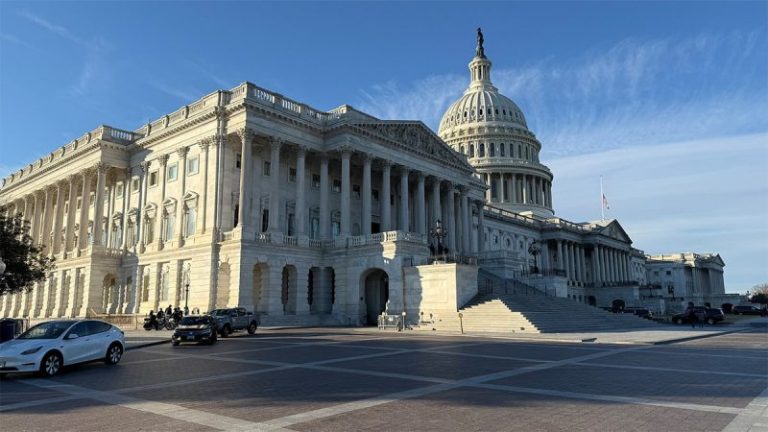
US Secretary of the Treasury Scott Bessent urged Congress to pass the Digital Asset Market CLARITY Act this spring, arguing that it will provide stability to markets rattled by volatility.

Speaking on CNBC and later before the Senate Banking Committee, Bessent said the bill will give “great comfort to the market,” and warned that parts of the crypto industry are resisting what he called “very good regulation.”

“There seems to be a nihilist group in the industry who prefers no regulation over this very good regulation,” he told lawmakers, drawing support from Senator Mark Warner.

The legislation has stalled amid disputes over stablecoin yield, DeFi oversight and token classifications, with critics — including Coinbase CEO Brian Armstrong — raising objections. Bessent cautioned that a bipartisan coalition backing the bill could fracture if Democrats retake the House in November. Warner, meanwhile, stressed unresolved concerns around illicit finance and national security risks tied to DeFi.

HIVE’s BUZZ HPC platform secures US$30 million in AI cloud contracts

BUZZ High Performance Computing (HPC), a Hive Digital Technologies (TSXV:HIVE,NASDAQ:HIVE) platform, announced that it has signed customer agreements valued at approximately US$30 million over two year fixed terms for artificial intelligence (AI) cloud contracts. The new contracts will support the initial phase of BUZZ’s AI-optimized GPU deployment at its Canada West location in Manitoba, with compute capacity expected to be online during the quarter ending on March 31, 2026. This phase consists of 504 liquid-cooled Dell Technologies (NYSE:DELL) server-based GPUs.

This initial phase is expected to generate about US$15 million in annual recurring revenue (ARR) to BUZZ’s cloud business once fully operational, increasing HIVE’s total annualized HPC segment revenue to roughly US$35 million.

HIVE said it aims to scale its HPC GPU AI cloud business toward approximately US$140 million in ARR over the next year. The company is using vendor financing and strategic partnerships to scale efficiently and pursue a “dual-engine strategy” of hashrate services and GPU-accelerated AI computing across its facilities in Canada, Sweden and Paraguay.

Taurus and Blockdaemon partner to expand institutional staking

Taurus, a Swiss fintech firm that provides digital asset infrastructure for banks and financial institutions, announced an agreement with blockchain infrastructure company Blockdaemon that will allow banks to offer staking yields to their clients without having to move those assets out of tightly controlled, regulated custody.

Taurus will integrate Blockdaemon’s staking infrastructure into its custody product, Taurus‑PROTECT, which is designed to keep digital assets safe inside banks’ own systems under financial regulator rules.

Taurus also has an agreement to provide digital asset custody, tokenization and node management technology that State Street uses to power its full‑service digital asset platform for institutional investors. Additionally, BNY Mellon (NYSE:BK) is broadening its digita asset platforms by partnering with infrastructure providers, including Blockdaemon.

Securities Disclosure: I, Meagen Seatter, hold no direct investment interest in any company mentioned in this article.

Securities Disclosure: I, Giann Liguid, hold no direct investment interest in any company mentioned in this article.

This post appeared first on investingnews.com

Emboldened congressional Democrats are expanding their battleground map for this year’s midterm elections, when Republicans will be defending their razor-thin majority in the House.

But the National Republican Congressional Committee (NRCC) chairman, Rep. Richard Hudson, isn’t buying it.

‘I mean, I’ve read fiction my whole life, and I recognize it when I see it,’ Hudson said in an exclusive with Fox News.

Republicans currently control the House 218-214, with two right-tilting districts and one left-leaning seat currently vacant. Democrats need a net gain of just three seats in the midterms to win back the majority for the first time in four years.

The Democratic Congressional Campaign Committee (DCCC) this week added five more offensive opportunities in Colorado, Minnesota, Montana, South Carolina and Virginia to their list of what they consider are vulnerable Republican-held House districts.

That brings the total number of districts Democrats are hoping to flip to 44. The DCCC notes that all five of the new districts they’re adding to their list of ‘offensive targets’ were carried by President Donald Trump by 13 points or fewer in the 2024 elections.

‘Democrats are on offense, and our map reflects the fact that everyday Americans are tired of Republicans’ broken promises and ready for change in Congress,’ DCCC Chair Suzan DelBene emphasized earlier this week.

And DCCC Spokesperson Viet Shelton told Fox News Digital, ‘In a political environment where Democrats are overperforming by more than 17 points in congressional special elections, it’s pretty clear we’re poised to re-take the majority. Momentum and the American people are on our side while Republicans are running scared.’

Asked about the DCCC’s move, Hudson scoffed.

‘They’ve got to have a list they can present to their donors,’ he said as he pointed to the DCCC. ‘But it’s not realistic. I mean, if you look at the map, there are very few seats up for grabs, and the majority of those seats are held by Democrats, but they’re seats that Donald Trump has carried or came very close….if you look at the seats that we’ll be competing for this fall. They’re they’re all favoring Republicans.’

The House GOP campaign chair added, ‘If you look at the map, it’s a Republican map. We just got to go out and win those races.’

The move by the DCCC comes as Democrats are energized, despite the party’s polling woes. Democrats, thanks to their laser focus on affordability amid persistent inflation, scored decisive victories in the 2025 elections and have won or over performed in a slew of scheduled and special ballot box contests since Trump returned to the White House over a year ago.

Republicans, meanwhile, are facing traditional political headwinds in which the party in power in the nation’s capital normally suffers setbacks in the midterm elections. And the GOP is also dealing with Trump’s continued underwater approval ratings.

The latest national surveys, including the most recent Fox News poll, indicate the Democrats ahead of the Republicans by mid-single digits in the so-called generic ballot question, which asks respondents whether they’d back the Democratic or GOP candidate in their congressional district without offering specific candidate names.

Asked about the polls, Hudson said, ‘We almost never lead in the generic ballot. But a single digit generic ballot, we do very well.’

And the House GOP campaign chair added he remains ‘very bullish.’

Cost of living concerns helped boost Trump and Republicans to sweeping victories in 2024, but affordability and overall economic concerns may work against them this year.

While the latest AP/NORC national poll indicated the GOP with a slight advantage over Democrats on handling the economy, a bunch of surveys, including the latest Fox News poll, indicate many Americans feel things are worse off than they were a year ago and remain pessimistic about the economy.

But on Friday the latest government numbers indicated that inflation eased during January.

And Hudson says the economy is still a winning issue for Republicans.

Pointing to the numerous tax cuts kicking in this year in the GOP’s sweeping One Big Beautiful Bill Act, which Trump signed into law last summer, Hudson touted ‘we put policies in place that are going to bring prosperity to the American people, and they’re starting to feel it.’

‘And as we move into tax season…folks who work overtime, folks who work for tips, they’re going to see a lot more money in their pocket thanks to no tax on tips, no tax on overtime,’ he added.

The GOP is also dealing with a low propensity issue: MAGA voters who don’t always go to the polls when Trump’s name isn’t on the ballot.

‘Our voters tend to be more working-class voters, and you have to put in extra effort to get them to the polls,’ Hudson said. ‘We know that’s our challenge. President Trump knows that’s the challenge, and he’s committed to helping us.’

Pointing to the NRCC’s annual fundraising gala, which Trump will once again headline this year, Hudson said this dinner will be a great kickoff for this year. We raised a whole lot of money with President Trump last year. We plan to raise a lot of money in March with President Trump, and then he’s going to get out on the campaign trail and help us turn out those voters and make that case.’

Asked about midterm election predictions, Hudson shied away from giving any hard numbers.

‘Not going to give you a number, but we’re going to hold the majority,’ he predicted. ‘President Trump was elected with a very specific agenda. We delivered almost his entire domestic agenda, and we’re going to go back to the voters and say promises made, promises kept, and they’re going to keep this House majority.’

This post appeared first on FOX NEWS

Albemarle (NYSE:ALB) is raising its long-term lithium demand outlook after a breakout year for stationary energy storage, underscoring a shift in the battery materials market that is no longer driven solely by electric vehicles.

The US-based lithium major reported fourth quarter 2025 net sales of US$1.4 billion, up 16 percent year-over-year, with adjusted EBITDA rising 7 percent to US$269 million.

For the full year, Albemarle delivered US$5.1 billion in revenue and US$1.1 billion in adjusted EBITDA, results that CEO Kent Masters said were supported by “strong growth in energy storage and significant cost and productivity improvements.”

But the most consequential update came in the company’s demand outlook.

“We are seeing a diversification of lithium end markets, with stationary storage becoming an increasingly significant demand driver,” Masters told investors during a February 12 conference call, adding that Albemarle has increased its 2030 global lithium demand forecast by 10 percent to a range of 2.8 million to 3.6 million metric tons.

Storage steps into the spotlight

Global lithium demand reached 1.6 million metric tons in 2025, up more than 30 percent year-over-year and in line with Albemarle’s prior projections. Demand growth outpaced supply, tightening inventories and lifting prices into year-end.

For 2026, Albemarle now expects global lithium demand to rise to between 1.8 million and 2.2 million metric tons — growth of 15 to 40 percent — driven by both EV adoption and accelerating deployments of stationary energy storage systems (ESS).

While global EV sales climbed 21 percent in 2025, energy storage was the standout. ESS demand surged more than 80 percent year-over-year, with strong growth across China, North America and Europe.

China, which accounted for roughly 40 percent of ESS shipments, saw demand rise 60 percent. North American shipments jumped 90 percent, reflecting grid stability needs and rising electricity consumption linked to data centers and artificial intelligence. European shipments more than doubled as countries expanded renewables and sought greater energy security.

Demand outside the three major regions grew 120 percent and represented more than 20 percent of global ESS shipments, with Southeast Asia, the Middle East and Australia emerging as key growth markets.

The shift is already visible in Albemarle’s financials. In 2025, energy storage volumes reached 235,000 metric tons of lithium carbonate equivalent, up 14 percent year-over-year and above the high end of the company’s guidance range.

Fourth quarter energy storage net sales rose 23 percent from a year earlier, while segment EBITDA climbed 25 percent, supported by higher lithium pricing and cost improvements.

CFO Neal Sheorey said Albemarle’s updated 2026 scenarios reflect both pricing and operational gains.

Cost discipline, portfolio reset

After weathering a sharp downturn in lithium prices over the past two years, Albemarle has focused on strengthening its balance sheet and lowering its cost base.

In 2025, the company delivered approximately US$450 million in run-rate cost and productivity improvements and is targeting an additional US$100 million to US$150 million in 2026.

Albemarle also announced it will idle operations at its Kemerton lithium hydroxide plant in Western Australia, citing a structural cost gap between Western and Chinese conversion assets.

“There is a gap there between China and the West,” Masters said, pointing to higher labor, power and waste management costs in Australia. Idling the plant is expected to improve adjusted EBITDA beginning in the second quarter, with no impact on sales volumes.

At the same time, Albemarle is streamlining non-core assets.

The company closed the sale of its stake in the Eurocat joint venture in January and expects to complete the sale of a majority stake in its refining catalysts business in the first quarter. Together, the transactions are expected to generate approximately US$660 million in pre-tax proceeds.

“We are committed to maintaining our investment-grade credit profile,” Masters said, adding that deleveraging and disciplined capital allocation remain priorities.

Growth with limited new capital

Despite pulling back on large-scale capital spending, Albemarle expects to deliver a five-year compound annual growth rate of roughly 15 percent in energy storage sales volumes, building on a 25 percent CAGR over the past four years.

Incremental expansions at the Greenbushes mine in Australia, yield improvements at the Salar de Atacama in Chile and higher utilization at the Wodgina joint venture are expected to support growth with minimal additional capital.

Looking ahead, Masters said the company is better positioned to navigate lithium’s still-maturing cycle.

“We’ve been through two cycles since the advent of EVs,” he said, describing the market as early in its development from a commodity perspective.

With stationary storage now emerging as a second structural demand pillar alongside EVs, Albemarle’s revised outlook suggests the lithium market’s next phase will be shaped as much by grid resilience and energy security as by transportation electrification — broadening the base of demand for years to come.

Lithium prices rebound sharply in early 2026

Lithium prices have surged since the start of 2026, underscoring the market’s renewed volatility.

According to Fastmarkets, spot battery-grade lithium carbonate on the seaborne market climbed from about US$11 per kilogram in early December to more than US$16 per kilogram by early January, a jump of nearly 50 percent in a matter of weeks.

The rally has been driven by tightening supply, including delays to the reopening of CATL’s (SZSE:300750,HKEX:3750) Jianxiawo lepidolite mine and maintenance at other production facilities, alongside aggressive restocking tied to long-term contract negotiations.

Speculative buying has amplified the move, with bullish sentiment and geopolitical risk adding to momentum. At the same time, thin spot liquidity reflects a cautious market, as buyers and sellers hesitate to commit amid rapid price swings.

Spodumene prices have followed suit, rising above US$2,000 per metric ton in January, levels not seen since October 2023. The rebound has improved margins for Australian producers, many of whom curtailed output when prices fell below US$900 per metric ton. Sustained pricing at current levels could prompt a wave of mine restarts, potentially easing supply tightness later this year.

Still, Fastmarkets cautioned that prices may be running ahead of fundamentals.

“Lithium prices appear to have moved ahead of the fundamentals, propelled by speculative buying, bullish sentiment and a backdrop of heightened geopolitical risk,” wrote Paul Lusty. “The key takeaway is to brace for more volatility.”

Securities Disclosure: I, Georgia Williams, hold no direct investment interest in any company mentioned in this article.

This post appeared first on investingnews.com

: A trio of Republican senators are moving to overhaul how federal childcare funds are distributed after what they call ‘mass fraud’ in Minnesota exposed a system that paid providers before verifying children were ever in the room.

Sen. Ted Cruz, R-Texas, joined by senators Mike Lee, R-Utah, and Rick Scott, R-Fla., is introducing the Payment Integrity Act, legislation that would require states to distribute federally funded childcare dollars based on verified attendance, not enrollment claims.

‘Programs in Minnesota for welfare and childcare were designed to channel resources into protecting vulnerable children but were treated like an open ATM by criminals,’ Cruz told Fox News Digital.

‘The mass fraud in Minnesota shows that American taxpayers can no longer rely on local and state politicians to prevent abuses because those politicians often have electoral and partisan incentives to look the other way. My legislation reduces the risk of the waste and fraud we’ve seen and ensures that resources are provided to children and families who need it.’

The bill would reverse a 2024 Biden administration rule requiring states to pay childcare providers before attendance verification. Under Cruz’s proposal, providers would be paid only after services are confirmed, shifting from enrollment-based payments to attendance-based billing.

Cruz’s bill comes as the outspoken Texan led a Senate Judiciary Subcommittee hearing on alleged Somali fraudsters last week. There, lawmakers heard directly from David Hoch, a journalist who accompanied blogger Nick Shirley to sites claiming to be Somali daycare centers.

‘There are few crimes more morally repugnant than stealing from vulnerable children. Every dollar stolen is a meal not eaten, a doctor’s visit missed and a future diminished,’ Cruz said, adding that such fraud ‘plunders our children’s potential.’

Gesturing toward a photo of the ‘Quality Learing Center’ in Minneapolis during the hearing, an alleged fraudulent childcare provider Cruz called ’emblematic’ of the crisis, he said the fraud was occurring not in ‘some distant or lawless place, but in the heart of America’s Midwest.’

Co-sponsor Lee said support for childcare should ‘go to real kids, not empty rooms.’

‘Fake childcare operations are stealing funding from the ones who are actually taking care of America’s children in need. Our bill will address this massive fraud by granting funding based on actual attendance rather than reported enrollment and allowing states to pay retroactively instead of in advance,’ Lee said, adding such ‘diligence’ should have been the law all along.

The Payment Integrity Act also puts into law the January rule from Health and Human Services that established attendance-based billing procedures.

That rule, according to Secretary Robert F. Kennedy’s deputy, Jim O’Neill, was also spurred by what has been happening in Minnesota.

‘We’ve seen credible and widespread allegations of fraudulent daycare providers who were not caring for children at all. The reforms we are enacting will make fraud harder to perpetrate,’ O’Neill said in a statement.

The Payment Integrity Act amends the Child Care and Development Block Grant Act signed into law by President George H.W. Bush, to include such ‘attendance-based billing.’

‘Nothing in this subchapter shall be construed to require a lead agency to make a payment to a child care provider prior to the provision of child care services,’ the bill states in a direct reversal of the prepayment system Cruz says allowed fraud to flourish.

This post appeared first on FOX NEWS

CHICAGO — Cardi B was part of Bad Bunny’s Super Bowl halftime show. What she did exactly, well, that turned into a perplexing question for two major prediction markets.

At least one Kalshi trader filed a complaint with the Commodity Futures Trading Commission over how the prediction market handled Sunday’s appearance by the Grammy-winning rapper. The result of a similar event contract on Polymarket also drew the ire of some users on that platform.

Prediction markets provide an opportunity to trade — or wager — on the result of future events. The markets are comprised of typically yes-or-no questions called event contracts, with the prices connected to what traders are willing to pay, which theoretically indicates the perceived probability of an event occurring.

The buy-in for each contract ranges from $0 to $1 each, reflecting a 0% to 100% chance of what traders think could happen.

More than $47.3 million was wagered on Kalshi’s market for “ Who will perform at the Big Game? ” A Polymarket contract had more than $10 million in volume.

Celebrities including Pedro Pascal, Karol G and Cardi B during the Super Bowl halftime show on Sunday.Kevin Mazur / Getty Images for Roc Nation

Cardi B joined singers Karol G and Young Miko and actors Jessica Alba and Pedro Pascal on a starry front porch during the halftime spectacle. She danced to the music, but it was unclear whether she was singing along during the show, which included performances by Ricky Martin and Lady Gaga.

Due to “ambiguity over whether or not Cardi B’s attendance at the 2026 Super Bowl halftime show constituted a qualifying ‘performance,’” Kalshi cited one of its rules in settling the market at the last price before trading was paused: $0.74 for No holders and $0.26 for Yes holders. The platform returned all the money to its users.

Polymarket’s contract was resolved as Cardi B had performed, but the yes was disputed. A final decision on the contract is expected to be announced on Wednesday.

In the CFTC complaint — first reported by the Event Horizon newsletter and posted by Front Office Sports — the trader alleges that Kalshi violated the Commodity Exchange Act with how it resolved the Cardi B contract. The trader — a Yes holder — is seeking $3,700.

A CFTC spokesman declined comment on Wednesday.

The Super Bowl capped a big NFL season for prediction markets.

Kalshi reported a daily record high of more than $1 billion in total trading volume on the day of the game, an increase of more than 2,700% compared to last year’s Super Bowl. The season-long total for all Super Bowl winner futures was $828.6 million, up more than 2,000% from last year.

The increased activity on Sunday caused some deposit issues. Kalshi co-founder Luana Lopes Lara posted on X on Monday that the “traffic spike was way bigger than our most optimistic forecasts.” She said the platform had reimbursed processing fees on the effected deposits and added credits to users who experienced delays.

Robinhood Markets highlighted the strength of its prediction markets when it announced its financial results for the fourth quarter and full 2025 on Tuesday.

“I think we are just at the beginning of a prediction market super cycle that could drive trillions in annual volume over time,” CEO Vlad Tenev said during an earnings call. “This year is going to be a big year. Olympics are going on right now. World Cup coming in the summer.”

This post appeared first on NBC NEWS

Sirios Resources (TSXV:SOI,OTCQB:SIREF) is a Québec-based gold exploration and development company focused on high-potential projects in the Eeyou Istchee James Bay region. Its flagship Cheechoo gold project ranks among the largest in the province by resource size and benefits from favourable geology, near-surface mineralization, and existing infrastructure, including road access, power lines, and proximity to the Éléonore mine. Sirios is advancing Cheechoo through systematic drilling, resource expansion, and technical studies, aiming to progress the project toward a Preliminary Economic Assessment (PEA).

In December 2025, Sirios completed a transformational combination with OVI Mining, creating a district-scale gold platform anchored by Cheechoo and complemented by the Corvet Est and PLEX projects. The transaction integrates Sirios into the Osisko development ecosystem, strengthening the leadership team with proven mine-building and capital markets expertise while maintaining the company’s deep geological knowledge of the James Bay region.

With over 30 years of continuous exploration in James Bay and strong partnerships with local and Indigenous communities, Sirios is well-positioned to create value through disciplined project advancement and exploration-driven growth. The company’s combination of experience, strategic assets, and community engagement underpins its long-term growth strategy.

Company Highlights

  • Flagship Cheechoo gold project hosts approximately 3 million ounces of gold, including 1.3 million ounces indicated and 1.7 million ounces inferred, including additional underground resources
  • Located in Eeyou Istchee James Bay, Québec, a Tier-1 mining jurisdiction with strong government and community support
  • Low strip ratio (2.9:1) and high gold recoveries (92 percent) support attractive open-pit development potential at Cheechoo
  • Strategic combination with OVI Mining brings Osisko-backed leadership, capital markets strength and additional district-scale exploration assets
  • Well-funded with recent treasury additions, supporting advancement of Cheechoo toward a preliminary economic assessment (PEA) and ongoing exploration across the portfolio

This Sirios Resources profile is part of a paid investor education campaign.*

Click here to connect with Sirios Resources (TSXV:SOI) to receive an Investor Presentation

This post appeared first on investingnews.com

Director of National Intelligence Tulsi Gabbard announced she was ending the work of a task force that sought to reform the U.S. intelligence community, including rooting out what she described as the politicization of intelligence gathering, after less than a year since its creation.

Gabbard established the group in April, when it was also tasked with probing ways to reduce spending on intelligence and whether reports on high-profile topics such as COVID-19 should be declassified.

In a statement on Wednesday, Gabbard said the task force’s work was always intended to be temporary after she was tapped to oversee coordination of the 18 U.S. intelligence agencies.

‘In less than one year, we’ve brought a historic level of transparency to the intelligence community,’ Gabbard said in her statement. ‘My commitment to transparency, truth, and eliminating politicization and weaponization within the intelligence community remains central to all that we do.’

The number of officers assigned to the task force, as well as their identities, are classified, according to Gabbard’s office.

The officers will now return to other intelligence agencies to continue the work the group started, her office added.

The group sparked criticism against Gabbard after its creation, with Democrats and some intelligence insiders raising questions about whether it would be used to undermine intelligence agencies and bring them under tighter control of President Donald Trump.

Sen. Mark Warner, D-VA, vice chairman of the Senate Intelligence Committee, said last year that the group appeared to be a ‘pass for a witch hunt’ designed to target intelligence officers deemed disloyal to Trump.

‘This seems to be just a pass for a witch hunt and that’s going to further undermine our national security,’ Warner told Reuters at the time.

Gabbard has implemented significant changes to the country’s intelligence gathering in the last year, including by using agencies to back up Trump’s claims about alleged interference in the 2016 and 2020 elections.

In August, she revealed plans to cut her office’s workforce and slash more than $700 million from its annual budget. She also fired two top intelligence officials in May after concluding that they opposed Trump.

Since Gabbard took over as director, the federal government has revoked the security clearances of dozens of former and current officials, including high-profile political opponents of the president, which critics have panned as being a punishment for siding against Trump rather than posing security risks.

Gabbard’s presence for a recent FBI search of a Georgia election office in connection to the 2020 election has led to criticism from Democrats who argue she is blurring the traditional lines between foreign intelligence collection and domestic law enforcement.

The CIA has also released additional information about its investigations into the origins of COVID-19, such as an assessment released last year that affirmed the position that it most likely originated in a lab in China.

The Associated Press contributed to this report.

This post appeared first on FOX NEWS

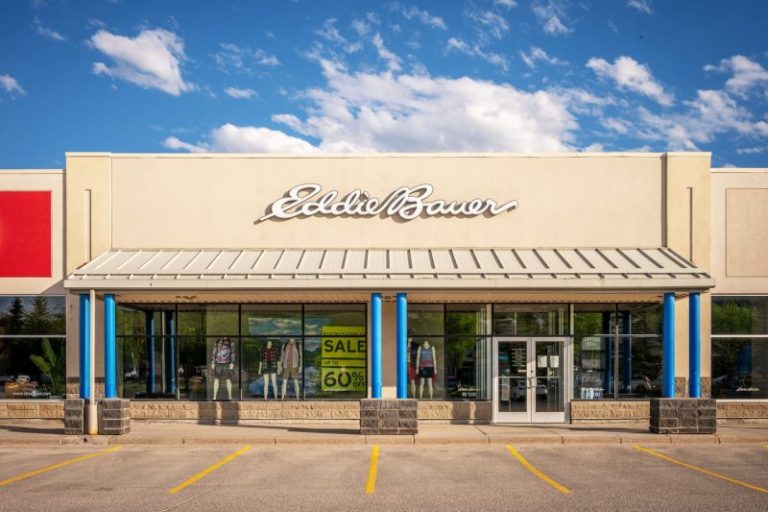
The operator of roughly 180 Eddie Bauer stores across the U.S. and Canada has filed for Chapter 11 bankruptcy protection, blaming declining sales and a litany of other industry headwinds.

The bankruptcy filing marks the third time in a little over two decades for the storied-but-now-tired brand that began as a Seattle fishing shop, later outfitted the first American to climb Mount Everest and made thousands of newfangled down jackets and sleeping bags for the military during World War II.

Eddie Bauer LLC said Monday it had entered into a restructuring pact with its secured lenders as it made the filing in the U.S. Bankruptcy Court for the District of New Jersey.

Most Eddie Bauer retail and outlet stores in the U.S. and Canada will remain open as the company winds down certain locations. It noted that it will conduct a court-supervised sales process, and if a sale can’t be executed, it will begin a wind-down of its U.S. and Canadian operations.

“This is not an easy decision,” said Marc Rosen, CEO of Catalyst Brands, which maintains the license to operate Eddie Bauer stores in the U.S. and Canada. “However, this restructuring is the best way to optimize value for the retail company’s stakeholders and also ensure Catalyst Brands remains profitable and with strong liquidity and cash flow.”

Eddie Bauer’s stores outside of the U.S. and Canada are operated by other licensees, are not included in the Chapter 11 filings, and will stay open, according to the release.

Authentic Brands Group continues to own the intellectual property associated with the Eddie Bauer brand and may license the brand to other operators, the company said. The operations of other brands in the Catalyst Brands portfolio are not affected by this filing and will continue in the normal course, according to the company.

Eddie Bauer’s e-commerce and wholesale operations will also not be impacted by the wind down, as they are operated by a company called Outdoor 5, LLC. That was a transition it made in January and became effective Feb. 2.

Eddie Bauer joins a growing list of U.S. retailers this year that are closing stores, as companies reorganize under bankruptcy protection or pare down their operations to focus on the most profitable businesses.

The parent company of Saks Fifth Avenue said last month that it was seeking bankruptcy protection, buffeted by rising competition and the massive debt it took on to buy its rival in the luxury sector, Neiman Marcus, just over a year ago. A few days later, the parent company said it was closing most of its Saks Off 5th stores.

Amazon said earlier this month that it was closing almost all of its Amazon Go and Amazon Fresh locations within days as it narrows its focus on food delivery and its grocery chain, Whole Foods Market.

Eddie Bauer’s namesake founder — an avid outdoorsman — started the company in Seattle in 1920 as Bauer’s Sports Shop, according to the brand’s website. In 1945, after making more than 50,000 jackets for the military, it launched a mail-order catalog.

“Bauer’s Sports Shop was not just a place where people purchased clothing and gear, it was a community hub where folks gathered to share their wisdom, learn, and talk about their experiences in the outdoors,” the website says.

The company created an American goose-down insulated jacket, known as the “Skyliner,” in 1936, and it became the company’s first patented jacket. It also outfitted the first American to climb Mount Everest — James W. Whittaker — with an Eddie Bauer parka in 1963.

After Bauer retired in 1968 and sold the business to his partner, the outdoor brand shifted more toward casual apparel and was bought by General Mills Inc. in 1971 and then by Spiegel Inc. in 1988. After Spiegel filed for bankruptcy in 2003 and most of its assets were sold, the remainder of the company was reorganized in 2005 as Eddie Bauer Holdings Inc.

In June 2009, Eddie Bauer filed bankruptcy and was acquired by Golden State Capital, the following month. In 2021, it was acquired by Authentic Brands and SPARC Group LLC.

A year ago, Catalyst was formed by the merger of SPARC and JCPenney, which Simon Property Group and fellow mall landlord Brookfield bought out of bankruptcy.

Rosen noted that even prior to the inception of Catalyst Brands last year, Eddie Bauer was in a “challenged situation.”

“Over the past year, these challenges have been exacerbated by various headwinds, including increased costs of doing business due to inflation, ongoing tariff uncertainty, and other factors,” he said.

He noted that while Catalyst’s leadership was able to make improvements in product development and marketing, those changes could not be implemented fast enough to fully address the problems created over several years.

Eddie Bauer had nearly 600 stores at its peak in 2001, according to CoStar Group Inc., a commercial real estate data firm.

In a note published earlier this month, Neil Saunders, managing director of GlobalData Retail, wrote that while the Eddie Bauer name is “well known,” the brand hasn’t kept pace with rivals like Swedish outdoor brand Fjallraven and Canadian label Arc’teryx. He also cited issues with quality deteriorating, which, for an outdoor brand measured by the performance of its products, is very problematic.

“And for many younger shoppers, the brand is seen as somewhat old-fashioned and a bit irrelevant,” he said.

This post appeared first on NBC NEWS

(TheNewswire)


Drill Hole LBX25-101 — Highlights

  • 1.50 m @ 0.88 g/t Au, 13.60 g/t Ag, 0.24% Cu, 5.61% Zn (159.20 m to 160.70 m) 

    • Including 0.50 m @ 2.06 g/t Au, 31.10 g/t Ag, 0.53% Cu, 12.35% Zn (159.70 m to 160.20 m) 

  • 1.60 m @ 1.16 g/t Au, 10.21 g/t Ag, 0.30% Cu, 4.39% Zn (187.70 m to 189.30 m) 

  • 3.00 m @ 0.97 g/t Au, 4.04 g/t Ag, 0.14% Cu, 2.21% Zn (190.50 m to 193.50 m) 


Drill Hole LBX25-102 — Highlights

  • 0.50 m @ 3.89 g/t Au, 38.70 g/t Ag, 0.42% Cu, 5.37% Zn (45.00 m to 45.50 m) 

  • 1.00 m @ 2.04 g/t Au, 0.80 g/t Ag, 0.01% Cu, 0.02% Zn (108.50 m to 109.50 m) 

  • 2.04 m @ 2.63 g/t Au, 2.38 g/t Ag, 0.02% Cu, 0.17% Zn 205.96 m to 208.00 m) 

    • Including 1.00 m @ 5.14 g/t Au, 4.60 g/t Ag, 0.04% Cu, 0.30% Zn (207.00 m to 208.00 m) 

  • 0.50 m @ 2.60 g/t Au, 13.60 g/t Ag, 0.10% Cu, 6.75% Zn (230.30 m to 230.80 m) 


Toronto, Ontario – February 11, 2026 TheNewswire – Laurion Mineral Exploration Inc. (TSX-V: LME | OTCQB: LMEFF | FSE: 5YD) (‘LAURION’ or the ‘Company’) reports assay results from drill holes LBX25-101 and LBX25-102 from the Company’s recent Fall diamond drilling program totalling 1,821 metres completed in 8 drill holes at the A-Zone/McLeod/CRK Zone at the Ishkōday Project, located in the Beardmore–Geraldton Greenstone Belt of north-western Ontario, approximately 220 kilometres northeast of Thunder Bay.

Drill holes LBX25-101 and LBX25-102 were planned as part of LAURION’s model-guided A-Zone program to test interpreted mineralized horizons and strengthen continuity across the northeastern portion of the zone. (See Image DDH Cross Section.) The drill holes were positioned to validate structural interpretations and increase confidence in zones where both historical drilling and more recent Company-led drill programs have identified broad anomalous gold mineralization with localized higher-grade intervals. The assay results provide additional technical data that will support the refinement of future targeting and improve predictability for the Company’s subsequent drill campaigns. (See Image of Drill Locations of Fall Diamond Drilling.)


‘We are advancing the A-Zone through disciplined, high-confidence drill targeting designed to create measurable project value,’ said Cynthia Le Sueur-Aquin, President and CEO of LAURION. ‘Our objective is to complete drilling that answers specific geological questions, strengthens continuity, and improves predictability — because better technical clarity today supports stronger outcomes tomorrow for our shareholders.’


Geological Context


Drill hole LBX25-101 is situated approximately 265 m southwest of LBX25-100, with LBX25-102 positioned an additional 335 m southwest, extending drill coverage along the interpreted A-Zone mineralized corridor into a sparsely drilled area. LBX25-101 was established as a step-back collar to test projected mineralized horizons and structural continuity beyond the denser drill grid. Targeting incorporated projected intercept positions from holes LBX22-055, LBX22-056, LBX22-056A, LBX22-057, and historic hole K56 to improve geological and structural constraint across this portion of the zone.


Drill hole LBX25-102 was collared adjacent to the access road approximately 1.0 km south of the River Road, located north of the McLeod Zone and southwest of drill hole LBX21-041, to support continued drill coverage along this portion of the interpreted mineralized trend. This collar location enabled efficient drill access while extending geological coverage into a less densely tested portion of the corridor.


Hole ID

From

(m)

To

(m)

Core Length (m)

Au (g/t)

Ag (g/t)

Cu (%)

Zn (%)

LBX25-101

7.90

11.80

3.90

0.200

2.88

0.03

0.65

including

7.90

8.60

0.70

0.146

9.80

0.06

2.94

LBX25-101

120.2

120.80

0.60

0.224

4.80

0.12

1.54

LBX25-101

159.20

196.50

37.30

0.209

2.06

0.05

0.87

including

159.20

160.70

1.50

0.883

13.60

0.24

5.61

including

159.70

160.20

0.50

2.060

31.10

0.53

12.35

including

187.70

189.30

1.60

1.159

10.21

0.30

4.39

including

188.20

193.50

5.30

0.872

5.11

0.16

2.53

including

190.50

193.50

3.00

0.971

4.04

0.14

2.21

LBX25-102

45.00

45.50

0.50

3.890

38.70

0.42

5.37

LBX25-102

52.80

53.30

0.50

0.617

3.90

0.03

3.25

LBX25-102

82.90

83.70

0.80

0.511

0.50

0.01

LBX25-102

108.50

109.50

1.00

2.040

0.80

0.01

0.02

LBX25-102

205.96

208.00

2.04

2.630

2.38

0.02

0.17

Including

207.00

208.00

1.00

5.140

4.60

0.04

0.30

LBX25-102

212.00

213.00

1.00

0.339

0.25

0.04

LBX25-102

222.80

223.30

1.20

0.292

9.58

0.02

1.10

including

222.80

223.30

0.50

0.457

20.60

0.03

2.55

LBX25-102

226.00

245.00

19.00

0.355

2.63

0.03

0.58

including

230.30

233.60

3.30

1.114

6.35

0.07

1.78

including

230.30

230.80

0.50

2.600

13.60

0.10

6.75

NOTE: Intervals represent core length. The interval widths reported are down-hole widths. The true widths of the mineralized zones are not known at this time as there is insufficient information to determine the orientation of the mineralization.


Name

Elevation

(m)

Azimuth

Dip

Easting

Northing

Depth

(m)

LBX25-101

321

127

-50

446328

5513024

276

LBX25-102

323

115

-50

446200

5512713

300

Total


576


Sampling and QA/QC Protocols


All drill core is transported and stored inside the core facility located at the Ishkōday Project in Greenstone, Ontario. LAURION employs an industry standard system of external standards, blanks and duplicates for all of its sampling, in addition to the QA/QC protocol employed by the laboratory. After logging, core samples were identified and then cut in half along core axis in the same building and then zip tied individually in plastic sample bags with a bar code. Approximately five or six of these individual bags were then stacked into a ‘rice’ white material bag and stored on a skid for final shipment to the laboratory. All core samples were shipped to the ALS facility in Thunder Bay, Ontario, which were then prepared by ALS Global Geochemistry in Thunder Bay and analyzed by ALS Global Analytical Lab in North Vancouver, British Columbia. Samples are processed by 4-acid digestion and analyzed by fire assay on 50 g pulps and ICP-AES (Inductively Coupled Plasma – Atomic Emission Spectroscopy). Over limit analyses are reprocessed with gravimetric finish. A total of 5% blanks and 5% standard are inserted randomly within all samples. 5% of the best assay result pulps were sent for re-assays. All QA/QC were verified, and no contamination or bias have been observed. The remaining half of the core, as well as the unsampled core, is stored in temporary core racks at the core logging facility in Beardmore and moved to the core storage facility at the Ishkōday Project. Note: QA/QC review of standards and duplicates indicates analytical results are reliable. One zinc standard adjacent to a high-grade zinc interval returned elevated values consistent with expected analytical behaviour following high-grade samples.


Qualified Person


The technical contents of this release were reviewed and approved by Pierre-Jean-Lafleur P. Eng, a consultant to LAURION and a Qualified Person as defined by National Instrument 43-101 – Standards of Disclosure for Mineral Projects.


About LAURION Mineral Exploration Inc.


Laurion Mineral Exploration Inc. is a mid-stage junior mineral exploration company listed on the TSX Venture Exchange under the symbol LME and on the OTC Pink market under the symbol LMEFF. The Company currently has 278,716,413 common shares outstanding, with approximately 73.6% held by insiders and long-term ‘Friends and Family’ investors, reflecting strong alignment between management, the Board, and shareholders.


LAURION’s primary focus is the 100%-owned, district-scale Ishkōday Project, a 57 km² land package hosting gold-rich polymetallic mineralization. The Company is advancing Ishkōday through a disciplined, milestone-driven exploration strategy focused on strengthening geological confidence, defining structural continuity.


LAURION’s strategy is centered on deliberate value creation. The Company is prioritizing systematic technical advancement, integrated geological and structural modeling, and the evaluation of optional, non-dilutive pathways, including historical surface stockpile processing, that may support flexibility in LAURION’s exploration plans without diverting the Company’s focus from its core exploration objectives.


The Company’s overarching objective is to build project value before monetization, ensuring that any future strategic outcomes are supported by technical clarity, reduced execution risk, and demonstrated scale. While the Board remains attentive to strategic interest that may arise, LAURION is not driven by transaction timing. Instead, the Company is focused on advancing the Ishkōday Project in a manner that strengthens long-term shareholder value.


LAURION will continue to communicate updates through timely disclosure and will issue press releases in accordance with applicable securities laws should any material information arise.


FOR FURTHER INFORMATION, CONTACT:

Laurion Mineral Exploration Inc.

Cynthia Le Sueur-Aquin – President and CEO

Tel: 1-705-788-9186 Fax: 1-705-805-9256


Douglas Vass – Investor Relations Consultant

Email: info@laurion.ca

Website: http://www.LAURION.ca

Follow us on: X (@LAURION_LME), Instagram (laurionmineral) and LinkedIn ()


Caution Regarding Forward-Looking Information


This press release contains forward-looking statements, which reflect the Company’s current expectations regarding future events including with respect to LAURION’s business, operations and condition, management’s objectives, strategies, beliefs and intentions, the Company’s ability to advance the Ishkōday Project, the nature, focus, timing and potential results of the Company’s exploration, drilling and prospecting activities, including the Company’s diamond drill program referenced in this press release and the Company’s other planned activities for the Ishkōday Project for the remainder of 2026, and the statements regarding the Company’s exploration or consideration of any possible strategic alternatives and transactional opportunities, as well as the potential outcome(s) of this process, the possible impact of any potential transactions referenced herein on the Company or any of its stakeholders, and the ability of the Company to identify and complete any potential acquisitions, mergers, financings or other transactions referenced herein, and the timing of any such transactions. The forward-looking statements involve risks and uncertainties. Actual events and future results, performance or achievements expressed or implied by such forward-looking statements could differ materially from those projected herein including as a result of a change in the trading price of the common shares of LAURION, the TSX Venture Exchange or any other applicable regulator not providing its approval for any strategic alternatives or transactional opportunities, the interpretation and actual results of current exploration activities, changes in project parameters as plans continue to be refined, future prices of gold and/or other metals, possible variations in grade or recovery rates, failure of equipment or processes to operate as anticipated, the failure of contracted parties to perform, labor disputes and other risks of the mining industry, delays in obtaining governmental approvals or financing or in the completion of exploration, as well as those factors disclosed in the Company’s publicly filed documents. Investors should consult the Company’s ongoing quarterly and annual filings, as well as any other additional documentation comprising the Company’s public disclosure record, for additional information on risks and uncertainties relating to these forward-looking statements. The reader is cautioned not to rely on these forward-looking statements. Subject to applicable law, the Company disclaims any obligation to update these forward-looking statements. All sample values are from grab samples and channel samples, which by their nature, are not necessarily representative of overall grades of mineralized areas. Readers are cautioned to not place undue reliance on the assay values reported in this press release.


NEITHER THE TSX VENTURE EXCHANGE NOR ITS REGULATION SERVICE PROVIDER (AS THAT TERM IS DEFINED IN THE POLICIES OF THE TSX VENTURE EXCHANGE) ACCEPTS RESPONSIBILITY FOR THE ADEQUACY OR ACCURACY OF THE CONTENT OF THIS NEWS RELEASE.


Copyright (c) 2026 TheNewswire – All rights reserved.

News Provided by TheNewsWire via QuoteMedia

This post appeared first on investingnews.com

Israeli Prime Minister Benjamin Netanyahu will meet President Donald Trump at the White House on Wednesday in a visit expected to center on Iran, as Washington weighs diplomacy against the threat of military action and Israel pushes to shape the scope of negotiations.

Trump has signaled the Iranian file will dominate the agenda. In a phone interview with Axios, the president said Tehran ‘very much wants to reach a deal,’ but warned, ‘Either we make a deal, or we’ll have to do something very tough — like last time.’

Netanyahu, speaking before departing Israel for Washington, said he intends to present Israel’s position. ‘I will present to the president our concept regarding the principles of the negotiations — the essential principles that are important not only to Israel but to anyone who wants peace and security in the Middle East,’ he told reporters.

The meeting comes days after U.S. and Iranian officials resumed talks in Oman for the first time since last summer’s 12-day war, while the United States continues to maintain a significant military presence in the Gulf — a posture widely viewed as both deterrence and for holding leverage in negotiations with Tehran.

From the U.S. perspective, Iran is seen as a global security challenge rather than a regional one, according to Jacob Olidort, chief research officer and director of American security at the America First Policy Institute. ‘It’s an important historic time of potentially seismic proportions,’ he told Fox News Digital.

‘Iran is not so much a Middle East issue. It’s a global issue affecting U.S. interests around the world,’ he added, calling the regime ‘probably the world’s oldest global terror network… [with] thousands of Americans killed through proxies.’

Olidort said the administration’s strategy appears to combine diplomacy with visible military pressure. ‘The president has been clear… should talks not be successful, the military option cannot be off the table,’ he said. ‘Military assets in the region serve as part of the negotiation strategy with Iran.’

For Israel, the main concern is not only Iran’s nuclear program but also its ballistic missile arsenal and regional network of armed groups.

Trump indicated to Axios that the United States shares at least part of that view, saying any agreement would need to address not only nuclear issues but also Iran’s ballistic missiles. 

Israeli intelligence expert Sima Shein has warned that negotiations narrowly focused on nuclear restrictions could leave Israel exposed. ‘The visit signals a lack of confidence that American envoys, Witkoff and Kushner, alone can represent Israel’s interests in the best way. They were in Israel just a week ago — but Netanyahu wants to speak directly with Trump, so there is no ambiguity about Israel’s position,’ she added.

Shein says Iran may be stalling diplomatically to see whether Washington limits talks to nuclear issues while avoiding missile constraints. Her analysis further suggests that a sanctions-relief agreement that leaves Iran’s broader capabilities intact could stabilize the regime at a moment of internal pressure while preserving its military leverage. 

‘An agreement now would effectively save the regime at a time when it has no real solutions to its internal problems. Lifting sanctions through a deal would give it breathing room and help stabilize it,’ she said.

‘If there is an agreement, the United States must demand the release of all detainees and insist on humanitarian measures, including medical support for those who have been severely injured. Washington would need to be directly involved in enforcing those provisions.’

Netanyahu said before leaving Israel that he and Trump would discuss ‘a series of topics,’ including Gaza, where a U.S.-backed postwar framework and ceasefire implementation remain stalled. 

According to Israeli reporting, Netanyahu plans to tell Trump that phase two of the Gaza peace plan ‘is not moving,’ reflecting continued disputes over disarmament, governance and security arrangements.

The timing of Netanyahu’s visit may also allow him to avoid returning to Washington the following week for the inaugural session of the Board of Peace, Shein said, noting the initiative is controversial in Israel’s parliament. 

‘Israel is deeply concerned about the presence of Turkey and Qatar on the board of peace and their malign influence on other members as well as on the Palestinian authority’s technocratic government,’ Dan Diker, president of the Jerusalem Center for Security and Foreign Affairs, told Fox News Digital.

‘Hamas’s control of Gaza has not weakened, while international commitments to disarm Hamas have appeared to weaken,’ he added, ‘The longer the U.S. waits before taking action against the Iranian regime, the more compromised Israel is in its ability and determination to forcibly disarm Hamas, both of which require the sanction and the blessing of the new international structures on Gaza.’

‘The prime minister’s deep concern is the stalled state of affairs both against the Iranian regime and apparently in Gaza. Timing is critical on both fronts. And for Israel, the window seems to be closing,’ Diker said.  


This post appeared first on FOX NEWS