Archive

February 12, 2026

Browsing

Sirios Resources (TSXV:SOI,OTCQB:SIREF) is a Québec-based gold exploration and development company focused on high-potential projects in the Eeyou Istchee James Bay region. Its flagship Cheechoo gold project ranks among the largest in the province by resource size and benefits from favourable geology, near-surface mineralization, and existing infrastructure, including road access, power lines, and proximity to the Éléonore mine. Sirios is advancing Cheechoo through systematic drilling, resource expansion, and technical studies, aiming to progress the project toward a Preliminary Economic Assessment (PEA).

In December 2025, Sirios completed a transformational combination with OVI Mining, creating a district-scale gold platform anchored by Cheechoo and complemented by the Corvet Est and PLEX projects. The transaction integrates Sirios into the Osisko development ecosystem, strengthening the leadership team with proven mine-building and capital markets expertise while maintaining the company’s deep geological knowledge of the James Bay region.

With over 30 years of continuous exploration in James Bay and strong partnerships with local and Indigenous communities, Sirios is well-positioned to create value through disciplined project advancement and exploration-driven growth. The company’s combination of experience, strategic assets, and community engagement underpins its long-term growth strategy.

Company Highlights

  • Flagship Cheechoo gold project hosts approximately 3 million ounces of gold, including 1.3 million ounces indicated and 1.7 million ounces inferred, including additional underground resources
  • Located in Eeyou Istchee James Bay, Québec, a Tier-1 mining jurisdiction with strong government and community support
  • Low strip ratio (2.9:1) and high gold recoveries (92 percent) support attractive open-pit development potential at Cheechoo
  • Strategic combination with OVI Mining brings Osisko-backed leadership, capital markets strength and additional district-scale exploration assets
  • Well-funded with recent treasury additions, supporting advancement of Cheechoo toward a preliminary economic assessment (PEA) and ongoing exploration across the portfolio

This Sirios Resources profile is part of a paid investor education campaign.*

Click here to connect with Sirios Resources (TSXV:SOI) to receive an Investor Presentation

This post appeared first on investingnews.com

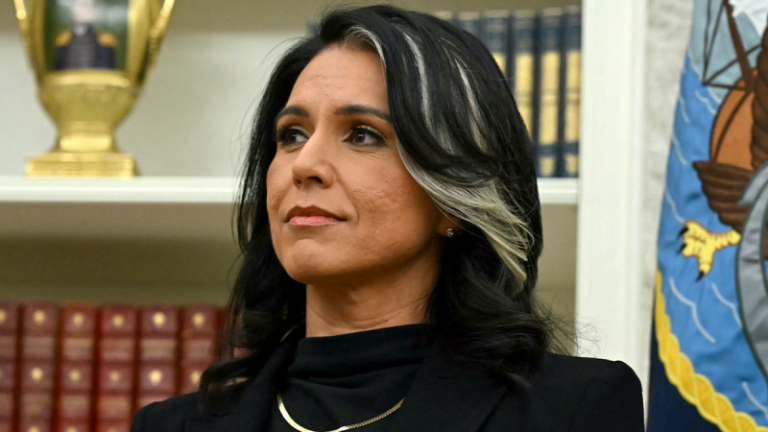
Director of National Intelligence Tulsi Gabbard announced she was ending the work of a task force that sought to reform the U.S. intelligence community, including rooting out what she described as the politicization of intelligence gathering, after less than a year since its creation.

Gabbard established the group in April, when it was also tasked with probing ways to reduce spending on intelligence and whether reports on high-profile topics such as COVID-19 should be declassified.

In a statement on Wednesday, Gabbard said the task force’s work was always intended to be temporary after she was tapped to oversee coordination of the 18 U.S. intelligence agencies.

‘In less than one year, we’ve brought a historic level of transparency to the intelligence community,’ Gabbard said in her statement. ‘My commitment to transparency, truth, and eliminating politicization and weaponization within the intelligence community remains central to all that we do.’

The number of officers assigned to the task force, as well as their identities, are classified, according to Gabbard’s office.

The officers will now return to other intelligence agencies to continue the work the group started, her office added.

The group sparked criticism against Gabbard after its creation, with Democrats and some intelligence insiders raising questions about whether it would be used to undermine intelligence agencies and bring them under tighter control of President Donald Trump.

Sen. Mark Warner, D-VA, vice chairman of the Senate Intelligence Committee, said last year that the group appeared to be a ‘pass for a witch hunt’ designed to target intelligence officers deemed disloyal to Trump.

‘This seems to be just a pass for a witch hunt and that’s going to further undermine our national security,’ Warner told Reuters at the time.

Gabbard has implemented significant changes to the country’s intelligence gathering in the last year, including by using agencies to back up Trump’s claims about alleged interference in the 2016 and 2020 elections.

In August, she revealed plans to cut her office’s workforce and slash more than $700 million from its annual budget. She also fired two top intelligence officials in May after concluding that they opposed Trump.

Since Gabbard took over as director, the federal government has revoked the security clearances of dozens of former and current officials, including high-profile political opponents of the president, which critics have panned as being a punishment for siding against Trump rather than posing security risks.

Gabbard’s presence for a recent FBI search of a Georgia election office in connection to the 2020 election has led to criticism from Democrats who argue she is blurring the traditional lines between foreign intelligence collection and domestic law enforcement.

The CIA has also released additional information about its investigations into the origins of COVID-19, such as an assessment released last year that affirmed the position that it most likely originated in a lab in China.

The Associated Press contributed to this report.

This post appeared first on FOX NEWS

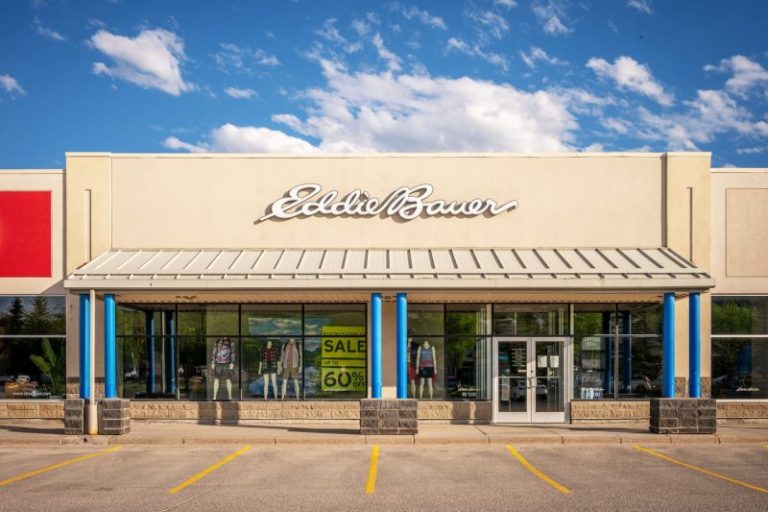
The operator of roughly 180 Eddie Bauer stores across the U.S. and Canada has filed for Chapter 11 bankruptcy protection, blaming declining sales and a litany of other industry headwinds.

The bankruptcy filing marks the third time in a little over two decades for the storied-but-now-tired brand that began as a Seattle fishing shop, later outfitted the first American to climb Mount Everest and made thousands of newfangled down jackets and sleeping bags for the military during World War II.

Eddie Bauer LLC said Monday it had entered into a restructuring pact with its secured lenders as it made the filing in the U.S. Bankruptcy Court for the District of New Jersey.

Most Eddie Bauer retail and outlet stores in the U.S. and Canada will remain open as the company winds down certain locations. It noted that it will conduct a court-supervised sales process, and if a sale can’t be executed, it will begin a wind-down of its U.S. and Canadian operations.

“This is not an easy decision,” said Marc Rosen, CEO of Catalyst Brands, which maintains the license to operate Eddie Bauer stores in the U.S. and Canada. “However, this restructuring is the best way to optimize value for the retail company’s stakeholders and also ensure Catalyst Brands remains profitable and with strong liquidity and cash flow.”

Eddie Bauer’s stores outside of the U.S. and Canada are operated by other licensees, are not included in the Chapter 11 filings, and will stay open, according to the release.

Authentic Brands Group continues to own the intellectual property associated with the Eddie Bauer brand and may license the brand to other operators, the company said. The operations of other brands in the Catalyst Brands portfolio are not affected by this filing and will continue in the normal course, according to the company.

Eddie Bauer’s e-commerce and wholesale operations will also not be impacted by the wind down, as they are operated by a company called Outdoor 5, LLC. That was a transition it made in January and became effective Feb. 2.

Eddie Bauer joins a growing list of U.S. retailers this year that are closing stores, as companies reorganize under bankruptcy protection or pare down their operations to focus on the most profitable businesses.

The parent company of Saks Fifth Avenue said last month that it was seeking bankruptcy protection, buffeted by rising competition and the massive debt it took on to buy its rival in the luxury sector, Neiman Marcus, just over a year ago. A few days later, the parent company said it was closing most of its Saks Off 5th stores.

Amazon said earlier this month that it was closing almost all of its Amazon Go and Amazon Fresh locations within days as it narrows its focus on food delivery and its grocery chain, Whole Foods Market.

Eddie Bauer’s namesake founder — an avid outdoorsman — started the company in Seattle in 1920 as Bauer’s Sports Shop, according to the brand’s website. In 1945, after making more than 50,000 jackets for the military, it launched a mail-order catalog.

“Bauer’s Sports Shop was not just a place where people purchased clothing and gear, it was a community hub where folks gathered to share their wisdom, learn, and talk about their experiences in the outdoors,” the website says.

The company created an American goose-down insulated jacket, known as the “Skyliner,” in 1936, and it became the company’s first patented jacket. It also outfitted the first American to climb Mount Everest — James W. Whittaker — with an Eddie Bauer parka in 1963.

After Bauer retired in 1968 and sold the business to his partner, the outdoor brand shifted more toward casual apparel and was bought by General Mills Inc. in 1971 and then by Spiegel Inc. in 1988. After Spiegel filed for bankruptcy in 2003 and most of its assets were sold, the remainder of the company was reorganized in 2005 as Eddie Bauer Holdings Inc.

In June 2009, Eddie Bauer filed bankruptcy and was acquired by Golden State Capital, the following month. In 2021, it was acquired by Authentic Brands and SPARC Group LLC.

A year ago, Catalyst was formed by the merger of SPARC and JCPenney, which Simon Property Group and fellow mall landlord Brookfield bought out of bankruptcy.

Rosen noted that even prior to the inception of Catalyst Brands last year, Eddie Bauer was in a “challenged situation.”

“Over the past year, these challenges have been exacerbated by various headwinds, including increased costs of doing business due to inflation, ongoing tariff uncertainty, and other factors,” he said.

He noted that while Catalyst’s leadership was able to make improvements in product development and marketing, those changes could not be implemented fast enough to fully address the problems created over several years.

Eddie Bauer had nearly 600 stores at its peak in 2001, according to CoStar Group Inc., a commercial real estate data firm.

In a note published earlier this month, Neil Saunders, managing director of GlobalData Retail, wrote that while the Eddie Bauer name is “well known,” the brand hasn’t kept pace with rivals like Swedish outdoor brand Fjallraven and Canadian label Arc’teryx. He also cited issues with quality deteriorating, which, for an outdoor brand measured by the performance of its products, is very problematic.

“And for many younger shoppers, the brand is seen as somewhat old-fashioned and a bit irrelevant,” he said.

This post appeared first on NBC NEWS