
Archive

January 2026

Browsing

Normally, the Supreme Court hears cases that deal with matters of law. 

But on Tuesday, Jan. 13, the justices will also be dealing with basic science. Not only that, they’ll be debating fundamental truth, as I can personally testify. 

The stakes couldn’t be higher in the case, West Virginia v. B.P.J. The specific question facing the court is simple: Should transgender boys be allowed to compete on girls’ sports teams? But you can’t really answer this question without asking a more important one: Can a young boy or a girl actually change genders? 

I asked this question myself, starting at age 12. I gave the wrong answer.

I was a classic tomboy — a girl who didn’t act and dress the way other girls did. I never felt like I fit in. But instead of realizing that I was in a normal phase of life, I got sucked into the world of social media and video games. That’s where I met people who told me that no, I wasn’t actually a girl. They told me I was a boy. That I should change my body to reflect who I ‘really was inside.’ 

I believed them. I went to doctors who gave me puberty blockers, blocking my normal development. Soon after, they started me on cross-sex hormones, so that I’d start to look more like a boy. Then, at age 15, the doctors gave me a double mastectomy. I figured that without a girl’s chest, I’d finally be happy. As a boy, why would I want to keep my breasts? 

By age 16, I realized how wrong I was. But I couldn’t go back. The puberty blockers and hormones changed my body, to the point that I no longer recognized myself in the mirror. And the chest surgery — how do you undo that? I’m now in my early 20s, and to this day, I have bandages where my breasts used to be. 

I know the truth now: I’m a girl. I always have been. I always will be. I can’t change that — because it’s scientifically and biologically impossible. No matter how many drugs or surgeries they get, kids who think they’re transgender really aren’t. They’re just confused. And in their confusion, doctors and activists are pushing them down a road of even more confusion. It’s also a road of unspeakable grief, worse than anything I ever experienced when I was 12 and felt like I didn’t fit in.

These deeply confused kids are at the center of the case before the Supreme Court. We’re talking about boys who are competing against girls, which is deeply and obviously unfair. Even a boy who’s taken puberty blockers and hormones is going to have an advantage over girls. It’s basic science, written into their biology. No medical treatment can change who they are. Sex-change treatments just cover up the truth under a veneer of self-deception and socially acceptable lies. 

The justices must see through it all. No doubt, the lawyers on the transgender side will try to trick them with arguments about equal treatment and human rights. But this isn’t about rights — it’s about the deep and profound wrong that is child transgenderism.

The only rights that are being violated are girls’ rights to compete fairly, without being forced to go up against boys. And states have a right — and a duty — to protect girls. For that matter, states have a duty to protect all children from transgender treatments of any kind. The Supreme Court has already given states the green light to keep kids safe from radical activism masquerading as medicine. Now the justices should extend that logic by protecting girls’ sports. 

Because at the end of the day, this isn’t just about law. It’s about science and truth. And that’s why the Supreme Court must reject the transgender lie. 

This post appeared first on FOX NEWS

We also break down next week’s catalysts to watch to help you prepare for the week ahead.

In this article:

    This week’s tech sector performance

    Tech markets spent the first full week of 2026 responding to headlines out of the Consumer Electronics Show (CES) in Las Vegas, where semiconductor and artificial intelligence (AI) announcements helped drive Nasdaq Composite (INDEXNASDAQ:.IXIC) momentum. This enthusiasm pushed the index to a fresh record midweek before a bout of profit taking and renewed concerns weighed on sentiment heading into Friday (January 9).

    The Nasdaq finished the week up 0.95 percent from Monday’s (January 5) open, powered by gains in memory and storage names like Micron Technology (NASDAQ:MU) and Western Digital (NASDAQ:WDC) after upbeat commentary on next-generation data infrastructure. However, the rally faded as investors rotated into defensive stocks after US President Donald Trump proposed a US$1.5 trillion “Dream Military” budget.

    Labor market indicators for the week suggest a continued, gradual cooling in the American job market, supporting the case for future US Federal Reserve interest rate cuts.

    North of the border, Canada’s S&P/TSX Composite Index (INDEXTSI:OSPTX) retreated after briefly hitting a record, mirroring the US market’s rotation in the second half of the week, weighed down by Venezuela oil fears.

    3 tech stocks moving markets this week

    1. Micron Technology (NASDAQ:MU)

    Shares of Micron Technology rose 0.12 percent on Monday after the company provided an investor update confirming strong demand for its high-bandwidth memory, critical for AI GPUs, through 2026.

    Comments on storage shortages at CES amplified gains on Tuesday, driving an 8.25 percent advance for Micron that day alongside additional memory stocks. The company saw a 6.14 percent weekly gain.

    2. Lockheed Martin (NYSE:LMT)

    Lockheed Martin jumped by as much as 2.06 percent on Thursday (January 8) after Trump’s Truth Social post prompted an investor rotation to defensive tech stocks.

    3. SanDisk (NASDAQ:SNDK)

    Sandisk, a company focused on NAND flash, SSDs and memory cards for consumer and AI data center use, jumped as much as 27.57 percent on Tuesday as comments at CES from NVIDIA (NASDAQ:NVDA) and Samsung Electronics (KRX:005930,OTCPL:SSNLF) executives reignited concerns of forthcoming price increases for NAND flash memory.

    SanDisk, Lockheed Martin and Micron Technology performance, January 5 to 9, 2026.

    Chart via Google Finance.

    Top tech news of the week

      • Huang also announced that NVIDIA’s new AI server racks will not require outside cooling, a revelation that caused the stocks of cooling equipment suppliers, such as Modine Manufacturing (NYSE:MOD) and Johnson Controls International (NYSE:JCI), to fall.

                      Tech ETF performance

                      Tech exchange-traded funds (ETFs) track baskets of major tech stocks, meaning their performance helps investors gauge the overall performance of the niches they cover.

                      This week, the iShares Semiconductor ETF (NASDAQ:SOXX) advanced by 2.47 percent, while the Invesco PHLX Semiconductor ETF (NASDAQ:SOXQ) saw a gain of 1.45 percent.

                      The VanEck Semiconductor ETF (NASDAQ:SMH) also increased by 1.98 percent.

                      Tech news to watch next week

                      Next week will bring bank earnings, starting with JPMorgan Chase (NYSE:JPM) on January 12, and Bank of America (NYSE:BAC) on January 15. January 15 will also bring the latest quarterly results from Taiwan Semiconductor Manufacturing Company (NYSE:TSM).

                      US producer price index data will hit on January 14, testing Fed interest rate cut bets, while Micron is set to break ground on its US$100 billion New York mega-fab on January 16.

                      Securities Disclosure: I, Meagen Seatter, hold no direct investment interest in any company mentioned in this article.

                      This post appeared first on investingnews.com

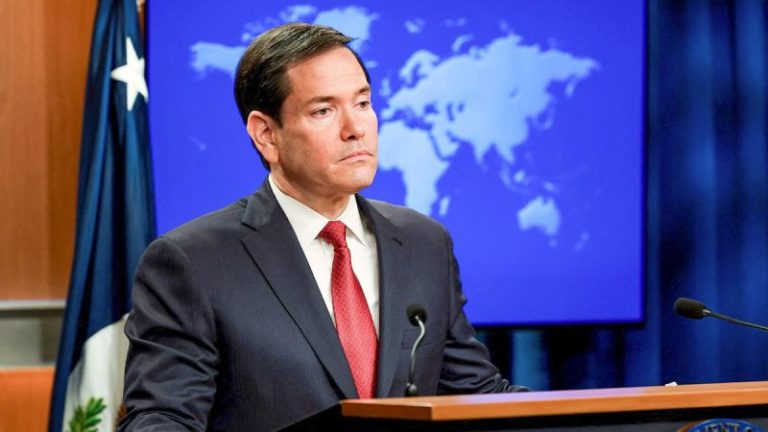
                      Israeli Prime Minister Benjamin Netanyahu and U.S. Secretary of State Marco Rubio discussed the possibility of U.S. intervention in Iran, according to a report.

                      The two leaders spoke by phone Saturday as Israel is on ‘high alert,’ preparing for the possibility of U.S. military intervention in Iran, according to Reuters, citing multiple Israeli sources.

                      The report comes as nationwide anti-regime demonstrations across Iran hit the two-week mark.

                      On Saturday, the Iranian regime triggered an internet ‘kill switch’ in an apparent effort to conceal alleged abuses by security forces and as protests against it surged nationwide, according to a cybersecurity expert. The blackout reduced internet access to a fraction of normal levels.

                      On Sunday, Iran’s parliament speaker warned that the U.S. military and Israel would be ‘legitimate targets’ if America strikes the Islamic Republic.

                      Parliament Speaker Mohammad Bagher Qalibaf issued the threat as lawmakers rushed the dais in the Iranian parliament, shouting, ‘Death to America!’ according to The Associated Press.

                      President Donald Trump offered support for the protesters on Saturday, writing on Truth Social that ‘Iran is looking at FREEDOM, perhaps like never before. The USA stands ready to help!!!’

                      At a news conference Friday, Trump said Iran was facing mounting pressure as unrest spreads across the country.

                      ‘Iran’s in big trouble,’ he said. ‘It looks to me that the people are taking over certain cities that nobody thought were really possible just a few weeks ago. We’re watching the situation very carefully.’

                      The president said the U.S. would respond forcefully if the regime resorts to mass violence. 

                      ‘We’ll be hitting them very hard where it hurts. And that doesn’t mean boots on the ground, but it means hitting them very, very hard where it hurts,’ he said.

                      Fox News Digital reached out to the State Department and White House for comment.

                      Fox News Digital’s Emma Bussey, Brie Stimson and The Associated Press contributed to this report.

                      This post appeared first on FOX NEWS

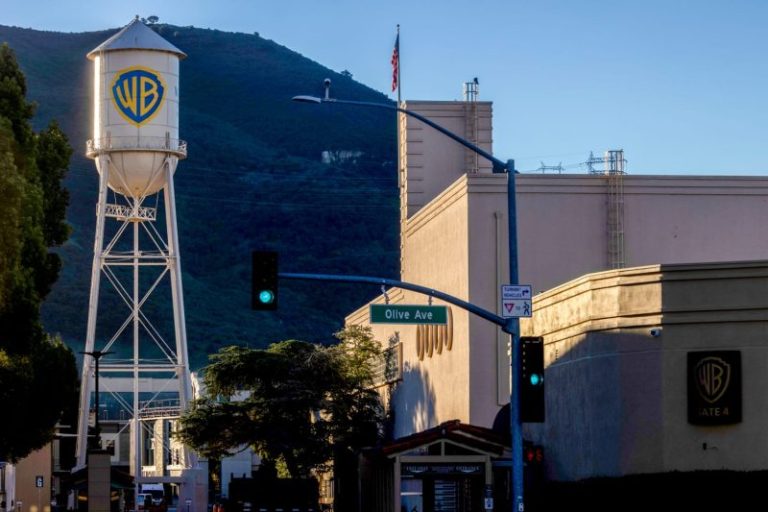
                      Warner Bros. Discovery on Wednesday rejected Paramount Skydance’s amended takeover offer, the latest in a series of rejections in David Ellison’s pursuit of the streaming and cable giant.

                      The media company said it remains committed to the $82.7 billion deal it reached in December to sell its streaming service, studio and HBO cable channel to Netflix.

                      ‘The Board unanimously determined that the Paramount’s latest offer remains inferior to our merger agreement with Netflix across multiple key areas,’ Warner Bros. Discovery Chairman Samuel Di Piazza said in a statement.

                      ‘Paramount’s offer continues to provide insufficient value,’ he continued.

                      In a letter to shareholders, Di Piazza wrote that Paramount Skydance’s offer carries ‘significant costs, risks and uncertainties as compared to the Netflix merger.’ The way the Paramount deal is structured creates a ‘lack of certainty’ about its finalization, he added.

                      Di Piazza adds in the letter that if the company were to agree to the Paramount merger and it failed to close, it would result in a ‘potentially considerable value destruction.’

                      ‘What matters most right now is our focus as we start the year,’ Warner Bros. Discovery CEO David Zaslav said in a memo to employees seen by NBC News. ‘Our operating plans remain unchanged, and our priorities for 2026 are clear and intentional.’

                      Zaslav wrote that the ‘review was conducted with discipline and rigor, and was supported by independent financial and legal advisors.’

                      On Dec. 22, Paramount Skydance increased its offer for Warner Bros. Discovery with a personal guarantee from billionaire Larry Ellison, who was backing the financing for the deal. His son, David Ellison, is the CEO of Paramount Skydance.

                      However, that was not enough for Warner Bros. Discovery. That beefed-up offer followed Warner Bros. Discovery’s Dec. 17 public rejection of Paramount. It also preceded multiple private rejections before Paramount Skydance went public.

                      In a statement Thursday, Paramount said it remained committed to the offer that WBD has rejected twice. “WBD continues to raise issues in Paramount’s offer that we have already addressed, including flexibility in interim operations,” Paramount said.

                      At stake is the future of one of the most storied media empires in the United States.

                      The bidding by Paramount also comes amid a monumental shift in the media and streaming landscape at large. On Monday, Versant Media, the cable network spinoff from Comcast, began trading as an independent company. Shares have plunged more than 20% over the course of those two days. (Comcast is the parent company of NBCUniversal and NBC News.)

                      On CNBC, Di Piazza said it would be a mistake to compare Warner Bros. Discovery‘s cable networks to Versant. ‘Discovery Global is different, it has a lot more scale,’ he said.

                      Streaming companies such as Apple, Netflix and Amazon are also challenging traditional broadcasters such as Paramount-owned CBS for sports rights.

                      Warner Bros. Discovery controls properties ranging from CNN Worldwide and the Discovery Channel to HBO, as well as the Warner Bros. film studio and archive.

                      Despite the back and forth between Warner Bros. Discovery and Paramount, Netflix has so far proceeded with the deal it inked Dec. 5, under which the world’s largest streaming company would acquire a stake in WBD.

                      Warner’s cable networks would be spun out into a separate company as part of that deal. However, Paramount Skydance wants to buy everything Warner Bros. Discovery owns.

                      Paramount’s controlling shareholders, the Ellisons, have suggested they could obtain regulatory clearance more quickly and easily than Netflix.

                      In mid-2025, the Ellisons acquired Paramount with approval from the Trump administration. But that approval only came after CBS News agreed to pay $16 million to President Donald Trump’s future presidential library over an interview that “60 Minutes” had conducted with then-presidential candidate, Vice President Kamala Harris.

                      Netflix, for its part, has met with Trump at the White House over the deal. But Trump has said either bidder poses potential problems, in his view.

                      Netflix said in a statement that it ‘welcomed the Warner Bros. Discovery board of directors’ continued commitment to the merger agreement’ the two companies reached last year. ‘Netflix and Warner Bros. will bring together highly complementary strengths and a shared passion for storytelling,’ Netflix’s co-CEOs Ted Sarandos and Greg Peters said.

                      Di Piazza said on CNBC that the difference between Paramount’s offer and that of Netflix is that Warner Bros. and Netflix already ‘have a signed merger agreement’ that has ‘a clear path to closing.’ Di Piazza also said the Netflix deal offers ‘protections for our shareholders, if something stops the close, whatever that might be.’

                      Trump has said he will be personally involved in reviewing whichever merger proceeds.

                      Paramount did not immediately respond to a request for comment.

                      This post appeared first on NBC NEWS

                      The gold price started off the new year on a strong note, approaching the US$4,500 per ounce level midway through the week and breaking through it on Friday (January 9).

                      As is often the case, silver put on a bumpier performance, trading within about a US$10 range. It recorded lows under US$73 per ounce and highs above US$82.

                      Beyond day-to-day price moves, there’s a lot of focus right now on how gold and silver will perform in 2026, and I want to spend some time looking at what experts see coming.

                      When it comes to gold I’m now seeing US$5,000 mentioned frequently, with multiple market watchers calling for it to reach that level as soon as the first quarter.

                      The consensus is that all of gold’s drivers either remain in place or are intensifying, including strong central bank buying, geopolitical tensions and easy money policies.

                      Here’s Alain Corbani of Montbleu Finance explaining why US$5,000 gold makes sense:

                      ‘Between the end of the quantitative tightening and the end of the quantitative easing, usually gold doubles or triples, which means that in a perfect world, gold could go … from US$4,000 to US$6,000 — this is basically the bull figure. So that’s why, when we say US$5,000, that’s only 10 percent more than what we are trading at today.’

                      Silver is trickier to predict. The white metal is known for being volatile, and its strong end-of-2025 performance means that some experts’ 2026 price calls were reached before last year even ended.

                      So where does silver stand as the year begins?

                      I heard this week from David Morgan of the Morgan Report, who didn’t give a specific forecast, but said he believes silver is currently in ‘price discovery’ mode:

                      ‘I’ve stated that we’re still in the price discovery mode — I truly believe that. What the true price of silver is in US dollars, Canadian dollars, I do not know. I think it’s north of $100 in US dollar terms, but it could be much higher than that.

                      I also spoke about silver with Doug Casey of InternationalMan.com. He said US$100 or even US$200 silver is possible, but for him the metal itself isn’t a speculative tool:

                      ‘Is silver at a new high where it’s going to stay there? Yeah, very possibly — not a prediction. But I’m not selling my silver. I mean, why should I sell it? I’m holding it as an asset, not as a speculative device. So is it going to US$100 or US$200? It’s possible. I don’t really care, because … I don’t use either my silver or my gold as speculative vehicles. That’s not what they’re about to me.’

                      Andy Schectman of Miles Franklin made a similar statement, saying that while he’s certainly bullish on silver, 2025 showed how unpredictable it can be:

                      ‘Rather than pick a price, I say we live in a world of probabilities. The probability that we see silver well north of US$100 to me is rather strong. Could it be as high as US$200 or higher? Sure. But to say that would be a guess, and an optimistic guess.

                      ‘But look, if I would have told you last year that we would see silver at US$80, you’d say, ‘You know, well, that’s a pretty big statement, Andy.’ Yeah, sure it is. A 150 percent gain in a year is pretty big. So rather than continue with that, I would just simply say: higher than most people would actually probably think possible.’

                      Bullet briefing — Rio Tinto, Glencore reopen M&A talks

                      Commodities giants Rio Tinto (ASX:RIO,NYSE:RIO,LSE:RIO) and Glencore (LSE:GLEN,OTCPL:GLCNF) say they have restarted talks about potentially combining forces.

                      The two major miners spoke previously back in 2024, but failed to reach an agreement. This time around, they say their preliminary discussions are centered on merging some or all of their businesses, and could include the acquisition of Glencore by Rio Tinto.

                      The news was first reported by the Financial Times, with both companies confirming the story in press releases shortly thereafter. According to the news outlet, the combination would create a massive mining company with an enterprise value of over US$260 billion.

                      Both companies have said there’s no guarantee that any transaction will go through. However, it’s worth noting that Rio Tinto has changed leadership since the 2024 talks ended, with Simon Trott now at the helm. For its part, Glencore has reorganized its coal assets.

                      The Thursday (January 8) Financial Times piece also notes that Gary Nagle, chief executive at Glencore, spoke last month about the importance of size in the mining industry, saying that bigger companies are better able to create synergies, as well as attract talent and capital.

                      Regulations require Rio Tinto to announce its intentions either way by February 5 of this year.

                      Securities Disclosure: I, Charlotte McLeod, hold no direct investment interest in any company mentioned in this article.

                      This post appeared first on investingnews.com

                      A federal judge Friday temporarily blocked the Trump administration from stopping subsidies on childcare programs in five states, including Minnesota, amid allegations of fraud.

                      U.S. District Judge Arun Subramanian, a Biden appointee, didn’t rule on the legality of the funding freeze, but said the states had met the legal threshold to maintain the ‘status quo’ on funding for at least two weeks while arguments continue.

                      On Tuesday, the U.S. Department of Health and Human Services (HHS) said it would withhold funds for programs in five Democratic states over fraud concerns.

                      The programs include the Child Care and Development Fund, the Temporary Assistance for Needy Families program, and the Social Services Block Grant, all of which help needy families.

                      ‘Families who rely on childcare and family assistance programs deserve confidence that these resources are used lawfully and for their intended purpose,’ HHS Deputy Secretary Jim O’Neill said in a statement on Tuesday.

                      The states, which include California, Colorado, Illinois, Minnesota and New York, argued in court filings that the federal government didn’t have the legal right to end the funds and that the new policy is creating ‘operational chaos’ in the states.

                      In total, the states said they receive more than $10 billion in federal funding for the programs. 

                      HHS said it had ‘reason to believe’ that the programs were offering funds to people in the country illegally.

                      New York Attorney General Letitia James, who is leading the lawsuit, called the ruling a ‘critical victory for families whose lives have been upended by this administration’s cruelty.’

                      Fox News Digital has reached out to HHS for comment.

                      This post appeared first on FOX NEWS

                      Blackrock Silver Corp. (TSXV: BRC,OTC:BKRRF) (OTCQX: BKRRF) (FSE: AHZ0) (‘Blackrock’ or the ‘Company’) is pleased to announce the completion of its non-brokered private placement (the ‘Offering’) previously announced on December 24, 2025. 2176423 Ontario Ltd., a company beneficially owned by Eric Sprott, purchased an aggregate of C$6,999,960 of the Offering. The Offering consisted of a total of 13,636,300 units of the Company (the ‘Units’) at a price of C$1.10 per Unit for gross proceeds of C$14,999,930. Each Unit consisted of one common share of the Company (each, a ‘Common Share’) and one-half of one Common Share purchase warrant (each whole warrant, a ‘Warrant’). Each Warrant entitles the holder thereof to acquire one Common Share at an exercise price of C$1.50 per Common Share until January 8, 2028.

                      Andrew Pollard, Blackrock’s President and Chief Executive Officer, commented: ‘Supported by Eric Sprott and a new cornerstone investor, this $15 million financing meaningfully strengthens our balance sheet as we advance Tonopah West toward development. As an emerging American silver developer, we are accelerating permitting and de-risking initiatives in 2026 to support the advancement of a secure, high-quality domestic source of silver for the U.S. market.’

                      The net proceeds of the Offering are intended to be used by the Company to fund exploration, permitting and pre-development activities on the Company’s Tonopah West project and for general working capital.

                      In connection with the closing of the Offering, the Company paid Research Capital Corporation (the ‘Finder‘) finder’s fees in cash totalling C$689,997 and issued to the Finder a total of 627,270 non-transferable finder’s warrants (‘Finder’s Warrants‘) in connection with the Units placed by the Finder. Each Finder’s Warrant entitles the holder thereof to acquire one Common Share at an exercise price of C$1.50 until January 8, 2028.

                      The participation of Eric Sprott in the Offering constituted a ‘related party transaction’, within the meaning of TSX Venture Exchange Policy 5.9 and Multilateral Instrument 61-101 (‘MI 61-101‘). The Company has relied on the exemptions from the formal valuation and minority shareholder approval requirements of MI 61-101 contained in sections 5.5(a) and 5.7(1)(a) of MI 61-101 in respect of the related party participation in the Offering as neither the fair market value (as determined under MI 61-101) of the subject matter of, nor the fair market value of the consideration for, the transaction, insofar as it involved the interested parties, exceeded 25% of the Company’s market capitalization (as determined under MI 61-101).

                      The Common Shares, Warrants and Finder’s Warrants issued in connection with the Private Placement and the Common Shares issuable upon exercise of the Warrants and Finder’s Warrants are subject to a hold period expiring on May 9, 2026.

                      The securities offered have not been, and will not be, registered under the U.S. Securities Act of 1933, as amended (the ‘U.S. Securities Act‘) or any U.S. state securities laws, and may not be offered or sold in the United States or to, or for the account or benefit of, United States persons absent registration or any applicable exemption from the registration requirements of the U.S. Securities Act and applicable U.S. state securities laws. This news release shall not constitute an offer to sell or the solicitation of an offer to buy securities in the United States, nor shall there be any sale of these securities in any jurisdiction in which such offer, solicitation or sale would be unlawful.

                      About Blackrock Silver Corp.

                      Backed by gold and silver ounces in the ground, Blackrock is a junior precious metal focused exploration and development company driven to add shareholder value. Anchored by a seasoned Board of Directors, the Company is focused on its 100% controlled Nevada portfolio of properties consisting of low-sulphidation, epithermal gold and silver mineralization located along the established Northern Nevada Rift in north-central Nevada and the Walker Lane trend in western Nevada.

                      Additional information on Blackrock Silver Corp. can be found on its website at www.blackrocksilver.com and by reviewing its profile on SEDAR at www.sedarplus.ca.

                      Cautionary Note Regarding Forward-Looking Statements and Information

                      This news release contains ‘forward-looking statements’ and ‘forward-looking information’ (collectively, ‘forward-looking statements‘) within the meaning of Canadian and United States securities legislation, including the United States Private Securities Litigation Reform Act of 1995. All statements, other than statements of historical fact, are forward-looking statements. Forward-looking statements in this news release relate to, among other things: the net proceeds from the Offering and the intended use of proceeds therefrom; the advancement of the Tonopah West project towards development, including the acceleration of permitting and de-risking initiatives at the Tonopah West project; and the intention for the Tonopah West project to function as a future secure, high-quality domestic source of silver for the U.S. market.

                      These forward-looking statements reflect the Company’s current views with respect to future events and are necessarily based upon a number of assumptions that, while considered reasonable by the Company, are inherently subject to significant operational, business, economic and regulatory uncertainties and contingencies. These assumptions include, among other things: conditions in general economic and financial markets; accuracy of assay results; geological interpretations from drilling results, timing and amount of capital expenditures; performance of available laboratory and other related services; future operating costs; the historical basis for current estimates of potential quantities and grades of target zones; the availability of skilled labour and no labour related disruptions at any of the Company’s operations; no unplanned delays or interruptions in scheduled activities; all necessary permits, licenses and regulatory approvals for operations are received in a timely manner; the ability to secure and maintain title and ownership to properties and the surface rights necessary for operations; and the Company’s ability to comply with environmental, health and safety laws. The foregoing list of assumptions is not exhaustive.

                      The Company cautions the reader that forward-looking statements involve known and unknown risks, uncertainties and other factors that may cause actual results and developments to differ materially from those expressed or implied by such forward-looking statements contained in this news release and the Company has made assumptions and estimates based on or related to many of these factors. Such factors include, without limitation: the timing and content of work programs; results of exploration activities and development of mineral properties; the interpretation and uncertainties of drilling results and other geological data; receipt, maintenance and security of permits and mineral property titles; environmental and other regulatory risks; project costs overruns or unanticipated costs and expenses; availability of funds; failure to delineate potential quantities and grades of the target zones based on historical data; general market, political, economic and industry conditions; and those factors identified under the caption ‘Risks Factors’ in the Company’s most recent Annual Information Form.

                      Forward-looking statements are based on the expectations and opinions of the Company’s management on the date the statements are made. The assumptions used in the preparation of such statements, although considered reasonable at the time of preparation, may prove to be imprecise and, as such, readers are cautioned not to place undue reliance on these forward-looking statements, which speak only as of the date the statements were made. The Company undertakes no obligation to update or revise any forward-looking statements included in this news release if these beliefs, estimates and opinions or other circumstances should change, except as otherwise required by applicable law.

                      Neither the TSX Venture Exchange nor its Regulation Services Provider (as that term is defined in the policies of the TSX Venture Exchange) accepts responsibility for the adequacy or accuracy of this release.

                      For Further Information, Contact:

                      Andrew Pollard
                      President and Chief Executive Officer
                      (604) 817-6044
                      info@blackrocksilver.com

                      NOT FOR DISTRIBUTION TO UNITED STATES NEWSWIRE SERVICES OR FOR DISSEMINATION IN THE UNITED STATES

                      To view the source version of this press release, please visit https://www.newsfilecorp.com/release/279847

                      News Provided by Newsfile via QuoteMedia

                      This post appeared first on investingnews.com

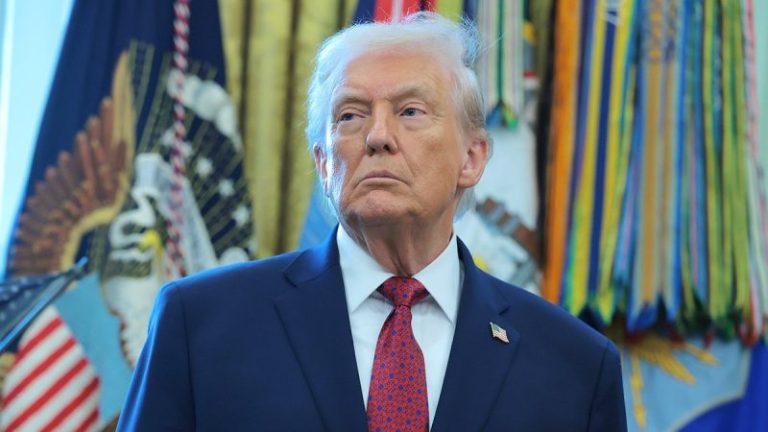
                      President Donald Trump announced in an early Friday morning Truth Social post that he has ‘cancelled the previously expected second Wave of Attacks’ against Venezuela in light of the ‘cooperation’ between the foreign nation and the U.S.

                      ‘Venezuela is releasing large numbers of political prisoners as a sign of ‘Seeking Peace.’ This is a very important and smart gesture. The U.S.A. and Venezuela are working well together, especially as it pertains to rebuilding, in a much bigger, better, and more modern form, their oil and gas infrastructure. Because of this cooperation, I have cancelled the previously expected second Wave of Attacks, which looks like it will not be needed, however, all ships will stay in place for safety and security purposes,’ Trump said in the post.

                      He noted that he will meet with ‘BIG OIL’ figures at the White House on Friday.

                      ‘At least 100 Billion Dollars will be invested by BIG OIL, all of whom I will be meeting with today at The White House. Thank you for your attention to this matter!’ he declared in the post.

                      The president’s comments come after he unilaterally ordered an attack against Venezuela last week in which U.S. forces successfully captured Nicolás Maduro.

                      Trump noted in a Wednesay Truth Social post, ‘I have just been informed that Venezuela is going to be purchasing ONLY American Made Products, with the money they receive from our new Oil Deal. These purchases will include, among other things, American Agricultural Products, and American Made Medicines, Medical Devices, and Equipment to improve Venezuela’s Electric Grid and Energy Facilities.’

                      ‘In other words, Venezuela is committing to doing business with the United States of America as their principal partner – A wise choice, and a very good thing for the people of Venezuela, and the United States. Thank you for your attention to this matter!’ he added.

                      This post appeared first on FOX NEWS

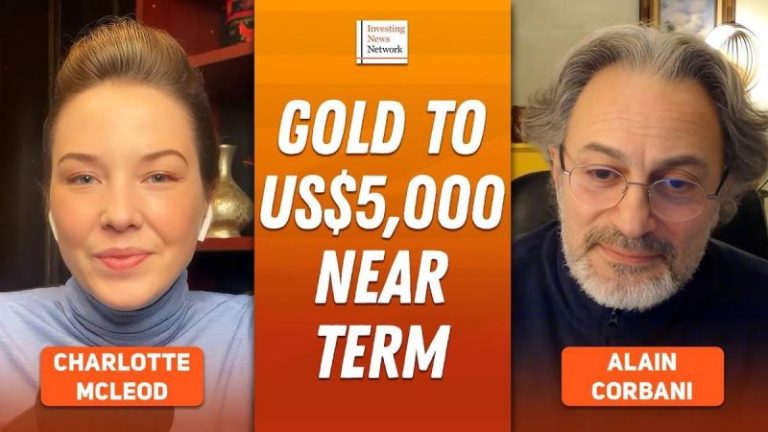
                      Alain Corbani, head of mining at Montbleu Finance and manager of the Global Gold and Precious Fund, sees the gold price reaching US$5,000 per ounce in the near term.

                      He sees real interest rates and the US dollar as the key factors to watch, but noted that other elements are also adding tailwinds.

                      Securities Disclosure: I, Charlotte McLeod, hold no direct investment interest in any company mentioned in this article.

                      This post appeared first on investingnews.com

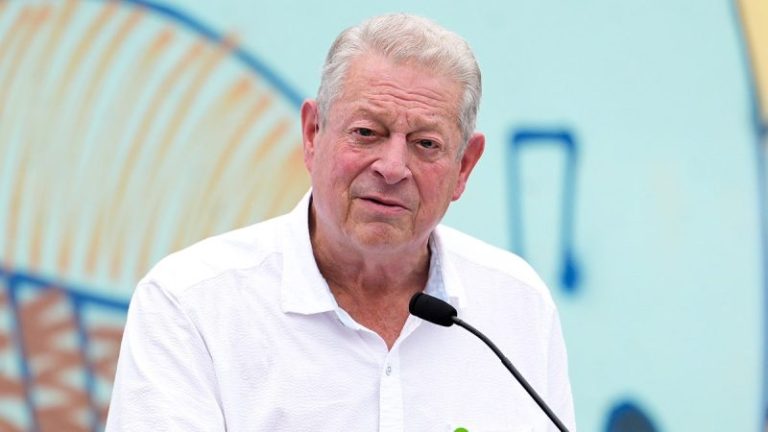
                      Former Vice President Al Gore on Wednesday condemned President Donald Trump’s move to withdraw the U.S. from United Nations-linked climate initiatives.

                      Gore claimed in a post on X that ‘the most significant challenge of our lifetimes’ is ‘the climate crisis.’ 

                      ‘The ongoing work of the IPCC, UNFCCC, and other global institutions remains essential to safeguarding humanity’s future,’ he asserted, referring to the Intergovernmental Panel on Climate Change (IPCC), the United Nations Framework Convention on Climate Change (UNFCC).

                      ‘By withdrawing from the IPCC, UNFCCC, and the other vital international partnerships, the Trump Administration is undoing decades of hard-won diplomacy, attempting to undermine climate science, and sowing distrust around the world,’ he wrote.

                      Trump issued a memorandum ordering U.S. withdrawal from the two initiatives that Gore mentioned as well as scads of other entities.

                      The president’s memorandum lists the Intergovernmental Panel on Climate Change under a grouping of ‘Non-United Nations Organizations.’ But the website ipcc.ch states, ‘The Intergovernmental Panel on Climate Change (IPCC) is the United Nations body for assessing the science related to climate change.’

                      In the memorandum, the president declared that he has ‘determined that it is contrary to the interests of the United States to remain a member of, participate in, or otherwise provide support to the organizations listed in section 2 of this memorandum.’

                      Secretary of State Marco Rubio said in a statement, ‘As this list begins to demonstrate, what started as a pragmatic framework of international organizations for peace and cooperation has morphed into a sprawling architecture of global governance, often dominated by progressive ideology and detached from national interests.’

                      Gore, who served as vice president alongside Democratic President Bill Clinton, lost the 2000 presidential contest to Republican George W. Bush.

                      This post appeared first on FOX NEWS