
Archive

January 30, 2026

Browsing

Co-Listing Expands U.S. Investor Access and Visibility in World’s Largest Aviation and Capital Markets

Syntholene Energy CORP (TSXV: ESAF,OTC:SYNTF) (OTCQB: SYNTF) (FSE: 3DD0) (‘Syntholene’ or the ‘Company’) announces that its common shares have been approved for quotation and have commenced trading on the OTCQB Venture Market in the United States under the trading symbol SYNTF. The OTCQB co-listing is intended to broaden the Company’s U.S. investor audience and increase visibility within the world’s largest aviation fuel, capital markets, and energy infrastructure ecosystem.

The OTCQB Venture Market, operated by OTC Markets Group Inc., is a recognized public market in the United States designed for early-stage and developing companies that meet verified reporting and compliance standards. The Company’s primary listing remains on the TSX Venture Exchange under the symbol ESAF.

‘Establishing a U.S. trading presence on the OTCQB is a strategically important step for Syntholene,’ stated Syntholene CEO Dan Sutton. ‘The United States represents the largest aviation market globally and a core center of capital formation for energy and infrastructure investment. Providing U.S. investors with direct access to our shares aligns our capital markets strategy with the jurisdictions driving both demand growth and project financing for synthetic fuels. We view this co-listing as a natural extension of our TSX Venture Exchange and Frankfurt listings, as well as an important foundation for long-term engagement with U.S. institutional, strategic, and retail investors.’

Syntholene believes the OTCQB quotation enhances the Company’s visibility and accessibility in the United States at a time when policy support for sustainable aviation fuel and synthetic fuels is accelerating. U.S. federal and state initiatives, including tax credits, grant programs, and offtake support mechanisms under the Inflation Reduction Act and related Department of Energy and Department of Transportation programs, are driving increased investment into next-generation fuel production infrastructure.

About Syntholene

Syntholene is actively commercializing its novel Hybrid Thermal Production System for low-cost clean fuel synthesis. The target output is ultrapure synthetic jet fuel, manufactured at 70% lower cost than the nearest competing technology today. The company’s mission is to deliver the world’s first truly high-performance, low-cost, and carbon-neutral synthetic fuel at an industrial scale, unlocking the potential to produce clean synthetic fuel at lower cost than fossil fuels, for the first time.

Syntholene’s power-to-liquid strategy harnesses thermal energy to power proprietary integrations of hydrogen production and fuel synthesis. Syntholene has secured 20MW of dedicated energy to support the Company’s upcoming demonstration facility and commercial scale-up.

Founded by experienced operators across advanced energy infrastructure, nuclear technology, low-emissions steel refining, process engineering, and capital markets, Syntholene aims to be the first team to deliver a scalable modular production platform for cost-competitive synthetic fuel, thus accelerating the commercialization of carbon-neutral eFuels across global markets.

For further information, please contact:
Dan Sutton, CEO
comms@syntholene.com 
www.syntholene.com
+1 608-305-4835

Investor Relations
KIN Communications Inc.
604-684-6730
ESAF@kincommunications.com

Neither TSX Venture Exchange nor its Regulation Services Provider (as that term is defined in policies of the TSX Venture Exchange) accepts responsibility for the adequacy or accuracy of this release.

Forward-Looking Statements
This press release contains forward-looking statements within the meaning of applicable securities laws. The use of any of the words ‘expect’, ‘anticipate’, ‘aims’, ‘continue’, ‘estimate’, ‘objective’, ‘may’, ‘will’, ‘project’, ‘should’, ‘believe’, ‘plans’, ‘intends’ and similar expressions are intended to identify forward-looking information or statements. All statements, other than statements of historical fact, including but not limited to statements regarding the development and intended benefits of the Company’s technology, commercial scalability, technical and economic viability, anticipated geothermal power availability, anticipated benefit of eFuel, and future commercial opportunities, are forward-looking statements.

The forward-looking statements and information are based on certain key expectations and assumptions made by the Company, including without limitation the assumption that the Company will be able to execute its business plan, that the eFuel will have its expected benefits, that there will be market adoption, and that the Company will be able to access financing as needed to fund its business plan. Although the Company believes that the expectations and assumptions on which such forward-looking statements and information are based are reasonable, undue reliance should not be placed on the forward-looking statements and information because the Company can give no assurance that they will prove to be correct. Since forward-looking statements and information address future events and conditions, by their very nature, they involve inherent risks and uncertainties.

Actual results could differ materially from those currently anticipated due to a number of factors and risks, including, without limitation, Syntholene’s ability to meet production targets, realize projected economic benefits, overcome technical challenges, secure financing, maintain regulatory compliance, manage geopolitical risks, and successfully negotiate definitive terms. Syntholene does not undertake any obligation to update or revise these forward-looking statements, except as required by applicable securities laws.

Readers are advised to exercise caution and not to place undue reliance on these forward-looking statements.

To view the source version of this press release, please visit https://www.newsfilecorp.com/release/282096

News Provided by TMX Newsfile via QuoteMedia

This post appeared first on investingnews.com

Last week, Secretary of War Pete Hegseth released the 2026 National Defense Strategy (NDS), a Pentagon blueprint that elevates Israel as a ‘model ally’ and translates President Trump’s national security doctrine into concrete military policy.

‘Israel has long demonstrated that it is both willing and able to defend itself with critical but limited support from the United States. Israel is a model ally, and we have an opportunity now to further empower it to defend itself and promote our shared interests, building on President Trump’s historic efforts to secure peace in the Middle East,’ the NDS states.

The document is now influencing parallel debates over the future of U.S. security assistance to Israel and whether the next Memorandum of Understanding, or MOU, should continue delivering traditional U.S. military aid to Israel, amid dissenting voices that portray the alliance as a burden rather than a strategic asset.

According to the strategy, Israel proved its ability and willingness to defend itself following the Oct. 7 attacks, demonstrating that it is not a passive partner but an operational force that supports U.S. interests in the region. The strategy emphasizes empowering capable allies rather than constraining them, building on President Trump’s earlier push for regional integration through the Abraham Accords.

Jonathan Ruhe, director of foreign policy at the Jewish Institute for National Security of America, said the strategy reflects a broader American shift toward partnerships that strengthen both U.S. security and domestic industry.

‘U.S. defense assistance to Israel in the MOU is spent in dollars here in America to support our industry,’ Ruhe told Fox News Digital. ‘And like in the national security strategy, it then enables Israel to go and do more to protect U.S. interests.’

He said a future agreement would likely extend beyond funding alone. ‘A new MOU would also likely be broader and include things that are more 50-50 partnership, like joint research and development, co-production, intelligence sharing and things like that to reflect the changing partnership going forward,’ Ruhe said.

The strategy also highlights the importance of revitalizing the American defense industrial base, noting that allies purchasing U.S. systems help strengthen domestic production while enabling partners to shoulder greater responsibility for regional security.

Avner Golov, vice president of the Israeli think tank Mind Israel, said the document makes clear that Israel is viewed not merely as a recipient of aid, ‘Israel is in the fight. We are protecting ourselves by ourselves. We just need the tools to do that. And by doing so, we enhance not only America’s standing in the Middle East, but also worldwide and contribute to the American economy.’

That framing comes as Israel and the United States prepare for negotiations over the next 10-year MOU, which governs U.S. military assistance to Israel. The current agreement, signed in 2016, provides $3.3 billion annually in foreign military financing, along with $500 million a year for missile defense cooperation.

The debate follows tensions during the Biden administration, when the White House paused the delivery of certain U.S. weapons to Israel in May 2024, including a shipment of 2,000-pound bombs. At the time, Netanyahu warned that Israel ‘will stand alone’ if Washington halted weapons deliveries, reflecting concern that limits or delays in U.S. military support could undermine Israel’s readiness and deterrence. 

Experts have noted that U.S. leaders have not always approved every Israeli weapons request and that roughly 70% of Israel’s military imports come from the United States, underscoring the strategic calculus behind Prime Minister Netanyahu’s recent push for greater independent production.

Golov criticized that approach, arguing it risks prioritizing optics over readiness. ‘I believe that is a short-term vision,’ Golov said. ‘In the long term, Israel must first be prepared for the next round of escalation. If we are not ready, we will face another war. If we are prepared, perhaps we can deter it.’

‘Israel must remain the strongest army in the region, and that is also a fundamental American interest,’ Golov said.

Ruhe said the debate reflects lessons learned from nearly two years of war. ‘You’ve got this sort of topsy-turvy world now where the Israelis are saying we don’t want to take any more U.S. money, and the Americans are saying, no, you’re going to take our money,’ he said.

According to Ruhe, the conflict exposed vulnerabilities created by heavy dependence on U.S. supply chains and political delays.

‘The war of the last two years showed that Israel can’t afford to be as dependent on the U.S. or continue to maintain the same defense partnership that it has because that creates a dependence,’ he said. ‘Israel becomes vulnerable to U.S. shortages in weapons output or politically motivated embargoes and holdups that can impact Israel’s readiness.’

At the same time, Ruhe noted that Israel remains reliant on the United States for major platforms.

‘Even Israel will say we’re utterly dependent on the U.S. for those big-ticket platforms,’ he said, pointing to aircraft such as the F-15 and F-35 that Israel has already committed to purchasing.

For that reason, Ruhe argued that maintaining stable funding under the next MOU may be the most practical path forward.

‘It’s actually much easier for Congress just to go ahead and approve that money,’ he said, explaining that predictable funding reduces annual political battles on Capitol Hill.

Golov said Israel’s long-term objective should not be reducing ties with Washington, but deepening them. ‘I don’t want to reduce dependency,’ he said. ‘I want to increase contribution to America.’

He described the emerging vision as a fundamental shift in how the alliance is structured. ‘We are moving from a 20th-century aid model to a 21st-century strategic merger,’ Golov said. ‘Israel is the only partner that delivers a 400% return on investment without asking for a single American soldier.’

Golov said the proposed framework is built around three pillars: an industrial defense ecosystem, a joint technology ecosystem and a regional ecosystem connecting Israeli innovation, Gulf infrastructure and American power.

He emphasized that maintaining U.S. security assistance during the transition period is critical.

‘We need a final ten-year ‘bridge’ with the current security aid MOU,’ Golov said. ‘A sudden cut would be a dangerous signal of American retreat to our enemies and may hinder IDF preparedness.’

‘I don’t know who the next president of the United States will be,’ he added. ‘This is where our enemies can read it in a very dangerous way.’

This post appeared first on FOX NEWS

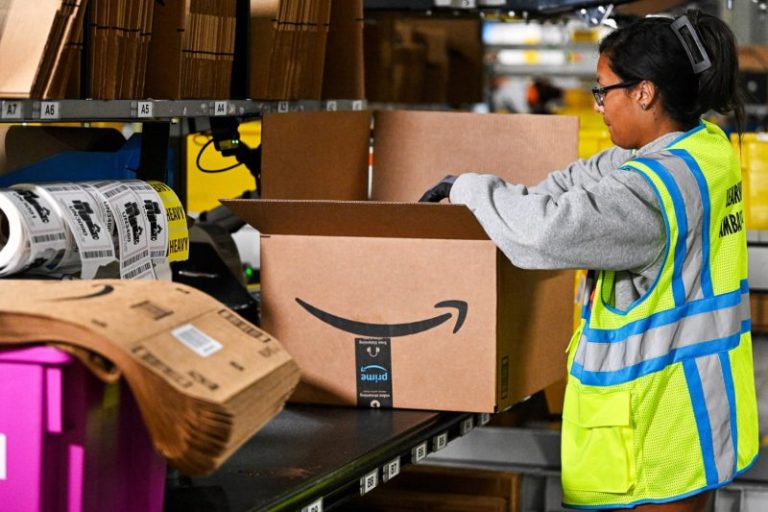
Amazon said Wednesday it was slashing another 16,000 jobs across the company in an ongoing bid to restructure the sprawling trillion-dollar firm.

‘The reductions we are making today will impact approximately 16,000 roles across Amazon, and we’re again working hard to support everyone whose role is impacted,’ Beth Galetti, Amazon’s senior vice president of people experience and technology, said in a memo to employees.

‘That starts with offering most US-based employees 90 days to look for a new role internally,’ she said. Amazon will ‘continue hiring and investing in strategic areas and functions that are critical to our future.’

Galetti said the cuts would ‘strengthen our organization by reducing layers, increasing ownership, and removing bureaucracy.’

In October, Amazon cut 14,000 jobs primarily at the corporate level. At the time, Galetti cited artificial intelligence as being the “most transformative technology we’ve seen since the internet.”

Amazon has 1.55 million employees worldwide, the company said in a filing last year.

It said Tuesday that it would close some of its Amazon Go and Amazon Fresh physical stores, planning to convert some into Whole Foods Market stores.

While AI was not explicitly cited in Wednesday’s note to Amazon workers, the cuts come as workers nationwide brace for the impact of artificial intelligence in a sluggish labor market.

Companies have started citing ‘efficiency’ as they pursue the implementation of AI.

On Monday, Goldman Sachs CEO David Solomon said that his firm’s headcount would be ‘more constrained in 2026’ as the company sees ‘opportunities for efficiency and we try to deploy those.’

On Tuesday, Pinterest said it would cut 15% of its workforce as it pivoted ‘resources to AI-focused roles and teams that drive AI adoption and execution.’

Last year, Microsoft said it was eliminating 9,000 jobs to improve efficiency. Target also cut 1,800 corporate jobs to reduce ‘complexity.’ Instagram and Facebook owner Meta Platforms also reduced its workforce by around 600 jobs as it shifted toward artificial intelligence.

At the same time, hiring nationwide is slowing and inflation remains elevated.

After three months of contraction last year, the U.S. economy added only 56,000 jobs in November and just 50,000 in December. Meanwhile, inflation remains at 2.7%, well above the Federal Reserve’s target of 2%.

This post appeared first on NBC NEWS