
Archive

January 28, 2026

Browsing

Hecla Mining Company (NYSE:HL) has agreed to sell its Casa Berardi gold operation in Québec to Orezone Gold (TSX:ORE,OTCQX:ORZCF) for total consideration of up to US$593 million.

The deal, announced on Monday (January 26), involves the sale of Hecla Québec, a wholly owned subsidiary of Hecla that holds the Casa Berardi mine and related exploration properties.

Under the terms of the agreement, Hecla expects to receive up to US$593 million through a mix of upfront cash, equity, deferred payments and contingent consideration.

Hecla will receive US$160 million in cash at closing, along with about 65.7 million Orezone common shares, representing about 9.9 percent of Orezone’s pro forma shares outstanding, currently valued at roughly US$112 million.

In addition, Hecla is set to receive US$80 million in deferred cash payments, split into US$30 million payable 18 months after closing and US$50 million payable after 30 months.

The remaining consideration is contingent and could total up to US$241 million.

It includes up to US$211 million in production-based royalty payments tied to future open-pit output, calculated at US$80 per ounce for the first 500,000 ounces of gold and US$180 per ounce thereafter.

Hecla may also receive a US$20 million payment upon the granting of certain permits, as well as up to US$10 million linked to a gold price exceeding US$4,200 per ounce.

The transaction is supported by Franco-Nevada (TSX:FNV,NYSE:FNV), which Orezone said is a sponsor in the acquisition.

“The sale of Hecla Quebec represents an important milestone in Hecla’s transformation as we concentrate capital allocation and operational focus on our world-class silver portfolio,” said Rob Krcmarov, president and CEO of Hecla.

For Orezone, the acquisition marks a major expansion into Canada and adds a producing gold mine to its portfolio. The company said Casa Berardi will complement its Bomboré project in Burkina Faso and will provide diversification in a jurisdiction known for stable mining regulations and established infrastructure.

“This Transaction marks a significant inflection point for Orezone as it adds a proven, cash-flow-generating asset to our portfolio, and provides asset diversification in a Tier 1 Jurisdiction,” said Patrick Downey, president and CEO of Orezone.

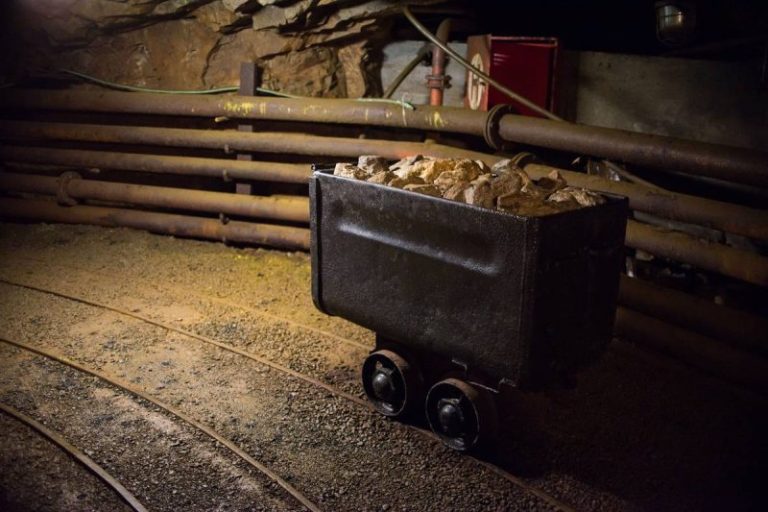
Casa Berardi is an underground and open-pit mine located in Québec’s Abitibi region that has been in operation since the late 1980s. It has produced over 3.2 million ounces of gold to date.

As of the end of 2024, its proven and probable reserves stood at 1.3 million ounces, with additional measured, indicated and inferred resources supporting future operations.

Casa Berardi’s gold production guidance for 2026 is between 83,000 and 91,000 ounces.

Securities Disclosure: I, Giann Liguid, hold no direct investment interest in any company mentioned in this article.
This post appeared first on investingnews.com

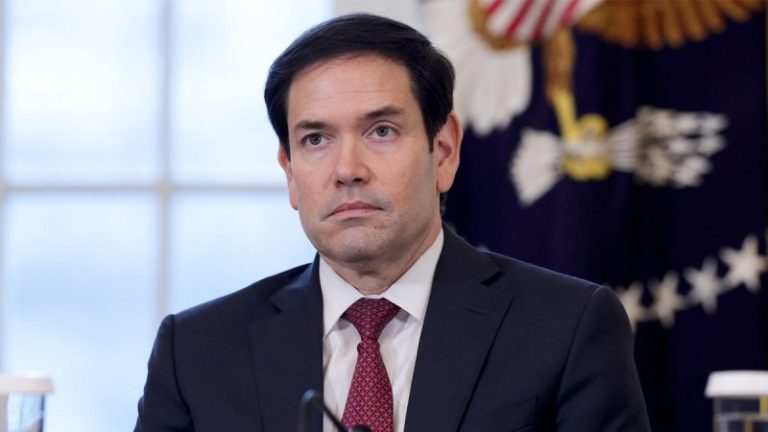
Secretary of State Marco Rubio will publicly testify on the Trump administration’s policy in Venezuela Wednesday morning after vowing to lawmakers that no more military action was expected in the region. 

Rubio’s return to the Hill, an increasingly frequent occurrence in recent months, comes after he, President Donald Trump, administration officials and Senate Republican leadership successfully killed a bipartisan push to rein in the president’s war authorities in Venezuela. 

His scheduled appearance before the Senate Foreign Relations Committee Wednesday at 10 a.m. comes just weeks after he helped to convince two lawmakers, Sens. Todd Young, R-Ind., and Josh Hawley, R-Mo., to flip their votes and back the administration. 

Both were concerned about boots on the ground in Venezuela and Congress’ constitutional authority to weigh in on the matter.

They were convinced by Rubio and the administration that no further military action would take place, and that if it were, President Donald Trump would come to Congress first. 

Young said at the time that the effort, spurred by Sen. Tim Kaine, D-Va., was ultimately just a messaging exercise that never would have survived in the House, nor evaded a veto from Trump. 

‘I had to accept that this was all a communications exercise,’ Young said. ‘I think we [used] this moment to shine a bright light on Congress’ shortcomings as it relates to war powers in recent history.’

Rubio also wrote to Senate Foreign Relations Chair James Risch, R-Idaho, to spell out that the administration would clue in Congress should any future military action take place in the region.

‘Should there be any new military operations that introduce U.S. Armed Forces into hostilities, they will be undertaken consistent with the Constitution of the United States, and we will transmit written notifications consistent with section 4(a) of the War Powers Resolution (Public Law 93-148),’ he said.

However, Rubio’s appearance before the panel comes on the heels of unrest stateside following another fatal shooting in Minnesota, where Alex Pretti was killed in the midst of a Department of Homeland Security-led immigration operation in Minneapolis.

While he won’t have to answer for that situation, it has drastically shifted the Senate’s attention over the last several days. 

It also follows Kaine’s vow to file several more war powers resolutions against Trump, specifically against action in Greenland, Iran and elsewhere. 

Kaine believed that he could take advantage of cracks that formed in Republicans’ unified front earlier this month, when five joined all Senate Democrats to advance his resolution to require any future military action in Venezuela would need Congress’ approval.

‘The way cracks grow is through pressure and the pressure campaign that I sort of decided to launch by use of these privileged motions,’ Kaine said after his initial push failed. 

‘I’m going to file every one I can to challenge emergencies, to challenge unlawful wars, to seek human rights reports, arms transfers if they’re wrong,’ he continued.

This post appeared first on FOX NEWS