
Archive

December 2025

Browsing

TSX-V: WLR

Walker Lane Resources Ltd. (TSXV: WLR,OTC:CMCXF) (Frankfurt: 6YL) ‘Walker Lane’) announces that it has engaged Stockhouse Publishing Limited, Marcus Brummell, and Baystreet.ca to conduct marketing and publishing services. The purpose of these marketing activities is to increase market awareness and visibility of Company activities, detail recent acquisitions, and generate a better understanding of the exploration potential of its gold and silver prospects in Nevada and Canada. 

The Company has entered into contracts dated August 15, 2025 and have been fully paid in cash. Both of these firms are arm’s length service providers and are in accordance with the policies of the TSX Venture Exchange (‘TSX-V’) and applicable securities laws.

Stockhouse Publishing Limited

Stockhouse Publishing Limited (‘Stockhouse’) will complete marketing and advertising services designed to connect Walker Lane with North America’s largest small cap investor community. Stockhouse’s investor community includes investors from Canada, United States, Australia, New Zealand, China, Germany and the United Kingdom. The campaign is expected to commenced in October, 2025 and will continue for up to a 12-month period at an aggregate cost of $75,000 CAD.

Marcus Brummell

The Company engaged Marcus Brummell of Langley B.C. (‘consultant’) in a contract dated August 15, 2025 to conduct a marketing awareness campaign of Company activities. Mr. Brummell has considerable experience in creating and publishing marketing materials for the mining sector and implements projects aimed to increase market awareness levels. The consultant was fully paid in cash for a total of $10,000 CDN for a minimum of 38 days of services but is also continuing to promote activities of the Company beyond the initial contractual obligation as a goodwill gesture to continue efforts to improve market visibility of the Company activities as some planned activities had been delayed for reasons beyond the control of the Company.

Baystreet.ca

Baystreet.ca (‘Baystreet’) is one of the leading financial content providers in Canada and has been actively assisting a broad range of clientele including junior mining companies for the past 27 years. Baystreet have established contacts with over 100 tier one financial publications with tens of thousands of downstream partners in Canada and the United States. The company established a contract to Baystreet to provide marketing services for a three-month period with the campaign commencing in October 2025 and continuing through to the end of December, 2025, at an aggregate total cost of $66,000 CAD plus applicable taxes. However, after the initial month, the parties reached a mutual agreement to discontinue the marketing program and a refund of $44,000 plus GST for two months of services not completed will be provided to the Company by Baystreet.ca

These consultants have no direct or indirect interest in the Company and do not intend to acquire an interest in the Company during the period of their contracts. The Consultants will be communicating directly with existing prospective investors. Any information distributions will be reviewed and approved by the Company prior to release. The services of these consultants are being provided in accordance with the policies and the approval of the TSX Venture Exchange (‘TSX-V’) and also align with the policies the BC Securities Commission.

If anyone would like further details on the marketing plans of the Company you are asked to contact Kevin Brewer at the contact information below.

About Walker Lane Resources Ltd.

Walker Lane Resources Ltd. is a growth-stage exploration company focused on the exploration of high-grade gold, silver and polymetallic deposits in the Walker Lane Gold Trend District in Nevada and the Rancheria Silver District in Yukon/B.C. and other property assets in Yukon. The Company intends to initiate an aggressive exploration program to advance the Tule Canyon (Walker Lane, Nevada) and Amy (Rancheria Silver, B.C.) projects through an aggressive drilling program to resource definition stage in the near future.

On behalf of the Board:
‘Kevin Brewer’
Kevin Brewer, President, CEO and Director
Walker Lane Resources Ltd.

Cautionary and Forward Looking Statements

This press release and related figures, contain certain forward-looking information and forward-looking statements as defined in applicable securities laws (collectively referred to as forward-looking statements). These statements relate to future events or our future performance. All statements other than statements of historical fact are forward-looking statements. The use of any of the words ‘anticipate’, ‘plans’, ‘continue’, ‘estimate’, ‘expect’, ‘may’, ‘will’, ‘project’, ‘predict’, ‘potential’, ‘should’, ‘believe’ ‘targeted’, ‘can’, ‘anticipates’, ‘intends’, ‘likely’, ‘should’, ‘could’ or grammatical variations thereof and similar expressions is intended to identify forward-looking statements. These statements involve known and unknown risks, uncertainties and other factors that may cause actual results or events to differ materially from those anticipated in such forward-looking statements. These statements speak only as of the date of this presentation. These forward-looking statements include, but are not limited to, statements concerning: our strategy and priorities including certain statements included in this presentation are forward-looking statements within the meaning of Canadian securities laws, including statements regarding the Tule Canyon, Cambridge, Silver Mountain, and Shamrock Properties in Nevada (USA), and its properties including Silverknife and Amy properties in British Columbia, the Silver Hart, Blue Heaven and Logjam properties in Yukon and the Bridal Veil property in Newfoundland and Labrador all of which now comprise the mineral property assets of WLR. WLR has assumed other assets of CMC Metals Ltd. including common share holdings of North Bay Resources Inc. (OTC-US: NBRI) and all conditions and agreements pertaining to the sale of the Bishop mill gold processing facility and remain subject to the condition of the option of the Silverknife property with Coeur Mining Inc. (TSX:CDE). These forward-looking statements reflect the Company’s current beliefs and are based on information currently available to the Company and assumptions the Company believes are reasonable. The Company has made various assumptions, including, among others, that: the historical information related to the Company’s properties is reliable; the Company’s operations are not disrupted or delayed by unusual geological or technical problems; the Company has the ability to explore the Company’s properties; the Company will be able to raise any necessary additional capital on reasonable terms to execute its business plan; the Company’s current corporate activities will proceed as expected; general business and economic conditions will not change in a material adverse manner; and budgeted costs and expenditures are and will continue to be accurate.

Actual results and developments may differ materially from results and developments discussed in the forward-looking statements as they are subject to a number of significant risks and uncertainties, including: public health threats; fluctuations in metals prices, price of consumed commodities and currency markets; future profitability of mining operations; access to personnel; results of exploration and development activities, accuracy of technical information; risks related to ownership of properties; risks related to mining operations; risks related to mineral resource figures being estimates based on interpretations and assumptions which may result in less mineral production under actual conditions than is currently anticipated; the interpretation of drilling results and other geological data; receipt, maintenance and security of permits and mineral property titles; environmental and other regulatory risks; changes in operating expenses; changes in general market and industry conditions; changes in legal or regulatory requirements; other risk factors set out in this presentation; and other risk factors set out in the Company’s public disclosure documents. Although the Company has attempted to identify significant risks and uncertainties that could cause actual results to differ materially, there may be other risks that cause results not to be as anticipated, estimated or intended. Certain of these risks and uncertainties are beyond the Company’s control. Consequently, all of the forward-looking statements are qualified by these cautionary statements, and there can be no assurances that the actual results or developments will be realized or, even if substantially realized, that they will have the expected consequences or benefits to, or effect on, the Company.

The information contained in this presentation is derived from management of the Company and otherwise from publicly available information and does not purport to contain all of the information that an investor may desire to have in evaluating the Company. The information has not been independently verified, may prove to be imprecise, and is subject to material updating, revision and further amendment. While management is not aware of any misstatements regarding any industry data presented herein, no representation or warranty, express or implied, is made or given by or on behalf of the Company as to the accuracy, completeness or fairness of the information or opinions contained in this presentation and no responsibility or liability is accepted by any person for such information or opinions. The forward-looking statements and information in this presentation speak only as of the date of this presentation and the Company assumes no obligation to update or revise such information to reflect new events or circumstances, except as may be required by applicable law. Although the Company believes that the expectations reflected in the forward-looking statements and information are reasonable, there can be no assurance that such expectations will prove to be correct. Because of the risks, uncertainties and assumptions contained herein, prospective investors should not read forward-looking information as guarantees of future performance or results and should not place undue reliance on forward-looking information. Nothing in this presentation is, or should be relied upon as, a promise or representation as to the future. To the extent any forward-looking statement in this presentation constitutes ‘future-oriented financial information’ or ‘financial outlooks’ within the meaning of applicable Canadian securities laws, such information is being provided to demonstrate the anticipated market penetration and the reader is cautioned that this information may not be appropriate for any other purpose and the reader should not place undue reliance on such future-oriented financial information and financial outlooks. Future-oriented financial information and financial outlooks, as with forward-looking statements generally, are, without limitation, based on the assumptions and subject to the risks set out above. The Company’s actual financial position and results of operations may differ materially from management’s current expectations and, as a result, the Company’s revenue and expenses. The Company’s financial projections were not prepared with a view toward compliance with published guidelines of International Financial Reporting Standards and have not been examined, reviewed or compiled by the Company’s accountants or auditors. The Company’s financial projections represent management’s estimates as of the dates indicated thereon.

SOURCE Walker Lane Resources Ltd

View original content to download multimedia: http://www.newswire.ca/en/releases/archive/December2025/10/c6157.html

News Provided by Canada Newswire via QuoteMedia
This post appeared first on investingnews.com

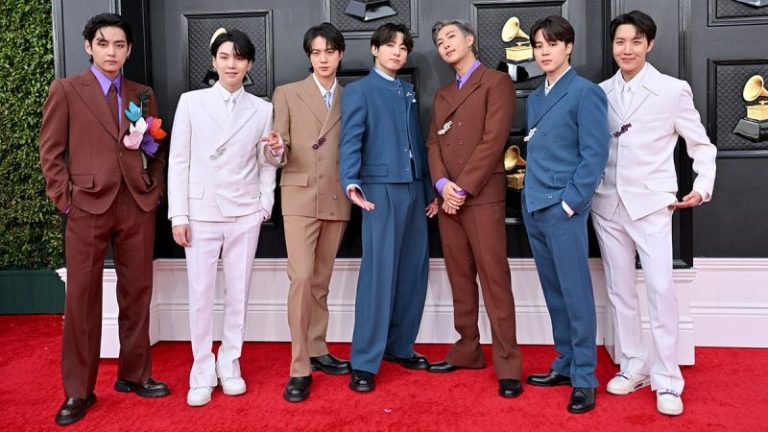
When the South Korean boy band/K-pop sensation BTS takes the stage in Seoul this June, ending a four-year touring hiatus, it will mark more than just a comeback — it will validate one of the shrewdest soft-power decisions in recent memory.  

In 2022, at the absolute apex of their global dominance, the group’s seven members chose to fulfill their mandatory military service rather than seek exemptions, which would almost certainly been granted. Their management company, HYBE, supported the decision. The world got a masterclass in how cultural power is created. 

The cynics predicted career suicide. Instead, BTS demonstrated that soft power isn’t built on avoiding obligations — it’s built on embracing them. When they reunite on stage, they’ll do so with enhanced credibility, having proven their success didn’t exempt them from the responsibilities of ordinary citizens. Americans remember Elvis taking a similar course at the height of his fame.  

The great thing about soft power is that, while generated by creative individuals and companies, it’s to the entire nation’s benefit. Like economic and martial power, soft power generates influence that can be used to bolster a nation’s standing. Examples of soft power abound from Britain’s cricket legacy and rock ’n’ roll ‘invasion’ of the 1960s to French and Italian cinema to America’s NBA, jazz music and Hollywood’s entertainment machine. Now, South Korea is stepping up.

Thus, it is almost tragic that while BTS was serving in the military, the ecosystem that made the band possible faces mounting scrutiny. South Korea has become expert at creating cultural phenomena that captivate the world — and equally expert at treating the architects of that success with suspicion once they achieve scale. This is a pattern South Korea cannot afford.   

South Korea’s cultural preeminence did not emerge from a government plan. It sprang from creative ambition, commercial ruthlessness, and just enough regulatory space for experimentation. The K-pop system requires massive capital investment, sophisticated global distribution and executives willing to bet nine figures on whether teenagers in Jakarta and São Paulo will stream the same songs. 

Yet, there’s a reflex in South Korean public life that treats popularity itself as evidence of wrongdoing. Bang Si-hyuk, the producer who built HYBE and shaped BTS into a global phenomenon, now faces legal scrutiny over stock transactions — the kind of corporate governance questions that seem to emerge almost inevitably once South Korean companies achieve sufficient scale.   

The particulars matter less than the pattern: bold risk-taking generates soft power, then invites investigation once it succeeds. 

Executives who might build the next BTS or international TV steaming sensation like, ‘Crash Landing on You,’ watch what happens to those who came before and recalibrate their ambition accordingly. In cultural soft power, this reflex is potentially fatal. 

South Korea’s competitors are watching. China has spent billions trying to manufacture soft power through state-directed enterprises. The PRC has largely failed — because audiences smell propaganda. South Korean free enterprise is succeeding in creating cultural exports that are simultaneously local and universal, specific enough to feel authentic in Seoul and accessible enough to travel across the globe.  

This is South Korea’s opportunity. Japan was given a similar window in the 1990s with anime and video games, but largely failed to capitalize on the trend because of governmental missteps. South Korea could easily repeat that mistake and lose the global influence that comes with serious national soft power. 

South Korea needs to recognize soft-power assets as strategic resources. France protects its luxury brands because Paris recognizes these companies project French taste globally in ways no government agency could. South Korea should ask: What institutional arrangements allow us to maintain standards while protecting our champions? 

South Korea’s cultural preeminence did not emerge from a government plan. It sprang from creative ambition, commercial ruthlessness, and just enough regulatory space for experimentation. 

BTS’s decision to fulfill their national military service obligations demonstrates what’s possible when artists, companies and national interest align voluntarily. HYBE supported that choice. But South Korea can’t count on such choices being made repeatedly if the system treats success as inherently suspect.

In June 2026, when BTS embarks on a global tour generating billions in economic impact and incalculable goodwill toward South Korea, remember this moment almost didn’t happen. The members could have sought exemptions. Instead, they chose service and came back stronger. 

But South Korea can’t count on such choices if the message to cultural entrepreneurs is that success invites scrutiny. The next generation is watching, deciding whether to aim for global impact or settle for domestic safety.

South Korea stumbled into becoming a cultural superpower. It doesn’t have to stumble out of it. But that requires recognizing that the bold, imperfect figures who build global cultural enterprises are assets to be protected, not problems to be managed. 

BTS made their choice — they bet on their country. Now, South Korea needs to decide if it’s going to bet on the people who create the next BTS, or put them under investigation instead. 

This post appeared first on FOX NEWS

After 2025’s volatile end, 2026 is poised to be a watershed moment for the cryptocurrency sector, marking a transition from a speculative asset class to essential global financial infrastructure.

Further regulatory clarity, artificial intelligence (AI) integration, real-world asset (RWA) tokenization and sustained institutional inflows could propel DeFi and crypto markets in 2026. According to experts, this is no longer a conversation about crypto versus TradFi; it’s about a hybrid financial system where digital assets are simply better tools.

Crypto market maturity and resilience

According to Elkaleh, Bitcoin’s resilience during its recent pullback, which brought a 37 percent drawdown from its October all-time high, was telling. While such severity was surprising, he observed that long-term holders and institutions continued to accumulate rather than unwind exposure, which he sees as an indicator of health.

“Q4 was defined by a major leverage reset, with BTC’s sharp pullback forcing a broader reassessment of risk,” he said.

At the time of this writing, analysts were split on where Bitcoin could go next. A further crash risk lingers if the US Federal Reserve delays interest rate cuts; however, a post-purge rally to US$135,000 to US$150,000 is in sight mid-year if institutions return, exchange-traded fund (ETF) flows flip positive and futures premiums stabilize above 5 percent.

As Bitcoin dropped, Elkaleh observed other segments of the market tied to practical use cases and diversification strategies — such as privacy assets, decentralized AI and stablecoin ecosystems — weather the storm.

“The market (has shown) growing maturity: capital and developer attention shifted toward utility-driven sectors such as tokenization, stablecoins and real-world integrations.”

Tokenization: The on-chain first institutional default

Mersch sees tokenization accelerating in 2026, eventually becoming the default for new institutional financial products.

He sees the foundation of this shift being built, with tokenized treasuries and money-market funds serving as a core yield sleeve for institutional investors who demand liquidity, standardized reporting and programmable settlement.

“If current growth holds, tokenized assets could be a multi-trillion dollar market by 2030, with government bonds and cash-like instruments as the anchor,” he said. “Over the next five years, the key shift is likely that new institutional products are designed as on-chain first, and only secondarily wrapped in legacy wrappers.”

He anticipates that stablecoins will be solidified as the liquidity backbone for a growing tokenized market, acting as the new cash layer. The most likely end state, according to Mersch, will be a hybrid digital cash stack, where bank-issued stablecoins, private stablecoins and central bank digital currenciesco-exist and interoperate.

Mersch predicts that tokenized real estate and private credit will now start to see expansion.

For real estate, tokenization converts a traditionally illiquid market into tradable, divisible assets, lowering the barrier to entry for global investors and providing recurring revenue streams.

Rupena, whose company, Milo, pioneered the crypto-backed mortgage, asserts that lenders will be expected to recognize digital assets as a core part of a client’s real balance sheet, just like cash or securities.

Elkaleh also expects to see strong expansion in RWA tokenization in 2026, alongside stablecoin-based payouts and small-business payment rails. “The most accelerated growth will occur in emerging markets, where mobile-first users turn to crypto as a practical financial alternative,” he wrote in an email.

“The rise of RWA markets, L2 scalability and more accessible DeFi will allow onchain credit and savings to scale meaningfully. Combined with steady institutional inflows, these economies will become the strongest demand engines of 2026, driving both user growth and real economic activity onchain.”

DeFi: An institutional derivatives and credit layer

The final pillar of the 2026 crypto outlook is the maturation of DeFi. Mersch asserted that DeFi is poised to emerge as a compliance-ready core platform for credit and risk management in 2026.

Real-world structural resilience supports Mersch’s forecast.

Rupena noted that market ups and downs are expected in the digital asset ecosystem, and that conservative LTVs, real-time monitoring and clear margining frameworks are designed to cope with volatility.

“Lower forced liquidation activity, even during big market moves, is a very healthy signal,” he explained, adding that customers are purposely keeping collateral cushions so they can stay calm during market swings.

This focus on prudence and durability validates the market’s readiness for institutional-grade credit and risk products.

“If successful, this creates a liquid, 24/7 derivatives layer that sits on top of both tokenized and traditional markets,” Mersch said. “By 2026 and beyond, the most interesting innovation may not be crypto versus TradFi, but portfolio and product designs that blend tokenized assets, stablecoin liquidity and DeFi-based synthetic exposure into a single stack.”

This institutional leap is fundamentally enabled by regulatory clarity.

“You can already see this through partnerships like Coinbase (NASDAQ:COIN) with Circle Internet Group (NYSE:CRCL) and Morpho (TSE:3653), where yield is embedded at the platform level without requiring users to interact directly with on-chain protocols. Regulation will accelerate that model,’ he added.

Elkaleh noted that clearer rules will allow users to adopt on-chain tools for cross-border payments, tokenized savings and AI-driven bill pay with the same confidence they have in regulated fintech apps. He expects the most transformational impact will come from next-generation L2 scalability paired with AI-agent execution.

“These shifts will bring down transaction costs, compress settlement times, and enable autonomous payments, subscriptions and cross-chain operations,” the expert explained.

“We also expect prediction-market aggregation to emerge as a breakout consumer interface and RWA perpetuals to bring macro assets, including commodities, credit and inflation onchain through synthetic markets. These developments collectively move crypto into a more comprehensive, high-velocity financial system.”

Upcoming crypto market catalysts

The pivot to a hybrid financial system will be driven by several concurrent catalysts.

The US Market Structure Bill is targeted for a Senate floor vote in early 2026, aiming to create the first federal framework for digital assets. North of the border, Canada’s Stablecoin Act, which provides C$10 million for Bank of Canada oversight starting in 2026, signals official endorsement of the digital cash layer.

Globally, the Basel Committee on Banking Supervision is set to implement new capital standards for banks’ crypto exposures, crucial for encouraging institutional momentum, by January 1, 2026.

The technological engine supporting this adoption is fueled by scalability and intelligence.

On the blockchain side, Ethereum’s aggressive roadmap, including the Glamsterdam upgrade targeted for 2026, continues to refine Layer-2 (L2) systems. This focus on L2 efficiency, combined with the integration of AI agent execution, is key for supporting the millions of transactions needed for a comprehensive, high-velocity financial system.

Investor takeaway

In 2026, the crypto market is set to deliver meaningful gains and stable, sustained growth as this new, highly efficient, and globally interoperable financial system moves from the laboratory into production scale.

Securities Disclosure: I, Meagen Seatter, hold no direct investment interest in any company mentioned in this article.

This post appeared first on investingnews.com

George Washington Plunkitt was born into poverty in 1842 but rose through the ranks of the Democratic Party machine of New York, the famed ‘Tammany Hall,’ to become a state representative and a state senator. He also became quite wealthy along the way.

Plunkitt always defended his machine and its methods — and the money they made him. Plunkitt would gladly defend the practices of Tammany, rebutting charges of corruption with the standard reply that ‘nobody thinks of drawin’ the distinction between honest graft and dishonest graft. There’s all the difference in the world between the two.’

Plunkitt’s brazenness lives on in the modern-day machines of the left, found in the deep-blue jurisdictions of the country. With the focus on the bilking of Minnesota taxpayers by the Somali community of the Twin Cities (many citizens, many not), voters across the country are still in shock as the story has unfolded since 2022. The lights shone on the Gopher State should get much brighter now, and after that, I have a follow-up that will make the swamp of the Twin Cities seem like a puddle.

The Minnesota story has been hiding in plain sight, with superb reporters from one of the original blogs of more than 20 years ago, Powerline, poring over the scandal for years.

Powerline’s founders John Hinderaker and Scott Johnson, and more recently their colleague Bill Glahn, have continued to dig and report, dig and report, dig and report on the ‘Somali connection.’

In recent weeks, the story caught fire with the help of reporting by Ryan Thorpe and Christopher Rufo of the Manhattan Institute’s City Journal and by Fox News. That ‘Minnesota is drowning in fraud,’ as Thorpe and Rufo put it, has now become a national story. Pray that it is the first of many.

‘There’s an honest graft, and I’m an example of how it works,’ Boss Plunkitt would say. ‘I might sum up the whole thing by sayin’: I seen my opportunities and I took ‘em.’

Turns out the defendants, the indicted and the convicted in the Gopher State saw their opportunities as well, and they put Tammany to shame when it came to scale and speed.

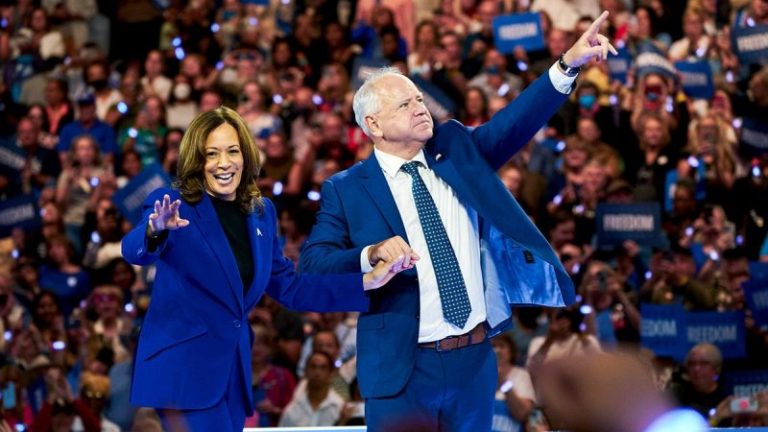
The conmen of Minnesota bilked the state out of vast piles of cash through a variety of plays, the most infamous of which is, for the moment, ‘Feeding Our Future.’ It took truly extraordinary efforts by Minnesota Gov. Tim Walz and the state’s attorney general, Keith Ellison, to turn their eyes the other way to allow that scam and soon others to flourish. The possessed girl in ‘The Exorcist’ had nothing on Walz and Ellison when it came to turning their heads.

We have former Attorney General Eric Holder and former White House Counsel Dana Remus to thank for elevating the massive fraud ring run primarily out of the Somali American and Somali community in the Twin Cities to the nation’s attention.

Why? Because that pair made Walz much more than an obscure governor of a deep-blue state. That duo was primarily responsible for ‘vetting’ the 2024 Democratic nominee for vice president as one of Democratic presidential candidate Kamala Harris’ potential running mates. The dynamic duo of Holder and Remus either wholly missed the massive cons run on Walz’s watch or judged them not significant enough to derail his candidacy.

During ‘Brat Summer,’ the legacy media abandoned its past practices and joined in the effort to push the worst pair of candidates to the finish since Alf Landon and Frank Knox got blown out by FDR in the 1936 referendum on Roosevelt’s New Deal.

Holder blessed Walz, and Holder’s fans in the Manhattan–Beltway corridor followed suit. Media elites blessed Holder’s judgment in turn.

Big mistake.

Now Walz is part of the national Democratic Party’s brand and refuses to go away, choosing to concentrate his efforts on running for a third term as governor next year — and apparently hoping he might be the party’s standard-bearer in 2028. Instead, ‘Feeding Our Future’ broke out of the Minnesota news ghetto and onto the national stage.

‘Run Tim Run’ should be the GOP’s chant, alongside ‘Run Gavin Run,’ because just like Walz, California Gov. Gavin Newsom has some industrial-level explaining to do.

No, I’m not referring to the California governor’s French Laundry debacle. And no, not the devastating fires that tore through L.A. in January. Not even his indicted former chief of staff. No, the exact parallel to Walz’s woe is the Newsom administration’s handling of COVID-era relief for the unemployed — a statewide con run by political cons.

The Pandemic Unemployment Assistance program (PUA), like the Lost Wages Assistance plan, was devised and funded by Congress to keep alive Americans left unemployed or with their businesses shuttered by COVID lockdowns. Like standard unemployment programs, these COVID-era programs were primarily run through state unemployment insurance offices and other state agencies.

The COVID lockdowns were unprecedented, and the public health ‘authorities’ responsible for advising and administering them should never be taken seriously again.

Many of those bureaucrats, drunk on new authority, stepped forward when elected officials sought guidance on what to do about the mysterious and deadly disease imported from China. (Their dismissal of the lab-leak theory speaks to their actual, as opposed to presumed, expertise.)

When lockdowns became the solution du jour, Congress rightly understood that they were shutting down the livelihoods of tens of millions of Americans and flooded the country with life-saving money — three times.

It was not just the Minnesota Somali community that had ‘seen their opportunities and took ‘em.’ So, too, did the cons of California: the real, honest-to-goodness cons of the California penal system — inmates for whom available time to scheme and scam is abundant.

Ask your favorite AI engine, ‘How much fraud was perpetrated against the California Employment Development Department during COVID?’ The answers will vary, but the floor on the cost of the fraud is $20 billion. The ceiling is more than $30 billion.

The Golden State’s EDD is ‘run’ by a director, and Gov. Newsom, who took office in 2018, has appointed two: Rita Saenz and Nancy Farias. COVID arrived on Newsom’s watch, and he and his appointees should own the fraud that followed. They make the Walz–Ellison team look like pikers when it comes to ignoring fraud.

In his first term, President Trump stood up Operation Warp Speed, and Congress rightly decided to (1) spend federal dollars to lessen the lockdown pain and (2) leave the payment of most public benefits to state agencies, while COVID business loans were handled by private-sector banks as the Federal Reserve and Treasury Department innovated in a variety of ways to prevent an economic crash.

The years following the mishap at the Wuhan lab demonstrated the vast incompetence of the American administrative state but also the necessity of a federal government to pick up the tab when ‘scientists’ lose their collective minds and, for example, counsel the closure of schools.

The official timeline has COVID appearing in Wuhan in December 2019 and reaching U.S. shores a month later. We may never know when the first cases were diagnosed by the Chinese Communist Party, and we are not in a position to investigate the horrific fraud and consequent disaster for which General Secretary Xi Jinping is responsible.

But President Trump could order a six-month deep dive into the financial fraud that followed in the U.S., not just in Minnesota and California — though those are the ‘patient zeroes’ for never allowing a crisis to pass without enriching the state’s worst actors.

Could President Trump stand up a time-limited panel to investigate fraud perpetrated on state agencies during COVID? Yes. Might that panel torch a few GOP reputations along the way? Inevitably.

But the interest in the Minnesota Somali shakedown should be a demand signal for accountability across the country.

President Trump often acts in the mold of Teddy Roosevelt, who, like 45–47, was never afraid of a headline — provided he provoked it.

Now is the time for the president to ask a handful of the smartest, most respected people in the country to sort through the wreckage of the COVID era’s many state governments’ responsibilities and ‘initiatives’ and report in rapid fashion — and in clear English — the scale of fraud perpetrated upon state agencies.

Make your search-and-publicize team smart and fast. Putting Johnson and Hinderaker as co-chairs of a strike team devoted to compiling the facts as we know them today would ensure accuracy and fine writing.

And give them a deadline: Aug. 31, 2026. Voters deserve to know how their state governments worked during COVID — or didn’t — before they vote again.

This post appeared first on FOX NEWS

Questcorp Mining Inc. (CSE: QQQ,OTC:QQCMF) (OTCQB: QQCMF) (FSE: D910) (the ‘Company’ or ‘Questcorp’) announces that it will offer (the ‘Offering’) up to 5,769,231 flow-through units (each, an ‘FT Unit’), at a price of $0.13 per FT Unit, for gross proceeds of up to $750,000, by way of non-brokered private placement. Each FT Unit will consist of one common share of the Company, issued as a flow-through share within the meaning of the Income Tax Act (Canada), and one-half-of-one share purchase warrant (each whole warrant, a ‘Warrant’). Each Warrant will entitle the holder to purchase an additional common share of the Company at a price of $0.20 for a period of twenty-four months.

The Company anticipates the net proceeds raised from the Offering will be used to conduct exploration of the Company’s North Island Copper Property, located on Vancouver Island, British Columbia.

The Company may pay finders’ fees to eligible parties who have assisted in introducing subscribers to the Offering. All securities issued in connection with the Offering will be subject to restrictions on resale for a period of four-months-and-one-day in accordance with applicable securities laws. Completion of the Offering remains subject to receipt of regulatory approval.

Final Tranche Closing

The Company also announces that it has closed the final tranche of its previously announced non-brokered private placement and has issued a further 1,266,667 units (each, an ‘NFT Unit‘), at a price of $0.15 per NFT Unit, for gross proceeds of $190,000. Each NFT Unit consists of one common share, and one-half of one Warrant.

No finders’ fees were paid in connection with closing of the final tranche. All securities issued in the final tranche are subject to restrictions on resale until April 9, 2026 in accordance with applicable securities laws.

About Questcorp Mining Inc.

Questcorp Mining Inc. is engaged in the business of the acquisition and exploration of mineral properties in North America, with the objective of locating and developing economic precious and base metals properties of merit. The Company holds an option to acquire an undivided 100% interest in and to mineral claims totaling 1,168.09 hectares comprising the North Island Copper Property, on Vancouver Island, British Columbia, subject to a royalty obligation. The Company also holds an option to acquire an undivided 100% interest in and to mineral claims totaling 2,520.2 hectares comprising the La Union Project located in Sonora, Mexico, subject to a royalty obligation.

Contact Information

Questcorp Mining Corp.

Saf Dhillon, President & CEO

Email: saf@questcorpmining.ca
Telephone: (604) 484-3031

This news release includes certain ‘forward-looking statements’ under applicable Canadian securities legislation. Forward-looking statements are necessarily based upon a number of estimates and assumptions that, while considered reasonable, are subject to known and unknown risks, uncertainties, and other factors which may cause the actual results and future events to differ materially from those expressed or implied by such forward-looking statements. Such factors include, but are not limited to: general business, economic, competitive, political and social uncertainties, uncertain capital markets; and delay or failure to receive board or regulatory approvals. There can be no assurance that the geophysical surveys will be completed as contemplated or at all and that such statements will prove to be accurate, as actual results and future events could differ materially from those anticipated in such statements. Accordingly, readers should not place undue reliance on forward-looking statements. The Company disclaims any intention or obligation to update or revise any forward-looking statements, whether as a result of new information, future events or otherwise, except as required by law.

To view the source version of this press release, please visit https://www.newsfilecorp.com/release/277245

News Provided by Newsfile via QuoteMedia

This post appeared first on investingnews.com

For Social Security it has been a miserable year. 

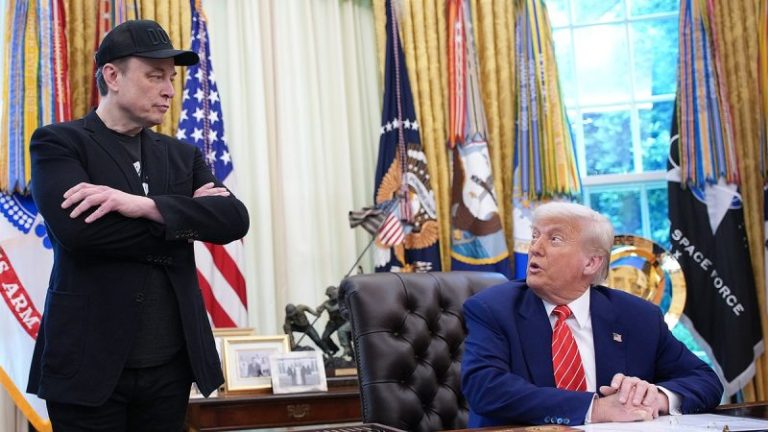
After President Donald Trump unleashed Elon Musk and DOGE on the Social Security Administration, the agency lost more staff in a shorter period of time than ever before in its 90-year history. Fortunately, public outcry and pushback from congressional Democrats saved Social Security from a 50% cut to staffing and the closure of scores of field offices as Trump and his administration had announced back in March. So, somehow, those dedicated workers remaining at the Social Security Administration have still managed to keep the agency running — without missing a single monthly benefit payment. 

There are not many public or private insurers in the world who can claim to never have missed a monthly benefit payment in 90 years. 

This is good news for 71 million Americans — many of whom depend on their earned benefit every month as a lifeline. But we are not out of the woods yet. The agency has been gutted. Enormous damage has been done to customer service and to the agency’s ability to process claims.

Just as many are demanding that Trump’s deep cuts to healthcare be restored, so too must Trump’s deep cuts to Social Security be restored, as the two are inextricably linked. Sixty-four million Medicare recipients will see a reduction in their Social Security benefits in 2026 due to Trump’s Medicare price hikes that will cut into their Social Security cost-of-living adjustment (COLA), making life more expensive for seniors. This is the greatest erosion of the Social Security COLA in nearly a decade, and the first time that Medicare premiums exceeded $200 per month. 

With the Social Security Administration’s staffing now reduced to a 60-year low and baby boomers swelling the number of active beneficiaries to an all-time high, the agency is struggling badly, and the American people are paying the price. Wait times to get to a person in a field office or to talk to a person on the 1-800 line have become longer and longer.  

As the Trump administration claims that things have never been better, millions of Americans are having a very different experience. In fact, more people today now die waiting in line for their initial disability determination than at any time since President Dwight Eisenhower signed the disability portion of the act into law in 1956. Even just recently, Trump and DOGE risked 300 million Americans’ personal data from the Social Security Administration. They have robbed Americans of customer service and peace of mind.

Conditions have grown so bad – Nancy Altman, president of Social Security Works, has called for Social Security Commissioner Frank Bisignano’s resignation. It proves to be a telling illustration of the deep concern experts have for the damage done to the agency. 

None of this had to happen. It was made to happen. As a candidate, Trump vowed all through the campaign that he would protect Social Security. Instead, he wrecked the program’s customer service, took a chainsaw to its functions and maligned its reputation with false claims of waste, fraud and abuse.

In a time of great political division, Social Security remains the most strongly supported program in America. In fact, 80% of Americans are concerned whether Social Security will be available when they retire and want it to be strengthened, made better — not hacked to pieces, privatized or liquidated. 

This is a democracy moment. Social Security should be a bipartisan issue. All lawmakers — Republicans, Democrats and Independents alike — need to come together to deliver on its promise of a secure retirement after a lifetime of hard work. 

This post appeared first on FOX NEWS

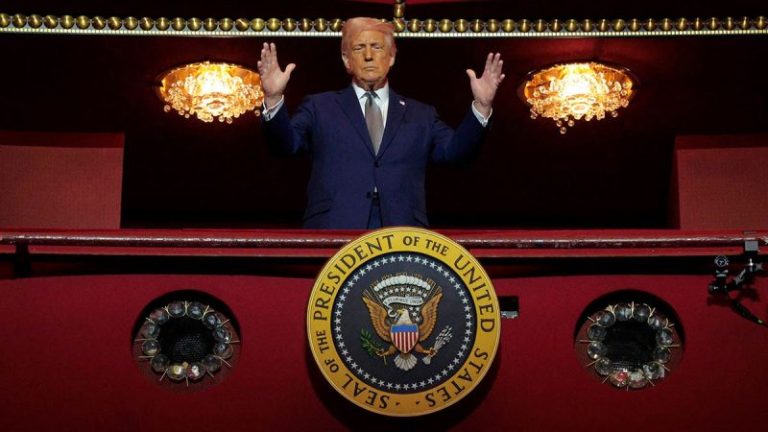
President Donald Trump spearheaded major changes to the Kennedy Center Honors ahead of the highly anticipated awards ceremony. 

Founded in 1978, the Kennedy Center Honors recognize a handful of performing artists every year for their lifetime contributions to culture. The Kennedy Center Honors, which are presented by the John F. Kennedy Center for the Performing Arts in Washington, D.C., are considered the nation’s top lifetime achievement award for the performing arts.

After returning to the White House in January, Trump, 79, became chairman of the Kennedy Center board and has since undertaken efforts to reshape the honors program — pushing for a glitzier, star-studded celebration. 

In August, Trump announced this year’s lineup of honorees, which included country legend George Strait, Hollywood star Sylvester Stallone, rock band KISS, Broadway icon Michael Crawford and Grammy Award-winning singer Gloria Gaynor.

‘The 48th Kennedy Center Honorees are outstanding people, incredible, we can’t wait… in a few short months since I became chairman of the board, the Kennedy Center, we’ve completely reversed the decline of this cherished national institution,’ he said in his speech.

From overhauling the honoree selection process to unveiling a new medallion, here’s a breakdown of how the Kennedy Center Honors have been revamped under Trump. 

Trump-led selection process 

Since the Kennedy Honors’ inception, the honorees were chosen by a bipartisan committee that worked with the Kennedy Center’s artistic staff, the Board of Trustees, external arts advisors, and the Center’s president and Honors team. 

While U.S. presidents have historically participated in the ceremonial aspects of the Honors including hosting a White House reception and attending the gala, they typically have not been directly involved in the selection process. 

However, Trump said he played a major role in choosing the 2025 honorees during an August event at the Kennedy Center to announce the recipients. 

Though there was a Special Honors Advisory Committee that made recommendations, Trump appeared to confirm that he made the final choices.

When reporters asked Trump how involved he was in selecting the 2025 honorees, he responded, ‘I was about 98% involved… they all came through me.’

‘I turned down plenty, they were too woke,’ he continued. ‘I had a couple of wokesters. No, we have great people. This is very different than it used to be.’

While taking aim at the state of Hollywood awards shows, Trump took a swipe at the Oscars.

‘Look at the Academy Awards — it gets lousy ratings now, it’s all woke,’ he said. ‘All they do is talk about how much they hate Trump, but nobody likes that. They don’t watch anymore…’

Trump concluded his ‘very long answer’ by saying he ‘was very involved’ in the selection of the Kennedy Center Honorees.

New medallion

For 47 years, the medallion received by the honorees had remained unchanged. The Honors medal hung from wide satin ribbon in five bright rainbow colors that formed a V-shape around the honoree’s neck. 

The gold circular medallion was shaped like a starburst and featured an abstract representation of the Kennedy Center building and was handmade by the same family for nearly five decades. Throughout the awards show’s history, the medallions were handmade by the Baturin’s, a Washington D.C.- based family of artisans and metalworkers. 

In a press release issued on Tuesday, the Kennedy Center announced that the medallions ‘have been re-imagined and donated by Tiffany & Co.’

‘As the first American high jewelry house, Tiffany & Co. has played a defining role in American luxury culture for nearly two centuries – making them the ideal collaborator to design the Honors medallion,’ the press release continued. 

‘The brand-new medallion features a gold disc etched on one side with a depiction of the Kennedy Center. The building is flanked by rainbow colors representing the breadth of the arts celebrated when receiving the Honor. The reverse side bears the Honorees’ names in script above the date of the Medallion Ceremony, December 6, 2025. The medallion hangs from a navy-blue ribbon, a color associated with dignity and tradition.’

Massive governance shake-up ahead of the Honors

n February, Trump announced a major shakeup of the Kennedy Center leadership. He revealed that he had decided to immediately fire multiple Kennedy Center board members appointed by former President Joe Biden and other prior trustees, including the chairman, and fill that role himself.

Trump claimed he and the former chair David Rubenstein along with the ousted board members ‘do not share [the same] vision for a Golden Age in Arts and Culture,’ according to his announcement on Truth Social.

‘We will soon announce a new Board, with an amazing Chairman, DONALD J. TRUMP!’ he added. 

Trump also criticized Kennedy Center programming, including drag shows, under the prior administration.

‘Just last year, the Kennedy Center featured Drag Shows specifically targeting our youth — THIS WILL STOP. The Kennedy Center is an American Jewel, and must reflect the brightest STARS on its stage from all across our Nation. For the Kennedy Center, THE BEST IS YET TO COME!’ Trump said on Truth Social. 

He later replaced the former members with 14 other members, including allies including second lady Usha Vance and ‘God Bless the USA’ singer Lee Greenwood. 

The new board elected Trump as chairman on Feb. 12. Trump dismissed long-serving Kennedy Center president Deborah Rutter and appointed his ally Ric Grenell – who became the U.S.’s first openly gay cabinet member under the first Trump administration when he served as acting director of national intelligence – as interim executive director amid the board overhaul. 

More mainstream-pop culture class of nominees 

The 2025 honorees including KISS, Gloria Gaynor, George Strait, Sylvester Stallone and Michael Crawford indicated a shift toward recognizing artists from more mainstream, pop culture fields rather than the cross-disciplinary lineups of prior years. 

During the first two decades after the Honors were founded, the recipients were mainly from the world of classical arts with some notable exceptions including actor James Cagney, actress Lucille Ball and film director Elia Kazan. 

In the mid-1990s, the Honors began expanding toward mainstream entertainment, honoring more pop musicians, rock artists, film and television actors and Broadway stars. The expansion accelerated through the 2000s and 2010s and into the 2020s.

In addition to mainstream artists, past honoree classes have always included representation from classical music, jazz, dance, opera or composition.  However, 2025’s lineup features no honoree from those disciplines, marking a first in modern program history.

The 2025 honorees chosen under Trump’s direction are entirely from rock, disco, country, film and Broadway.

In the Kennedy Honors Center’s August press release announcing the honorees, Grenell said, ‘For nearly half a century, this tradition has celebrated those whose voices and visions tell our nation’s story and share it with the world.’ ‘This year’s Honorees have left an indelible mark on our history, reminding us that the arts are for everyone.’

Trump will host the Honors 

At the August event to announce the honorees, Trump announced that he will host the Kennedy Center Honors gala, becoming the first president in history to host the event. 

‘I’ve been asked to host. I said, I’m the President of the United States. Are you fools asking me to do that? ‘Sir, you’ll get much higher ratings.’ I said ‘I don’t care. I’m President of the United States, I won’t do it.’ They said, ‘Please,” Trump told reporters.

Trump went on to say that his Chief of Staff Susie Wiles also asked him to host the Honors. 

‘I said, ‘OK, Susie, I’ll do it.’ That’s the power she’s got,’ he said. ‘So I have agreed to host. Do you believe what I have to do? And I didn’t want to do it, OK? They’re going to say, ‘He insisted.’ I did not insist, but I think it will be quite successful, actually.’ 

‘It’s been a long time. I used to host ‘The Apprentice’ finales and we did rather well with that,’ Trump added, referring to his long-running NBC reality competition show.

‘So I think we’re going to do very well, because we have some great honorees, some really great ones.’

During Trump’s first term, he and First Lady Melania Trump did not attend the Honors or host the traditional White House reception for the honorees.

In 2017, honorees including Norman Lear and dancer Carmen de Lavallade announced that they would not attend a White House reception hosted by Trump in protest.

The White House subsequently issued a statement that read: ‘The president and first lady have decided not to participate in this year’s activities to allow the honorees to celebrate without any political distraction.’

Trump and Melania also did not attend in 2018 and 2019. In 2020, the Honors were postponed due to the COVID-19 pandemic and instead took place in May 2021, with a revamped format including smaller, socially-distanced and virtual tributes.

The 48th Annual Kennedy Center Honors will take place on Dec. 7 at the Kennedy Center in Washington, D.C. and will air Dec. 23 on the CBS Television Network and on Paramount+

This post appeared first on FOX NEWS

NioCorp Developments (NASDAQ:NB) has completed the US$8.4 million acquisition of the manufacturing assets and intellectual property of Massachusetts-based FEA Materials.

NioCorp expects the move to position it as a domestic producer of aluminum-scandium (Al-Sc) master alloy amid growing demand for the material in defense and commercial markets.

The all-cash purchase complements NioCorp’s Elk Creek critical minerals project in Nebraska, where it aims to produce scandium oxide alongside niobium, titanium and potentially rare earths once fully financed and operational.

FEA’s proprietary process converts scandium oxide directly into Al-Sc master alloy, bypassing intermediate metal production. NioCorp is also assessing the feasibility of producing finished Al-Sc alloy parts via casting, forging and machining for original equipment manufacturers in the US.

“This strategic acquisition positions NioCorp to potentially build America’s first vertically integrated scandium supply chain from mine to finished alloy parts,” NioCorp CEO Mark A. Smith said in a press release.

Eugene Prahin, CEO of FEA, praised NioCorp’s vertically integrated approach, adding that the company’s alloying technology “will be key to growing scandium-based structural alloys in the years to come.”

The FEA acquisition follows a US$10 million Pentagon Title III award to NioCorp’s subsidiary Elk Creek Resources. Announced in August, it is geared at supporting scandium oxide production.

NioCorp is also collaborating with Lockheed Martin (NYSE:LMT) on aerospace-grade Al-Sc components.

“Working jointly with the Pentagon, NioCorp is committed to insulating the US from market manipulation by China, which has historically constrained scandium-based technologies,’ said Smith.

With the latest acquisition and the government funding, NioCorp envision building a complete US mine-to-market supply chain for scandium, spanning extraction, alloy production and finished parts manufacturing.

Securities Disclosure: I, Georgia Williams, hold no direct investment interest in any company mentioned in this article.

This post appeared first on investingnews.com

The Senate is quietly winning the battle over states’ abilities to craft their own artificial intelligence (AI) regulations, but there is still a desire to chart out a rough framework at the federal level. 

The issue of a blanket AI moratorium, which would have halted states from crafting their own AI regulations, was thought to have been put to bed over the summer. But the push was again revived by House Republicans, who were considering dropping it into the annual National Defense Authorization Act. 

However, Republicans in the lower chamber have pulled back from that push, even as the White House has pressed Congress to create a federal framework that would make regulations more cohesive across the country. 

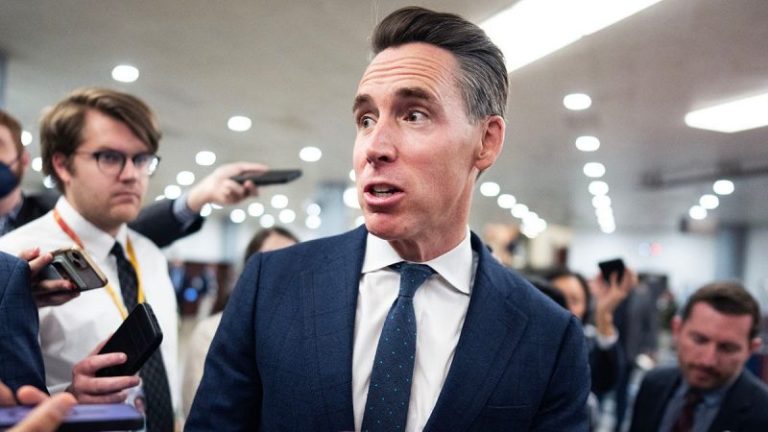
A trio of Senate Republicans, Sens. Josh Hawley of Missouri, Marsha Blackburn of Tennessee and Ron Johnson of Wisconsin, who banded together to block the original proposal, cheered the provision’s apparent rise from the grave.

Hawley told Fox News Digital that it was good news that the provision would not be included in the defense authorization bill, but warned that ‘vigilance is needed, and Congress needs to act.’

‘I mean, for everybody out there saying, ‘Well, Congress needs to act and create one standard,’ I agree with that,’ he said. ‘And we can start by banning chat bots for minors.’ 

Sen. Ted Cruz, R-Texas, who chairs the Senate Commerce, Science and Transportation committee, initially pushed for a moratorium to be included in Trump’s One Big, Beautiful Bill. His position on the issue has been to unchain AI to give the U.S. a competitive edge against foreign adversaries like China.

But that attempt was nearly unanimously defeated over the summer and stripped from the bill. And Cruz hasn’t given up.

‘The discussions are ongoing, but it is the White House that is driving,’ Cruz told Fox News Digital. 

Senate Majority Leader John Thune, R-S.D., acknowledged that getting the moratorium into the defense authorization bill would be difficult earlier in the week.

‘That’s controversial, as you know,’ Thune said. ‘So, I mean, I think the White House is working with senators and House members for that matter to try and come up with something that works but preserves states’ rights.’

Trump declared last month that the U.S. ‘MUST have one Federal Standard instead of a patchwork of 50 State Regulatory Regimes,’ and argued that over regulation at the state level was threatening the investment, and expected growth, of AI. 

The White House reportedly drafted an executive order that would have blocked states from regulating AI that would have withheld certain streams of federal funding from states that didn’t comply with the order, and enlisted the Department of Justice to sue states that crafted their own regulations.

So far, Trump has not taken action on the order. 

Blackburn, who was the leading player in thwarting Cruz’s previous attempt to assert an AI moratorium into Trump’s marquee tax bill, also wants some kind of federal framework, but one that is designed to ‘protect children, consumers, creators, and conservatives,’ a spokesperson for Blackburn told Fox News Digital in a statement. 

‘Senator Blackburn will continue her decade-long effort to work with her colleagues in both the House and Senate to pass federal standards to govern the virtual space and rein in Big Tech companies who are preying on children to turn a profit,’ the spokesperson said.

And Johnson, another key figure in blocking the moratorium earlier this year, argued to Fox News Digital that it was an ‘enormously complex problem. It’s my definition of a problem.’ 

But unlike his counterparts, he was more skeptical about Congress producing a framework that he would be comfortable with.

‘I’m not a real fan of this place,’ Johnson said. ‘And I think we’d be far better off if we passed a lot fewer laws. I’m not sure how often we get it right. Look at healthcare, look at how that’s been completely botched.’ 

‘What are we gonna do with AI? Hard to say, but we just don’t go through the problem-solving process,’ he continued. ‘And again, I’m concerned, the real experts on this have got vested interests. Whatever they’re advising is, can you really trust them?’

This post appeared first on FOX NEWS

Silver is known as the most versatile precious metal, and its end uses range from silverware to medicine, as well as industrial and technological applications, which account for well over half of annual global demand.

In 2024, global physical silver demand reached 1.16 billion ounces, shy of the record of 1.28 billion ounces set in 2022, as per the Silver Institute’s latest World Silver Survey released in April 2025.

Industrial demand is on an upward trend from the push toward renewable energy — in particular, silver demand should benefit from the expansion of the solar energy sector, electric vehicles and the growing use of AI and data centers. The metal is a great conductor of both heat and electricity, making it perfect for use in solar panels.

In 2025, the Silver Institute expects global demand for silver to decline by 1 percent to 1.15 billion ounces, but remain at historically high levels. With all of that in mind, here’s a look at four factors driving silver demand.

1. Industrial fabrication

Expected demand in 2025: 677.4 million ounces

Silver is the best electrical and thermal conductor of all the metals, so it’s no surprise that it’s used in industrial fabrication. Industrial silver demand has seen steady growth in recent years. Coming in at just 491 million ounces in 2016, industrial demand rose to 592.3 million ounces in 2022, 657.1 million ounces in 2023 and a record 680.5 million ounces in 2024.

For 2025, the Silver Institute believes industrial demand will see a slight regression of 0.5 percent to 677.4 million ounces.

Here’s a brief rundown of the main industrial uses driving silver demand:

Electronics — In electronics, industrial silver is used mainly in multi-layer ceramic capacitors, membrane switches, silvered film, electrically heated automobile windshields, conductive adhesives and the preparation of thick-film pastes.

Electronics is expected to remain an important driver for silver going forward, as per the Silver Institute, which expects overall industrial silver consumption to reach 456.6 million ounces in 2025. Photovoltaics form the largest portion of electronic demand, totaling 197.6 million tons in 2024.

Using silver as conductive ink, photovoltaic cells transform sunlight into electricity. These cells are combined to form solar panels. The use of silver in the fabrication of photovoltaic cells, also known as solar cells, is seen as an area of rapid growth in the short to medium term. In fact, SolarPower Europe reported that total installations reached 2.2 terawatts by the end of 2024, and are expected to more than triple to more than 7 terawatts by 2030.

Automotive industry — Every electrical action in a modern car is activated with silver-coated contacts. Basic functions such as starting the engine, opening power windows, adjusting power seats and closing power trunks are all activated using a silver membrane switch. Furthermore, in January 2021, the Silver Institute reported that, depending on the model, battery electric vehicles contain between 25 and 50 grams of silver, while hybrid vehicles use 18 to 34 grams of silver. That’s compared to 15 to 28 grams of silver in a light internal combustion engine vehicle.

The Silver Institute has projected that automotive demand for silver could reach 90 million ounces by 2025. The association states that silver demand from the car industry will be driven by infrastructure investment, broader decarbonization efforts and the expansion of charging stations.

Brazing and soldering — Adding silver to the process of soldering or brazing helps produce smooth, leak-tight and corrosion-resistant joints when combining metal parts. In addition, silver-brazing alloys are used widely in everything from air conditioning and refrigeration to electric power distribution. The Silver Institute predicts demand from this segment to total 52.9 million ounces in 2025.

2. Jewelry

Expected demand in 2025: 196.2 million ounces

Jewelry is often what laypeople think about when they consider silver demand. And for good reason — few materials are better suited for jewelry than silver. Lustrous but resilient, silver responds well to sculpting, requires minimal care and lasts a lifetime.

While silver and gold possess similar working qualities, the white metal enjoys greater reflectivity and can achieve a brilliant polish. A vast amount of silver supply from mine production gets turned into a form of jewelry. The segment grew moderately by 3 percent in 2024, rising to 208.7 million ounces, but the Silver Institute is predicting a significant reversal in 2025, with a 6 percent decline to 196.2 million ounces.

3. Silver bullion, coins and bars

Expected demand in 2025: 204.4 million ounces

Another source of silver demand is for silver as an investment in the form of silver coins, bars and rounds. This category includes the silver used to fabricate the bullion, as well as small bar purchases by retail investors, according to the Silver Institute.

Silver coins have a long history. Minted silver coins were first used in the Eastern Mediterranean region in 550 BCE, and by 269 BCE the Roman Empire had adopted silver as well. Silver was the main circulating currency until the 19th century, when it was phased out of regular coinage.

While silver is not used in many circulating coins today, mints in many countries still create high-purity bullion coins and bars for investors.

Physical silver investment demand reached a record high of 338.3 million ounces in 2022, but declined considerably to 244.3 million ounces in 2023, before falling another 22 percent to 190.9 million ounces in 2024.

However, with rising uncertainty in global financial markets, the institute is predicting 7 percent growth in 2025 to 204.4 million ounces.

Silver exchange-traded products (ETPs) and silver ETFs purchase significant amounts of physical silver. Silver ETPs have experienced high volatility over the last five years, with demand peaking in 2020 with net inflows of 331.1 million ounces of silver, which fell to to 64.9 million ounces in 2021. Following the pandemic, ETPs experienced heavy outflows with investors selling off 117.4 million ounces in 2022 and 37.6 million ounces in 2023.

In 2024, as uncertainty began to seep into global financial markets, investors once again returned to ETPs, pushing demand to 61.6 million ounces of silver flowing into the products.

The Silver Institute expects demand to grow by 14 percent in 2025 to 70 million ounces, attributing these inflows to cuts to the Federal Funds rate, concerns over US debt load, and instability in the Middle East.

4. Silverware

Expected demand in 2025: 46 million ounces

Sterling silver has been the standard for silver holloware and silver flatware since the 14th century. Silver cutlery and other decor lasts for generations as it resists tarnish and is a traditional decoration in homes around the world. Base metal copper is mixed with silver to strengthen it for use as cutlery, bowls and decorative items.

Demand for the metal from the silverware industry reached 73.5 million ounces in 2022 but has declined since then to 54.2 million ounces in 2024. The Silver Institute expects the market to shed another 15 percent in 2025 to 46 million ounces.

Securities Disclosure: I, Melissa Pistilli, hold no direct investment interest in any company mentioned in this article.

This post appeared first on investingnews.com