
Archive

November 2025

Browsing

Questcorp Mining Inc. (CSE: QQQ,OTC:QQCMF) (OTCQB: QQCMF) (FSE: D910) (the ‘Company’ or ‘Questcorp’) is pleased to announce that Sorbie Bornholm LP (‘Sorbie’), a UK Investment Fund, has undertaken an initial investment in Questcorp Mining Inc. (CSE: QQQ,OTC:QQCMF) (OTCQB: QQCMF) (FSE: D910) (‘Questcorp’ or the ‘Company’). The gross amount of the investment is CAD$2,000,000. The funds will go toward advancing Questcorp’s ongoing exploration and development programs at its flagship La Union Gold and Silver Project in Sonora, Mexico, and its North Island Copper Property on Vancouver Island, British Columbia, and for general working capital purposes.

Reflecting on the new partnership, President & CEO, Saf Dhillon, commented:

‘We are incredibly pleased to have secured this strategic investment from Sorbie Bornholm, a respected international institutional investor. This financing provides us with the flexibility to accelerate exploration across our key assets in Mexico and British Columbia. We view Sorbie’s participation as a strong vote of confidence in Questcorp’s team, vision, and long-term potential to deliver value through discovery and development.’

Whitney Kofford, Managing Director of Sorbie Bornholm LP, added:

‘We are delighted to welcome Questcorp Mining Inc. as a new partner and portfolio company. Our decision to invest reflects our enormous confidence in Questcorp’s leadership. And in turn, by entering into a Sharing Agreement, Questcorp’s leadership signals strong conviction in their ability to execute and grow value for all stakeholders. Sorbie’s Sharing Agreement is designed to align interests towards growth and provide companies with consistent capital that rewards operational success and share price appreciation. We trust Questcorp will use the capital support to systematically unlock long-term value for all shareholders, and we look forward to sharing in their great upside potential.’

About Sorbie Bornholm

Sorbie Bornholm LP is a global investment firm that provides funding for ongoing business objectives to listed micro, small and mid-cap growth companies. We focus on public equity investments in companies that are looking to expand and on management teams with a clear growth strategy. Our extensive experience allows us to invest in most industries in order to provide supportive, longer-term capital that rewards company growth.

Since 2000, Sorbie Bornholm LP founder Greg Kofford has perfected the ‘Sorbie-Strategy’, utilizing a sharing agreement that supports management and rewards growth. This unique approach has now been used in over 50 investments – with many of those resulting in the companies receiving more cash than the original offering proceeds – without having to issue any additional shares.

Sorbie Bornholm’s core values drive who we are and how we invest. We are committed to developing long-term relationships with select listed public companies and their brokers & advisers. We focus on providing supportive, longer-term capital that rewards growth. We invest to make a difference, to become a valued partner and to be a shareholder of choice. It’s important to us that we succeed together.

To see if the Sorbie-Strategy is right for your company, please contact Sorbie Bornholm:

Whitney Kofford, Managing Director
+1-801-554-5889
whitney@sorbiebornholm.com https://sorbiebornholm.co.uk/

About Questcorp Mining Inc.

Questcorp Mining Inc. is engaged in the business of the acquisition and exploration of mineral properties in North America, with the objective of locating and developing economic precious and base metals properties of merit. The Company holds an option to acquire an undivided 100% interest in and to mineral claims totaling 1,168.09 hectares comprising the North Island Copper Property, on Vancouver Island, British Columbia, subject to a royalty obligation. The Company also holds an option to acquire an undivided 100% interest in and to mineral claims totaling 2,520.2 hectares comprising the La Union Project located in Sonora, Mexico, subject to a royalty obligation.

Contact Information

Questcorp Mining Corp.

Saf Dhillon, President & CEO

Email: saf@questcorpmining.ca
Telephone: (604) 484-3031

This news release includes certain ‘forward-looking statements’ under applicable Canadian securities legislation. Forward-looking statements include, but are not limited to, statements with respect to the intended use of proceeds from the Offering. Forward-looking statements are necessarily based upon a number of estimates and assumptions that, while considered reasonable, are subject to known and unknown risks, uncertainties, and other factors which may cause the actual results and future events to differ materially from those expressed or implied by such forward-looking statements. Such factors include, but are not limited to: the ability of Riverside to secure geophysical contractors to undertake orientation surveys and follow up detailed survey to confirm and enhance the drill targets as contemplated or at all, general business, economic, competitive, political and social uncertainties, uncertain capital markets; and delay or failure to receive board or regulatory approvals. There can be no assurance that the geophysical surveys will be completed as contemplated or at all and that such statements will prove to be accurate, as actual results and future events could differ materially from those anticipated in such statements. Accordingly, readers should not place undue reliance on forward-looking statements. The Company disclaims any intention or obligation to update or revise any forward-looking statements, whether as a result of new information, future events or otherwise, except as required by law.

To view the source version of this press release, please visit https://www.newsfilecorp.com/release/273793

News Provided by Newsfile via QuoteMedia

This post appeared first on investingnews.com

Critics once called it isolationist. But national security experts now say Donald Trump’s ‘America First’ strategy is proving to be something else entirely — a hard-nosed policy of deterrence built on strong alliances, especially with Israel.

Fred Fleitz, vice chair of the America First Policy Institute’s Center for American Security and former chief of staff at the National Security Council, told Fox News Digital that ‘The America First approach to U.S. national security means a strong national security policy, a decisive president, keeping our nation out of unnecessary wars, having members of alliances carry their own weight, but it also means standing strongly with Israel and fighting antisemitism.’

He said supporting Israel is not about sentiment. ‘Standing with Israel is in our strategic interest,’ he said. ‘Israel is dealing with enemies in the region that the U.S. would have to deal with if it were not there. So it’s in our strategic interest.’

Israel as America’s forward defense

Mike Makovsky, CEO of the Jewish Institute for National Security of America (JINSA), said Israel effectively absorbs threats that would otherwise demand U.S. military action. ‘Historically, there are about three reasons why we have interests in the region,’ he said. ‘One is Israel. Two is oil. And three is Islamic extremism — terrorism, Shia and Sunni.’

Makovsky said it is ironic that the America First debate has resurfaced ‘only a few months after Israel smoked America’s Mideast enemies.’ He pointed to Iran’s nuclear advances and the role of its proxies. ‘They’re building ballistic missiles… They could reach the eastern seaboard of the United States,’ he said. ‘You marry missiles with nukes that could hit the U.S. — you’ve got the North Koreans on the West Coast; do you really want Iran that could hit the East Coast?’

According to Makovsky, Israel’s campaign against those threats shows the alliance’s strategic value. ‘What did the Israelis just do? They took care of it. The United States came in with the B-2 at the very end… but it was Israel that did all that work,’ he said.

He added that Israel ‘pretty much finished off Hamas,’ weakened Hezbollah — ‘which has hundreds of American soldiers’ blood on their hands’ — and continues to confront the Houthis to ‘ensure freedom of navigation.’ That, he argued, is deterrence in action: ‘As long as we support Israel, we give them some help, we give them the weapons they need, they’re really doing our work.’

Countering Iran and its allies

Fleitz called Iran ‘the biggest threat,’ encompassing ‘Iran and Iran’s proxies in the region. This includes Hamas, Hezbollah in Syria, Iran-backed militias in Iraq, and then Iran itself, with its nuclear weapons program and its sponsorship of terror.’

He said Israel’s actions have ‘destroyed Hamas proxies and significantly weakened Iran,’ adding that ‘we joined Israel in June in taking on Iran’s nuclear program, which was a threat to global security.’

Both analysts framed Iran as part of a wider axis of power alongside Russia and China, each exploiting Middle East instability to undermine U.S. influence — by fueling proxy wars, spiking energy prices, and threatening trade routes through the Gulf and the Red Sea. Fleitz said Trump’s willingness to act decisively ‘to attack Iran’s nuclear program’ exemplified using strength to prevent costlier wars later.

Energy and economic security

Both agree that energy policy is where America First becomes measurable. Fleitz said that ‘energy independence is a very important part of President Trump’s America First policy to free Americans from high energy bills.’ At the same time, he noted, energy diplomacy abroad reinforces economic security at home. ‘By pushing the Saudis — and the Saudis, I think, are happy to help us with this — to produce more oil, it may actually help us end the war in Ukraine,’ he said.

Makovsky made a similar case for regional stability: ‘The biggest threat to the Gulf Arab oil exporters … is Iran,’ he said. Without Israel’s containment of Tehran, ‘Iran would have taken over the Middle East, most likely. And if you care about oil prices, that’s not too good.’

Both experts said that when Israel shoulders the burden of defending energy corridors and trade routes, Americans save in both dollars and deployments.

Avoiding unnecessary wars

Fleitz said Trump’s doctrine is about selective force, not retreat. ‘He wants to keep our country out of new and unnecessary wars, but he will use military force prudently to defend our national security,’ he said. ‘He is going to avoid sending American troops into certain situations and using military force. But that doesn’t mean he won’t do these things when it is in U.S. strategic interests.’

He pointed out U.S. personnel who are currently stationed in Israel but ‘they’re not going to Gaza’ and ‘will not be engaging in combat operations against Hamas.’ Their mission, he said, fits the model of minimal footprint, maximum leverage.

Credibility and global deterrence

Makovsky warned that abandoning Israel would erode America’s credibility worldwide. He recalled what a senior Arab leader once told him: ‘If America doesn’t help Israel attack the nuclear facilities of Iran, it will be one of the great catastrophes.’

‘That’s because everybody in the Mideast, everyone in Asia, knows that the U.S.–Israel relationship is one of the closest in the world,’ Makovsky said. ‘If we don’t help Israel, it undercuts our credibility. The Chinese and the Russians and the North Koreans know that if we’re not going to support Israel, we’re not going to help other allies … and it would make us more vulnerable to the Chinese without a doubt.’

Peace through strength

Fleitz said Trump’s ’20-point peace plan’ for Gaza exemplifies the America First balance between toughness and diplomacy. ‘It achieved its two primary objectives, getting all the living hostages out of Israel and enacting a ceasefire,’ he said, acknowledging that ‘the ceasefire is fairly shaky.’ The next step, he added, is ‘an international stabilization force’ — a complex process still under negotiation.

For both experts, the takeaway is the same: America First doesn’t mean isolation. It means strategic partnerships that keep U.S. troops out of long wars while preserving American dominance.

This post appeared first on FOX NEWS

Questcorp Mining Inc. (CSE: QQQ,OTC:QQCMF) (OTCQB: QQCMF) (FSE: D910) (the ‘Company’ or ‘Questcorp’) completed the first tranche of its non-brokered private placement (the ‘Offering’) on October 24, 2025. In connection with closing of the first tranche, the Company issued 14,000,334 units (each, a ‘Unit’) at a price of $0.15 per Unit for gross proceeds of $2,100,050. Each Unit consists of one common share of the Company (each, a ‘Share’) and one-half-of-one share purchase warrant (each whole warrant, an ‘Warrant’). Each Warrant entitles the holder to acquire an additional common share of the Company at a price of $0.20 until October 24, 2027, subject to accelerated expiry in the event the closing price of the Shares is $0.50 or higher for ten consecutive trading days.

A portion of the Units issued under the first tranche the Offering, representing $2,000,000 are held pursuant to a sharing agreement entered into with an institutional investor, Sorbie Bornholm LP (‘Sorbie‘) and the Company (the ‘Sharing Agreement‘). Funds deposited under the Sharing Agreement are secured in escrow with a third-party. The Sharing Agreement provides that the Company’s economic interest will be determined in twenty-four monthly settlement tranches as measured against the Benchmark Price (as defined herein). Unless subject to adjustment, each monthly settlement tranche will total $79,792.

If, at the time of settlement, the Settlement Price (determined monthly based on a volume-weighted average price for twenty trading days prior to the settlement date) (the ‘Settlement Price‘) exceeds the benchmark price of $0.1949 (the ‘Benchmark Price‘), the Company shall receive more than one-hundred percent of the monthly settlement due, on a pro-rata basis. There is no upper limit placed on the additional proceeds receivable by the Company as part of the monthly settlements. If, at the time of settlement, the Settlement Price is below the Benchmark Price of $0.1949, the Company will receive less than one-hundred percent of the monthly settlement due on a pro-rata basis. In no event will a decline in the Settlement Price of the Units result in an increase or decrease in the number of Units being issued to Sorbie, but it could result in the Company receiving less than the full amount of the subscription received from Sorbie or in the Company receiving a nominal amount for a particular month.

As an example, the following are the monthly settlement amounts the Company would receive based on varying Settlement Prices:

Settlement Price Monthly Settlement Amount
$0.2449 $100,262
$0.1949 (Benchmark Price) $79,792
$0.1449 $59,322


For further information concerning the Offering, readers are encouraged to review the news release issued by the Company on October 27, 2025.

About Questcorp Mining Inc.

Questcorp Mining Inc. is engaged in the business of the acquisition and exploration of mineral properties in North America, with the objective of locating and developing economic precious and base metals properties of merit. The Company holds an option to acquire an undivided 100% interest in and to mineral claims totaling 1,168.09 hectares comprising the North Island Copper Property, on Vancouver Island, British Columbia, subject to a royalty obligation. The Company also holds an option to acquire an undivided 100% interest in and to mineral claims totaling 2,520.2 hectares comprising the La Union Project located in Sonora, Mexico, subject to a royalty obligation.

Contact Information

Questcorp Mining Corp.

Saf Dhillon, President & CEO

Email: saf@questcorpmining.ca
Telephone: (604) 484-3031

This news release includes certain ‘forward-looking statements’ under applicable Canadian securities legislation. Forward-looking statements are necessarily based upon a number of estimates and assumptions that, while considered reasonable, are subject to known and unknown risks, uncertainties, and other factors which may cause the actual results and future events to differ materially from those expressed or implied by such forward-looking statements. Such factors include, but are not limited to: general business, economic, competitive, political and social uncertainties, uncertain capital markets; and delay or failure to receive board or regulatory approvals. There can be no assurance that the geophysical surveys will be completed as contemplated or at all and that such statements will prove to be accurate, as actual results and future events could differ materially from those anticipated in such statements. Accordingly, readers should not place undue reliance on forward-looking statements. The Company disclaims any intention or obligation to update or revise any forward-looking statements, whether as a result of new information, future events or otherwise, except as required by law.

To view the source version of this press release, please visit https://www.newsfilecorp.com/release/273791

News Provided by Newsfile via QuoteMedia

This post appeared first on investingnews.com

Let’s put politics aside, as if that were possible, and look at how the craziness of the last few days is affecting people.

A week ago, President Donald Trump announced that the 42 million Americans on the SNAP nutrition program would not be getting their benefits — this against the backdrop of a government shutdown that has now reached its 40th day.

This against the backdrop of millions of federal workers who have not been paid while the shutdown drags on — and many of whom live paycheck to paycheck.

This against the backdrop of Trump throwing a lavish, Great Gatsby-themed Mar-a-Lago bash where guests in formal wear watched opera and feasted on blue cheese mousse, sliced beef filet, seared scallops and Trump chocolate cake.

Meanwhile, a federal judge ordered the administration to resume SNAP benefits, which cost $8.5 billion a month, but the Supreme Court gave Trump time to appeal.

And when at least nine states said they would pay for SNAP benefits during the crisis, Trump ordered them to ‘immediately undo’ any effort to provide food stamps to lower-income families — or face financial penalties.

Let’s see: how does this make the president look?

I hate this word, but what are the optics of this determined effort to stop these benefits from reaching hungry families?

After all, when a wealthy donor pal, Timothy Mellon, a banking and railroad heir, offered $130 million to ensure that American troops get paid during the shutdown, Trump seized the opportunity.

After all, the Trump tax cut was tilted toward the wealthy.

After all, Trump has further cut capital gains taxes on home sales that will mostly benefit the affluent and wealthy, enabling many to pay zero, or a reduced rate, on these sales. If you are totally unaware of this, you probably don’t qualify.

After all — this may have been the weirdest thing — Trump said Obamacare is so terrible that he wants to send people $2,000 checks so they can buy their own insurance.

But, where would they buy it, if not from an insurance company? And what would they do if the stock market plunged? There’s a reason that privatization of health insurance has never gone anywhere.

So to come back to politics (inevitably), how does any of this help Trump?

I get the notion that he’s trying to boost the pain level so that Democrats will end the shutdown on his terms.

The Democrats, who have made soaring Obamacare premiums a central part of their pitch — and fear millions will lose coverage unless expiring subsidies are extended — have hung on longer than anyone expected.

For what it’s worth, both sides deserve a ton of blame for failing to keep the lights on during this endless blame game, rather than work out a compromise, which is what we pay them to do.

But don’t Trump and JD Vance, who called the judge’s order ‘absurd,’ look like they don’t particularly care if millions of families go hungry, or are taking food from dumpsters?

Seriously, is there an alternative explanation?

Blaming the other side is fine for the usual political fun and games. But doing it during this kind of self-inflicted crisis?

With the opposition throwing out charges of cruelty, is there some nine — dimensional chess level on which this helps Trump?

Trump says former President Joe Biden ‘went totally crazy’ and handed out food stamps to ‘anybody that would ask.’ So is this liberalism gone wild? I decided to do a little digging.

Turns out there are income limits, and those in the program must meet work requirements. What’s more, the oft-repeated charge that illegal immigrants are getting SNAP benefits is simply untrue, though there are exemptions for children and refugees. (Obviously, you can never completely rule out instances of fraud.)

During the pandemic, when unemployment soared, Congress passed an emergency measure that temporarily suspended a work requirement for adults without dependents who were capable of holding jobs. This happened under … President Trump, in his first term, in 2020.

Under a deal with Republicans in 2023, work requirements for SNAP were increased. That happened under … Biden. Some Republicans, meanwhile, said the measure didn’t go far enough.

By the way, SNAP participation peaked in the fall of 2017, under Trump, which was related to hurricane emergencies.

Sorry for the green-eyeshade stuff, but I thought it was worth more research.

Most people don’t have the time or interest in excavating the details. They just know they aren’t getting the food aid they expected and that neither are millions of other lower-income families. And especially with his dogged determination to block the states from helping out, many are holding Trump accountable.

This post appeared first on FOX NEWS

Republican Rep. Riley Moore said the United States could take a range of actions — including sanctions and ‘even kinetic military action’ — in response to what he called the ‘genocide’ of Christians in Nigeria.

Trump designated Moore, a member of the Appropriations Committee from West Virginia, along with Chairman Tom Cole, R-Okla., to lead an investigation into the killing of Christians by Islamist militants in the African nation.

Frustrations with the matter boiled out into the open when Trump this week designated Nigeria as a country of particular concern and ordered the Pentagon to prepare to intervene militarily.

In a video on Truth Social this week, Trump threatened to ‘do things to Nigeria that Nigeria is not going to be happy about’ and ‘go into that now-disgraced country guns-a-blazing.’

Moore told Fox News Digital the designation unlocks ’15 different levers’ the administration can use against Nigeria, including halting arms sales, freezing aid and sanctioning officials or institutions accused of ignoring or enabling religious killings.

‘All options are on the table here for this, even kinetic military action,’ Moore said. ‘That could mean targeted, strategic counterterrorism strikes to get rid of some of the top leadership if that’s what it takes to stop the killing.’

‘We’ve been providing security assistance to this country since at least 2009 – billions of dollars worth of arm sales, training and equipment that they’ve received. And it’s a question of prioritization in what’s important to them. And clearly this has not been one of the most important things.’

The West Virginia Republican said he has been working with the House Appropriations Committee and the State Department to identify what he called ‘legislative levers’ that could support the administration’s response. Moore said he’s also consulting with NGOs and Christian organizations ‘on the ground’ in Nigeria to document the scale of the violence.

He described the attacks as a ‘genocide,’ claiming Christians are being killed at a rate of five to one compared with non-Christians. Moore accused Nigeria’s government of ‘looking the other way’ despite receiving billions in U.S. security aid since 2009.

‘They’re not taking this seriously,’ he said. ‘We had a pastor warn the government about an impending attack — they called it fake news. Within 24 hours, that pastor and 20 of his congregants were murdered.’

The Nigerian government denies a genocide is taking place. ‘Portraying Nigeria’s security challenges as a targeted campaign against a single religious group is a gross misrepresentation of reality. Terrorists attack all who reject their murderous ideology — Muslims, Christians, and those of no faith alike,’ the office of the presidency wrote on X. 

Moore said he and House Appropriations Chairman Tom Cole, R-Okla., plan to meet with Nigerian officials in Washington this month as part of the investigation, and may even send delegations to the nation. He added that the U.S. could still work with Nigeria’s government if it shows a willingness to confront extremist groups.

‘It’s not all sticks here — there are some carrots in this,’ Moore said. ‘If they’re willing to work with us, this could actually lead to a stronger relationship between our countries.’

The Nigerian government has denied that the killings amount to religious persecution, arguing that extremist and criminal groups target civilians of all faiths.

With a population of more than 230 million, Nigeria’s vibrant and often turbulent cities and villages are home to people of strikingly diverse backgrounds. The country’s more than 500 languages and mix of Islam, Christianity, and traditional indigenous faiths have long been marred by tension.

Nigeria’s faith communities remain sharply divided, with Muslims dominating the northern regions and Christians concentrated in the south.

Christianity took firm root in the 19th century, when freed slaves educated in Sierra Leone returned home as teachers and missionaries — establishing schools, churches, and early congregations that continue to shape southern Nigeria’s identity today.

Despite vast oil and mineral wealth, decades of corruption and mismanagement have left much of the nation impoverished.

Nigeria’s growing cache of lithium, cobalt, nickel, and other rare minerals has drawn quiet U.S. attention as Washington looks to counter China’s dominance in Africa’s critical-minerals market. The Commerce Department and U.S. International Development Finance Corp. have eyed investment opportunities in Nigeria’s nascent lithium industry, but persistent insecurity in mining regions threatens Western access and future development.

For over a decade, Nigeria’s Christians fleeing the nation’s northern half have been subject to the violence of Boko Haram, an Islamist militant group known for its terrorist spectacles. Churches and homes burned, communities vanishing in the group’s night raids.

Numbers are difficult to verify, but the International Society for Civil Liberties and Rule of Law reports at least 52,000 Christians have been killed, some 18,500 abducted and unlikely to have survived, and 20,000 churches and Christian schools attacked between 2009 and 2023.

In 2014, Boko Haram famously kidnapped and enslaved 276 teenage girls in a raid on a high school dormitory. The group regularly arms children as suicide bombers and holds slave markets in captured territories.

But a direct U.S. military campaign would prove difficult with current U.S. assets in the nation and is unlikely, one defense official told Fox News Digital.

The United States currently has no permanent military base in Nigeria, though small teams of U.S. advisors and special operations trainers work periodically with Nigerian forces under AFRICOM programs.

Washington approved about $600 million in security aid to Nigeria over the past decade, mostly focused on counterterrorism in the northeast.

This post appeared first on FOX NEWS

Surface Metals Inc. (CSE: SUR,OTC:SURMF) (OTCQB: SURMF) (the ‘Company’, or ‘Surface Metals’) has granted 250,000 options priced at $0.255 to a consultant, and directors and officers have voluntarily surrendered 499,999 options issued on April 14, 2022 at $3.84 (post consolidation).

As per the press release announced on October 29th, 2025, IDR Marketing Inc. ‘IDR’, has been retained for a six month period commencing October 29th to provide public relations strategies, brand awareness, financial and digital marketing services to the Company. IDR is a California Corporation with its registered office located at 100 Oceangate, 12th Floor, Long Beach, CA, USA, 90802. Its principal and president is Linda Josey, an arm’s-length party. Contact details: linda@idrmarketing.com (562) 343-7483.

IDR Marketing Inc. is an independent ad agency providing full-scale integrated marketing and advertising services. Clients trust IDR for brand strategy and awareness, digital marketing, social media and advertising, newswire distribution, article marketing,

About Surface Metals Inc.

Surface Metals Inc. (CSE: SUR,OTC:SURMF) (OTCQB: SURMF) is a North American mineral exploration company focused on advancing a diversified portfolio of gold and lithium projects in Nevada, USA, and Manitoba, Canada. The Company’s Cimarron Gold Project is located in Nye County, Nevada, in a historically productive gold district. Surface’s Clayton Valley Lithium Brine Project hosts an inferred resource of approximately 302,900 tonnes LCE adjacent to Albemarle’s Silver Peak Mine. Surface Metals is also advancing lithium projects in Fish Lake Valley, Nevada, and through a joint venture with Snow Lake Energy in southeastern Manitoba.

On behalf of the Board of Directors

Steve Hanson
Chief Executive Officer, President, and Director
Telephone: (604) 564-9045
info@surfacemetals.com

Neither the CSE nor its regulations service providers accept responsibility for the adequacy or accuracy of this news release. This news release contains certain statements which may constitute forward-looking information within the meaning of applicable securities laws (‘forward-looking statements’). Any forward-looking statement speaks only as of the date it is made and, except as may be required by applicable securities laws, the Company disclaims any intent or obligation to update any forward-looking statement, whether as a result of new information, future events or results or otherwise.

To view the source version of this press release, please visit https://www.newsfilecorp.com/release/273738

News Provided by Newsfile via QuoteMedia

This post appeared first on investingnews.com

The Trump administration on Friday intensified its dispute with South Africa, saying no U.S. government official will attend the G20 Summit in Johannesburg in protest of what it describes as state-backed discrimination against White Afrikaners.

‘The lives and property of Afrikaners have been endangered by politicians who incite race-based violence against them, threaten to confiscate their farms without compensation, and prop up a corrupt race-based scoring system that discriminates against Afrikaners in employment,’ State Department Deputy Principal spokesperson Tommy Piggott told Fox News Digital.

‘South Africa must immediately end all government-sponsored discrimination against Afrikaners and condemn those who seek to ignite racial violence against them.’

Trump wrote on Truth Social on Friday that it’s a ‘total disgrace’ the G20, scheduled for Nov. 22 to Nov. 23, will be held in South Africa.

‘Afrikaners (People who are descended from Dutch settlers, and also French and German immigrants) are being killed and slaughtered, and their land and farms are being illegally confiscated,’ the president said. ‘No U.S. Government Official will attend as long as these Human Rights abuses continue. I look forward to hosting the 2026 G20 in Miami, Florida!’

Afrikaners have faced increasing hostility from some politicians who have called for violence against them and the threat of land confiscation.

South Africa’s Expropriation Act of 2024 allows the government to take land for public use, including in some cases without compensation — a policy the government says is aimed at addressing racial inequities in ownership, but one that critics warn could unfairly affect White Afrikaner farmers.

Trump confronted South African President Cyril Ramaphosa at the White House in May, pressing him on ‘White genocide’ in the country. Ramaphosa vehemently denied the claims. 

‘There is just no genocide in South Africa,’ he said. ‘We cannot equate what is alleged to be genocide to what we went through in the struggle because people were killed because of the oppression that was taking place in our country. So you cannot equate that.’

Trump played a video in the Oval Office of white crosses along a highway that he said depicted burial sites of White farmers.

‘Have they told you where that is, Mr. President?’ Ramaphosa asked. ‘I’d like to know where that is because this I’ve never seen.’

A senior State Department official told Fox News Digital that the Trump administration set a refugee cap for fiscal year 2026 of 7,500, with a majority of the spots reserved for Afrikaners fleeing what it describes as government-sponsored race-based discrimination in South Africa.

This post appeared first on FOX NEWS

Fertilizer prices remained elevated in Q3 compared to both the first half of the year and the end of 2024.

Potash prices surged at the start of the year as the Trump administration threatened tariffs on Canada, the top supplier to US farmers. During the third quarter, prices were 20 percent higher than at the end of last year.

Meanwhile, phosphate prices continued to climb through Q3 on the back of supply shortages, spurred by export restrictions from top producer China. Prices were further influenced by US tariffs.

What happened to phosphate and potash prices in Q3?

According to data from the World Bank, the average quarterly phosphate price rose to US$770.60 per metric ton (MT), up from US$673.20 in Q2, and significantly higher than the annual average of US$563.70 in 2024.

On a monthly basis, phosphate climbed to US$736 in July, then climbed to a three year high of US$795.10 in August. Since then, the price has fallen to US$780.63 in September and US$754 in October.

The quarterly average for potash fell slightly in Q3 to US$352.20 per MT, down from US$359.20 the previous quarter, but remained higher than US$283.90 in the last quarter of 2024.

On a monthly basis, potash prices eased to US$362.50 in July, and continued to fall to US$356.50 in August. They sank further to US$352.50 in September and US$352 in October.

What factors impacted phosphate in Q3?

Phosphate prices have been primarily influenced over the last several years by export restrictions from China, which have declined to 6.6 million MT in 2024 from 9 million MT in 2021. The restrictions were put in place to protect the domestic supply, and while the hope was that they would eventually ease, that hasn’t happened.

“As expected, their exports started to arrive in July to September; however, the government had a self-imposed October 15 cutoff date for export submission. That date came and went without an extension, so now the belief is their flows will slow to a crawl very soon,” he said. The situation may face additional headwinds, as China has imposed more restrictions on key battery technologies and precursors for phosphate-based batteries. These restrictions will add to demand for ex-China supply as the agricultural sector competes with battery makers for a limited supply of phosphate.

Demand for phosphate is also high, particularly from India, which has been working to increase its stockpiles since the end of 2024, when they reached a low of 1.1 million MT. However, stockpiles had more than doubled to 2.4 million MT at the start of October, with imports climbing to 4 million MT during the April to September period.

Much of the demand has been covered by supply from Saudi Arabia and Morocco, which signed several offtake agreements with Indian importers in July. “They were a major driver of higher prices for much of 2025 as they played catch up on stockpiles, and have finally reached a comfortable number of tons, which has allowed them to slow their desperate pace. The slower demand pace has allowed the market time to breathe/correct lower,” Linville said.

For US-based farmers, supply isn’t the only issue.

On August 7, a host of new tariffs as high as 25 percent were applied to phosphate imports, including from Saudi Arabia, which accounted for 54.7 percent of imports during the first five months of the year. Although there were some concerns that higher prices could prompt farmers to rethink their strategy, Linville hasn’t seen that materialize either.

With reports that farm yields this year have been higher, it may prompt farmers who have been on the fence about a fall application of phosphate to reconsider, as a significant yield would indicate some phosphate soil depletion.

“While still spoty, we are continuing to hear reports that phosphate demand is better than expected,” he said.

However, Linville noted that a surge in last-minute demand it could make supplies tighter and limit the ability for phosphate to make it onto the fields.

What factors impacted potash in Q3?

Linville said potash news was quiet during the quarter, pointing to stable prices and a well-supplied market.

In July, BHP (ASX:BHP,NYSE:BHP,LSE:BHP) announced it was delaying the opening of its Jansen mine in Saskatchewan. It was initially slated to start production in 2026, but has instead moved its timeline back to 2027 and is also considering pushing the second phase to 2031, citing cost overruns that have ballooned to US$7 billion.

Although potash has so far escaped US tariffs, Linville noted some concern following Ontario’s anti-tariff ad, which ran in the US during the World Series. “We continue to hope/believe that potash will be left alone as part of the North America Trade agreement. Assuming potash is left alone, markets should continue as normal; however, if we start seeing barriers to entry, US farmers will likely bear the brunt of most/all of those tariffs,” he said

Potash and phosphate price forecast for 2025

While potash markets remain stable, phosphate markets are much more dynamic.

Unless there is a significant shift in China’s exports, supply should remain tight. In his most recent weekly update on November 5, Linville noted that the situation could become dire for US consumers before the end of the year.

“We continue to advise our people that if they decide they need phosphate after all, do not wait to lock it up. Days very well may matter. Heck, hours might matter. Supplies are tight and can ill-afford a sudden demand jump,” he wrote.

Additionally, markets are likely to become further strained in the years to come as limited supply meets increased demand from outside the agricultural sector.

Securities Disclosure: I, Dean Belder, hold no direct investment interest in any company mentioned in this article.

This post appeared first on investingnews.com

One year ago, Donald Trump won a transformative election victory, sweeping all seven swing states, the popular vote, and moving all fifty states redder than they were in 2020.

How did he do it?

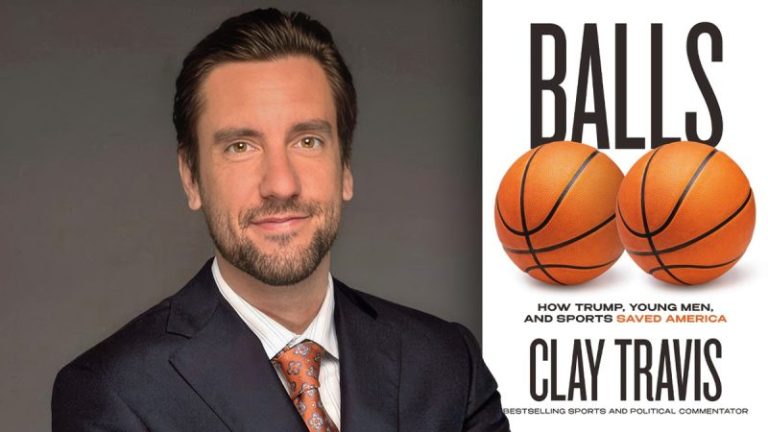
By motivating men, young men in particular, and sports fans who were fed up with the insanity of men winning women’s sports championships. I wrote about the victory in my new book, ‘Balls,’ which was released on Tuesday.  

The book addresses the landslide Trump victory, but it also asks an important question when looking forward prospectively: Now that Trump, unfortunately, isn’t able to run for reelection, how do Republicans ensure that the Trump MAGA coalition extends, and even grows, beyond his own presidency?

In 2024, the two most conservative voting groups in America were male senior citizens and young men under the age of thirty.

This has never happened before in any of our lives.

It was a cultural transformation overnight.

Trump also won record support among White, Black, Asian and Hispanic men as well, but that same momentum didn’t extend to 2025. Indeed, Tuesday’s voting results paint an ominous picture of what 2026 and 2028 could look like if young men aren’t motivated to show up and vote like they did in 2024. 

Consider the numbers: in 2024, Trump received 1.968 million votes in New Jersey and 2.075 million votes in Virginia. While he lost both states by narrow margins to Kamala Harris — by roughly 5% — he received more votes than the Virginia Democrat candidate for governor, Abigail Spanberger — who won Virginia with 1.961 million votes — and the New Jersey Democrat candidate for governor, Mikie Sherrill — who won New Jersey with 1.792 million votes. 

So how did both Democratic gubernatorial candidates win election comfortably despite receiving fewer votes than Trump did in their states a year ago? Yes, partly because it was an off-year cycle and overall turnout trended down, but they won comfortably because roughly 600,000 Trump voters didn’t show up to vote in 2025 who did show up to vote in 2024.

Who are these voters?

Young men, sports fans, blue collar workers, the Trump MAGA base that will come out to support Trump when he’s on the ballot, but won’t show up when he’s not on the ballot.

So will these voters return in 2026 and in 2028 when Trump isn’t on the ballot? That depends on how well future Republican candidates speak to these voters. Some of y’all will think I’m crazy for telling you this, but as soon as the 2026 mid-term elections are over, expect a pivot so rapid it will make your head spin — Democrats in 2027 will all argue that Trump’s unique political gifts end with him, that MAGA is over without Trump as its leader. Yep, from ‘He’s Hitler!’ to ‘He’s the most talented Republican president in any of our lifetimes,’ almost overnight.

I’m telling you, it’s coming.

Because Democrats are going to bank on Trump as a political unicorn, a candidate so talented that only he could power a coalition as substantial as he won in 2024.

So what do Republicans need to do to extend and even grow Trump’s appeal with young men? I think it’s a combination of three things, wed the policy and the personal together, as Trump has been uniquely talented at doing.

1. On the policy front, the 2024 election was about the economy, the border, and crime

It was as easy as EBC.

Trump won the arguments on all three of these fronts. So far, Trump 2.0 has ended the border as an issue by ending illegal immigration and driven crime down to record lows in many states and cities. His challenge on the economy is that Biden was so bad, it’s taking time to clean up his mess. With record high stock prices and record low gas prices, Trump is delivering for all of us with stock market assets and all of us who have to fill up our tanks.

But there’s a lingering anger over how much goods cost. Even I feel it each time I buy a Chick-fil-A meal for my family and it costs over $50. For fast food, really!

Prices went up so fast under President Joe Biden that the sticker shock is still real even in 2025. Trump has stopped the rapid price increases and, in the case of some purchases like gas, has actually brought them back lower than they were during Biden, but that bitter aftertaste of inflation takes time to wear off.

So far it hasn’t.

2. Focus on men in women’s sports

Is it the most important issue in the country?

No.

But it crystallizes the absurdity of Democrat policies for young men and sports fans, who provided the fuel to Trump’s record win in 2024.

If you believe a man should be able to win a women’s sports championship, how can I trust your opinion on anything? As I wrote in ‘Balls,’ this issue, combined with EBC, won Trump the election in 2024. 

I think that will still be the message in 2026, too, because, amazingly, Democrats have doubled and tripled down on defending men in women’s sports all over the country.

This issue isn’t going away.

3. HAVE FUN and BE ENTERTAINING.

My two favorite moments of the 2024 campaign were when Trump dressed up as a McDonald’s employee and as a garbage man and rode around in a garbage truck.

Was it absurd and ridiculous?

Of course.

But the number one gift Trump has that he receives zero credit for is this: HE’S FUNNY!

Yes, politics are serious. But they should also be fun. Trump is a happy warrior and happy warriors win.

The two most successful Republican presidents of my life were Ronald Reagan and Donald Trump. Both were, in many respects, professional entertainers. They knew how to cut through the noise and were authentic in the way they did so.

Trump isn’t perfect, none of us are, but he’s the most comfortable president in his own skin that any of us have ever seen and he has tremendous political instincts.

You can spend a hundred million on an ad campaign and not get the free media attention that Trump did, scooping out fries and talking with voters at the drive-thru in Pennsylvania. That style of politicking is unbeatable. Heck, I would argue the best version of Trump is the one you get in fast food restaurants. He genuinely loves getting out and interacting with people. That’s a skill that can’t be taught, but it can be emulated.

We used to ask the question, which candidate would you rather have a beer with? While Trump doesn’t drink — as he’s jokingly said, can you imagine what he’d say if he drank? — he’s authentic and real. As artificial intelligence takes over much of the country, I believe authenticity will become the most important political key to the realm.

Young people in particular, who are steeped in social media artificiality fed to them constantly on their phones, have an innate sense of when they’re being poll-tested and marketed to, they sniff it out better than older voters.

If you want them to show up and support you, you have to win their trust.

Which is why I truly believe the election was over when it came to male voters when Trump was shot in Butler, Pennsylvania.

In that moment, having escaped death by half an inch, Trump, whose critics had labeled him a phony, rose up and screamed, ‘Fight, fight, fight!’ three times. At that instant, the election was over for male voters.

It was the bravest presidential moment of my life.

But it was also one of the most authentic.

In times of great peril, your own personal character is revealed. In those perilous milliseconds, Trump became a legend and won the election.

He proved once and for all he had ‘Balls.’

And so far no Democrat has proven that they do.

So long as that remains the case, Republicans aren’t going to lose men.

Which is why the best example of an oxymoron in America today isn’t ‘jumbo shrimp,’ it’s ‘masculine Democrat.’

Because after all, there are certainly big shrimp, but there are still no masculine democrats.

Clay Travis is the author of the new book, ‘Balls: How Trump, Young Men and Sports Fans Saved America.’ Buy it here.

This post appeared first on FOX NEWS

U.S.-based companies announced more than 153,000 job cuts in October, the research firm Challenger, Gray & Christmas reported Thursday.

“This is the highest total for October in over 20 years, and the highest total for a single month in the fourth quarter since 2008,’ the firm said in a news release.

From January through the end of October, employers have announced the elimination of nearly 1.1 million jobs. It’s the most Challenger has recorded since 2020, when the Covid-19 pandemic shut down the global economy.

“October’s pace of job cutting was much higher than average for the month,’ Andy Challenger, the firm’s chief revenue officer, said in a statement. The last time there was a higher October monthly total was in 2003.

“Some industries are correcting after the hiring boom of the pandemic, but this comes as AI adoption, softening consumer and corporate spending, and rising costs drive belt-tightening and hiring freezes,” he said.

On Wednesday, the private payroll processor ADP released its own October jobs data, showing that employers added just 42,000 jobs in the month.

The ADP report also flagged job losses in the leisure and hospitality sector as a potential sign of trouble ahead, given the industry’s acute sensitivity to consumer sentiment.

ADP’s chief economist called the losses in hospitality and leisure a ‘concerning trend.’

Both Challenger and ADP’s reports landed as major companies such as Amazon, IBM, UPS, Target, Microsoft, Paramount and General Motors announced plans to eliminate tens of thousands of jobs.

Despite the wave of downbeat economic news, the Trump administration continues to deliver an upbeat take on the current environment.

“Jobs are booming” and “inflation is falling,” Treasury Secretary Scott Bessent said Tuesday.

However, the most recent available data paints a different picture.

Inflation has also been on the rise. Prices as measured by the Consumer Price Index overall have risen every month since April.

A spokesperson for the Treasury Department did not immediately reply to a request for comment on the Challenger report.

Challenger’s report does not typically carry the same weight with economists and investors as federal jobs data, owing to its methodology.

To arrive at its figures, the firm compiles the number of job cuts companies have publicly announced. But employers may not ultimately carry out all the cuts they roll out.

Moreover, some of the job cuts that multinational companies announce could affect workers outside of the United States. Other headcount reductions could be achieved through attrition, rather than layoffs. The report also may not capture smaller layoffs over the long run.

But in the midst of a federal data blackout caused by the government shutdown, Challenger’s latest report is being read more closely than usual.

The federal government’s October jobs report that would traditionally be released Friday will not be published this week, due to the shutdown.

Other key data about the U.S. economy like GDP and an inflation indicator called PCE, closely watched by the Federal Reserve, has also been delayed.

Challenger equated the impact of AI on the current labor market to the rise of the internet in the early aughts. “Like in 2003, a disruptive technology is changing the landscape,” it said.

‘Technology continues to lead in private-sector job cuts as companies restructure amid AI integration, slower demand, and efficiency pressures,’ Challenger said.

But even firms that are not actively cutting jobs have warned that they do not plan to add to their headcount in the near term, with several pointing directly to AI’s impact on their personnel needs.

On Wednesday night, JPMorgan Chase CEO Jamie Dimon told CNN that headcount at his company would likely remain steady as the nation’s largest bank rolls out AI internally.

Goldman Sachs CEO David Solomon also recently told his employees that the firm would ‘constrain headcount growth through the end of the year,’ as it takes advantage of AI efficiencies, Bloomberg reported.

This post appeared first on NBC NEWS