Archive

November 2025

Browsing

The conservative movement has found itself in a season of confusion in recent weeks. Former friends quarrel, familiar institutions are in turmoil, and some voices, both new and old, on the right have begun to wonder aloud whether the United States should still stand with Israel. 

That question deserves a resolute answer, and the answer is this: for our security, for democracy in the Middle East and for the very destiny of our nation, America must stand with Israel.

Americans should always be open to debate how we spend our money abroad and whether our foreign policy truly serves national interest. The rising generation in particular demands rigorous answers beyond empty platitudes.  

But lately, it seems that something deeper, something darker, has driven those questions. After decades of conflict in the Middle East, some are tempted to embrace isolationism, to treat moral clarity as naïveté, and to spurn our allies as unwanted burdens under the strain of massive national debt. For others, it is nothing more than antisemitism.  

The acceptance of antisemitic voices on the left and the right, from the halls of Congress to social media, represents a vile and dangerous trend in American politics, and it must be forcefully opposed wherever it appears. There is no place in the conservative movement for antisemitism.


For nearly 80 years, the bond between the United States and Israel has been more than a diplomatic arrangement. It has been a covenant of free peoples who share the same ideals: faith in God, belief in human dignity and gratitude for the blessings of liberty. Israel’s survival has never depended on our charity; it has depended on our partnership, and that partnership has made America safer and paid dividends. 

Centuries before the founding of modern Israel, our Founding Fathers championed the return of the Jewish people to Israel and made special provision for the Jewish faith in America. George Washington assured Jewish Americans that the fledgling United States ‘gives to bigotry no sanction, to persecution no assistance.’ John Adams supported ‘the Jews again in Judea’ as ‘an independent nation.’ Elias Boudinot, the president of the American Revolution’s Congress, boldly suggested that ‘God has raised up these United States… for the very purpose of… bringing his beloved people to their own land.’ Even the famously thrifty Benjamin Franklin once opened his coffers to help a local Philadelphia synagogue weather financial difficulty.  

But the case for Israel is far more than historic.


Today, Israel stands as an oasis of democracy in a Middle East where dozens of its neighbors are Islamic states or still practice monarchy. It is a cruel irony that, in a world of 46 majority-Muslim nations, the presence of a single majority-Jewish nation is seen by many of Israel’s neighbors as one too many. Thirty-one countries still refuse to recognize Israel on their maps. Some of those would love nothing less than to see Israel wiped off the map altogether. And yet Israel persists.  

Thanks to Israel’s courage and the decisive strike on Iran’s nuclear facilities by the United States, we no longer live under a nuclear sword of Damocles wielded by a regime that chants ‘Death to America.’ From the Stuxnet cyber operation that crippled Iran’s enrichment program, to Israel’s assistance with U.S. airstrikes, and to many heroic covert operations, Israel has repeatedly helped delay Tehran’s progress toward obtaining nuclear weapons. Those actions protected not only Jerusalem and Tel Aviv – they protected Washington, New York and every American city within reach of Iran’s hatred. 

That may not matter much to a segment of the New Right that confuses isolation for safety. But the rest of us know better. We understand what it would mean if the world’s leading state sponsor of terrorism ever possessed nuclear weapons.  When Israel takes the fight to Iran’s terror network proxies like Hezbollah, Hamas and the Revolutionary Guard, it is not merely doing our bidding; it is doing what conscience and common sense require. It stands between civilization and chaos. Israel’s cause is our cause.  

When Israel succeeds, as it did in 2024 by decapitating Hezbollah’s leadership in a precision pager-bombing campaign, America is safer. The practical case for our alliance is clear.

Centuries before the founding of modern Israel, our Founding Fathers championed the return of the Jewish people to Israel and made special provision for the Jewish faith in America.

But the heart of American support is still a matter of shared values and faith. We stand with Israel because we believe in right over wrong, in good over evil, and in liberty over tyranny. Israel must be empowered to finish the fight against those who would harm her, terrorists who hide behind women, children, hospitals and holy places as they launch rockets indiscriminately into Israel. Peace and justice, within Gaza and without, require that Hamas be destroyed. 

In the end, Americans have always supported Israel because the very existence of this enduring nation bears witness to God’s faithfulness. And the support of millions of Americans throughout the generations has been built upon the ancient words recorded in Genesis where God promises to ‘bless those who bless you, and whoever curses you I will curse, and all peoples on earth will be blessed through you.’

For 250 years, America has been blessed like no other country in history. As we prepare to celebrate our blessings as a nation, I believe we must never forsake that promise or our cherished ally. If the world knows nothing else, let the world know this: America stands with Israel. 
This post appeared first on FOX NEWS

Elliott Investment Management has reportedly taken a large stake in Barrick Mining (TSX:ABX,NYSE:B), the Financial Times reported on Tuesday (November 18), adding activist pressure to the gold producer, which is already dealing with escalating operational problems and a leadership shakeup.

The moves comes just weeks after the abrupt September exit of former CEO Mark Bristow, and as Barrick’s new chief executive, Mark Hill, begins overhauling the company’s regional structure.

In an internal memo seen by Bloomberg, Hill said Barrick will fold its Pueblo Viejo mine in the Dominican Republic into its North American division and merge its Latin America and Asia Pacific operations to improve performance.

Elliott’s investment also comes during a challenging phase for Barrick.

The company has been hit by rising costs at key North American assets and the loss of its most profitable operation, the Loulo-Gounkoto mine in Mali, after the military junta seized control earlier this year.

The dispute, which was tied to Mali’s new mining tax code, resulted in 3 metric tons of gold being taken by the state and the detention of four Barrick employees. The asset loss also triggered a roughly US$1 billion writeoff.

The setbacks have left Barrick trailing behind its peers despite a powerful gold price rally. Company shares are up 117 percent in the past year, compared with an average 130 percent gain among major rivals.

Barrick’s performance has company executives weighing their options.

As mentioned, a split into two companies is being considered. Four people told Reuters that this could involve one firm focused on North America and another holding assets in Africa and Asia. Another option would involve selling Barrick’s Africa portfolio outright, along with the Reko Diq project in Pakistan once financing is secured.

Barrick is also trying to resolve its dispute with Mali before pursuing a sale of that operation.

Investors have pushed similar ideas before, but were stifled due to the company’s North American footprint.

The company’s core US asset is Nevada Gold Mines, which it operates in partnership with Newmont (NYSE:NEM,ASX:NEM), and the sentiment has been that “there is not much of value” in Barrick’s remaining mines.

Bloomberg reported last month that Newmont was looking at whether a transaction could give it control of the Nevada operations it shares with Barrick, but discussions have not advanced since then.

Elliott, meanwhile, has a long record of targeting miners, including Anglo American (LSE:AAL,OTCQX:AAUKF) and Kinross Gold (TSX:K,NYSE:KGC), and often pushes for structural changes.

For Barrick, the challenge now is stabilizing its operations, while deciding how far to go with strategic restructuring in today’s historically high gold price environment.

Securities Disclosure: I, Giann Liguid, hold no direct investment interest in any company mentioned in this article.

This post appeared first on investingnews.com

A U.S. citizen jailed in Saudi Arabia for criticizing the royal family online was freed Wednesday by Saudi authorities, ending a four-year ordeal in the country, according to media reports.

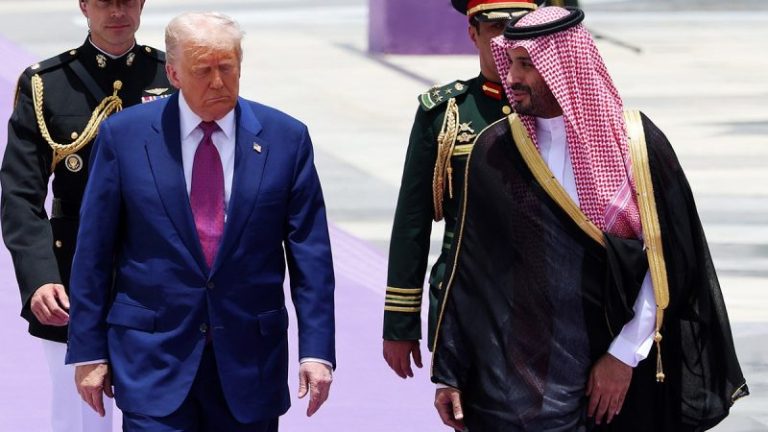
Saad Almadi’s release came just a day after President Donald Trump met with Crown Prince Mohammed bin Salman in Washington, D.C., per the New York Post.

Almadi, 75, a retired engineer and U.S. resident since 1976, was detained in 2021 during a family visit to Riyadh and later sentenced to more than 19 years in prison on terrorism charges tied to a series of posts online.

The charges were reduced to cyber crimes, and although he was released from prison in 2023, Almadi was held in the country under an exit ban which prevented him from going back home to the U.S.

The Almadi family issued a statement Wednesday celebrating the good news and thanking Trump.

‘Our family is overjoyed that, after four long years, our father, Saad Almadi, is finally on his way home to the United States!’ they said.

‘This day would not have been possible without President Donald Trump and the tireless efforts of his administration. We are deeply grateful to Dr. Sebastian Gorka and the team at the National Security Council, as well as everyone at the State Department.’

A third portion of the statement expressed appreciation to others who had supported the case over the years.

‘We extend our thanks to the U.S. Embassy in Riyadh for keeping our father safe, and to the nonprofit organizations and members of Congress who fought for his freedom,’ the statement read.

Almadi’s case also drew attention from human rights groups and U.S. lawmakers after he was accused of terrorism over 14 social media posts.

One suggested that a street in Washington be renamed after Jamal Khashoggi, who was murdered in the Saudi Consulate in Istanbul in 2018.

U.S. pressure to lift Almadi’s exit ban had also intensified since Trump’s May visit to Saudi Arabia.

The president’s national security advisor, Sebastian Gorka, also met with Almadi’s son at the White House.

The Foley Foundation, which advocates for Americans detained overseas, praised the news Wednesday, saying it was ‘so excited’ the family’s fight had finally succeeded.

Per reports, Almadi was flying to the U.S. from Riyadh on Wednesday, according to his family, after Trump and the crown prince set foot on stage at a forum in Washington.

Fox News Digital has reached out to Sebastian Gorka, the Department of State and The White House for comment.

This post appeared first on FOX NEWS

(TheNewswire)

Vancouver, British Columbia, November 19, 2025 TheNewswire – Prismo Metals Inc. (the ‘ Company ‘) (CSE: PRIZ,OTC:PMOMF) (OTCQB: PMOMF) is pleased to report that it has completed a detailed exploration program at the Black Diamond area of its Silver King Project located in Arizona. Work consisted of mapping and sampling of the area including the Black Diamond copper replacement body and the newly encountered strongly altered felsic intrusion with stockwork veining.  A handheld XRF analyzer was used to complete a soil geochemistry grid and to analyze selected rock samples in a qualitative manner. Additionally, an IP survey was recently initiated over the Silver King land package, with results expected by the first week of December.

Figure 1 .  Map showing the location of the Black Diamond replacement and felsic intrusion exploration targets at the Silver King project.  Claim boundaries are shown in yellow.

The soil survey defined a large copper anomaly over the Black Diamond replacement body along with some anomalous gold values. Previous rock samples have shown the copper-gold association of mineralization in replacement mineralization. The soil survey also showed Zn, Pb, Ag and Sb anomalies associated with the felsic intrusion. This intrusion is strongly sericitized and is cut by moderate to strong stockwork quartz veins with locally abundant iron oxides after pyrite.

XRF analysis of rock samples in the area was also completed. Although XRF analyses on rocks are generally qualitative and are not valid assays as are rock samples assayed by the geochemical laboratories, they do indicate the presence of the metals of interest and are useful as guides to mineralization.

XRF analyses of individual quartz veinlets in the stockwork hosted by the felsic intrusion locally indicate the presence of silver, lead and zinc as well as some antimony.  During the exploration program, Prismo’s geological team took 34 rock chip samples over the area. These samples were submitted to the laboratory with assay results expected in the coming weeks.

Craig Gibson, Chief Exploration Officer of the Company, stated: ‘These results confirm Black Diamond as a copper-gold replacement body target as was indicated from previous work, making this area a compelling drill target. The data collected from the felsic intrusion indicated that it is mineralized, a feature that was not indicated in reports from previous work by Fischer Watt in 1980, although they considered it a prime target based on alteration mineralogy and fluid inclusion studies 1 .’

Drill Permit Update

Prismo also announced that the Forest Service, the federal surface land management entity for Silver King, has determined that the Company’s proposed drill plan meets the regulatory requirements for processing, and that such plan is complete, as described in the regulations at 36 CFR 228.4(c).

The Forest Service will now proceed with the environmental analysis pursuant to 36 CFR 228(a)(5) in conformity with the National Environmental Policy Act (NEPA). This analysis will proceed as a Categorical Exclusion, the lowest level of environment reviews applicable to projects that are not expected to have a significant effect on the environment, such as Silver King.

Alain Lambert, CEO of Prismo stated: ‘We are pleased with the steady progress on the permitting front, especially given the now resolved US government ‘shutdown.’

Mr. Lambert added: ‘With the closing of our recent oversubscribed financing, we are fully funded for the first two phases of drilling. In Phase 1, we plan a drill program at the historic Silver King mine site for about 1,000 meters. That drill plan is designed to test the upper half of the steeply dipping pipelike Silver King mineralized body as well as potential mineralization adjacent to the dense stockwork that was the focus of historic mining.’

Figure 2 . Cross section through the Silver King mine workings showing proposed drill holes (in black) to test the pipelike mineralized body (in red)

Given the Company’s recent discoveries, Prismo has added a second phase of drilling for an additional 1,000 meters. This additional program will focus on the newly identified targets outside of the historic mining area, such as the polymetallic vein and the copper vein mentioned above. Drilling of the large body of replacement mineralization on the patented Black Diamond claim is also being planned and is road accessible on private ground.

1 Haynes, F. and Reynolds, 1980, Silver King Breccia Pipe Prospect, unpublished report, Fischer-Watt Mining Co., 5p.

QA/QC

XRF analyses are considered to be qualitative in nature and cannot be considered to be representative of commercial assays.  XRF soil analyses are useful as they indicate variations in metal contents to represent anomalies, although the actual values of the metals present are not necessarily the same as those obtained from commercial geochemical analyses.  The company uses commercial standards when using the XRF analyzer.

Qualified Person

Dr. Craig Gibson, PhD., CPG., a Qualified Person as defined by NI-43-01 regulations and Chief Exploration Officer and a director of the Company, has reviewed and approved the technical disclosures in this news release.  The historic data presented in this press release was obtained from public sources, should be considered incomplete and is not qualified under NI 43-101, but is believed to be accurate. The Company has not verified the historical data presented and it cannot be relied upon, and it is being used solely to aid in exploration plans. References to mineralization at the Magma Mine and Resolution Copper deposit is not necessarily indicative to the mineralization on the Silver King property.

About the Silver King

Discovered in 1875, the Silver King mine was one of Arizona s most important historic producers, yielding nearly 6 million ounces of silver at grades of up to 61 oz/t.  The Silver King mine sits only 3 km from the main shaft of the Resolution Copper project — a joint venture between Rio Tinto and BHP and one of the world s largest unmined copper deposits with an estimated copper resource of 1.787 billion metric tonnes at an average grade of 1.5% copper (1) . The unique land position is fully surrounded by Resolution Copper s claim block, offering strategic upside. Selected samples from small-scale production in the late 1990s returned grades as high as 644 oz/t silver (18,250 g/t) and 0.53 oz/t gold (15 g/t), indicating that high-grade mineralization remains.

About Prismo Metals Inc.

Prismo (CSE: PRIZ,OTC:PMOMF) is a mining exploration company focused on advancing its Silver King, Ripsey and Hot Breccia projects in Arizona and its Palos Verdes silver project in Mexico.

Please follow @PrismoMetals on , , , Instagram , and

Prismo Metals Inc.

1100 – 1111 Melville St., Vancouver, British Columbia V6E 3V6

Phone: (416) 361-0737

Contact:

Alain Lambert, Chief Executive Officer alain.lambert@prismometals.com

Gordon Aldcorn, President gordon.aldcorn@prismometals.com

Cautionary Note Regarding Forward-Looking Information

This release includes certain statements and information that may constitute forward-looking information within the meaning of applicable Canadian securities laws. Forward-looking statements relate to future events or future performance and reflect the expectations or beliefs of management of the Company regarding future events. Generally, forward-looking statements and information can be identified by the use of forward-looking terminology such as intends’ or anticipates’, or variations of such words and phrases or statements that certain actions, events or results may’, could’, should’, would’ or occur’. This information and these statements, referred to herein as ‘forward‐looking statements’, are not historical facts, are made as of the date of this news release and include without limitation, statements regarding discussions of future plans, estimates and forecasts and statements as to management’s expectations and intentions with respect to, among other things: the timing, costs and results of drilling at Silver King.

These forward‐looking statements involve numerous risks and uncertainties, and actual results might differ materially from results suggested in any forward-looking statements. These risks and uncertainties include, among other things: delays in obtaining or failure to obtain appropriate funding to finance the exploration program at Silver King.

In making the forward-looking statements in this news release, the Company has applied several material assumptions, including without limitation, that: the ability to raise capital to fund the drilling campaign at Silver King and the timing of such drilling campaign.

Although management of the Company has attempted to identify important factors that could cause actual results to differ materially from those contained in forward-looking statements or forward-looking information, there may be other factors that cause results not to be as anticipated, estimated or intended. There can be no assurance that such statements will prove to be accurate, as actual results and future events could differ materially from those anticipated in such statements. Accordingly, readers should not place undue reliance on forward-looking statements and forward-looking information. Readers are cautioned that reliance on such information may not be appropriate for other purposes. The Company does not undertake to update any forward-looking statement, forward-looking information or financial outlook that are incorporated by reference herein, except in accordance with applicable securities laws. We seek safe harbor.

Copyright (c) 2025 TheNewswire – All rights reserved.

News Provided by TheNewsWire via QuoteMedia

This post appeared first on investingnews.com

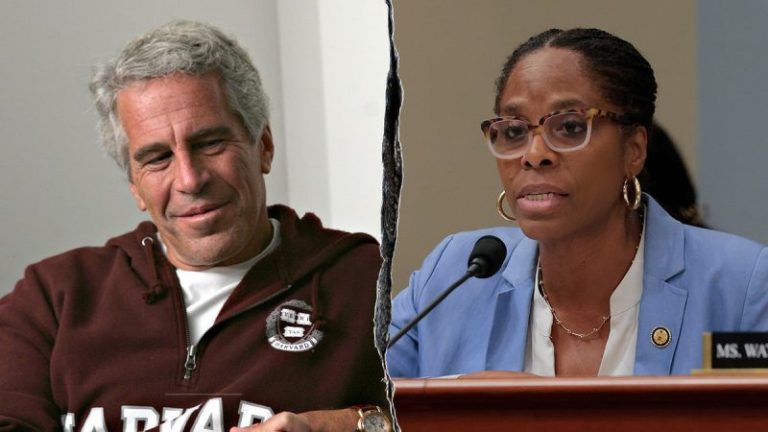
A House Freedom Caucus-led bid to strip a member of the House Democratic Caucus of her role on a high-profile committee after her ties to Jeffrey Epstein were revealed earlier this month failed on Tuesday night.

Lawmakers voted against censuring Del. Stacey Plaskett, D-V.I., the Virgin Islands’ nonvoting delegate in the House of Representatives, over newly surfaced text messages between her and Epstein that were exchanged during the February 2019 congressional testimony of Michael Cohen.

The censure had also included language to remove Plaskett from the House Permanent Select Committee on Intelligence, which oversees entities like the FBI and CIA and regularly receives classified briefings on matters of national security.

Three Republicans joined Democrats to kill the measure, while three more Republicans voted ‘present.’ It ultimately failed in a 209-214 vote.

The three Republicans who voted against censuring Plaskett were Reps. Lance Gooden, R-Texas, Don Bacon, R-Neb., and Dave Joyce, R-Ohio.

House Homeland Security Committee Chairman Andrew Garbarino, R-N.Y., voted ‘present’ along with Reps. Dan Meuser, R-Pa., and Jay Obernolte, R-Calif.

Rep. Ralph Norman, R-S.C., who introduced the resolution, said during debate on the measure on Tuesday, ‘The House of Representatives has a responsibility and a duty to protect the integrity of this institution. And what we learn from the documents released by Jeffrey Epstein’s estate is nothing short of alarming.’

Those documents show that Delegate Stacey Plaskett, a sitting member of Congress, coordinated her questioning during an Oversight — an official Oversight hearing, with a man who was a convicted sex offender, a man whose crimes against minors shocked this entire nation.’

Rep. Jamie Raskin, D-Md., who led Democrats’ rebuttal against the resolution, called the measure ‘one more pathetic effort to distract and divert attention from the fact that the president’s name appeared more than a thousand times already in the small fraction of material released on Epstein.’

He also repeatedly referred to Epstein as Plaskett’s ‘constituent’ over his primary residence having been in the Virgin Islands.

Texts exchanged during the 2019 hearing, in which Cohen accused President Donald Trump of a scheme to pay off mistresses to hide evidence of extramarital affairs during his 2016 presidential bid, show Epstein taking a heavy interest in Plaskett’s questioning.

Epstein appeared to guide Plaskett’s lines of questioning at times. One text showed him saying, ‘Hes opened the door to questions re who are the other henchmen at trump org.’

Plaskett was shown to respond, ‘Yup. Very aware and waiting my turn.’

Republicans have seized on Plaskett’s messages with Epstein as proof of a double standard by Democrats on the late pedophile financier’s case.

House Democrats have been arguing for transparency in pushing to uncover any potential improper links between Trump and Epstein but have been largely silent on Plaskett in the days since her ties to him surfaced.

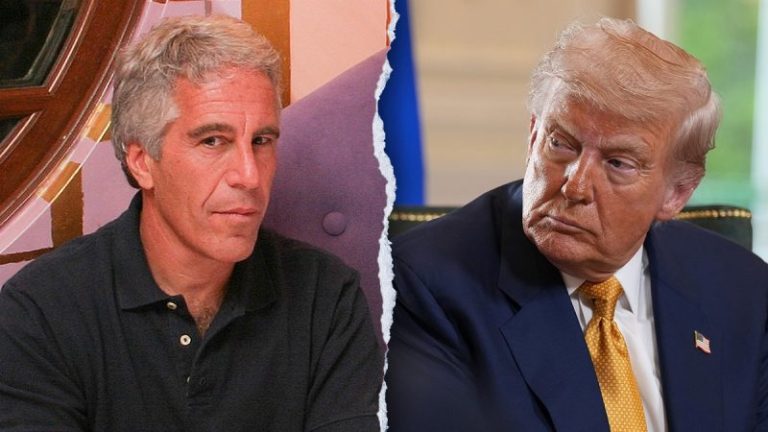
Neither Plaskett nor Trump has been accused of any wrongdoing connected to Epstein’s crimes, however.

Raskin accused Republicans on Tuesday of robbing Plaskett of her right to due process.

‘Without even going to the Ethics Committee, much less a court, they want to arraign her on some charges based on a newspaper article, that she did something lawful — however ill-advised — it may have been. She took a phone call from one of her constituents,’ Raskin said.

‘Where is the ethical transgression? Where is the legal transgression? Are you saying anybody on your side of the aisle who had a phone call with Jeffrey Epstein should be censured?’

Plaskett’s texts with Epstein were reported in a number of media outlets, but they were first found in a tranche of documents from Epstein’s estate and handed over to the House Oversight Committee.

‘I got a text from Jeffrey Epstein, who, at the time was my constituent — who was not public knowledge at that time, that he was under federal investigation — and who was sharing information with me,’ she said in her own defense on Tuesday.

Plaskett also pointed out her years of experience as a prosecutor when arguing she was not seeking advice on her line of questioning.

It’s worth noting, however, that while the federal probe into Epstein was not public knowledge, he first faced charges related to the exploitation of underaged girls as early as 2006.

The vote comes after a Democrat-led bid to refer Plaskett’s case to the House Ethics Committee, rather than moving forward with the censure resolution, failed to pass in a narrow 213-214 vote.

The House of Representatives had earlier moved to force the Department of Justice (DOJ) to release all of its unclassified Epstein files in an overwhelming 427-1 vote.

This post appeared first on FOX NEWS

Rio Tinto (ASX:RIO,NYSE:RIO,LSE:RIO) said on Monday (November 17) that it has signed a joint development agreement with environmental technology company Calix (NYSE:CALX,ASX:CXL) to develop Calix’s Zero Emissions Steel Technology (Zesty) green iron demonstration plant in Western Australia.

If approved, the plant will be built at a site in Kwinana, south of Perth, that was previously earmarked for Rio Tinto’s BioIron research and development facility and associated pilot plant.

Under the deal with Calix, Rio Tinto will invest more than AU$35 million, pending project milestones. Funding from the mining giant will include both in-kind and financial contributions.

The plant received AU$44.9 million in Australian Renewable Energy Agency support in July.

Rio Tinto’s work will include helping Calix reach a final investment decision through technical support, engineering services and advocacy. Subject to a final investment decision and successful project construction, Rio Tinto will provide up to 10,000 tonnes of various Pilbara iron ores for plant commissioning and the initial testing phase.

The miner will also provide introductions to potential customers for downstream use of the Zesty product.

“The world needs low-emissions steel if it is going to decarbonise, and we continue to look at a range of ways Pilbara iron ores can help to do this as new technologies emerge,” said Rio Tinto Iron Ore Chief Executive Matthew Holcz.

He added that Rio Tinto will keep progressing BioIron with its partners, the University of Nottingham and Metso. However, the company has decided that the current furnace design requires additional development.

“Both projects are part of our work to reduce emissions and support the future of iron ore in Australia and the communities that depend on it,’ Holcz added, referring to Zesty and BioIron.

Securities Disclosure: I, Gabrielle de la Cruz, hold no direct investment interest in any company mentioned in this article.

This post appeared first on investingnews.com

House Republicans are cautiously supportive of a bipartisan bill aimed at forcing the Department of Justice (DOJ) to release all its files on Jeffrey Epstein’s case after President Donald Trump gave the bill his stamp of approval on Sunday night.

GOP lawmakers who spoke with Fox News Digital Monday evening said they would vote for the bill and were optimistic their colleagues would as well — though many of them said they still had concerns about how it was written.

It comes after Speaker Mike Johnson, R-La., who had been against the bill but pushing parallel transparency efforts in Epstein’s case, said he hoped it would undergo material changes when it reached the Senate to give more protection for innocent people whose names may appear in the files against their wishes.

‘I have real concerns about the discharge language in the House draft,’ Johnson said. ‘But I do have some comfort that, I think if and when it’s processed in the Senate, that they’ll be able to correct some of those concerns, if we have the protection of victims and whistleblowers and all the rest.’

The legislation is coming to the House floor on Tuesday afternoon via a mechanism called a discharge petition led by Rep Ro. Khanna, D-Calif., and Rep. Thomas Massie, R-Ky. The latter has found himself at odds with both Johnson and Trump on several key issues this year.

A discharge petition allows a bill to get a House-wide vote against leaders’ wishes, provided the petition gets support from most lawmakers in the chamber — which in this case, it did last week.

Rep. Byron Donalds, R-Fla., a Trump ally who is running for governor in Florida, said he would vote for the bill but shared Johnson’s concerns.

‘Number one, Congress has never released criminal files ever in the history of Congress. Two, there are victims, and I know we’re supposed to be trying to do what we can to sanitize their names or cover their names or redact their names, but you know, that doesn’t mean it’s going to be foolproof,’ Donalds said.

‘You could have victims that don’t want to be released, be identified, and then they have to go relive this again. What about those women? What if those women have kids now? What if those women have husbands now and they don’t want to go through this? So I think there’s a reason why political bodies don’t release criminal files.’

Donalds said he would vote to release the files, however, to move past this chapter and help victims get closure.

‘It’s become such a huge distraction here on Capitol Hill. And I do want to see justice for those victims, if they were abused,’ he said.

Republican Study Committee Chairman August Pfluger, R-Fla., said, ‘I’m gonna vote in favor of it, but it’s not perfect, and there’s a lot of things that need to be addressed.’

‘Transparency is key. My district needs transparency. The president has nothing to hide, but things that need to be fixed, have to be fixed in the Senate,’ Pfluger, who pledged to support the bill before Trump’s blessing, said.

Rep. Erin Houchin, R-Ind., said she had similar concerns ‘from the start.’

‘Once it goes to the Senate, if the Senate believes they need to have broader or, you know, bigger protections, then I think that’ll be up to the Senate to decide, but I’m ready to vote this out of the House and send it over to the Senate and get moving on it,’ Houchin said.

A member of the conservative House Freedom Caucus, Rep. Andy Ogles, R-Tenn., questioned whether such a move by Congress could get in the way of the DOJ’s active probes into Epstein.

‘I have concerns as well. I mean, you have the Department of Justice investigations taking place. Are we inadvertently interfering?’ he posed.

Ogles said, however, that he believed most House Republicans like himself would back the bill.

‘With the president coming out in support of it, I think that sends a clear message that he’s not afraid of what’s in it, the Democrats should be,’ he said.

Rep. Rich McCormick, R-Ga., similarly said he believed Trump’s support alleviated some difficulties for Republicans.

‘I think it releases any angst they might have when we’re voting for it,’ McCormick said. ‘I think most people will vote for it, I don’t think it’s going to be a controversial bill at all.’

Houchin told Fox News Digital, ‘I think he moved the needle tremendously, just to say, you know, let’s have a vote on it and let’s stop talking about it.’

But Rep. Russell Fry, R-S.C., disagreed that Trump’s support had a significant effect on shifting the tide.

‘I mean, maybe a little bit, but I think people were largely there anyway,’ Fry said. ‘We talked about this on the campaign trail, The guy was a total dirtbag, did unspeakable atrocities on women in our country, and the public wants closure…this has been the most transparent Congress and administration on this subject in the country’s history.’

Trump posted on Truth Social on Sunday night, ‘House Republicans should vote to release the Epstein files, because we have nothing to hide, and it’s time to move on from this Democrat Hoax.’

It appeared to lead to Rep. Troy Nehls, R-Texas, who notably said he would oppose the measure on Friday, changing his mind as of Monday night. He told reporters ‘everybody’ would vote in favor of the bill and pointed out, ‘Donald Trump made a decision.’

House Oversight Committee Chairman James Comer, R-Ky., who was leading the Johnson-backed probe into Epstein, appeared similarly resigned on Monday.

‘At this point, I just think the best thing to do — there’s so much media frenzy and curiosity about this, and you know, the survivors act like they want everything to come out. I want everything to come out….any other villains in this, we’ll try to figure out what we can,’ he said.

And Massie told reporters that same evening that he would be open but cautious about any changes to his bill in the Senate.

‘If the Senate wants to improve this bill without limiting the disclosure, that would be fine by me. But if they try to monkey it up, I think those senators are gonna get in front of a freight train and be in a lot of trouble with their supporters,’ he warned.

Massie told Fox News Digital of Johnson’s concerns, ‘He needs to be for it or against it. I think he’s going to vote for it, so he must think there’s more good than bad.’

Senate Majority Leader John Thune, R-S.D., has not yet said what he would do if the bill passed the House on Tuesday.

This post appeared first on FOX NEWS

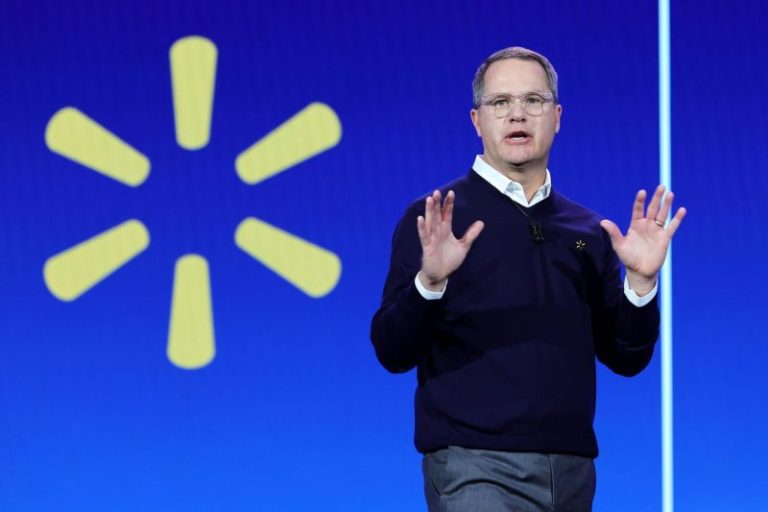
Walmart announced Friday that longtime CEO Doug McMillon will retire at the end of January — which came as a surprise to some given the company’s success in a rapidly evolving retail landscape.

John Furner, Walmart’s U.S. CEO, will assume the role of overall CEO on Feb. 1, the company said. McMillon will continue to serve in an executive and advisory role through January 2027. Furner, 51, began his career at Walmart as an hourly associate.

McMillon, 59, has held the top job since 2014 and is only the fifth person to lead the storied company in its 63-year history.

McMillon has overseen a radical transformation of Walmart’s image in a little over a decade.

In 2014, Walmart had a reputation as a budget retail option and was accused of underpaying its associates. Today, it draws more well-to-do shoppers and has earned credit for adopting innovative personnel policies.

McMillon also built up Walmart’s e-commerce operation into the country’s second-largest, behind only Amazon. Over the course of McMillon’s tenure, the value of Walmart’s shares has increased some 300%.

“Serving as Walmart’s CEO has been a great honor and I’m thankful to our Board and the Walton family for the opportunity,” McMillon said in a statement. “I’ve worked with John for more than 20 years. … He’s uniquely capable of leading the company through this next AI-driven transformation.”

America’s retail landscape continues to rapidly evolve, as consumer spending habits increasingly bifurcate between wealthier households and everyone else.

However, Walmart’s quarterly results have held steady — and the company has been justly rewarded by investors. Just this year, Walmart shares have climbed around 13%. Over the course of McMillon’s tenure, the retailer’s stock price is up some 300%.

On Walmart’s most recent earnings call in August, McMillon indicated the company has been able to withstand the broader pressures facing consumers. Its shoppers’ “behavior has been generally consistent,” he said. “We aren’t seeing dramatic shifts.”

Other retailers have not been so fortunate.

Target’s shares have lost about one-third of their value this year, as the chain works to regain its footing in a more value-conscious environment. In August, longtime CEO Brian Cornell announced plans to step down.

Amazon, meanwhile, has fared slightly better as consumers continue to prioritize the convenience of online shopping. But it recently announced thousands of layoffs affecting corporate employees. Amazon’s share price has climbed about 8% this year.

McMillon has also steered Walmart through a volatile period in U.S. politics, during which elected officials have engaged directly with companies and consumers have proven willing to boycott corporate giants over social issues.

Walmart found itself in President Donald Trump’s crosshairs in May, after it signaled plans to increase some prices in response to his tariffs.

“Walmart should STOP trying to blame Tariffs as the reason for raising prices throughout the chain,” Trump wrote on his Truth Social platform. “Between Walmart and China they should, as is said, ‘EAT THE TARIFFS,’ and not charge valued customers ANYTHING. I’ll be watching, and so will your customers!!!”

While subsequent reports indicated that Walmart had indeed increased prices on some items, McMillon said in August that the changes were gradual enough that consumer habits shifted only modestly.

Six months after Trump singled Walmart out over tariffs, he did so again — but for a very different reason.

In recent weeks, the Trump White House has repeatedly touted Walmart’s 2025 Thanksgiving menu package — which costs less overall than the retailer’s similar menu did last year — as a sign that the president’s economic policies have helped drive down grocery prices for consumers.

But there is a flaw in that rationale. This year’s Walmart Thanksgiving menu contains fewer items than last year’s menu did.

This post appeared first on NBC NEWS

Brunswick Exploration Inc. (TSX-V: BRW, OTCQB: BRWXF; ‘ BRW ‘ or the ‘ Company ‘) is pleased to announce inaugural drilling results from its Anatacau Main Project, located in the Eeyou Istchee-James Bay region of Quebec. All drillholes were centered on the Anais showing and intercepted multiple, large spodumene-bearing pegmatites with rich lithium mineralization. The pegmatites are found along a major deformation corridor, reminiscent of the neighboring Galaxy deposit owned by Rio Tinto located 22 kilometers to the West.

Highlights include:

  • 1.66% Li2O over 47.2 meters in drill hole AN-25-05 within a larger package of continuous lithium mineralization (present within both country rock and pegmatites) of 120.7 meters at 1.31% Li2O .
  • Very high cesium values intercepted in multiple secondary sub-parallel dykes including 1.46% Cs2O over 1 meter and 0.8% Cs2O over 1 meter.
  • This latest discovery is now drill traced over 170 meters of strike length and is open in all directions.

Mr. Killian Charles, President and CEO of BRW, commented: ‘Today’s exciting results underscores the opportunities across our continuously growing portfolio. We are rapidly starting to define a sizeable lithium system at Anatacau Main which, importantly, remains open in all directions. Furthermore, we are seeing mineralization constrained to the same structural corridor that is found at Rio Tinto’s Galaxy project (54.3Mt M&I at 1.30% Li2O and 55.9Mt Inferred at 1.29%, see Note ) and BRW’s Anatacau West. At Anatacau Main, we control over 18 kilometers of this highly prospective corridor which will be the focus of subsequent work in Q1 2026.

Between these strong results at Anatacau, a forthcoming maiden resource estimate for Mirage, an inaugural drill campaign in Greenland and further growth opportunities beyond the existing portfolio, Brunswick Exploration is among the most exciting companies in the lithium exploration space.’

Table 1 : Mineralized Intercepts from Inaugural Drilling Program at Anatacau Main

True thickness is estimated between 65% and 85%

Figure 1 : Surface Map of the Anatacau Main Project and Drill Holes Completed to Date

Results Interpretation

The largest pegmatite outcrop observed at the Anais showing has now been extended to over 170 meters in strike length and to a maximum depth of 98 meters. It remains open in all direction with an apparent thickness of 47.2 meters (DDH AN-25-05) at its widest point. The main pegmatite dyke is interpreted to be dipping 85 degrees to the West. Several other, well-mineralized stacked pegmatite intervals were also intercepted in all holes, demonstrating the potential for more dyke discoveries in the vicinity of the outcrop (Figure 1). The mineralized dykes discovered at Anatacau straddle the southern side of an interpreted major deformation zone, striking northwest-southeast; a structural control that is reminiscent of the Galaxy deposit (Figure 2). The different pegmatite dykes appear to be oriented North-South to Northeast-Southwest.

The pegmatite dykes show excellent continuity in terms and mineralogy and grade, with several high-grade zones intersected to date (Table 1, Figure 3). The mineralized pegmatite dykes typically exhibit massive to coarse crystals (15+centimeters) with a mineralogy consisting of quartz, white K-feldspar, plagioclase, white spodumene, and minor amounts of muscovite, fine-grained tourmaline, and blue apatite. Spodumene crystals are inclusion-free and are consistently white unlike spodumene mineralization found at the Galaxy deposit and Anatacau West which varies from off-white to greenish. Some pegmatite intervals are under the cut-off of 0.3% Li2O but demonstrate high values of tantalum and cesium (up to 1.46% Cs2O in a 1 meter interval). This highlights the potential for other types of mineralization and by-products at the Anatacau Main project, a feature uncommon in other James Bay projects.

Host rocks consist of greywacke and amphibolite, locally deformed into schist near the deformation zone where pegmatites seem to propagate well into both units. Holmquistite, a lithium amphibole, is commonly observed in all host rocks at varying concentrations (up to 1.5% Li2O in host rock) over significant widths. This pervasive lithium alteration is potentially indicative of significant lithium bearing fluids along the deformation corridor and could be potentially used as a vectoring tool for further discoveries.

A geometallurgical study is underway at SGS using DMS (Dense Media Separation) with results expected early in 2026.

Figure 2 : Regional Map of the Anatacau Main and Anatacau West Projects

Figure 3 : Cross Section A-A’ (see Figure 1 for Location)

Table 2 : Drill Hole Collars (UTM Nad83, Zone 18N)

Drill hole Azimut Dip Length UTM X UTM Y
AN-25-01 78 -49.2 126 380436.08 5784638.25
AN-25-02 78 -72.26 93 380436.08 5784638.25
AN-25-03 98.33 -50.53 144 380384.73 5784678.00
AN-25-04 129 -49.27 108 380384.42 5784599.78
AN-25-05 140 -49.27 159 380329.20 5784591.66
AN-25-06 140 -49.26 165 380232.46 5784553.73


Anatacau Drilling Campaign Overview

Six (6) diamond drill holes were completed (see Figure 1 and Table 2) for a total of 750 meters. The holes were spaced by 55 to 100m, and all holes intercepted mineralized pegmatites.

The aim of the 2025 drilling campaign was to test at shallow depths (less than 150 meters vertical depth) the pegmatite dykes mapped at surface on the Anaïs showing. The drilling campaign was performed in HQ size to perform a geometallurgical study, planned according to a grant from the Ministry of Natural Resources and Forests of the Quebec Government.

Brunswick Exploration discovered the Anais showing in 2023, which consists of several parallel pegmatite dykes with visible spodumene mineralization. The largest dyke found to date is exposed over a 15 m wide by 100m long outcrop. Several grab samples returned high grade values ranging from1.19 to 3.83% Li2O on the outcrop itself (see press release dated July 13, 2023). The Anais lithium discovery is located 22 kilometers East and along strike from Rio Tinto’s Galaxy project and BRW’s Anatacau West project.

Note

SEC Technical Report Summary for the James Bay Lithium Project prepared by SLR Consulting (Canada), Wave International Pty and WSP Canada for Arcadium Lithium Plc., dated August 31 2023

About the Anatacau Project

The Anatacau Main and the Anatacau West Projects are under option from Osisko GP, a subsidiary of Osisko Development whereby BRW can earn a 90% interest in the projects. For further details, please refer to the November 28, 2022 News release.

QAQC

All drill core samples were collected under the supervision of BRW employees and contractors. The drill core was transported by helicopter to the logging facility at camp Wabamisk. and by truck from the drill platform to the core logging Each core was then logged, photographed, tagged, and then packed to be shipped to Val-d’Or. Core splitting by diamond saw and sampling was done by BRW contractor at their Val-d’Or facility. All pegmatite intervals were sampled at approximately 1m intervals to ensure representativity, excluding all host rock material. Host rock was also sent for analysis 1m before and after each pegmatite interval. Samples were bagged, and blanks, pulp duplicates and certified reference materials for lithium were inserted at regular intervals. Groups of samples were placed in larger bags, sealed with numbered tags, in order to maintain a chain of custody. The sample bags were transported from BRW contractor facility to the Agat laboratory in Val-d’Or. All sample preparation and analytical work was performed by Agat Laboratories. Samples were crushed in order for 75% of the material to pass through a 2mm screen (method 200075), split to a sub-sample of 250g, and the split sample pulverized (200087) to obtain more than 85% of the material passing a 75µm screen. A sub-sample of the pulverized fraction was dissolved in a sodium peroxide solution, prior to lithium analysis by ICP-OES and ICP-MS according to the Agat method 201378. All results passed the QA/QC screening at the laboratory, and all inserted standard, duplicates and blanks returned results that were within acceptable limits. All reported drill intersections are calculated on the basis of a lower cutoff grade of 0.30% Li2O.

Qualified Person

The scientific and technical information contained in this press release has been reviewed and approved by Mr. François Goulet, Manager Quebec. He is a Professional Geologist registered in Quebec and is a Qualified Person as defined by National Instrument 43-101.

About Brunswick Exploration

Brunswick Exploration is a Montreal-based mineral exploration company listed on the TSX-V under symbol BRW. The Company is focused on grassroots exploration for lithium in Canada, a critical metal necessary to global decarbonization and energy transition. The company is rapidly advancing its extensive grassroots lithium property portfolio in Canada and Greenland.

Investor Relations/information

Mr. Killian Charles, President and CEO ( info@brwexplo.ca )

Cautionary Statement on Forward-Looking Information

This news release contains ‘forward-looking information’ within the meaning of applicable Canadian securities legislation based on expectations, estimates and projections as at the date of this news release. Forward-looking information involves risks, uncertainties and other factors that could cause actual events, results, performance, prospects and opportunities to differ materially from those expressed or implied by such forward-looking information. Factors that could cause actual results to differ materially from such forward-looking information include, but are not limited to, delays in obtaining or failures to obtain required governmental, environmental or other project approvals; uncertainties relating to the availability and costs of financing needed in the future; changes in equity markets; inflation; fluctuations in commodity prices; delays in the development of projects; the other risks involved in the mineral exploration and development industry; and those risks set out in the Corporation’s public documents filed on SEDAR at www.sedar.com. Although the Corporation believes that the assumptions and factors used in preparing the forward-looking information in this news release are reasonable, undue reliance should not be placed on such information, which only applies as of the date of this news release, and no assurance can be given that such events will occur in the disclosed time frames or at all. The Corporation disclaims any intention or obligation to update or revise any forward-looking information, whether as a result of new information, future events or otherwise, other than as required by law. Neither the TSX Venture Exchange nor its Regulation Services Provider (as that term is defined in the policies of the TSX Venture Exchange) accepts responsibility for the adequacy or accuracy of this news release.

A tables accompanying this announcement is available at https://www.globenewswire.com/NewsRoom/AttachmentNg/1841b3d5-7add-44fc-9098-bfc9a3ad1b96

Figures accompanying this announcement are available at:

https://www.globenewswire.com/NewsRoom/AttachmentNg/8f3d17e7-4ea2-4967-9ae5-99fc74320957

https://www.globenewswire.com/NewsRoom/AttachmentNg/d76899b2-eec4-43a8-8af9-0c912d555c2a

https://www.globenewswire.com/NewsRoom/AttachmentNg/76da0e33-bcfd-4bc2-bbff-76e34511dfa7

News Provided by GlobeNewswire via QuoteMedia

This post appeared first on investingnews.com

Americans have delivered the same message in the last two elections: make life affordable again. 

They are tired of working harder for less, while the cost of everything — from housing to education to insurance — keeps rising. The affordability crisis touches every household, and its biggest driver is the one Washington refuses to tackle seriously: healthcare. 

Healthcare now consumes nearly one-fifth of our economy. It is the largest single cost for employers, the fastest-growing burden on families, and the quietest drain on national growth. Every dollar businesses spend on bloated health costs is a dollar not available for higher wages, new jobs or investment. Every dollar families spend on premiums or out-of-pocket costs is a dollar they can’t use for savings, housing or opportunity. Until we fix healthcare, we can’t fix affordability. 

It’s not that Washington ignores healthcare — it’s that it thinks about it too narrowly. Politicians obsess over temporary subsidies, tax credits and program expansions that make insurance more expensive to subsidize but never make care itself more affordable. The current fight over extending COVID-era insurance subsidies is a perfect example. Even supporters of Obamacare now admit that the ‘Affordable’ Care Act turned out to be unaffordable. Their answer is to borrow more money to prop up a system that keeps getting worse. That is not reform — it’s surrender.

There are three truths both parties must face. 

First, the system is already too expensive and locked in a pattern that guarantees it will grow more unaffordable every year. 

Second, 60 years of bureaucratic control — public and private — have utterly failed to contain costs.

Third, we must build a new model that relies on patients, doctors and employers — not massive government and insurance-company bureaucracies — to achieve the change Americans want. 

That model is not theoretical — it already works in the rest of our economy. When people have access to clear prices and quality information before making decisions, competition drives innovation, choice and lower costs. Technology has made this possible in every industry, from travel to retail to manufacturing. If the same principles applied to healthcare, we could unleash that same power to lower costs and improve quality. 

Instead, our opaque, bureaucratic system hides prices and multiplies middlemen. The average family of four now spends roughly $27,000 a year on health insurance — about the cost of a new Chevrolet or Toyota every 12 months. Most families don’t see the full bill because their employer or the government pays much of it, but that just means their wages are smaller. Paying the equivalent of a new car every year just for coverage is why Americans list affordability as their top economic concern.

Worse, nobody knows what anything costs — not patients, not families, not even the self-funded employers who pay the claims for their plan members. Bills arrive months after care, after passing through a maze of third-party administrators, repricers and billing vendors. That secrecy fuels waste, fraud and frustration. It’s estimated that 30% to 50% of all healthcare spending is administrative rather than medical. In short, America’s healthcare system has more middlemen than medicine. 

And who benefits? Powerful interest groups, insurers, consultants and bureaucracies that profit from complexity and confusion. As Tom Cruise shouted in ‘Jerry Maguire’: ‘Show me the money.’ Behind the speeches and lobbyists defending this broken system are people determined to protect their share of a bankrupting status quo. 

Second, 60 years of bureaucratic control — public and private — have utterly failed to contain costs.

Politicians can’t fight every entrenched interest group — but millions of patients and doctors armed with real price and quality information can. Transparency gives power back to those who actually deliver and receive care. When they can see what things cost, they can make smarter choices, reward efficiency and hold wasteful players accountable. Transparency doesn’t just lower prices — it changes who holds the power.

That’s why President Donald Trump’s price-transparency executive order in his first administration was a genuine breakthrough. It required hospitals and insurers to publish negotiated prices and, through the No Surprises Act, directed officials to create Advance Explanations of Benefits (AEOBs) so Americans could know their costs before receiving care. Trump started the transparency revolution. Under the Biden administration, enforcement stalled, and patients never saw the full benefit. 

Now Trump has the chance to finish what he began — and make transparency permanent. 

The administration has the authority to act right now under his ‘radical transparency’ executive order issued earlier this year, the No Surprises Act, and existing Employee Retirement Income Security Act authority. The Centers for Medicare & Medicaid Services should immediately issue and enforce AEOB rules. The Department of Labor should guarantee employers access to complete claims and pricing data while protecting patient privacy. If the administration moves quickly, Americans could begin receiving AEOBs in 2026 — and Trump could rightfully claim a historic victory for transparency, competition and higher wages before the midterms. 

Congress should reinforce this effort by passing the bipartisan Patients Deserve Price Tags Act, led by Kansas Republican Sen. Roger Marshall and Colorado Democrat Sen. John Hickenlooper. The bill secures employer access to data and ensures no third-party administrator can hide prices from the people who pay the bills. The executive branch can act today; Congress should make it permanent.

When every patient and employer can see prices, markets will clean out waste on their own. Transparency gives employers the power to negotiate directly with providers and patients the ability to choose wisely. Prices in the open create competition that middlemen can’t survive and costs they can’t hide. The ripple effect — lower costs, higher wages, more investment — will strengthen every part of the economy. 

If America truly wants to make life affordable again, healthcare transparency is where we start.

It’s bold. It’s achievable. And it’s the single biggest step we can take to restore prosperity for working families.   

Disclaimer: Gingrich 360 has consulting clients in the healthcare industry which may be impacted by changes to healthcare laws. 

This post appeared first on FOX NEWS