
Archive

November 2025

Browsing

Exploration Program Targets Near-Mine Ounce Growth

Fortune Bay Corp. (TSXV: FOR,OTC:FTBYF) (FWB: 5QN) (OTCQB: FTBYF) (‘Fortune Bay’ or the ‘Company’) is pleased to announce that exploration drilling has commenced on multiple high-priority exploration targets at its 100%-owned Goldfields Gold Project (‘Goldfields’ or the ‘Project’) in northern Saskatchewan.

The targets include opportunities for resource expansion at the Box and Athona deposits, and potential for the addition of new resources from underexplored historical occurrences at Frontier, Golden Pond, and Triangle ­— all within two kilometres of past-producing and expected future mine infrastructure (Figure 1).

An initial 17 exploration holes (3,250 metres) are planned with provision to expand the program in a results-driven manner. The exploration drilling will be carried out in conjunction with development-related drilling, supporting advancement of Goldfields to Pre-Feasibility Study, as described in the Company’s recent News Release.

Gareth Garlick, VP Technical Services for Fortune Bay, commented ‘We have initiated drilling within three weeks of closing our financing, demonstrating the pace at which we intend to advance the Project. Goldfields is already positioned as a robust development asset in Canada’s top mining jurisdiction, with work toward pre-feasibility and permitting in progress. Our exploration program is designed to unlock additional near-mine ounces that could further strengthen Goldfields’ exceptional economics and improve the overall development profile.’

Box Deposit – High-Grades Open at Depth

The Box deposit is wide open at depth. The Company’s 2021 drilling confirmed high-grades extending up to 240 m beyond the extents of the current open-pit constrained Mineral Resource Estimate (‘MRE’) (Figure 2), including:

  • 13.22 g/t Au over 8.0 m from 426.0 to 434.0 m (drill hole B21-340)
  • 8.74 g/t Au over 5.0 m from 575.0 to 580.0 m (drill hole B21-339)
  • 8.00 g/t Au over 12.0 m from 509.0 to 521.0 m (drill hole B21-336)
  • 8.00 g/t Au over 4.0 m from 375.0 to 379.0 m (drill hole B21-334)

Four initial drill holes (2,000 m) are planned to test and infill large gaps (up to 170 m) in the existing drill hole coverage outside of the MRE to test for extensions to high-grade zones with underground mining potential.

Gold mineralization occurs in sheeted and stockwork quartz–sulphide veins within the Box Mine Granite (‘BMG’), controlled by N-S and NW-SE trending structures. The Box Deposit currently hosts an open-pit constrained mineral resource including 734,300 oz Indicated (16.2 Mt @ 1.41 g/t), and 114,100 oz Inferred (3.4 Mt @ 1.04 g/t) (effective date September 11, 2025).

Athona Deposit – Near-Pit Resource Expansion Potential

Mineral resources at Athona are hosted entirely within the Athona Mine Granite (‘AMG’). The outcropping Athona West Mine Granite (‘AWMG’) is located immediately west of the AMG and displays gold mineralization similar in style to the AMG, but has not seen sufficient drilling to support estimation of mineral resources (Figure 3).

Two initial drill holes (270 m) are planned with the dual purpose of testing mineralization continuity in the AWMG and testing an underlying extension of the AMG below the AWMG. This target is located directly adjacent to, and partially overlapping, the Athona open-pit designed in the Updated PEA and has potential to cost-effectively add mineral resources with limited delineation drilling.

Gold mineralization at Athona occurs as stacked quartz–sulphide vein arrays controlled by NNE-trending structures. The Athona Deposit (AMG) currently hosts an open-pit constrained mineral resource including 255,400 oz Indicated (7.8 Mt @ 1.02 g/t) and 100,100 oz Inferred (4.0 Mt @ 0.78 g/t) (effective date September 11, 2025).

Exploration Drilling at Underexplored Historical Gold Occurrences

The Frontier, Golden Pond, and Triangle occurrences — all located within two kilometres of past-producing and expected future mine infrastructure — represent opportunities to define new mineralized zones that could ultimately contribute additional gold ounces to future Mineral Resource Estimates, thereby enhancing the overall scale and optionality of the Goldfields Project. The 2025/2026 exploration drilling program has been designed to test the size potential and continuity of shallow mineralized systems at these targets. Results from this work will be used to prioritize areas for follow-up delineation drilling, with the objective of advancing the most compelling opportunities in a cost-effective and timely manner.

Frontier – Located 800 metres northwest of the Box Deposit, the mineralized Frontier Mine Granite (‘FMG’) forms a 10–25 metre thick tabular body striking ENE–WSW and dipping gently to the SSE, similar in style to the Box Mine Granite. Historical work indicates that most mineralization occurs within a topographic high (outcropping to ~25 metres depth), which could provide a favourable strip ratio should a mineral resource be defined. Three initial drill holes (340 metres) are planned test for down-dip extensions of historically identified mineralization.

Golden Pond – Historical drilling at Golden Pond returned near-surface gold mineralization, with the vein system interpreted to remain open to the northwest. Six initial holes (440 metres) are planned to confirm historical results and to evaluate both along-strike and down-dip extensions of the mineralized structure.

Triangle – Triangle hosts a broad quartz-vein system that has returned surface grab samples up to 177 g/t gold from recent fieldwork. Unlike the granite-hosted targets at Box, Athona, Frontier, and Golden Pond, mineralization at Triangle occurs within less-resistant calcareous bedrock and is often masked by overburden. Historical drilling was limited and did not appropriately test the interpreted vein orientation.

Two initial drill holes (200 metres) will be completed to properly evaluate the target and assess continuity of the mineralized system both along strike and down dip.

Technical Disclosure

Current Drilling and Sampling Results

The Box 2021 (‘B21’) and 2022 (‘B22’) drill holes were oriented at moderate dips (-55 to -60 degrees) to the east to intersect the dominant mineralized vein-sets at high angles, and true thicknesses are estimated to be approximately 80% of the intersected lengths. Drill results shown are assays from 1 metre samples of half-cut NQ core composited into longer intervals using a minimum lower cut-off of 0.5 g/t Au, and maximum 5 metres of consecutive waste defined as < 0.3 g/t Au.

Surface sample results from Triangle derive from grab samples collected by hand from outcrop. Grab samples are selective in nature and are not necessarily representative of the overall mineralization at the occurrence.

Historical Results

Historical exploration results for Golden Pond and Frontier, that are being used to plan exploration holes, derive from assessment reports 74N08-0150 and 74N07-0315, respectively. These reports and supporting datasets are available for download from the Saskatchewan Mineral Assessment Database (‘SMAD’). Accordingly, historical results have not been verified and there is a risk that any future confirmation work and exploration may produce results that substantially differ from the historical results. The Company considers historical results relevant to assess the mineralization and economic potential of the property.

Mineral Resource Estimate

The Mineral Resource Estimate for Box and Athona is provided in the technical report titled ‘Goldfields Project Updated NI 43-101 Technical Report & Preliminary Economic Assessment, Saskatchewan, Canada‘, dated October 20, 2025, prepared by Kevin Murray, P.Eng.; Scott C. Elfen, P.E.; James Millard, P.Geo.; Jonathan Cooper, P.Eng.; Marc Schulte, P.Eng.; Cliff Revering, P.Eng.; and Ron Uken, Pr.Sci.Nat. for Fortune Bay Corp. The report is available under the Company’s issuer profile on SEDAR+ (www.sedarplus.ca) and on the Company’s website at www.fortunebaycorp.com.

Qualified Person & Technical Disclosure

The technical and scientific information in this news release has been reviewed and approved by Gareth Garlick P.Geo., Vice-President Technical Services of the Company, who is a Qualified Person as defined by NI 43-101. Mr. Garlick is an employee of Fortune Bay and is not independent of the Company under NI 43‑101.

About Goldfields

The 100% owned Goldfields Project (‘Goldfields’ or the ‘Project’) is located approximately 13 kilometres south of Uranium City, Saskatchewan. Goldfields hosts the Box and Athona gold deposits, as well as additional gold showings within the prospective Goldfields Syncline. The Box deposit was historically mined underground between 1939 and 1942, producing 64,000 ounces of gold. The Project is located within a historical mining area and benefits from established infrastructure, including a road and hydro-powerline to the Box deposit. Nearby facilities and services in Uranium City include bulk fuel, civils contractors, and a commercial airport.

About Fortune Bay

Fortune Bay Corp. (TSXV:FOR,OTC:FTBYF; FWB:5QN; OTCQB:FTBYF) is a gold exploration and development company advancing high-potential assets in Canada and Mexico. With a strategy focused on discovery, resource growth and early-stage development, the Company targets value creation at the steepest part of the Value Creation Curve—prior to the capital-intensive build phase. Its portfolio includes the development-ready Goldfields Project in Saskatchewan, the resource-expansion Poma Rosa Project in Mexico, and two optioned Athabasca Basin uranium portfolios providing non-dilutive capital and upside exposure. Backed by a technically proven team and tight capital structure, Fortune Bay is positioned for multiple near-term catalysts. For more information, visit www.fortunebaycorp.com or contact info@fortunebaycorp.com.

On behalf of Fortune Bay Corp.

‘Dale Verran’
Chief Executive Officer
902-334-1919

Cautionary Statement

Information set forth in this news release contains forward-looking statements that are based on assumptions as of the date of this news release. These statements reflect management’s current estimates, beliefs, intentions, and expectations. They are not guarantees of future performance. Words such as ‘expects’, ‘aims’, ‘anticipates’, ‘targets’, ‘goals’, ‘projects’, ‘intends’, ‘plans’, ‘believes’, ‘seeks’, ‘estimates’, ‘continues’, ‘may’, variations of such words, and similar expressions and references to future periods, are intended to identify such forward-looking statements, and include, but are not limited to, statements with respect to: the results of the Updated PEA, including future Project opportunities, future operating and capital costs, closure costs, AISC, the projected NPV, IRR, timelines, permit timelines, and the ability to obtain the requisite permits, economics and associated returns of the Project, the technical viability of the Project, the market and future price of and demand for gold, the environmental impact of the Project, and the ongoing ability to work cooperatively with stakeholders, including Indigenous Nations, local Municipalities and local levels of government. Since forward-looking statements are based on assumptions and address future events and conditions, by their very nature they involve inherent risks and uncertainties. Although these statements are based on information currently available to the Company, the Company provides no assurance that actual results will meet management’s expectations. Risks, uncertainties and other factors involved with forward- looking information could cause actual events, results, performance, prospects and opportunities to differ materially from those expressed or implied by such forward-looking information. Forward looking information in this news release includes, but is not limited to, the Company’s objectives, goals or future plans, statements, exploration results, potential mineralization, the estimation of mineral resources, exploration and mine development plans, timing of the commencement of operations and estimates of market conditions. Factors that could cause actual results to differ materially from such forward-looking information include, but are not limited to failure to identify mineral resources, failure to convert estimated mineral resources to reserves, the inability to complete a feasibility study which recommends a production decision, the preliminary nature of metallurgical test results, delays in obtaining or failures to obtain required governmental, environmental or other project approvals, political risks, inability to fulfill the duty to accommodate Indigenous Nations and local Municipalities, uncertainties relating to the availability and costs of financing needed in the future, changes in equity markets, inflation, changes in exchange rates, fluctuations in commodity prices, delays in the development of projects, capital and operating costs varying significantly from estimates and the other risks involved in the mineral exploration and development industry, and those risks set out in the Company’s public documents filed on SEDAR. Although the Company believes that the assumptions and factors used in preparing the forward-looking information in this news release are reasonable, undue reliance should not be placed on such information, which only applies as of the date of this news release, and no assurance can be given that such events will occur in the disclosed time frames or at all. The Company disclaims any intention or obligation to update or revise any forward-looking information, whether as a result of new information, future events or otherwise, other than as required by law. For more information on Fortune Bay, readers should refer to Fortune Bay’s website at www.fortunebaycorp.com.

Neither TSX Venture Exchange nor its Regulation Services Provider (as that term is defined in policies of TSX Venture Exchange) accepts responsibility for the adequacy or accuracy of this release.

SOURCE Fortune Bay Corp.

View original content to download multimedia: http://www.newswire.ca/en/releases/archive/November2025/25/c2492.html

News Provided by Canada Newswire via QuoteMedia

This post appeared first on investingnews.com

The Justice Department asked a federal judge to unseal grand jury materials and lift protective orders in the Jeffrey Epstein and Ghislaine Maxwell cases after President Donald Trump signed the Epstein Files Transparency Act.

Signed by Trump on Nov. 19, 2025, the law requires Attorney General Pam Bondi to release all unclassified records, communications and investigative materials related to Epstein within 30 days.

The order allows limited redactions for victim privacy or to protect active investigations, but those must be narrowly tailored and justified in the Federal Register.

The department asked the court to expedite the unsealing of grand jury transcripts and exhibits and to modify orders that block public release of discovery materials.

It argued that Congress explicitly authorized disclosure under the law, overriding the secrecy of grand jury proceedings outlined in the Federal Rules of Criminal Procedure. The law, the DOJ said, also supersedes earlier court rulings that denied unsealing.

The judge in the Maxwell case set a briefing schedule Monday, ordering Maxwell to file her position by Dec. 3. He also directed prosecutors to notify victims, who may submit letters to the court by the same date.

The government has until Dec. 10 to respond, and the judge will rule afterward, though he has not set a specific date. The judge has acknowledged the law’s 30-day release deadline for Bondi.

The House voted 421-1 last Tuesday to release the files after months of pressure from Reps. Thomas Massie, R-Ky., and Ro Khanna, D-Calif. Rep. Clay Higgins, R-La., cast the lone ‘no’ vote, saying the bill ‘reveals and injures thousands of innocent people — witnesses, people who provided alibis, family members, etc.’

House Speaker Mike Johnson, R-La., supported the measure but voiced similar concerns. The Senate passed the bill hours later by unanimous consent.

Trump signed the law amid renewed scrutiny of his past association with Epstein after the Justice Department and FBI said in July they would not unseal related materials, citing the case’s closure.

The law directs the department to release all unclassified records related to Epstein and Maxwell, as well as files referencing individuals in Epstein’s prior cases, trafficking allegations, internal communications and details about his death.

Files containing victims’ names, child sexual abuse material, classified content or information that could affect active investigations may be withheld or redacted.

Bondi said Wednesday she would comply with the law, which requires the department to post the files online in a searchable format within 30 days.

The release has drawn strong interest from Trump supporters who have urged the department to disclose Epstein’s alleged ‘client list’ and details of his death.

While the documents are authentic, Epstein’s statements in the emails remain unverified. They do not allege wrongdoing by Trump and only reference him in passing.

Trump has not been formally accused of misconduct related to Epstein, and no law enforcement records link him to Epstein’s crimes.

Epstein died by suicide in 2019 while awaiting trial on federal sex-trafficking charges. Maxwell was later convicted of similar offenses and is serving a 20-year sentence.

Fox News’ Diana Stancy and Emma Colton contributed to this report.

This post appeared first on FOX NEWS

HIGHLIGHTS:

  • 83.2m grading 17.35 g/t gold from 76.0 m, including
    • 46.65 m grading 27.35 g/t gold from 88.95 m
  • 70.7m grading 9.38 g/t gold from 49.65 m
  • 92.1 m grading 4.33 g/t gold from 97.1 m
  • 65.2 m grading 5.39 g/t gold from 152.2 m
  • Ana Paula drill program to be extended to 20,000 metres of drilling

Heliostar Metals Ltd. (TSXV: HSTR,OTC:HSTXF) (OTCQX: HSTXF) (FSE: RGG1) (‘Heliostar’ or the ‘Company’) is pleased to announce additional results from the current drill program at its 100% owned Ana Paula project in Guerrero, Mexico. The program aims to convert inferred ounces to higher confidence classifications. It will also support the ongoing Feasibility Study and testing the next exploration targets around the Ana Paula deposit.

Heliostar CEO, Charles Funk, commented, ‘It’s rare to find a deposit that consistently produces 50-100m wide drill intercepts of these gold grades. Ana Paula is wide, high-grade, and shallow, with good underground mining conditions. These factors drive the low $1,011 all in sustaining cost in our new PEA for the project. It will also drive high margins at the project. The current program is focused on upgrading inferred ounces to higher confidence categories and the new data will be incorporated into a Feasibility Study. The lower costs drive a lower cut-off grade in the planned mine that opens the potential for more inferred material conversion. To maximize this opportunity, we will expand the program by 33% to 20,000 metres to allow for more infill and exploration drilling at Ana Paula. Across the Company, we have another study, a Prefeasibility Study for Cerro del Gallo, planned this quarter. We are also drilling at San Agustin and La Colorada. These programs should increase production and unlock the value we see in our deep growth portfolio.’

Drilling Program

Heliostar has completed 44 holes and 12,615 metres drilled to date. Drilling is designed along north-south sections with angled holes to better define the overall east-west orientation of the High Grade Panel. Heliostar’s drilling approach at Ana Paula has been to change the direction of drilling by approximately 90 degrees from the majority of historic intercepts. The Company believes that this change contributed to demonstrating more continuous and higher-grade gold mineralization within the High Grade Panel than recognized by previous operators.

Where appropriate, the holes are also being used to collect rock strength data, hydrogeologic data and samples for further metallurgical studies that will directly influence the Ana Paula mine design in the ongoing Feasibility Study.

Drill Results Summary

Holes AP-25-331, AP-25-333, AP-25-334 and AP-25-336 are resource conversion holes drilled in the central part of the High Grade Panel. Holes AP-25-334 and AP-25-336 were drilled on the same fence, with AP-25-334 targeting the polymictic breccia and hanging wall mineralization, and AP-25-336 targeting the polymictic breccia and footwall mineralization. Hole AP-25-334 intercepted a wide zone of 92.05 metres (‘m’) grading 4.33 grams per tonne (‘g/t’) gold, whilst AP-25-336 returned intervals of 3.2 m at 15.58 g/t gold, 65.15 m at 5.39 g/t and 43.55 m at 4.66 g/t gold with a 3.05 m interval with 24.64 g/t gold.

Figure 1: Plan Map of the current drill program at Ana Paula

To view an enhanced version of this graphic, please visit:
https://images.newsfilecorp.com/files/7729/275661_ee215e99b48368f4_003full.jpg

Figure 2: Cross-Section through newly reported holes AP-25-334 and AP-25-336

To view an enhanced version of this graphic, please visit:
https://images.newsfilecorp.com/files/7729/275661_ee215e99b48368f4_004full.jpg

Hole AP-25-333 is located 60 m to the east of the above-mentioned fence and returned two high-grade intervals of 26.6 m grading 4.78 g/t gold and 83.2 m grading 17.35 g/t gold. Hole AP-25-331 is a step out 32 m to the southeast and returned a 7.95 m zone grading 7.92 g/t gold and a wide high-grade interval of 70.65 m at 9.38 g/t gold.

Holes AP-25-330, AP-25-332 and AP-25-335A are geotechnical holes for mine development planning and returned assay results in line with expectations, including intervals of 48.5 m of 5.48 g/t gold, 5.2 m of 4.23 g/t gold and 35.55 m of 6.73 g/t gold, respectively.

True widths are unknown. Mineralization at Ana Paula occurs as disseminations or vein stockworks with variable controls including rock porosity, lithology and fault networks.

Drilling continues throughout the High Grade Panel and its less well-defined east and west edges, with assays pending from twelve holes. Two of the drills have begun to target deeper inferred mineralization and the northern exploration zone, which is approximately 250 m north of the High Grade Panel that has two drill holes pending assay.

The next Ana Paula drill results are anticipated to be released in December.

Drilling Results and Coordinates Tables

Table 1: Significant Drill Intersections

Holey From
(metres)
To
(metres)
Interval
(metres)
Au
(g/t)
Topcut
Au (g/t)
Hole
Purpose
AP-25-330 45.4 93.9 48.5 5.48 Geotechnical Hole
including 45.4 53.6 8.2 7.41
and 82.3 85.5 3.2 20.8
AP-25-331 29.9 38.85 8.95 7.27 Resource Hole
including 36.0 38.85 2.85 15.5
and 49.65 120.3 70.65 9.38 1
including 59.65 75.0 15.35 18.3
AP-25-332 140.5 145.75 5.25 4.23 Geotechnical Hole
AP-25-333 38.8 65.4 26.6 4.78 4.58 Resource Hole2
including 38.8 44.45 5.65 11.3 10.4 2
and including 59.7 65.4 5.7 9.45
and 76.0 159.2 83.2 17.3 15.8 1,2
including 88.95 135.6 46.65 27.3 24.5 3
and including 146.1 155.3 9.2 9.60
AP-25-334 97.1 189.15 92.05 4.33 Resource Hole
including 98.2 105.85 7.65 8.17
and including 140.15 147.15 7.0 8.49
and including 166.1 180.0 13.9 9.70
AP-25-335A 12.75 21.2 8.45 4.76 Geotechnical Hole
and 45.0 80.55 35.55 6.73
including 45.0 51.7 6.7 11.0
and including 62.2 80.55 18.35 7.94
and 102.6 108.2 5.6 4.67
and 140.55 145.8 5.25 5.01
AP-25-336 25.15 28.35 3.2 15.6 Resource Hole
and 128.35 141.7 13.35 2.50
including 128.35 132.0 3.65 6.85
and 152.2 217.35 65.15 5.39 4.98 4
including 152.2 162.4 10.2 13.6
including 173.8 176.85 3.05 24.6 15.8 4


1 Result reported in November 20th Q3, 2025 quarterly news release
2 Top cut to 47 ppm Au based on resource model domains
3 Top cut to 64 ppm Au based on resource model domains
4 Top cut to 38 ppm Au based on resource model domains

Drilling Coordinates Table

Table 2:  Drill Hole Details

Hole ID Easting
(WGS84 Zone 14N)
Northing
(WGS84 Zone 14N)
Elevation
(metres)
Azimuth
(°)
Inclination
(°)
Length
(metres)
AP-25-330 410,274 1,997,960 962.6 0 -53 126.0
AP-25-331 410,205 1,998,038 917.7 180 -50 192.0
AP-25-332 410,030 1,998,137 972.8 180 -55 329.4
AP-25-333 410,191 1,998,065 907.1 180 -55 204.0
AP-25-334 410,126 1,998,071 931.8 178 -55 302.0
AP-25-335A 410,254 1,998,038 913.4 180 -46 237.0
AP-25-336 410,128 1,998,121 933.8 180 -55 353.0


Ana Paula Preliminary Economic Assessment Note

Heliostar announced the results of a Preliminary Economic Assessment on November 6, 2025. References to the results in this release are provided in greater detail here.

Quality Assurance / Quality Control

Drill core is PQ size, and the core is cut in half, with half sent for analysis. Core samples were shipped to ALS Limited in Zacatecas, Zacatecas, Mexico, for sample preparation and for analysis at the ALS laboratory in North Vancouver. The Zacatecas and North Vancouver ALS facilities are ISO/IEC 17025 certified. Gold was assayed by 30-gram fire assay with atomic absorption spectroscopy finish, and overlimits were analyzed by 30-gram fire assay with gravimetric finish.

Control samples comprising certified reference and blank samples were systematically inserted into the sample stream and analyzed as part of the Company’s quality assurance / quality control protocol.

Statement of Qualified Person

Stewart Harris, P.Geo., a Qualified Person, as such term is defined by National Instrument 43-101 – Standards of Disclosure for Mineral Projects, has reviewed the scientific and technical information that forms the basis for this news release and has approved the disclosure herein. Mr. Harris is employed as Exploration Manager of the Company.

About Heliostar Metals Ltd.

Heliostar is a gold mining company with production from operating mines in Mexico. This includes the La Colorada Mine in Sonora and the San Agustin Mine in Durango. The Company also has a strong portfolio of development projects in Mexico and the USA. These include the Ana Paula project in Guerrero, the Cerro del Gallo project in Guanajuato, the San Antonio project in Baja Sur and the Unga project in Alaska, USA.

FOR ADDITIONAL INFORMATION, PLEASE CONTACT:

Charles Funk
President and Chief Executive Officer
Heliostar Metals Limited
Email: charles.funk@heliostarmetals.com
Phone: +1 844-753-0045
Rob Grey
Investor Relations Manager
Heliostar Metals Limited
Email: rob.grey@heliostarmetals.com
Phone: +1 844-753-0045


Neither TSX Venture Exchange nor its Regulation Services Provider (as that term is defined in the policies of the TSX Venture Exchange) accepts responsibility for the adequacy or accuracy of this release.

Cautionary Statement Regarding Forward-Looking Information

This news release includes certain ‘Forward-Looking Statements’ within the meaning of the United States Private Securities Litigation Reform Act of 1995 and ‘forward-looking information’ under applicable Canadian securities laws. When used in this news release, the words ‘anticipate’, ‘believe’, ‘estimate’, ‘expect’, ‘target’, ‘plan’, ‘forecast’, ‘may’, ‘would’, ‘could’, ‘schedule’ and similar words or expressions, identify forward-looking statements or information. These forward-looking statements or information relate to, among other things, show the full extent of the deposit, upgrade and expand the resource base, growing our annual production profile in the near term and bringing additional production online.

Forward-looking statements and forward-looking information relating to the terms and completion of the Facility, any future mineral production, liquidity, and future exploration plans are based on management’s reasonable assumptions, estimates, expectations, analyses and opinions, which are based on management’s experience and perception of trends, current conditions and expected developments, and other factors that management believes are relevant and reasonable in the circumstances, but which may prove to be incorrect. Assumptions have been made regarding, among other things, the receipt of necessary approvals, price of metals; no escalation in the severity of public health crises or ongoing military conflicts; costs of exploration and development; the estimated costs of development of exploration projects; and the Company’s ability to operate in a safe and effective manner and its ability to obtain financing on reasonable terms.

These statements reflect the Company’s respective current views with respect to future events and are necessarily based upon a number of other assumptions and estimates that, while considered reasonable by management, are inherently subject to significant business, economic, competitive, political, and social uncertainties and contingencies. Many factors, both known and unknown, could cause actual results, performance, or achievements to be materially different from the results, performance or achievements that are or may be expressed or implied by such forward-looking statements or forward-looking information and the Company has made assumptions and estimates based on or related to many of these factors. Such factors include, without limitation: precious metals price volatility; risks associated with the conduct of the Company’s mining activities in foreign jurisdictions; regulatory, consent or permitting delays; risks relating to reliance on the Company’s management team and outside contractors; risks regarding exploration and mining activities; the Company’s inability to obtain insurance to cover all risks, on a commercially reasonable basis or at all; currency fluctuations; risks regarding the failure to generate sufficient cash flow from operations; risks relating to project financing and equity issuances; risks and unknowns inherent in all mining projects, including the inaccuracy of reserves and resources, metallurgical recoveries and capital and operating costs of such projects; contests over title to properties, particularly title to undeveloped properties; laws and regulations governing the environment, health and safety; the ability of the communities in which the Company operates to manage and cope with the implications of public health crises; the economic and financial implications of public health crises, ongoing military conflicts and general economic factors to the Company; operating or technical difficulties in connection with mining or development activities; employee relations, labour unrest or unavailability; the Company’s interactions with surrounding communities; the Company’s ability to successfully integrate acquired assets; the speculative nature of exploration and development, including the risks of diminishing quantities or grades of reserves; stock market volatility; conflicts of interest among certain directors and officers; lack of liquidity for shareholders of the Company; litigation risk; and the factors identified under the caption ‘Risk Factors’ in the Company’s public disclosure documents. Readers are cautioned against attributing undue certainty to forward-looking statements or forward-looking information. Although the Company has attempted to identify important factors that could cause actual results to differ materially, there may be other factors that cause results not to be anticipated, estimated or intended. The Company does not intend, and does not assume any obligation, to update these forward-looking statements or forward-looking information to reflect changes in assumptions or changes in circumstances or any other events affecting such statements or information, other than as required by applicable law.

To view the source version of this press release, please visit https://www.newsfilecorp.com/release/275661

News Provided by Newsfile via QuoteMedia

This post appeared first on investingnews.com

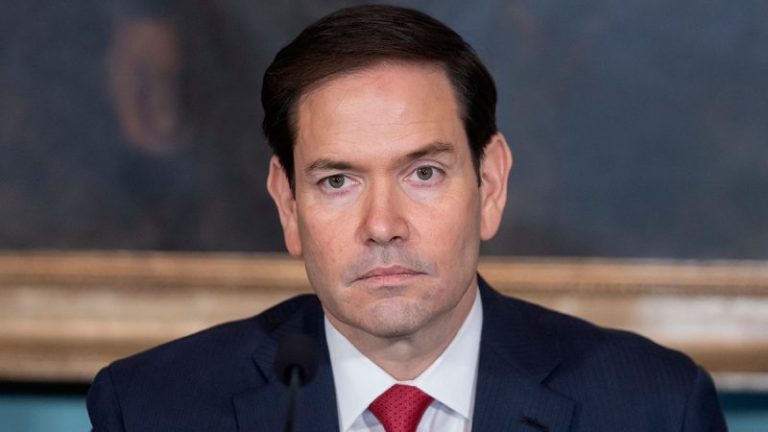
Secretary of State Marco Rubio said Sunday that discussions over ending the war in Ukraine have entered a productive phase, while claiming ‘a tremendous amount of progress’ had been made.

Following a round of talks with a Ukrainian delegation in Geneva, Switzerland, Rubio told reporters negotiators had ‘a very good day today.’

‘We had a very good day today. I think we made a tremendous amount of progress, even from the last time I spoke to you,’ Rubio said.

‘We began almost three weeks ago with a foundational document that we socialized and ran by both sides, and with input from both sides,’ he said.

Rubio described how negotiators had been refining the 28-point peace framework that outlines potential conditions for a ceasefire and long-term settlement for Ukraine and Russia.

‘Over the last 96 hours or more, there’s been extensive engagement with the Ukrainian side including our Secretary of the Army and others, being on the ground in Kyiv, meeting with relevant stakeholders across the Ukrainian political spectrum in the legislative branch and the executive branch, and the military and others to further sort of narrow these points.’

‘We arrived here today with one goal: to take what – it’s 28 points or 26 points, depending on which version, as it continued to evolve and try to narrow the ones that were open items. And we have achieved that today in a very substantial way,’ he said.

The weekend talks centered on a 28-point plan, which is a framework drafted by the U.S. outlining steps for a possible ceasefire and political settlement.

The document is said to cover security guarantees, territorial control, reconstruction mechanisms, and Ukraine’s long-term relationship with NATO and the EU.

The plan has reportedly evolved through several iterations, narrowing disputes point by point as both sides weigh concessions.

‘Now, obviously, like any final agreement, it’ll have to be agreed upon by the presidents, and there are a couple of issues that we need to continue to work on,’ Rubio clarified.

While declining to specify unresolved issues, Rubio described the moment as ‘delicate.’

‘This is a very delicate moment, and it’s important – like I said, there’s not agreement on those yet.  Some of it is semantics or language; others require higher-level decisions and consultation; others, I think, just need more time to work through,’ he said before touching on some issues.

‘There were some that involved equities or the role of the EU or of NATO or so forth, and those we kind of segregated out because we just met with the national security advisors for various European countries, and those are things we’ll have to discuss with them because it involves them.’

‘I don’t want to declare victory or finality here. There’s still some work to be done,’ he added.

Suggesting there is intent to ensure Ukraine’s security, Rubio said that they all ‘recognize that part of getting a final end to this war will require for Ukraine to feel as if it is safe, and it is never going to be invaded or attacked again.’

‘I honestly believe we’ll get there,’ he said, and when asked about next steps, Rubio said a possible call between Presidents Donald Trump and Volodymyr Zelenskyy could happen, adding, ‘I don’t know. It’s possible. I’m not sure.’

‘The deadline is we want to get this done as soon as possible. Obviously, we’d love it to be Thursday,’ he added.

This post appeared first on FOX NEWS

Bitcoin and ether slumped to multi-month lows on Friday, with cryptocurrencies swept up in a broader flight from riskier assets as investors worried about lofty tech valuations and bets on near-term U.S. interest rate cuts faded.

Bitcoin, the world’s largest cryptocurrency, fell 5.5% to a seven-month low of $81,668. Ether slid more than 6% to $2,661.37, its lowest in four months.

Both tokens are down roughly 12% so far this week.

Cryptocurrencies are often viewed as a barometer of risk appetite and their slide highlights how fragile the mood in markets has turned in recent days, with high-flying artificial intelligence stocks tumbling and volatility spiking VIX.

“If it’s telling a story about risk sentiment as a whole, then things could start to get really, really ugly, and that’s the concern now,” Tony Sycamore, a market analyst at IG, said of the fall in bitcoin.

About $1.2 trillion has been wiped off the market value of all cryptocurrencies in the past six weeks, according to market tracker CoinGecko.

Bitcoin’s slide follows a stellar run this year that propelled it to a record high above $120,000 in October, buoyed by favourable regulatory changes towards crypto assets globally.

But analysts say the market remains scarred by a record single-day slump last month that saw more than $19 billion of positions liquidated.

“The market feels a little bit dislocated, a bit fractured, a bit broken, really, since we had that selloff,” said Sycamore.

Bitcoin has since erased all its year-to-date gains and is now down 12% for the year, while ether has lost close to 19%.

Citi analyst Alex Saunders said $80,000 would be an important level as it is around the average level of bitcoin holdings in ETFs.

The selloff has also hurt share prices of crypto stockpilers, following a boom in public digital asset treasury companies this year as corporates took advantage of rising prices to buy and hold cryptocurrencies on their balance sheets.

Shares of Strategy, once the poster child for corporate bitcoin accumulation, have fallen 11% this week and were down nearly 4% in premarket trade, languishing at one-year lows.

JP Morgan said in a note this week that the company could be excluded from some MSCI equity indexes, which could spark forced selling by funds that track them.

Its Japanese peer Metaplanet has tumbled about 80% from a June peak.

Crypto exchange Coinbase was down 1.9% in premarket trade and is on course for its longest losing streak in more than a month.

Crypto miners MARA Holdings and CleanSpark were down 2.4% and 3.6%, respectively, while the Winklevoss twins’ newly-listed Gemini has plunged 62% from its listing price.

“Bitcoin market conditions are the most bearish they have been since the current bull cycle started in January 2023,” said digital asset research firm CryptoQuant in its weekly crypto report on Wednesday.

“We are highly likely to have seen most of this cycle’s demand wave pass.”

This post appeared first on NBC NEWS

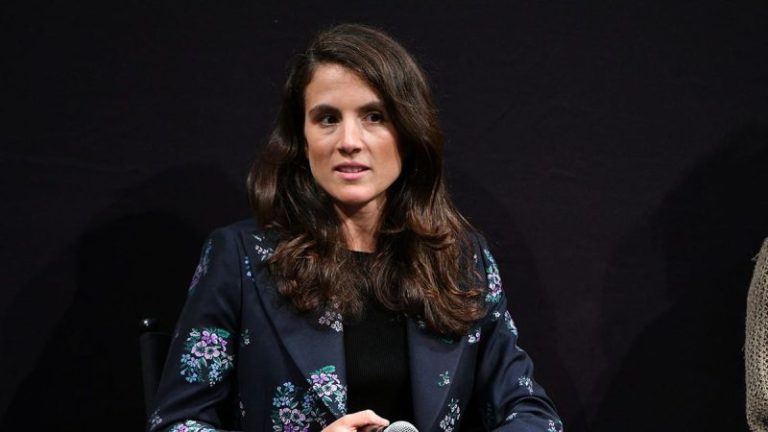
Former President John F. Kennedy’s granddaughter, Tatiana Schlossberg, announced on Saturday — exactly 62 years after he was assassinated — that she has terminal cancer.

The 35-year-old said she was diagnosed with acute myeloid leukemia, with a rare mutation called Inversion 3, soon after the birth of her daughter in May 2024, and that doctors recently told her she probably has about a year to live.

‘My first thought was that my kids, whose faces live permanently on the inside of my eyelids, wouldn’t remember me,’ she wrote in an essay for The New Yorker. ‘My son might have a few memories, but he’ll probably start confusing them with pictures he sees or stories he hears.’

She said she ‘didn’t ever really get to take care of my daughter—I couldn’t change her diaper or give her a bath or feed her, all because of the risk of infection after my transplants. I was gone for almost half of her first year of life. I don’t know who, really, she thinks I am, and whether she will feel or remember, when I am gone, that I am her mother.’

She said the diagnosis was shocking because she felt perfectly healthy.

‘I did not—could not—believe that they were talking about me,’ she wrote of the first talk of leukemia. ‘I had swum a mile in the pool the day before, nine months pregnant. I wasn’t sick. I didn’t feel sick. I was actually one of the healthiest people I knew.’

She said the cancer is mostly seen in older patients and doctors frequently asked her if she had spent much time at Ground Zero in New York City, which she had not.

Schlossberg, who is the daughter of Caroline Kennedy, JFK’s oldest surviving daughter, described in heartbreaking detail her months on end of different treatments to beat the cancer.

She went through a round of chemotherapy to ‘reduce the number of blast cells in my bone marrow,’ then received a bone-marrow transplant with the help of her sister.

She said after she went into remission and went home she had no immune system and had to get all of her childhood vaccines again.

Then she relapsed, her doctor telling her that leukemia with her mutation ‘liked to come back.’

At the beginning of the year, she joined a clinical trial of CAR-T-cell therapy, ‘a type of immunotherapy that has proved effective against certain blood cancers.’

That was followed by another round of chemotherapy and a second blood transfusion from an unrelated donor.

‘During the latest clinical trial, my doctor told me that he could keep me alive for a year, maybe,’ she wrote.

She also wrote of her concerns after her cousin Robert F. Kennedy Jr., whom she called an ’embarrassment,’ was nominated as secretary of Health and Human Services.

‘Suddenly, the health-care system on which I relied felt strained, shaky,’ she wrote. ‘Doctors and scientists at Columbia [Presbyterian hospital], including [her husband] George, didn’t know if they would be able to continue their research, or even have jobs.’

She praised the rest of her family, whom she said sat at her bedside while she endured treatments and took care of her children.

Of her husband, urologist George Moran, she wrote, ‘he is perfect, and I feel so cheated and so sad that I don’t get to keep living the wonderful life I had with this kind, funny, handsome genius I managed to find.’

Her brother Jack Schlossberg, who is running for congress in New York, wrote on his Instagram on Saturday, ‘Life is short, let it rip.’


View this post on Instagram


Her mother’s cousin, Maria Shriver, shared her essay on Instagram, writing, ‘If you can only read one thing today, please make take the time for this extraordinary piece of writing by my cousin Caroline’s extraordinary daughter Tatiana. Tatiana is a beautiful writer, journalist, wife, mother, daughter, sister, and friend.’

Tatiana added in her essay, ‘For my whole life, I have tried to be good, to be a good student and a good sister and a good daughter, and to protect my mother and never make her upset or angry. Now I have added a new tragedy to her life, to our family’s life, and there’s nothing I can do to stop it.’

Robert F. Kennedy Sr., her mother, Caroline Kennedy’s uncle, was assassinated five years after JFK, and along with having two siblings who died in infancy, Caroline’s only surviving brother, JFK Jr, died in a plane crash in 1999.

Schlossberg’s grandmother, Jacqueline Kennedy Onassis, also died of cancer in 1994, of non-Hodgkin lymphoma when she was 64.

She finished her essay by saying that she lives to be with her children now.

‘But being in the present is harder than it sounds, so I let the memories come and go,’ she admitted. ‘So many of them are from my childhood that I feel as if I’m watching myself and my kids grow up at the same time.’

She added, ‘Sometimes I trick myself into thinking I’ll remember this forever, I’ll remember this when I’m dead. Obviously, I won’t. But since I don’t know what death is like and there’s no one to tell me what comes after it, I’ll keep pretending. I will keep trying to remember.’

This post appeared first on FOX NEWS

Statistics Canada released October’s consumer price index (CPI) data on Monday (November 17). The figures showed that inflation softened during the month, falling to 2.2 percent year-over-year from 2.4 percent in September.

The agency cited a 9.4 percent decrease in gasoline prices as the main contributing factor, following a 4.1 percent decrease the previous month. However, less gasoline prices, CPI actually rose by 2.6 percent in both October and September.

Statistics Canada also noted slowing grocery prices, reporting a 3.4 percent year-over-year increase in October compared to the 4 percent recorded in September. Additionally, October saw the largest month-on-month drop in grocery prices since September 2020 at 0.6 percent.

On Thursday (November 20), StatsCan released September’s monthly mineral production survey.

The data shows that gold production declined month-over-month, while copper and silver output increased.

Gold production fell to 16,978 kilograms compared to 17,651 kilograms in August. Meanwhile, copper production rose significantly to 36.23 million kilograms from 30.47 million, and silver production jumped to 28,384 kilograms from 24,801 kilograms.

Shipments, however, increased broadly in September. Gold shipments rose to 19,025 kilograms from 16,289 kilograms in August, and silver shipments jumped to 33,296 kilograms from 25,636. Copper shipments increased the most, spiking to 44.04 million kilograms from 27 million.

For more on what’s moving markets this week, check out our top market news round-up.

Markets and commodities react

Canadian equity markets were in retreat this week.

The S&P/TSX Composite Index (INDEXTSI:OSPTX) was flat, gaining just 0.19 percent over the week to close Friday (November 21) at 30,160.65.

Meanwhile, the S&P/TSX Venture Composite Index (INDEXTSI:JX) lost 1.3 percent to 854.76. The CSE Composite Index (CSE:CSECOMP) had another bad week, dropping 3.44 percent to close at 145.59.

The gold price fell 0.43 percent to US$4,065.32 by 4:00 p.m. EST Friday. The silver price fared worse, dropping 1.07 percent to US$50.02.

Meanwhile, in base metals, the COMEX copper price ended the week down 0.3 at US$5.07 per pound.

The S&P Goldman Sachs Commodities Index (INDEXSP:SPGSCI) dropped 2.01 percent to end Friday at 546.41.

Top Canadian mining stocks this week

How did mining stocks perform against this backdrop?

Take a look at this week’s five best-performing Canadian mining stocks below.

Stocks data for this article was retrieved at 4:00 p.m. EST on Friday using TradingView’s stock screener. Only companies trading on the TSX, TSXV and CSE with market caps greater than C$10 million are included. Mineral companies within the non-energy minerals, energy minerals, process industry and producer manufacturing sectors were considered.

1. Sigma Lithium (TSXV:SGML)

Weekly gain: 64.01 percent
Market cap: C$1.48 billion
Share price: C$13.67

Sigma Lithium is a lithium mining company advancing its Grota do Cirilo operation in Minas Gerais, Brazil.

Operations at the Greentech processing facility were commissioned in 2023, with an annual nameplate capacity of 270,000 metric tons of lithium oxide concentrate. The company is currently constructing its Phase 2 expansion that will more than double that capacity.

In its third-quarter results released on November 14, Sigma reported that net revenue increased to US$28.5 million, 69 percent higher than Q2 and 36 percent higher than the same period in 2024.

The report also stated that Sigma upgraded its mining operations in Q3 with the goal of reaching the plant’s full capacity of 300,000 metric tons in 2026. As part of this process, Sigma is doubling its mining fleet. The company expects production to resume by the end of November, with full operational capacity expected in Q1 2026.

The report boosted Sigma’s share price, as did climbing lithium prices, which have gained more than 10 percent in November and more than 50 percent since bottoming out in June.

2. Li-FT Power (TSXV:LIFT)

Weekly gain: 52.63 percent
Market cap: C$201.24 million
Share price: C$4.35

Li-FT is a lithium exploration company advancing its flagship Yellowknife lithium project in the Northwest Territories, Canada.

The 1,843 hectare property, located east of the city of Yellowknife, hosts 13 spodumene-bearing pegmatites. Its current combined inferred resource estimate across eight of those pegmatites stands at 50.38 million metric tons of ore grading 1 percent lithium oxide for 1.25 million metric tons of lithium carbonate equivalent (LCE).

The company also owns the Cali project in the Northwest Territories, and the Pontax, Rupert and Moyenne projects in the Eeyou Istchee James Bay region of Québec, Canada.

On Tuesday, Li-FT filed a final base shelf prospectus to replace the previous prospectus that expired on October 21. The company said the new filing will permit it to offer common shares, warrants, subscription receipts, units or debt securities up to a total of C$200 million until it expires in December 2027.

Li-FT also said it was changing its financial year-end from November 30 to December 31 to better align with the timing of the company’s financial reporting and with its peers.

The company is another lithium stock benefiting significantly from rising lithium prices this week.

3. LithiumBank Resources (TSXV:LBNK)

Weekly gain: 45.59 percent
Market cap: C$32.45 billion
Share price: C$0.50

LithiumBank is a lithium exploration and development company advancing its Boardwalk and Park Place lithium brine projects in Alberta, Canada, both of which overlap with the Leduc and Swan Hills formations.

Boardwalk consists of 395,369 acres of brine-hosted licenses about 85 kilometers east of Grand Prairie in an area with a history of hydrocarbon extraction.

According to Boardwalk’s mineral resource estimate from a February 2025 technical report, the project hosts a measured resource of 1.67 million metric tons of LCE with an average grade of 81.2 milligrams per liter (mg/L), and an indicated resource of 3.52 million metric tons of LCE with an average grade of 81.8 mg/L, all within the Leduc formation.

Park Place, located 50 kilometers south of Boardwalk, consists of 1.4 million acres of licenses. A June 2024 mineral resource estimate demonstrated an inferred resource of 10.08 million metric tons LCE with a grade of 79.4 mg/L at the Leduc aquifer, and 11.6 million metric tons of LCE with an average grade of 80.9 mg/l at the Swan Hills aquifer.

The most recent news from the company came on Thursday, when LithiumBank reported that, following its award of C$3.9 million in funding for certain milestones through Alberta’s Emission Reduction Act in July, it is working to acquire a second past-producing well at Boardwalk.

LithiumBank is focused on commencing near-term production at Boardwalk using modular direct lithium extraction plants, which the company said it believes this second well can likely support.

Rising lithium prices also helped support LithiumBank this week.

4. Abcourt Mines (TSXV:ABI)

Weekly gain: 41.67 percent
Market cap: C$72.45 million
Share price: C$0.085

Abcourt Mines is a gold mining and development company focused on ramping up operations at its Sleeping Giant gold mine in the Abitibi region of Québec.

Sleeping Giant hosts an underground mine along with a mill capable of processing 750 metric tons per day. The property consists of four mining leases covering an area of 458 hectares and 69 claims.

A July 2023 preliminary economic assessment demonstrates an after-tax net present value of US$77.5 million with an internal rate of return of 33.3 percent over a payback period of 2.2 years.

The company has been working on restarting mining operations at the site throughout 2025, and achieved its first gold pour in September.

The most recent news came on November 11, when the company released an update from Sleeping Giant. In the announcement, the company stated that in October it had milled 2,563 metric tons of ore with a head grade of 6 grams per metric ton of gold, producing 475 ounces of gold.

Abcourt also said progress at the site was continuing with one stope in production and two more under development. Additionally, civil engineering was underway at the tailings facilities in preparation for a planned lift in summer 2026.

5. Pure Energy Minerals (TSXV:PE)

Weekly gain: 38.1 percent
Market cap: C$10.19 million
Share price: C$0.29

Pure Energy is a lithium exploration company that owns a 3 percent net smelter return (NSR) on the Clayton Valley lithium brine project in Nevada, United States.

The project consists of 950 placer claims covering 9,450 hectares. In September 2024, Pure Energy announced that its project partner, SLB, had completed an earn-in to acquire a 100 percent stake in Clayton Valley, leaving Pure Energy with its NSR.

Through 2023 and into 2024, SLB completed construction of a direct lithium extraction pilot plant at the site, with the first lithium production occurring in March 2024.

This Thursday, Pure Energy released its management discussion and analysis for the quarter ending September 30, 2025. In the report, the company restated its position in Clayton Valley, noting that it is receiving annual payments of US$400,000 from SLB until commercial production, after which time it will receive its 3 percent NSR on minerals produced.

Pure Energy’s share price increased significantly this week alongside rising lithium prices.

FAQs for Canadian mining stocks

What is the difference between the TSX and TSXV?

The TSX, or Toronto Stock Exchange, is used by senior companies with larger market caps, and the TSXV, or TSX Venture Exchange, is used by smaller-cap companies. Companies listed on the TSXV can graduate to the senior exchange.

How many mining companies are listed on the TSX and TSXV?

As of May 2025, there were 1,565 companies listed on the TSXV, 910 of which were mining companies. Comparatively, the TSX was home to 1,899 companies, with 181 of those being mining companies.

Together, the TSX and TSXV host around 40 percent of the world’s public mining companies.

How much does it cost to list on the TSXV?

There are a variety of different fees that companies must pay to list on the TSXV, and according to the exchange, they can vary based on the transaction’s nature and complexity. The listing fee alone will most likely cost between C$10,000 to C$70,000. Accounting and auditing fees could rack up between C$25,000 and C$100,000, while legal fees are expected to be over C$75,000 and an underwriters’ commission may hit up to 12 percent.

The exchange lists a handful of other fees and expenses companies can expect, including but not limited to security commission and transfer agency fees, investor relations costs and director and officer liability insurance.

These are all just for the initial listing, of course. There are ongoing expenses once companies are trading, such as sustaining fees and additional listing fees, plus the costs associated with filing regular reports.

How do you trade on the TSXV?

Investors can trade on the TSXV the way they would trade stocks on any exchange. This means they can use a stock broker or an individual investment account to buy and sell shares of TSXV-listed companies during the exchange’s trading hours.

Article by Dean Belder; FAQs by Lauren Kelly.

Securities Disclosure: I, Dean Belder, hold no direct investment interest in any company mentioned in this article.

Securities Disclosure: I, Lauren Kelly, hold no direct investment interest in any company mentioned in this article.

This post appeared first on investingnews.com

Congress is once again on the edge of considering a bone-crushing sanctions package against Russia, but procedural disagreements threaten to derail the process.

Senators Lindsey Graham, R-S.C., and Richard Blumenthal, D-Conn., have been working on a sanctions package that would hit Russia and its energy trade partners where it hurts in a bid to cripple the Kremlin’s war machine.

Movement on their legislation, which has over 80 co-sponsors in the upper chamber, has lurched and stalled over the last several months as President Donald Trump and his administration work to hammer out a peace deal between Russia and Ukraine to see an end to the war.

Now, the president seems ready to get the package through Congress.

Graham said that, over a round of golf last weekend, Trump told Senate Majority Leader John Thune, R-S.D., ‘Move the bill.’

‘I think it’s very important we not screw this up,’ Graham said. ‘If you want [Russian President Vladimir] Putin at the table, there will be no successful 28-point plan or 12-point plan unless Putin believes that we’re going to continue to support Ukraine militarily and that we’re going to come after people who buy cheap Russian oil.

‘It’s important that the Congress pass this bill to give leverage to the president as he tries to negotiate with Putin.’

While the changes to the bill still remain under wraps, a White House official told Fox News Digital that both Congress and the White House are working together to ensure the legislation advances, ‘The President’s foreign policy objectives and authorities.’ 

‘The Constitution vests the president with the authority to conduct diplomacy with foreign nations,’ the official said. The current bipartisan sanctions legislation provides new sanctions authorities for the president to conduct foreign diplomacy.’

And Despite Graham and Blumenthal having worked on the bill together in the Senate for months, Thune believed it may be better if a sanctions package comes from the House.

He said that what is more likely to happen is that the House originates the legislation because it’s a revenue measure, which typically starts in the lower chamber.

‘We had one available to us in the Senate. We could do it here,’ Thune said. ‘But I think, too, if you want to expedite movement in terms of getting it on the president’s desk, it’s probably quicker if it comes out of the House, comes over to us, to take it up and process it on the floor.’

But there may be an issue with the House starting the process.

House Speaker Mike Johnson, R-La., told Fox News Digital that, based on conversations with Thune, he understood that the legislation would originate in the Senate and then be shipped to the House. It was ‘news’ to him when Thune made the case that the House should be at the start of the legislative process.

He warned that, in the House, it would be ‘a much more laborious, lengthy process,’ and that he was of the notion that the Senate would send its bipartisan package to them, which would make it easier to pass.

‘The reason is because it’s a faster track to get it done,’ Johnson said. ‘If it originates in the House, then it goes to seven different committees of jurisdiction, which, as you know, takes a long time to process. And even if I can convince some of the chairmen to waive jurisdiction, not all of them will.’

But there are procedural hurdles that could bog down the process in the Senate, too.

So far, the original version of the bill has sat in the Senate Committee on Banking, Housing and Urban Affairs since April. It would have to be considered in committee, then discharged and then put on the floor — and at any point could be blocked along the way.

Still, there is hope that movement on the bill will come to fruition. And both Graham and Blumenthal have been tweaking the legislation in the background to best meet the White House’s desires.

Blumenthal told Fox News Digital after a recent meeting with Graham that the bill was largely the same but wouldn’t get into specifics on what the changes were.

He noted that Trump’s move to sanction two major Russian oil companies, which took effect Friday, was a good start.

‘I think we’re waiting to finalize the bill and see what the president thinks about it,’ Blumenthal said. ‘And, obviously, he’s imposed sanctions already on India, on two major Russian oil companies, so he’s in the right frame of mind.’

This post appeared first on FOX NEWS

Shoppers are still flocking to Walmart.

The company raised its full-year earnings and sales outlook Thursday, heading into the crucial holiday shopping season.

Walmart also offered fresh signs that it is shedding its original identity as a strictly down-market brick-and-mortar operation by growing its e-commerce business and increasing its market share of higher-income shoppers.

Walmart’s shares closed more than 6% higher Thursday, even as the broader market suffered a dramatic sell-off. The stock is up more than 18% this year.

The biggest retailer and grocer in the United States acknowledged the added financial pressures on lower-income households but said middle-income families are holding up. Walmart saw more sales growth in its grocery and health and wellness product categories than in general merchandise.

‘As pocketbooks have been stretched, you’re seeing more consumer dollars go to necessities versus discretionary items,’ Chief Financial Officer John David Rainey said on a call with analysts Thursday morning.

The company reported that same-store sales for Walmart U.S. rose 4.5% in the quarter that ended Oct. 31, exceeding analysts’ expectations.

“The team delivered another strong quarter across the business. eCommerce was a bright spot again this quarter. We’re gaining market share, improving delivery speed, and managing inventory well,” outgoing CEO Doug McMillon said in a statement.

Walmart reported 27% growth in e-commerce sales globally.

Walmart also announced that it will move from trading on the New York Stock Exchange to the tech-heavy Nasdaq next month. It’s the latest sign of America’s largest private employer working to position itself as tech-forward in order to compete with Amazon.

The discounter’s third-quarter earnings come amid growing questions about whether Americans contending with tariffs, corporate layoffs and accelerating inflation are still confidently spending on retail.

As a bellwether for the U.S. economy and consumer confidence, Walmart’s strong earnings and guidance indicate that consumers are still shopping — at least at the lower end of the retail price point.

The company announced last week that McMillon will step down in January. McMillon, 59, started at Walmart as an associate in the 1980s and has helmed the company since 2014.

Under his leadership, Walmart improved pay and benefits for many employees, renovated hundreds of stores and boosted its e-commerce and delivery programs, especially during the Covid pandemic.

John Furner, CEO of Walmart U.S., will take over the top job Feb. 1. Since 2019, Furner has led Walmart’s American operations — by far the largest slice of the company, with around 1.6 million of Walmart’s approximately 2.1 million total associates worldwide.

Walmart is leading the retail race against longtime rival Target, which Wednesday reported a drop in third-quarter sales and cut its full-year profit guidance.

Target’s sales have faltered over the last few years, with some consumers expressing frustration over what they said were disorganized stores and rollbacks of the company’s diversity, equity and inclusion initiatives.

In October, Target said it would cut about 1,800 corporate jobs.

Target is hoping for a fresh start in the new year. Incoming CEO Michael Fiddelke will take over Feb. 1, the same day Furner becomes CEO of Walmart.

The struggling retailer said Wednesday that it plans to increase its investment in stores and technology next year by 25%.

Since January, U.S. businesses have had to contend with ever-changing tariffs under the Trump administration. Walmart has navigated the uncertainty by raising prices on some items, while swallowing some tariff costs on others. In the three months that ended Oct. 31, prices at Walmart U.S. rose around 1% overall, with higher prices on electronics, toys and seasonal items in particular due to tariff pressures.

In the grocery section, Walmart expects egg prices to drop but anticipates the record-breaking beef prices will stay high, in part from cattle herds shrinking over the last few decades.

Prices for other grocery staples are also up, though the Trump administration’s rollback of tariffs on many food items last week could offer some relief.

Despite the rising prices, Walmart is offering its annual Thanksgiving menu deal for 10 at less than $4 per person. It’s less expensive than last year’s package, but it also contains fewer items.

The company is also expanding its use of artificial intelligence, teaming up with OpenAI to allow customers to buy from Walmart within ChatGPT. Walmart has not detailed the terms of the partnership or shared when the new option could be available.

This week, Target announced its own collaboration with OpenAI.

Walmart has lagged behind rival Amazon in AI-driven e-commerce — Amazon debuted its Rufus shopping assistant in February 2024, more than a year before Walmart launched its counterpart, Sparky.

This post appeared first on NBC NEWS

Here’s a quick recap of the crypto landscape for Wednesday (November 19) as of 9:00 p.m. UTC.

Get the latest insights on Bitcoin, Ether and altcoins, along with a round-up of key cryptocurrency market news.

Bitcoin and Ether price update

Bitcoin (BTC) was priced at US$89,503.92, down by 3.5 percent over 24 hours. Its lowest price of the day was US$88,540.26 and its highest was US$92,074.61.

Bitcoin price performance, November 19, 2025.

Chart via TradingView.

Ether (ETH) was at US$2,942.52, down 5.8 percent over 24 hours. Its lowest price on Wednesday was US$2,872.51 and its highest was US$3,093.82.

Altcoin price update

  • XRP (XRP) was priced at US$2.04, down by 8.4 percent over 24 hours. Its lowest price of the period was US$2.03 and its highest was US$2.14.
  • Solana (SOL) was trading at US$132.84, down by 6.2 percent over 24 hours. Its lowest price of the day was US$130.72 and its highest was US$138.25.

Crypto derivatives and market indicators

Derivatives markets witnessed significant long position liquidations totaling approximately US$68.99 million for Bitcoin and US$117.35 million for Ether. The dominance of long liquidations highlights persistent bearish pressure and forced deleveraging across the derivatives ecosystem, exacerbated by price drops below key support levels.

Meanwhile, open interest in Bitcoin rose by 1.5 percent, reaching US$66.11 billion, and Ether’s open interest increased by 1.64 percent to US$37.78 billion, signaling continued trader engagement despite recent volatility.

Bitcoin’s relative strength index is at 32.54, indicating that the cryptocurrency is in oversold territory. That suggests potential for a near-term technical bounce, although the market remains vulnerable.

Funding rates remain slightly positive, with Ether at 0.008 and Bitcoin at 0.01, implying that the perpetual futures market still carries a mild premium for longs, despite liquidation pressure. This delicate funding rate environment reflects cautiously bullish sentiment mixed with forced position unwinds.

Traders should watch open interest trends and funding rates closely to gauge whether the market stabilizes, or if continued downside liquidity pressure will push Bitcoin and Ether toward lower technical support zones — near US$88,000 for Bitcoin, and closer to US$2,800 for Ether. This dynamic underscores the high risk and opportunity for derivatives traders navigating the current oversold but volatile crypto market conditions.

Today’s crypto news to know

21shares launches spot Solana ETF in US

Despite a volatile market, 21shares has successfully launched its spot Solana exchange-traded fund (ETF), TSOL, in the US. It debuted with more than US$100 million in assets under management.

This is the fifth Solana-focused ETF in the US and it offers a key feature: the ability for holders to indirectly earn staking rewards from underlying SOL tokens, enhancing its appeal. Its number for assets under management at launch underscores persistent investor demand for regulated altcoin exposure.

TSOL’s success could be a leading indicator for further crypto ETF innovation, with forecasts predicting over 100 new altcoin ETFs by 2026. This influx is expected to inject significant institutional capital into altcoins like SOL, potentially legitimizing them further and boosting token prices.

Kraken files confidential IPO with SEC

Kraken announced it has confidentially filed a registration statement for an initial public offering (IPO) with the US Securities and Exchange Commission (SEC), a significant step toward becoming a publicly traded company.

The offering is contingent on SEC review and market conditions. This filing follows others, like Grayscale’s, aligning Kraken with major US crypto exchanges like Gemini and Coinbase Global (NASDAQ:COIN). Kraken’s IPO pursuit signals the growing maturity and institutional acceptance of crypto exchanges. A public listing would provide capital for expansion, increase visibility and transparency and potentially boost investor confidence.

More broadly, a successful IPO for Kraken would be a landmark event, cementing crypto exchanges’ transition from niche startups to mainstream financial infrastructure.

Securities Disclosure: I, Meagen Seatter, hold no direct investment interest in any company mentioned in this article.

This post appeared first on investingnews.com