
Archive

November 2025

Browsing

The Trump administration harshly criticized the United Kingdom over its handling of mass immigration and the long-running rape gang scandal that has victimized white girls across the country.

In a statement posted to X, the U.S. State Department called on its Europe-based diplomats to track the effects of rampant immigration. While the statement zeroed in on the U.K., it also highlighted similar problems in Germany and Sweden.

‘The State Department instructed U.S. embassies to report on the human rights implications and public safety impacts of mass migration,’ the statement read. ‘Officials will also report policies that punish citizens who object to continued mass migration and document crimes and human rights abuses committed by people of a migration background.’

The statement referenced the so-called ‘grooming gangs’ made up of mostly Pakistani men who have victimized young girls for decades, with little action taken by the government.

‘In the United Kingdom, thousands of girls have been victimized in Rotherham, Oxford, and Newcastle by grooming gangs involving migrant men,’ the State Department said. ‘Many girls were left to suffer unspeakable abuse for years before authorities stepped in.’

A day after the statement, GB News reported that U.K. Prime Minister Keir Starmer told reporters at the G20 in South Africa that the national inquiry would ‘leave no stone unturned.’

The State Department’s warning comes weeks after several victims — who were members of the independent inquiry — resigned over what they claimed was a continuation of a cover-up. 

One abuse survivor, Ellie Reynolds, told cable channel GMB that the existence of grooming gangs has been ‘brushed under the carpet’ and that ‘our voices have been silenced.’

She was supported by fellow survivor Fiona Goddard, who was groomed from the age of 14, and said that when she spoke out for help she was dismissed as a ‘child prostitute’ by authorities.

Goddard resigned to protest the cover-up, saying members of the grooming gangs near Bradford were in the ‘vast majority … Pakistani men.’

Successive governments — both Conservative and Labour — have been dealing with the revelations for years that a number of grooming gangs, often consisting mostly of men of South Asian or Pakistani heritage, have sexually exploited girls for decades across the north of England.

Prior to the inquiry, Starmer had commissioned a national audit led by Baroness Louise Casey earlier this year. 

On the hot-button issue of the backgrounds of the criminals, the Casey report stated in part, ‘We found that the ethnicity of perpetrators is shied away from and is still not recorded for two-thirds of perpetrators, so we are unable to provide any accurate assessment from the nationally collected data.’

It continued: ‘Despite the lack of a full picture in the national data sets, there is enough evidence available in local police data in three police force areas which we examined which show disproportionate numbers of men from Asian ethnic backgrounds amongst suspects for group-based child sexual exploitation, as well as in the significant number of perpetrators of Asian ethnicity identified in local reviews and high-profile child sexual exploitation prosecutions across the country, to at least warrant further examination.’

Her audit also identified other perpetrators, including White British, European, African or Middle Eastern individuals.

The results of the audit produced 12 recommendations to the government, which have been implemented, including a national inquiry to ‘direct local investigations and hold institutions to account for past failures.’ 

But the Starmer government has been set back by a failure to appoint a chair for the inquiry, and it has faced resignations as critics have accused the Labour government of covering it up for political reasons.

Alan Mendoza, founder of the Henry Jackson Society, told Fox News Digital that ‘successive governments’ have allowed ‘gangs of largely South Asian Muslims to target white British girls, claiming, ‘the Labour government doesn’t want to be seen as stigmatizing demographics or potentially losing votes.’

‘I hope that the inquiry will focus more specifically on the real issue plaguing the U.K. over the last 20 years,’ Mendoza added.

The point person for the government’s inquiry is Labour member of Parliament Jess Phillips, who has served as the parliamentary undersecretary of state for Safeguarding and Violence Against Women and Girls since July 2024.

However, Phillips is facing heavy scrutiny over how she’s handling the set-up of the inquiry.

Asked in Parliament about the nature of the inquiry and whether it will address the perpetrators’ ethnicity, she vowed to be transparent.

‘There is absolutely no sense that ethnicity will be buried away,’ Phillips said. ‘Every single time that there is an apparently needless delay — even though it took seven months to put in place chairs for both the COVID inquiry and the blood inquiry, and nobody moaned about that — it gets used to say that we want to cover something up. That is the misinformation I am talking about. It will not cover things up. We are taking time to ensure that that can never happen.’

Elon Musk weighed in on the matter in a series of X statements earlier this year, stating that Phillips, was a ‘rape genocide apologist’ and the world was witnessing ‘the worst mass crime against the people of Britain ever.’ 

Philips told the BBC that his comments were ‘disinformation’ and ‘endangering’ her, but said it was nothing compared to what the victims of the abuse had faced. 

Commentators say the challenge for the government now is to find those credible and willing to bring justice and lasting change so it won’t happen again.

Fox News Digital reached out to Phillips’ office but received no response.

 

This post appeared first on FOX NEWS

Silver missed the Black Friday sale memo, rising to a new all-time high of US$56.86 per ounce.

The white metal’s price rise came after CME Group (NASDAQ:CME) halted trading on the Comex on Friday (November 28), citing a ‘cooling issue’ at a CyrusOne data center located in a Chicago suburb.

‘On November 27, our CHI1 facility experienced a chiller plant failure affecting multiple cooling units,’ a CyrusOne spokesperson explained to CNBC in an email. “Our engineering teams, along with specialized mechanical contractors, are on-site working to restore full cooling capacity. We have successfully restarted several chillers at limited capacity and have deployed temporary cooling equipment to supplement our permanent systems.”

A CME Group X post shows that by 5:46 a.m. PST, all markets were open and trading.

According to Reuters, the outage is one of the longest in years for CME Group.

Some traders are taking the disruption as a reminder of the market’s strong reliance on systems that don’t always run perfectly. However, others have pointed out that thinner activity in the US due to Thursday’s (November 27) Thanksgiving holiday likely helped minimize the impact of the stoppage.

‘If there was to be a glitch day, today’s probably a good day to have it,’ Joe Saluzzi, co-manager of trading at Themis Trading in Chatham, New Jersey, told the news outlet.

Silver price chart, November 27 to 28, 2025.

While silver is known for lagging behind gold before outperforming, it’s now ahead of its sister metal in terms of percentage gains — silver is up about 84 percent year-to-date, while gold has risen around 58 percent.

Gold was also on the move on Friday, breaking back above US$4,200 per ounce for the first time since mid-November, but it remains below its all-time high of nearly US$4,400, set in October.

Silver’s breakout this year has been driven by various factors.

As a precious metal, it’s influenced by many of the same factors as gold, but its October price jump, which took it past the US$50 level, was also driven by a lack of liquidity in the London market.

While that issue appears to have resolved, a new situation has recently emerged — Bloomberg reported on Tuesday (November 25) that Chinese silver stockpiles are now at their lowest level in a decade after huge shipments to London.

Tariff concerns and silver’s new status as a critical mineral in the US have also provided support in 2025.

The white metal’s industrial side also shouldn’t be forgotten — according to the Silver Institute, industrial demand for silver reached a record 680.5 million ounces in 2024, driven by usage in grid infrastructure, vehicle electrification and photovoltaics. Total silver demand was down 3 percent year-on-year in 2024, but still exceeded supply for the fourth year in a row, resulting in a deficit of 148.9 million ounces for the year.

Watch five experts share their thoughts on the outlook for silver.

Time will tell what’s next for silver, but some experts see it continuing to outperform gold in 2026.

‘The sure money is made in the gold sector, but the big money is made in the silver sector — that’s proven true over the last couple of precious metals cycles. I believe it will be true in this one as well,’ said Jay Martin of VRIC Media.

Securities Disclosure: I, Charlotte McLeod, hold no direct investment interest in any company mentioned in this article.

This post appeared first on investingnews.com

The Trump administration announced a sweeping federal civil-rights agreement Friday with Northwestern University, requiring the school to pay $75 million and protect students and staff from any ‘race-based admissions practices’ and a ‘hostile educational environment directed toward Jewish students.’

The Department of Justice (DOJ), Department of Education (DOE) and Department of Health and Human Services (HHS) said in a statement the agreement was intended to safeguard Northwestern from unlawful discrimination’ and calls for the university to ‘maintain clear policies and procedures relating to demonstrations, protests, displays, and other expressive activities,’ as well as the implementation of mandatory antisemitism training.

‘Today’s settlement marks another victory in the Trump Administration’s fight to ensure that American educational institutions protect Jewish students and put merit first,’ Attorney General Pamela Bondi said in a statement. ‘Institutions that accept federal funds are obligated to follow civil rights law — we are grateful to Northwestern for negotiating this historic deal.’

Northwestern will pay its $75 million to the United States through 2028.

The new agreement comes after the Trump administration previously secured a $221 million settlement with Columbia University to resolve multiple federal civil rights investigations. That deal includes a $200 million payment over three years for alleged discriminatory practices and $21 million to settle claims of antisemitic employment discrimination against Jewish faculty after the Oct. 7, 2023, Hamas attacks in Israel. 

DOE Secretary Linda McMahon called the Northwestern agreement ‘a huge win for current and future Northwestern students, alumni, faculty, and for the future of American higher education.’

‘The deal cements policy changes that will protect students and other members of the campus from harassment and discrimination, and it recommits the school to merit-based hiring and admissions,’ she said in a statement. ‘The reforms reflect bold leadership at Northwestern and they are a roadmap for institutional leaders around the country that will help rebuild public trust in our colleges and universities.’

Northwestern directed Fox News Digital to a statement made by university president Henry Bienen reacting to the agreement, saying it would restore hundreds of millions of dollars in critical research funding.

‘This is not an agreement the University enters into lightly, but one that was made based on institutional values,’ Bienen stated. ‘As an imperative to the negotiation of this agreement, we had several hard red lines we refused to cross: We would not relinquish any control over whom we hire, whom we admit as students, what our faculty teach or how our faculty teach. I would not have signed this agreement without provisions ensuring that is the case.’

Bienen added, ‘Northwestern runs Northwestern. Period.’

The university president also said the $75 million payment ‘is not an admission of guilt, but simply a condition of the agreement.’ He noted that Northwestern ‘has not been found in violation of any laws and expressly denies liability regarding all allegations in the now-closed investigations.’

In its statement announcing the agreement, DOJ said federal agencies would close their pending investigations and treat Northwestern as eligible for future grants, contracts and awards.

The Trump administration previously put a freeze on approximately $790 million from Northwestern University and over $1 billion in federal funding from Cornell University over potential civil rights investigations at both prestigious schools.

This post appeared first on FOX NEWS

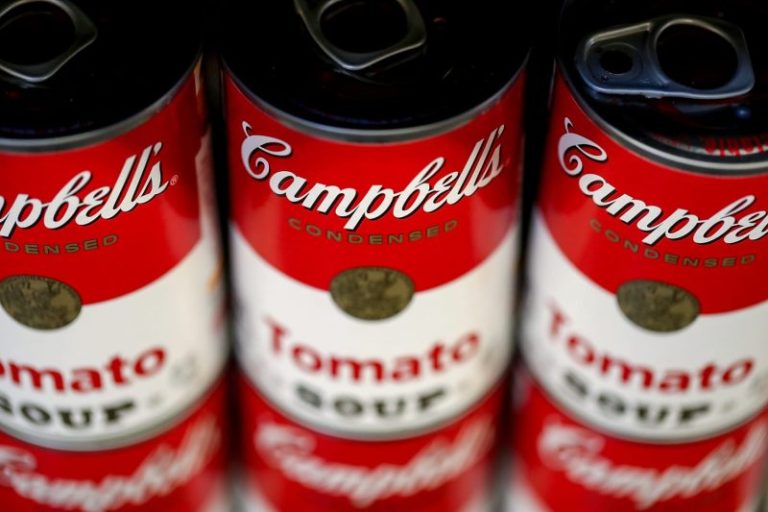
Campbell’s has fired an executive accused of making racist comments and mocking its products and customers, the company announced on Wednesday.

The termination follows a lawsuit filed in Michigan by former employee Robert Garza against Campbell’s, the company’s then-vice president of information technology Martin Bally and another manager.

The complaint alleges retaliation and a hostile work environment, citing a November 2024 meeting between Bally and Garza to discuss salary, according to the lawsuit.

Garza allegedly recorded the conversation, and the audio — obtained by NBC News — is more than 90 minutes long.

During the interaction, the lawsuit alleges that Bally described Campbell’s as “highly process(ed) food” and said it was for “poor people.” He also allegedly made racist remarks about Indian workers, calling them “idiots.”

‘After a review, we believe the voice on the recording is in fact Martin Bally,’ Campbell’s said Wednesday. ‘The comments were vulgar, offensive and false, and we apologize for the hurt they have caused.’

The company said it does not tolerate the language used in the audio recording and the behavior “does not reflect” its values.

Campbell’s said it learned of the litigation and first heard segments of the audio on Nov. 20.

Bally’s termination was effective Tuesday, the company said.

According to the lawsuit, Garza told his manager, J.D. Aupperle — who is also named as a defendant, about Bally’s behavior in January 2025 and wanted to report the comments to the human resources department. He was not encouraged to report the comments, the lawsuit claims, and was then ‘abruptly terminated from employment’ later that month.

‘This situation has been very hard on Robert,’ Garza’s attorney, Zachary Runyan, said in a statement to NBC News on Tuesday. ‘He thought Campbell’s would be thankful that he reported Martin’s behavior, but instead he was abruptly fired.’

Garza is seeking monetary damages from the company.

Bally and Aupperle did not immediately return requests for comment on Wednesday.

Campbell’s said it is ‘proud of the food we make’ and ‘the comments heard on the recording about our food are not only inaccurate — they are patently absurd.’

This post appeared first on NBC NEWS

Investor Insight

Heliostar offers a rare combination of immediate cash flow from two producing mines and a significant growth story driven by the high-grade Ana Paula development project. This blend of near-term production, strong margins and a robust pipeline positions the company as a compelling emerging mid-tier gold producer.

Overview

Heliostar Metals (TSXV:HSTR,OTCQX:HSTXF,FRA:RGG1) is an emerging mid-tier gold producer focused on unlocking high-grade gold production in Mexico’s premier mining regions.

The company rapidly expanded its asset base by acquiring a diverse portfolio of producing and development-stage assets. This positions it for long-term, scalable production growth supported by both high-grade underground and large open-pit heap-leach operations.

Heliostar now holds two producing mines – La Colorada and San Agustin, with combined production of 30,000 to 40,000 oz of gold – and is advancing the development of its flagship Ana Paula project. Two additional development assets in Mexico, Cerro del Gallo and San Antonio, in addition to exploration projects in North Sonora and Unga in Alaska complete Heliostar’s portfolio. This diversified platform enables the company to fund development through operating cash flow while continuing to expand its resource base.

Heliostar prioritizes capital discipline and low-cost acquisitions, significantly expanding its asset base while maintaining a lean financial structure. With a growing operating cash flow, the company is reducing reliance on equity financing for development.

The company is positioned for strong year-over-year production growth as San Agustin restarts in Q4 2025, La Colorada executes its updated 2025 mine plan, and Ana Paula advances toward construction and expected first production in 2028, following a positive underground PEA in November 2025 and an ongoing feasibility study. These milestones support the company’s strategy of building a multi-asset production base with increasing scale and margins.

Looking ahead, the company has a long-term vision of achieving 500,000 ounces of gold production annually by 2030. This growth will be driven by the development of Ana Paula, followed by Cerro del Gallo and San Antonio, with continued exploration success and strategic acquisitions supplementing organic growth.

Company Highlights

  • Heliostar Metals is rapidly advancing from a junior explorer to a mid-tier gold producer, targeting 150,000 oz per year in the near term and 500,000 oz annually by 2030.
  • Heliostar has rapidly expanded its portfolio with key acquisitions, now controlling two producing mines and three advanced-stage growth assets in Mexico. Added 3.5 million measured and indicated gold ounces for just US$15 million, reinforcing a capital-efficient growth model.
  • The company prioritizes capital discipline and low-cost acquisitions to expand its asset base and maintain a lean financial structure. Unlike many juniors that rely on dilution to grow, Heliostar leverages gold production cash flows to drive project development.
  • Annual gold production at La Colorada and San Agustin mines as of 2025 is between 30,000 to 40,000 oz, with mine operations earning $14.2 million in Q3 2025. Cash flow from these two mines funds Heliostar’s exploration and development without significant dilution.
  • CEO Charles Funk leads a seasoned team of mine builders and exploration experts with a track record of developing world-class deposits.
  • The company also features a favorable shareholder registry: 53 percent institutional investors, 42 percent high-net-worth and retail investors, and 5 percent held by the board and management.

Key Projects

Ana Paula (Flagship Development Project)

Ana Paula is Heliostar’s flagship high-grade underground gold project located in the Guerrero Gold Belt, one of Mexico’s most prolific precious metals regions.

The November 2025 underground PEA confirms Ana Paula as a low-cost, high-margin development opportunity with a nine-year mine life producing approximately 875,000 ounces of gold, averaging roughly 101,000 ounces per year after ramp-up. The project benefits from a wide, high-grade panel that continues to demonstrate strong continuity and exceptional grades, supported by a mineral resource of 710,920 ounces of measured and indicated gold at 6.6 grams per ton (g/t) and 447,500 ounces of inferred gold at 4.24 g/t.

Heliostar has transitioned the project to an underground-only development plan to enhance economics, minimize surface disturbance and reduce capital intensity. The company is advancing engineering and permitting programs, including a permit amendment to convert the existing open-pit approval into an underground operation. A recently expanded 20,000-metre drill program is underway to upgrade inferred resources, expand the mineral envelope and support the ongoing feasibility study. Recent results included 83.2m grading 17.35 g/t gold from 76.0 m and 70.7 m grading 9.38 g/t gold from 49.65 m.

Heliostar intends to advance the existing decline in 2026 to access underground drilling platforms and complete bulk sampling, enabling a construction decision shortly thereafter and positioning the project for first production in 2028. Ana Paula is expected to become the cornerstone asset underpinning Heliostar’s long-term production growth.

La Colorada Mine

La Colorada, located in Sonora, Mexico, is a fully operating open-pit heap-leach mine that underwent a major turnaround in early 2025. Mining was restarted in January 2025, and an updated October 2025 technical report outlines a significantly strengthened operation with a 6.1-year mine life and total production of 286,000 ounces of gold. The mine is expected to produce between 17,500 and 23,800 gold-equivalent ounces in 2025 at competitive cash costs and all-in sustaining costs, benefiting from strong gold prices and improved operational performance.

La Colorada has meaningful opportunities for growth through drilling of the Veta Madre Plus area, which could add up to 28,000 ounces of additional near-surface resource, and the evaluation of the underground potential at El Creston, where deeper drilling has returned high-grade gold and silver intercepts. Further optimization of low-grade stockpiles also offers a route to additional production with minimal capital requirements. With its expanded reserves, improving margins and active exploration pipeline, La Colorada remains a key cash-flow generator and a vital contributor to Heliostar’s self-funded growth strategy.

San Agustin Mine

San Agustin is a heap-leach gold mine in Durango, Mexico, that produced approximately 14,700 ounces of gold in 2024 and continues to generate cash flow through stockpile processing in 2025. The mine is scheduled to restart active mining in the fourth quarter of 2025 following approval of the Corner Permit Area, with the restart plan outlining roughly 44,500 ounces of total gold production over a 1.2-year mine life. The restart requires just US$4.2 million in initial capital, funded entirely from Heliostar’s balance sheet, and delivers strong economics with significant leverage to higher gold prices. Beyond the restart, San Agustin provides meaningful growth potential through near-surface oxide expansion and deeper sulfide and breccia targets, where drilling has identified encouraging mineralization.

Cerro del Gallo Project

Cerro del Gallo is a large-scale, gold-silver development project in the Guanajuato district with 2.86 Moz of measured and indicated gold resources and an additional 1 Moz inferred. The project is advancing through permitting and a pre-feasibility study expected in Q4 2025, which is evaluating a long-life heap-leach operation targeting 80,000 to 100,000 ounces of annual gold production. With its scale, simple metallurgy and strong development profile, Cerro del Gallo represents a cornerstone growth asset supporting Heliostar’s strategy to expand production later this decade

San Antonio Project

San Antonio is an open-pit heap-leach development project in Baja California Sur hosting 1.74 million ounces of measured and indicated gold resources. A January 2025 PEA outlines robust economics, including 1.1 Moz of total production over 13 years, low AISC and an after-tax NPV5 of US$715 million at US$2,600 gold. The project is progressing through additional studies and environmental permitting and provides significant medium-term growth potential within Heliostar’s pipeline.

Unga Project

The Unga project in Alaska is a high-grade gold exploration asset, with an inferred resource of 384,000 oz gold (13.8 g/t). While not a primary focus, the project remains a long-term high-grade growth opportunity.

Management Team

Charles Funk – President & CEO

Charles Funk brings over 18 years of experience in business development and exploration. Before joining Heliostar, he held senior roles at Newcrest Mining and OZ Minerals, two of the world’s most prominent mining companies. Funk led the Panuco discovery for Vizsla Silver in 2020, demonstrating his strong expertise in identifying and advancing high-potential gold and silver deposits. Under his leadership, Heliostar has pursued transformational acquisitions that have rapidly expanded the company’s asset base while maintaining capital efficiency.

Gregg Bush – Chief Operating Officer

A highly regarded mine builder, Gregg Bush has a strong track record in mine development, project integration, and operations management. He previously served as COO of Capstone Mining for nine years and as SVP of Mexico for Equinox Gold. With deep experience in Latin American mining operations, Bush plays a pivotal role in advancing Heliostar’s production assets, optimizing operations and ensuring efficient project execution.

Sam Anderson – VP Projects

Sam Anderson brings 20 years of experience in mine geology and project management, including 17 years at Newmont, where he served as mine geology superintendent and senior manager of exploration business development. He played a significant role in the development of Newmont’s Merian Mine in Suriname, from resource stage to steady-state operation. His expertise in mineral resource expansion and project evaluation is crucial to advancing Ana Paula and Cerro del Gallo toward production.

Mike Gingles – VP of Corporate Development

With over 35 years of corporate and entrepreneurial experience in the mining industry, Mike Gingles has been a key player in major mining deals. He led the Pueblo Viejo and Turquoise Ridge transactions for Placer Dome, two of the largest gold assets in North America. His expertise in strategic partnerships, corporate finance, and project acquisitions has positioned Heliostar for transformational growth.

Hernan Dorado – VP Sustainability & Special Projects

As a fifth-generation miner, Hernan Dorado has more than 20 years of experience in the mining sector, including a founding role at Guanajuato Silver, where he served as COO. He has extensive experience in Mexican mining operations, permitting and sustainability practices, ensuring that Heliostar’s projects meet the highest environmental and social responsibility standards.

Vitalina Lyssoun – Chief Financial Officer

Vitalina Lyssoun is a chartered professional accountant (CPA, CA) with over 16 years of financial expertise with a focus on the resource sector. She has strengths in Canadian and US public company reporting, regulatory and tax compliance, and internal controls. She is fluent in Spanish and has experience in operations based in Mexico, Central America and West Africa. Most recently, Lyssoun built and led the corporate accounting team at Gatos Silver, including through their recent merger with First Majestic Silver.

Stephen Soock – VP Investor Relations & Development

Stephen Soock has been in the mining industry for almost 20 years in both technical and capital markets roles. He has worked in various technical roles at mine sites across Canada, including Vale’s Thompson Nickel operation, Mosaic’s Belle Plaine solution potash mine and Rio Tinto’s Diavik Diamond mine complex. Prior to joining Heliostar, Stephen spent eight years as a sell-side research analyst covering growth and development companies in the junior precious metals space. He graduated from Queen’s University with a B.Sc. in Mining Engineering, is a CFA Charterholder, and a Brendan Woods ranked analyst.

This post appeared first on investingnews.com

The end of the shutdown delivered something rare in Washington: a second chance to get healthcare right. As part of the agreement to reopen the government, Senate Majority Leader John Thune, R-S.D., committed to holding a vote in December on extending the enhanced premium tax credits in the individual market. That creates an opportunity to avoid steep premium hikes and to begin building a system that works better for patients. 

For Democrats who voted to end the shutdown, the incentives are straightforward. They want to show that their compromise leads to real relief for families facing higher premiums. They will look for a deal that solves the problem in front of them, but they will back away if Republicans turn the bill into another fight over repealing the Affordable Care Act (Obamacare). The task now is to fix what is broken, not revisit old conflicts. 

This moment also gives Republicans a chance to show they can govern. Healthcare costs are a major driver of the affordability crisis facing families. They reduce take-home pay, increase the price of goods and services, and push both households and governments deeper into debt. Employers, who carry most of the cost of coverage for people under 65, feel the pressure directly, and workers feel it in their wages. 

President Donald Trump has already outlined an important principle: instead of routing federal subsidies through insurance companies, direct that support to individuals so they can choose the care and coverage that work best for them. Florida Republican Sen. Rick Scott has made a similar argument, calling on Republicans to fix Obamacare. Combined with growing bipartisan support for price transparency, these ideas point toward a practical strategy that empowers patients and employers and encourages a more competitive market.

Today’s system moves in the other direction. Prices are hidden, administrative layers keep expanding and incentives are misaligned in ways that guarantee prices will rise year after year. These problems are especially severe in the individual market, which has fewer participants, a less healthy risk pool and limited plan competition. Making this market functional again requires more enrollment, more choices and more transparency. 

The December vote is the right moment to begin that shift. A package that addresses the immediate subsidy issue and lays the groundwork for long-term reform is both achievable and necessary. There are practical solutions already developed by center-right institutions such as the America First Policy Institute, the Paragon Institute, leaders in Congress and Trump’s policy proposals. 

The first step is a responsible phase-out of the enhanced premium tax credits through 2026. This avoids an abrupt cutoff and gives the rest of the reforms time to take effect.

Second, Congress should adopt a proposal from the Paragon Institute to restore and reform the Cost Sharing Reduction (CSR) payments in Obamacare, giving qualifying enrollees the option to receive their CSR subsidies directly into a health savings account (HSA). This one change addresses several problems at once. 

It lowers premiums and reduces federal costs. When CSR payments were halted in 2017, insurers responded by sharply raising premiums on silver plans, a practice known as ‘silver loading.’ Because premium tax credits are tied to the price of silver plans, this increased federal spending. A 2018 analysis by the Congressional Budget Office found that restoring CSR funding would reduce the federal deficit by about $30 billion over a decade. Providing the funding is less expensive than continuing the current workaround. 

It also creates the budget space needed to phase out the enhanced premium tax credits in a responsible way. The savings could be used to fund the phase-out or to provide more generous HSA contributions from the CSRs to strengthen support for lower-income Americans. 

Most importantly, it empowers patients. According to Paragon, the typical annual HSA contribution for someone receiving CSR assistance would be about $2,000. That is meaningful support that families can control directly. If they remain healthy, unused dollars stay in the account and continue to grow. If they get sick, they can use the funds for out-of-pocket costs. Because the money belongs to them, they have a clear incentive to compare prices and choose high-value care, which encourages greater competition among providers.

Next, Congress should strengthen the individual market’s risk pool by expanding affordable choices. That means allowing any health plan approved by the state insurance commissioner to be included in the exchanges, expanding access to copper plans, adjusting age-rating rules so younger people pay less, and modernizing individual coverage health reimbursement arrangements (ICHRAs) so more small businesses can offer coverage. Practical changes, such as letting employees choose between an ICHRA and a traditional group plan, allowing workers to contribute pretax dollars to close premium gaps and removing unnecessary COBRA requirements, would make ICHRAs more attractive.  

The first step is a responsible phase-out of the enhanced premium tax credits through 2026. This avoids an abrupt cutoff and gives the rest of the reforms time to take effect.

Finally, these reforms should be paired with the bipartisan Patients Deserve Price Tags Act, sponsored by Kansas Republican Sen. Roger Marshall and Colorado Democrat Sen. John Hickenlooper. The bill would strengthen enforcement of price transparency rules so small businesses, self-funded employers and new purchasing groups can contract directly with providers and transparent pharmacies. This would reduce costs, remove middle men, and increase competition.

This is a moment for practical governing. The shutdown deal did not only reopen the government. It opened a door. If Republicans take this opportunity, they can solve a real problem for millions of Americans and begin a long-overdue transition to a health system that puts patients, not bureaucracies, in charge. 

December’s vote could be the start of that transition. It should be. 

Disclaimer: Gingrich 360 has consulting clients in the healthcare industry which may be impacted by changes to healthcare laws. 

This post appeared first on FOX NEWS

Here’s a quick recap of the crypto landscape for Wednesday (November 26) as of 9:00 p.m. UTC.

Get the latest insights on Bitcoin, Ether and altcoins, along with a round-up of key cryptocurrency market news.

Bitcoin and Ether price update

Bitcoin’s (BTC) price climbed from around US$87K to close at US$89,903.49 on Wednesday afternoon, a three percent increase in 24 hours.

Bitcoin price performance, November 26, 2025.

Chart via TradingView.

However, a 1.55 percent increase in open interest during the same four hour window suggests fresh buying interest, while a positive funding rate of 0.002 reflects modestly bullish market sentiment. A relative strength index of 62.56 for Bitcoin indicates that the asset is in moderately bullish territory but not yet overbought.

Despite optimism of a possible temporary reset, investors warn that a decisive break below US$80,000 could expose Bitcoin to a slide toward the US$69,000 to US$62,000 support range.

As analyst Ted Pillows wrote on X, “$BTC is facing a lot of resistance around the $88,000–$90,000 zone. If BTC doesn’t break above this level soon, expect a sweep of the lows again.”

“Notably, what makes this episode different from past crypto winters is the investor base. BTC is now held by ordinary investors in their mainstream portfolios. So many are treating it like any other high-beta risk asset,’ she said.

“This behavior means that current price action is more of a classic de-risking phase. Rate-cut expectations change quickly, so investors opt for assets they perceive as core ballast. Given that, the picture suggests a complementary reading rather than a simple “either/or.” Gold acts as the insurance that central banks are still actively adding. In turn, Bitcoin is the high-risk component that investors reduce first when volatility rises,’ added Chen.

Meanwhile, Ether (ETH) closed at US$3,025.84, a 3.1 percent increase in 24 hours. ETH also showed strong bullish momentum, with a 2.7 percent rise in open interest and liquidations predominantly on the short side, signaling a short squeeze; however, a positive funding rate of 0.008 underscores traders’ optimism.

Altcoin price update

  • XRP (XRP) was priced at US$2.22, up by one percent over 24 hours.
  • Solana (SOL) was trading at US$142.99, up by 3.9 percent over 24 hours.

Today’s crypto news to know

Strategy insists balance sheet holds firm

Strategy (NASDAQ:MSTR) reiterated that its balance sheet can withstand a deep Bitcoin drawdown, telling investors in a recent X post that its collateral coverage would remain at 2.0x even if Bitcoin dropped to US$25,000.

The company disclosed updated calculations showing that its convertible debt remains overcollateralized despite the stock’s 49 percent slide and the risk of an MSCI index removal next year.

With 649,870 BTC — worth roughly US$57 billion — the firm remains the largest corporate holder of Bitcoin globally. Strategy maintains that this overcollateralization gives it room to manage volatility and refinance maturities that run through 2032. Despite the reassurances, the company continues to face pressure from index committees and investors reevaluating the long-term role of a Bitcoin-heavy corporate treasury.

Recently, S&P Dow Jones Indices left Strategy off its latest round of S&P 500 additions, choosing to elevate SanDisk instead despite Strategy’s market capitalization placing it within the top tier of US public companies.

Strategy’s bid for inclusion has been complicated by its reliance on Bitcoin holdings, which some index members argue behaves more like an investment vehicle than a traditional operating company.

For its part, Strategy insists that its software business, alongside its Bitcoin strategy, qualifies it as an operating firm under the index rules. Chairman Michael Saylor pushed back against the characterization, stressing on X that Strategy is “not a fund, not a trust, and not a holding company.”

Japan approves major regulatory shift for crypto under FIEA

Japan’s Financial Services Agency has finalized plans to move digital assets under the Financial Instruments and Exchange Act, marking the country’s most sweeping crypto regulatory overhaul in years.

The shift reclassifies crypto assets as investment products and subjects issuers and exchanges to disclosure and conduct standards similar to those governing securities.

The changes affect over 13 million Japanese crypto accounts that collectively hold more than ¥5 trillion, prompting concerns from local exchanges about higher compliance burdens.

The FSA’s working group outlined new obligations, including clearer disclosure of token supply, governance structures, project risk assessments, and issuer responsibilities.

In addition, exchanges will also be required to maintain reserve funds to cover potential hacking incidents. Regulators plan to crack down on unregistered offshore platforms that continue marketing to Japanese users without approval.

The legislative package is expected to be submitted during the 2026 Diet session.

Bolivia to integrate crypto and stablecoins into financial system

In a historic move, the government of Bolivia is preparing to integrate cryptocurrencies and stablecoins, according to an announcement from the country’s economic minister, Jose Gabriel Espinoza.

“You can’t control crypto globally, so you have to recognize it and use it to your advantage,” Espinoza reportedly said, according to Reuters. With stablecoins like USDT already being used for cross-border payments and as a hedge against the local currency’s depreciation, banks will soon be allowed to custody crypto, as well as offer crypto-based savings accounts, credit cards, and loans.

Spain moves to hike taxes on Bitcoin, Ether

A Spanish parliamentary bloc has introduced new tax amendments that would significantly increase the burden on Bitcoin, Ether, and other non-financial-instrument crypto assets.

The proposal would shift gains from crypto into the general personal income tax base, which carries rates of up to 47 percent — far above the current 30 percent maximum applied to savings-based income.

Lawmakers also want corporate crypto gains taxed at 30 percent and are pushing for a nationwide “traffic light” risk label that would appear on trading platforms.

Tax specialists argue the reforms would be difficult to implement, with some calling the package legally unworkable and likely to generate administrative chaos. Investors are likewise already expressing concern after a recent case in which a trader was taxed 9 million euros on a transaction that produced no profit, highlighting flaws in current enforcement.

If enacted, analysts further warn that the new measures could accelerate capital flight from Spain’s retail crypto market.

Grayscale files to offer Zcash ETF

Grayscale submitted a Form S-3 registration statement to the US Securities and Exchange Commission on Wednesday, signaling the firm’s intention to convert its fund tied to Zcash into a spot exchange-traded fund.

Securities Disclosure: I, Giann Liguid, hold no direct investment interest in any company mentioned in this article.

Securities Disclosure: I, Meagen Seatter, hold no direct investment interest in any company mentioned in this article.

This post appeared first on investingnews.com

President Donald Trump pardoned two turkeys Tuesday — Gobble and Waddle — as part of an annual tradition that has occurred at the White House for more than 35 years. 

The Thanksgiving Turkey Pardoning is a ceremony originating from the National Thanksgiving Turkey Presentation dating back to the 1940s, when the National Turkey Federation would present the president with a live turkey for Thanksgiving. 

President John F. Kennedy is often credited with pardoning the first turkey in 1963, when he said that he would ‘let this one grow.’ Although Kennedy didn’t use the word ‘pardon,’ the L.A. Times reported on the matter with the headline, ‘Turkey gets presidential pardon,’ according to an NBC News archive. 

President Ronald Reagan also made a joke about pardoning that year’s turkey, Charlie, in response to a question from a reporter, according to the Ronald Reagan Presidential Library & Museum.

‘If they’d given me a different answer on Charlie and his future, I would have pardoned him,’ Reagan said in 1987. 

However, the tradition was codified during George H.W. Bush’s administration, according to the White House Historical Association. Bush used the word pardon, and the tradition continued each year afterward. 

‘But let me assure you, and this fine tom turkey, that he will not end up on anyone’s dinner table, not this guy — he’s presented a presidential pardon as of right now — and allow him to live out his days on a children’s farm not far from here,’ Bush said in 1989. 

Gobble and Waddle clocked in at 50 pounds and 52 pounds each, and traveled from North Carolina to the Washington’s Willard InterContinental Hotel for the annual tradition. Following the pardoning, they will head to North Carolina State University’s Prestage Department of Poultry Science.

During the ceremony in the Rose Garden, Trump also took aim at former President Joe Biden, and said Biden used the autopen to pardon the 2024 turkeys, and as a result those pardons were ‘totally invalid.’ 

As a result, Trump quipped that he had pardoned those turkeys too, and said he ‘saved them in the nick of time.’

This post appeared first on FOX NEWS

Bert Dohmen, founder and CEO of Dohmen Capital Research, discusses precious metals.

He believes gold’s fundamentals support ‘much higher prices’ for a number of years, and sees silver doing even better as the US faces down the specter of potential deflation.

Securities Disclosure: I, Charlotte McLeod, hold no direct investment interest in any company mentioned in this article.

This post appeared first on investingnews.com

A Florida man was arrested after an FBI investigation linked him to multiple extremist group chats on the encrypted messaging app Signal, where agents claim he used aliases to share disturbing graphic messages, detailed instructions for explosives and violent neo-Nazi propaganda.

Lucas Alexander Temple, 20, is facing federal charges for distribution of information regarding the manufacturing or use of explosives and possession of an unregistered short-barreled shotgun, according to court documents.

According to criminal complaints, Temple shared a hand-drawn diagram of a homemade detonator, linked to YouTube videos describing how to synthesize dynamite and construct blasting caps, and posted a 122-page extremist manual filled with White supremacist rhetoric. 

Investigators said the chats also included graphic discussions promoting rape, torture and murder, including the killing of non-White children.

Screenshots of messages allegedly sent by Temple’s aliases included phrases like, ‘How long would it take to rape a femboy to death?’ and discussions about sexually assaulting men.

Temple’s online aliases were linked to his true identity through personal details shared in chats — including his age, job at a grocery store and a family museum visit — and were verified with state records and security footage, according to the complaint.

While executing a search warrant at Temple’s home on Thursday, FBI agents found neo-Nazi propaganda, a book related to Columbine High School shooters Dylan Klebold and Eric Harris and a Springfield Model 67 Series E shotgun with a barrel shorter than 18 inches.

The barrel was allegedly sawed off and found in a separate area by investigators.

ATF records confirmed Temple was not registered to have the weapon.

Agents also found a handwritten note that said, ‘Plans: Wear body cams for livestream. Notify friends of livestream. Put flags on car. Play music on car speakers during operation. Place motion-activated bombs in doorways (for cops).’

During his initial court appearance, Magistrate Judge Amanda Arnold Sansone ordered that he remain detained pending trial, finding he posed a serious danger to others.

This post appeared first on FOX NEWS