Archive

August 2025

Browsing

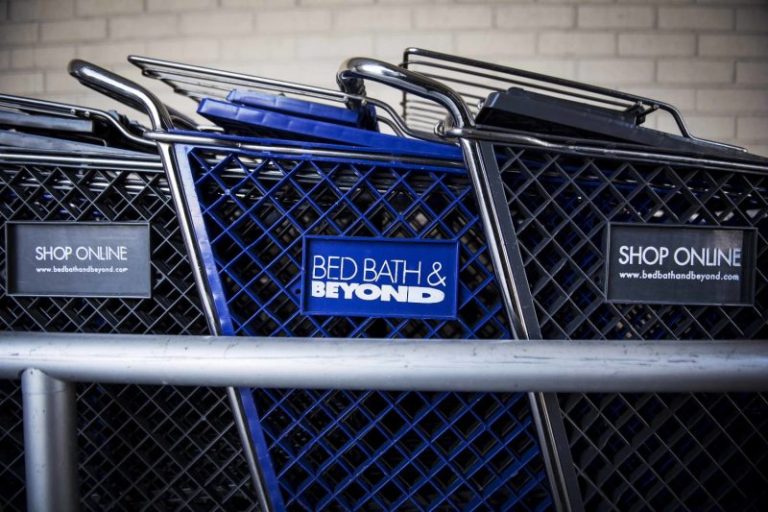
Bed Bath & Beyond is back — kind of.

The bankrupt home goods chain is being resurrected by the owners and licensees of its intellectual property, which opened the first new Bed Bath & Beyond store in Nashville, Tennessee, on Friday with potentially dozens of more to come.

This time around, the store has a new name — Bed Bath & Beyond Home — and marks a “fresh start” for the beloved brand, said Amy Sullivan, the CEO of The Brand House Collective, the store’s operator.

“We’re proud to reintroduce one of retail’s most iconic names with the launch of Bed Bath & Beyond Home, beautifully reimagined for how families gather at home today,” Sullivan said in a news release. “With Bed Bath & Beyond Home we’re delivering on our mission to offer great brands, for any budget, in every room. It’s a powerful addition to our portfolio and a meaningful step forward in our transformation.”

In honor of the brand’s legacy, the new store will accept the brand’s famous 20% coupon, regardless of when it expired.

“We encourage guests to bring in their legacy Bed Bath & Beyond coupons which we will gladly honor,” the company said in a news release. “The coupon we all know and love is back and for those who need one, a fresh version will be waiting at the door.”

Bed Bath and Beyond 2.0 has been several years in the making and involved a rigmarole of corporate acquisitions and rebrandings. When the original Bed Bath and Beyond filed for bankruptcy in April 2023 following a string of corporate missteps, it struggled to find a buyer and ended up liquidating and selling off its business in parts. Overstock.com later bought the brand’s intellectual property, rebranded its business to Beyond Inc. and launched an online-only version of Bed Bath and Beyond.

What followed from there was a dizzying array of corporate deal-making. Ultimately, Beyond took an ownership stake in Kirkland’s Inc., a home decor chain with around 300 stores across the U.S., and gave it the exclusive license to develop and create Bed Bath & Beyond Home stores, as well as Buy Buy Baby stores.

Kirkland’s later rebranded to The Brand House Collective and plans to convert some of its existing Kirkland’s Home stores into more Bed Bath and Beyond shops. Friday’s launch in Nashville is the first of six planned for the market and, pending the results, it plans to convert around 75 additional stores through 2026.

The company said it chose Nashville for the launch because of its proximity to its corporate headquarters, which will allow it to “closely manage every detail and set the standard for future rollouts.”

While the relaunch is exciting for fans of the legacy brand, it comes at a difficult time for the home decor market. In many ways, Bed Bath & Beyond’s bankruptcy was the fault of its management team and execution missteps, but it also faced macro challenges as well, experts said at the time. Competition from players like Amazon, Walmart, Home Goods and Wayfair has made it harder for other brands to capture customer spend, and the overall sector has been soft for several years because of high interest rates and the sluggish housing market.

Even the current leaders in the home decor space have seen soft trends and it’s unlikely that will change until interest rates fall and the housing market picks back up, some analysts have said.

This post appeared first on NBC NEWS

The 4,000m drilling campaign aims to unlock district-scale potential by testing a possible extension of Aris’ producing vein system in Colombia’s premier high-grade gold corridor

Quimbaya Gold Inc. (CSE: QIM,OTC:QIMGF) (OTCQB: QIMGF) (FSE: K05) (‘Quimbaya’ or the ‘Company’) is pleased to announce the commencement of its inaugural diamond drill campaign at the 100%-owned Tahami South Project in Antioquia, Colombia. The fully permitted 4,000-meter program marks Quimbaya’s transition from surface exploration to drill-testing in one of the country’s most prolific gold-producing districts.

Highlights

  • Tahami South is located adjacent to Aris Mining’s Segovia Mine, one of Colombia’s highest-grade and most productive gold operations.

  • The project covers a series of mapped epithermal gold-silver veins that trend through both the Segovia Mine and onto Quimbaya’s ground.

  • Despite extensive artisanal activity and positive surface sampling, the property has never seen diamond drilling.

  • Quimbaya’s 2025 fieldwork outlined multiple drill-ready targets with strong geochemistry, hydrothermal alteration, and structural control.

  • Drilling began in early August 2025, with initial results anticipated in Q4.

A Strategic First Drill Test in Colombia’s Premier Gold District

Tahami South lies within the Colombia’s premier high-grade corridor, a region known for high-grade quartz epithermal gold systems. Recent work by Quimbaya has confirmed widespread alteration, stockwork veins, and placer-style artisanal mining, all indicators of a potentially fertile gold system.

‘The old adage in exploration holds true: the best place to find a mine is next to a mine,’ said Alexandre P. Boivin, CEO of Quimbaya Gold. ‘We’re the first company to deploy modern exploration on this part of the Segovia trend. Our systematic work, including soil geochemistry, channel and rock sampling, stream sediments sampling and structural modelling, has built a robust case for drill testing. We’re now turning that data into action.’

Drill Targets and Geological Context

The initial program will test multiple zones across a structural corridor interpreted to be a continuation of the Segovia vein system. Planned holes will target:

  • Structural intersections mapped across sections A-A’, B-B’, C-C’, E-E’ and H-H’

  • Zones with strong sericitic alteration, quartz veins, hydrothermal breccias, and gold-bearing stockworks

  • Areas proximal to active artisanal workings, suggesting near-surface mineralisation

Surface sampling has returned:

  • Rock chip assays up to 11.21 g/t Au

  • Panel rock assays up to 23.3 g/t Ag

  • Auger soils up to 59 ppb Au and MMI soils up to 37.1 ppb Au

  • Multi-element pathfinder anomalies (As, Cu, Pb, Zn) coincident with structural targets

‘This program is the culmination of months of disciplined geoscience,’ said Ricardo Sierra, VP Exploration. ‘We’ve mapped out structural trends, alteration zones, and artisanal footprints that all suggest a large-scale epithermal system. Now, we’re finally testing it below surface.’

Figure 1. Planned drill platforms (TDH -001 to TDH-007) overlaid on gold-in-auger soil anomalies (Au g/t) and rock sample assay values (Au g/t) at the Tahami South Project.

To view an enhanced version of this graphic, please visit:
https://images.newsfilecorp.com/files/11347/261779_f9d44764a4c268ae_001full.jpg

Next Steps:

Drilling will continue through Q3 2025 with initial assay results expected in Q4. Follow-up drilling is being planned in parallel to expand on any intercepts and test new targets defined through ongoing mapping and geological exploration.

Qualified Person
The technical information in this news release has been reviewed and approved by Ricardo Sierra, a Qualified Person as defined by National Instrument 43-101.

About Quimbaya

Quimbaya aims to discover gold resources through exploration and acquisition of mining properties in the prolific gold mining districts of Colombia. Managed by an experienced team in the mining sector, Quimbaya is focused on three projects in the regions of Segovia (Tahami Project), Puerto Berrio (Berrio Project), and Abejorral (Maitamac Project), all located in Antioquia Province, Colombia.

Contact Information

Alexandre P. Boivin, President and CEO apboivin@quimbayagold.com

Sebastian Wahl, VP Corporate Development swahl@quimbayagold.com

Quimbaya Gold Inc.
Follow on X @quimbayagoldinc
Follow on LinkedIn @quimbayagold
Follow on YouTube @quimbayagoldinc
Follow on Instagram @quimbayagoldinc
Follow on Facebook @quimbayagoldinc

Cautionary Statements

Certain statements contained in this press release constitute ‘forward-looking information’ as that term is defined in applicable Canadian securities legislation. All statements, other than statements of historical fact, included herein are forward-looking information. Generally, but not always, forward-looking statements and information can be identified by the use of forward-looking terminology such as ‘intends’, ‘expects’ or ‘anticipates’, or variations of such words and phrases or statements that certain actions, events or results ‘may’, ‘could’, ‘should’, ‘would’ or ‘occur’. Forward-looking statements herein include statements and information regarding the Offering’s intended use of proceeds, any exercise of Warrants, the future plans for the Company, including any expectations of growth or market momentum, future expectations for the gold sector generally, the Colombian gold sector more particularly, or how global or local market trends may affect the Company, intended exploration on any of the Company’s properties and any results thereof, the strength of the Company’s mineral property portfolio, the potential discovery and potential size of the discovery of minerals on any property of the Company’s, including Tahami South, the aims and goals of the Company, and other forward-looking information. Forward-looking information by its nature is based on assumptions and involves known and unknown risks, uncertainties and other factors which may cause the actual results, performance or achievements of Quimbaya to be materially different from any future results, performance or achievements expressed or implied by such forward-looking statements or information. These assumptions include, but are not limited to, that the Company’s exploration and other activities will proceed as expected. The future outcomes that relate to forward-looking statements may be influenced by many factors, including but not limited to: future planned development and other activities on the Company’s mineral properties; an inability to finance the Company; obtaining required permitting on the Company’s mineral properties in a timely manner; any adverse changes to the planned operations of the Company’s mineral properties; failure by the Company for any reason to undertake expected exploration programs; achieving and maintaining favourable relationships with local communities; mineral exploration results that are poorer or better than expected; prices for gold remaining as expected; currency exchange rates remaining as expected; availability of funds for the Company’s projects; prices for energy inputs, labour, materials, supplies and services (including transportation); no labour-related disruptions; no unplanned delays or interruptions in scheduled construction and production; all necessary permits, licenses and regulatory approvals are received in a timely manner; the Offering proceeds being received as anticipated; all requisite regulatory and stock exchange approvals for the Offering are obtained in a timely fashion; investor participation in the Offering; and the Company’s ability to comply with environmental, health and safety laws. Although Quimbaya’s management believes that the assumptions made and the expectations represented by such information are reasonable, there can be no assurance that the forward-looking information will prove to be accurate. Furthermore, should one or more of the risks, uncertainties or other factors materialize, or should underlying assumptions prove incorrect, actual results may vary materially from those described in forward-looking statements or information. Readers are cautioned not to place undue reliance on forward-looking information as there can be no assurance that the plans, intentions or expectations upon which they are placed will occur. Forward-looking information contained in this news release is expressly qualified by this cautionary statement. The forward-looking information contained in this news release represents the expectations of Quimbaya as of the date of this news release and, accordingly, is subject to change after such date. Except as required by law, Quimbaya does not expect to update forward-looking statements and information continually as conditions change.

NOT FOR DISTRIBUTION TO UNITED STATES NEWS WIRE SERVICES OR FOR DISSEMINATION IN THE UNITED STATES

To view the source version of this press release, please visit https://www.newsfilecorp.com/release/261779

News Provided by Newsfile via QuoteMedia

This post appeared first on investingnews.com

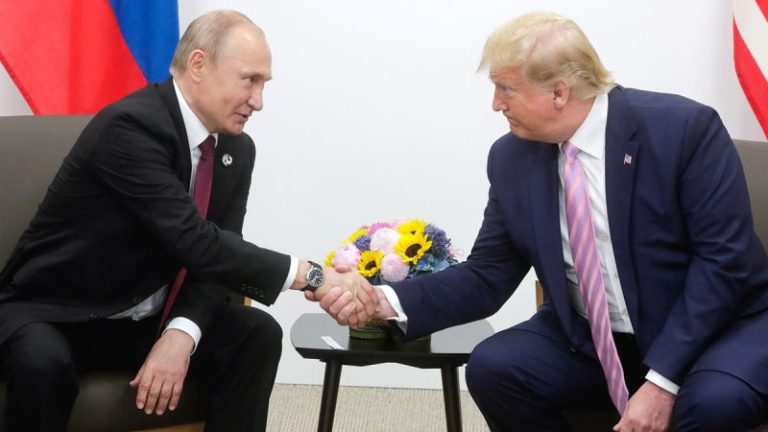
While President Donald Trump previously refrained from speaking ill of Russian President Vladimir Putin, those days are over. 

The ongoing war between Russia and Ukraine has changed the nature of their dynamic. Although the two appeared to get along, at least publicly, during Trump’s first administration, their relationship has unraveled as the more recent conflict persists. 

In recent weeks, Trump has refused to mince his words when asked about Putin. Trump said during a Cabinet meeting July 8 he was fed up with Putin and said he was eyeing potentially imposing new sanctions on Russia. 

‘We get a lot of bulls— thrown at us by Putin, if you want to know the truth,’ Trump said. ‘He’s very nice all the time, but it turns out to be meaningless.’ 

John Hardie, Russia program deputy director at the Foundation for Defense of Democracies, said Russia started to attract ire from Trump dating back to March after Ukraine agreed to a 30-day ceasefire. But Russia has failed to get on board with a ceasefire. 

‘Really, since then, I think Trump has come to view the Russians as the main impediment to a deal,’ Hardie told Fox News Digital Thursday. 

Additionally, Hardie said that Trump has also grown frustrated that Russia will launch drone and missile attacks against Ukraine, even after directly speaking with Putin. 

‘What he’s sort of latched on to are these Russian drone and missile barrages,’ Hardie said. ‘That really seems to resonate with him.’  

Tensions only have continued to escalate between the U.S. and Russia since the July Cabinet meeting. 

Trump announced July 14 that he would sign off on ‘severe tariffs’ against Russia if Moscow failed to agree to a peace deal within 50 days. He then dramatically reduced the deadline to only 10–12 days — which ends Friday. 

The decision to reduce the timeline prompted former Russian President Dmitry Medvedev to caution that ‘each new ultimatum is a threat and a step towards war.’ 

In addition to economic sanctions, Trump responded to Medvedev and issued a rare statement disclosing that two U.S. Navy submarines would be moved in response to escalating threats from Russia. 

‘I have ordered two Nuclear Submarines to be positioned in the appropriate regions, just in case these foolish and inflammatory statements are more than just that,’ Trump said Aug. 1. 

Trump’s disclosure of the submarine presence puts additional pressure on Russia to come to the negotiating table, according to Bryan Clark, a retired submarine officer and director of the Hudson Institute think tank’s Center for Defense Concepts and Technology.

‘We have used very sparingly submarines to try to influence adversary behavior before, but this is pretty unusual, to do it against a nuclear-powered adversary like Russia in response to a nuclear threat by Russia,’ Clark told Fox News Digital Monday. ‘So I think this is trying to essentially push back on Russia’s frequent and long-standing threats to use nuclear weapons in part of the Ukraine conflict.’

Momentum is picking up on negotiations though, and U.S. Special Envoy Steve Witkoff met with Putin Wednesday. 

Trump said in a post on Truth Social afterward that ‘great progress’ was made during the meeting. And now, Trump and Putin are expected to meet face to face imminently in an attempt to finally advance negotiations to end the war between Russia and Ukraine. 

Still, Hardie said he is skeptical that the meeting between Putin and Trump will result in meaningful progress. 

‘I don’t expect a summit to produce much,’ Hardie said. ‘And I think Putin could try to use the summit to placate Trump and kind of buy more time continues assault on Ukraine, but I think his goal is he’d love to be able to enlist Trump in his effort to impose these harsh terms on Ukraine.’ 

Russia has pushed for concessions in a peace deal that include barring Ukraine from joining NATO, preventing foreign peacekeeper troops from deploying to Ukraine after the conflict, and adjusting some of the borders that previously were Ukraine’s.

It’s unclear if Trump plans to announce any additional economic burdens upon Russia Friday in accordance with the deadline that he imposed demanding that Russia signal willingness to end the conflict. But according to Trump, the ball is in Putin’s court. 

‘It’s going to be up to him,’ Trump told reporters Thursday. ‘We’re going to see what he has to say. It’s going to be up to him. Very disappointed.’

The White House did not disclose any details regarding potential Friday sanctions, but said that Trump wants to meet with Putin and Ukrainian President Volodymyr Putin to resolve the conflict. 

‘The Russians expressed their desire to meet with President Trump, and the President is open to this meeting,’ White House press secretary Karoline Leavitt said in a statement to Fox News Digital. ‘President Trump would like to meet with both President Putin and President Zelensky because he wants this brutal war to end. The White House is working through the details of these potential meetings and details will be provided at the appropriate time.’

This post appeared first on FOX NEWS

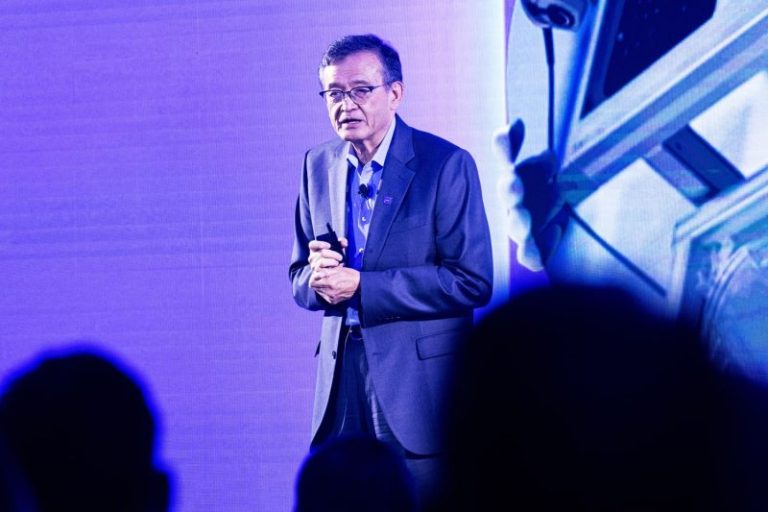
President Donald Trump on Thursday demanded that the CEO of the tech firm Intel resign immediately, saying he is “highly conflicted” because of alleged ties to China.

“There is no other solution to this problem,” Trump wrote on Truth Social.

Trump’s attack on the Intel chief is his latest attempt to pressure the semiconductor industry, which has fueled the boom in artificial intelligence. On Wednesday, he said he would hit imported computer chips with a 100% tariff unless companies are making them, or plan to make them, in the United States.

The demand also comes after Sen. Tom Cotton wrote to Intel Chairman Frank Yeary to “express concerns about the security and integrity of Intel’s operations and its potential impact on U.S. national security.”

Cotton, a Republican from Arkansas, claims in the letter that Intel’s recently named CEO, Lip-Bu Tan, “reportedly controls dozens of Chinese companies and has a stake in hundreds of Chinese advanced-manufacturing and chip firms. At least eight of these companies reportedly have ties to the Chinese People’s Liberation Army.”

Cotton asked Intel whether it had asked Tan to “divest from his positions in semiconductor firms linked to the Chinese Communist Party or the People’s Liberation Army and any other concerning entities in China that could pose a conflict of interest?”

Cotton also asked the company if it was aware of any subpoenas that Tan’s former firm received and if Tan has disclosed any other ties to China.

Intel has not responded to NBC News’ request for comment on Cotton’s letter and Trump’s social media post.

The senator’s letter cites a recent Reuters story that said Tan “has invested in hundreds of Chinese tech firms, including at least eight with links to the People’s Liberation Army, according to a Reuters review of Chinese and U.S. corporate filings.’

In March, Yeary announced that Tan had been named Intel CEO. Tan started working at the company on March 18. Tan was previously chief executive of Cadence Design Systems, an American chip design company based in California, from 2009 to 2021.

Intel’s rivals such as Taiwan Semiconductor, Samsung, GlobalFoundries and Nvidia have all announced plans to invest billions of dollars in their existing U.S. chipmaking infrastructure or deepen partnerships with U.S. companies like Apple to dodge those long-promised tariffs.

Further management turmoil for Intel likely spells more trouble and delays as it continues to try to play catch up with its competitors. The company’s stock market value, just shy of $90 billion, lags far behind most of its rivals. Its stock dropped more than 2% Thursday, erasing its gains for the year and underperforming the S&P 500’s 9% gain this year.

Intel’s last CEO, Patrick Gelsinger, was forced out at the end of 2024 after the company fell behind Nvidia, AMD and other chip firms in the AI race. That came as Gelsinger sought to transform the long-struggling company by attempting to build major chip factories in the U.S.

But Intel’s debt load and the lead time that other companies already had on Intel were too much for Gelsinger to overcome.

In November, Intel received a nearly $8 billion grant under the Biden administration’s “CHIPS Act” for factory build-outs and to make secure chips for the Defense Department.

But that grant was less than Intel was originally set to receive. It was reduced because U.S. officials worried about Intel’s ability to deliver what was promised, The New York Times reported.

This post appeared first on NBC NEWS

OpenAI’s ChatGPT is one of the latest technological breakthroughs in the artificial intelligence space. But what is ChatGPT, and can you invest in OpenAI?

This emerging technology is representative of a niche subsector of the AI industry known as generative AI — systems that can generate text, images or sounds in response to prompts given by users.

Precedence Research expects the global AI market to grow at a compound annual growth rate (CAGR) of 19.2 percent to reach US$3.68 trillion by 2034. Just how much of an impact OpenAI’s ChatGPT will have on this space is hard to predict, but Fortune Business Insights estimates that the total market revenue of generative AI will see a CAGR of 39.6 percent through 2032, increasing from US$67.18 billion last year to US$967.65 billion in 2032.

In September 2024, Reuters reported that OpenAI was planning a restructuring from a non-profit to a for-profit company in order to make it ‘more attractive to investors.’ However, after encountering backlash and potential legal conflicts, in May 2025 OpenAI’s management decided to remain a non-profit while still converting its for-profit arm into a public benefit corporation.

OpenAI completed a new round of funding totaling US$40 billion in late March 2025 projected to bring its valuation to US$300 billion. Japanese multinational investment firm SoftBank made up 75 percent of the funding, while Microsoft (NASDAQ:MSFT), and investment firms Coatue Management, Altimeter Capital and Thrive Capital also took part in the raise.

The US Department of Defense (DoD) awarded a US$200 million contract to OpenAI in June 2025 to provide the DoD with artificial intelligence tools for addressing national security challenges, including cyber defense and warfare.

In this article

    What is OpenAI’s ChatGPT?

    Created by San Francisco-based tech lab OpenAI, ChatGPT is a generative AI software application that uses a machine learning technique called reinforcement learning from human feedback (RLHF) to emulate human-written conversations based on a large range of user prompts. This kind of software is better known as an AI chatbot.

    ChatGPT learns language by training on texts gleaned from across the internet, including online encyclopedias, books, academic journals, news sites and blogs. Based on this training, the AI chatbot generates text by making predictions about which words (or tokens) can be strung together to produce the most suitable response.

    More than a million people engaged with ChatGPT within the first week of its launch for free public testing on November 30, 2022. The introduction of ChatGPT quickly ushered in a new era in the tech industry.

    Based on this success, OpenAI created a more powerful version of the ChatGPT system called GPT-4, which was released in March 2023. This iteration of ChatGPT can accept visual inputs, is much more precise and can display a higher level of expertise in various subjects. Because of this, GPT-4 can describe images in vivid detail and ace standardized tests.

    Unlike its predecessor, GPT-4 doesn’t have any time limits on what information it can access; however, AI researcher and professor Dr. Oren Etzioni has said that the chatbot is still terrible at discussing the future and generating new ideas. It also hasn’t lost its tendency to deliver incorrect information with too high a degree of confidence.

    Further improving on its product, in May 2024 OpenAI launched Chat GPT-4o, with the o standing for omni. OpenAI describes GPT-4o as ‘a step towards much more natural human-computer interaction—it accepts as input any combination of text, audio, image, and video and generates any combination of text, audio, and image outputs.’

    This version has done away with the lagging response time afflicting GPT-4. This proves especially helpful for producing immediate translations during conversations between speakers of different languages. It also allows users to interrupt the chatbot to pose a new query to modify responses.

    More recently, in December 2024, OpenAI introduced ChatGPT Pro subscriptions targeting engineers and academics. For US$200 monthly, users have nearly unlimited access to all ChatGPT models and tools.

    The ChatGPT 3.5 and ChatGPT-4 platforms are free to use, and can be accessed via the web. Those with an iPhone or iPad can also use ChatGPT through an app, and an Android version launched in July 2023. OpenAI also launched a paid subscription, ChatGPT Plus for business use, in August 2023. ChatGPT Plus gives users access to GPT-4 and the newest iteration GPT-4o.

    What is the Stargate Project?

    The Stargate Project is an AI joint venture focused on building new AI infrastructure in the US through US$500 billion in investments. It was announced on January 21, 2025.

    Stargate’s initial funding is coming from OpenAI, SoftBank, Oracle (NYSE:ORCL) and UAE-based technology fund MGX. In addition to OpenAI and Oracle, Stargate’s technology partners include Microsoft, NVIDIA, and British semiconductor and software design company Arm Holdings (NASDAQ:ARM).

    Newly re-elected US President Trump unveiled Stargate during a press conference at the White House highlighting the importance of investment in US AI infrastructure. During the announcement, OpenAI’s Altman, Oracle co-founder Larry Ellison and Softbank CEO Masayoshi Son credited President Trump’s return to office as a major catalyst in making Stargate a reality. The construction of data centers for the Stargate Project are already underway in Texas, according to Ellison.

    How much has Microsoft invested in OpenAI?

    Ascannio / Shutterstock

    Over the years, Microsoft has reportedly invested nearly US$14 billion in OpenAI to help the small tech firm create its ultra-powerful AI chatbot.

    As for how Microsoft could benefit from its investment in OpenAI, OpenAI officially licensed its technologies to Microsoft in 2020 in a then-exclusive partnership. Indeed, Pitchbook has described the deal as an “unprecedented milestone” for generative AI technology. Since then, Microsoft has made good use of OpenAI’s technology in developing new advancement in its Azure cloud computing business.

    However, the relationship between the two has changed in recent months.

    Notably, Microsoft is not a financier of the Stargate Project joint venture, and is instead just described as a technology partner. According to OpenAI’s press release, the new joint venture builds on its existing partnership with Microsoft.

    Microsoft’s lack of a funding role in Stargate led some to wonder if the trillion-dollar tech firm had soured on its relationship with OpenAI. This conclusion was understandable given reports that Microsoft refused to make a bigger contribution than the US$750 million it invested during the OpenAI US$6.6 billion funding round in October 2024.

    Additionally, Microsoft changed the contract between the two companies and is no longer the exclusive cloud provider for OpenAI, but has the right of first refusal for deals the AI firm may make with other cloud companies.

    As Bloomberg technology reporter Dina Bass explained, Microsoft stands to benefit from its role as a technology partner without having to invest a dime into the project.

    “Microsoft views the revised contract with OpenAI as advantageous, according to people familiar with the company’s thinking. The software giant retains its share of OpenAI’s revenue and is the largest investor in a company that may now become even more valuable — though the size of that stake could change as the startup works to restructure as a for-profit,” wrote Bass. “And Microsoft also still has access to OpenAI models, even if they’re trained in a data center funded by Softbank or Oracle.”

    Yet, there are reports that Microsoft and OpenAI’s relationship is on the brink of a big breakup. The tech giant has been pushing for a much larger percentage of OpenAI’s revenues than the 20 percent it currently enjoys. According to the Wall Street Journal, OpenAI is considering making antitrust complaints about Microsoft to regulators even though the two companies are still undergoing high level discussions about the future of the partnership.

    Elon Musk’s position on OpenAI

    DIA TV / Shutterstock

    OpenAI was founded in 2015 by Altman, its current CEO, as well as Tesla (NASDAQ:TSLA) CEO Elon Musk and other big-name investors, such as venture capitalist Peter Thiel and LinkedIn co-founder Reid Hoffman. Musk left his position on OpenAI’s board of directors in 2018 to focus on Tesla and its pursuit of autonomous vehicle technology.

    A few days after ChatGPT became available for public testing, Musk took to X, formerly known as Twitter, to say, “ChatGPT is scary good. We are not far from dangerously strong AI.” That same day, he announced that X had shut the door on OpenAI’s access to its database so it could no longer use it for RLHF training.

    His reason: “OpenAI was started as open-source & non-profit. Neither are still true.”

    Furthering his feud with OpenAI, Musk filed a lawsuit against the company in March 2024 for an alleged breach of contract. The crux of his complaint was that OpenAI has broken the ‘founding agreement’ made between the founders (Altman, Greg Brockman and himself) that the company would remain a non-profit. Altman and OpenAI have denied there was such an agreement and that Musk was keen on an eventual for-profit structure.

    Musk dropped the lawsuit three months later without giving a reason, reported Reuters. The day before he dropped the lawsuit, he reacted to the news that Apple (NASDAQ:AAPL) is partnering with OpenAI to incorporate ChatGPT with Apple devices. On X, Musk declared, ‘If Apple integrates OpenAI at the OS (operating system) level, then Apple devices will be banned at my companies. That is an unacceptable security violation.” It should be noted that OpenAI has said queries completed on Apple devices will not be stored by OpenAI. By August 2024, Musk had resumed his litigation in federal court.

    It seems that the US government also has questions about the restructuring of the private company and the involvement of tech giant Microsoft, as reported by Bloomberg. In early January 2025, the Financial Press also reported the Federal Trade Commission (FTC) has raised questions about the potential anti-trust violations in the newly emerging AI technology space arising from Microsoft’s partnership with and investments in OpenAI.

    Of course, Musk took to X to weigh in on the Stargate Project, suggesting OpenAI and its partners don’t actually have the US$500 million they’ve pledged to invest. Sam Altman was quick to reply, telling Musk he’s mistaken and inviting him to visit their data center under construction in Texas.

    However, Musk is not alone in his skepticism. For example, Atreides Management Chief Investment Office Gavin Baker also questioned the deal on X. “Stargate is a great name but the $500b is a ridiculous number and no one should take it seriously,” Baker wrote, backing up his statement by explaining the financial positions of each of the partners. “Nowhere close to $500b. Everyone should just start issuing press releases for $1 trillion AI projects.”

    OpenAI criticisms and lawsuits

    While ChatGPT has served as a major step forward in generative AI technology, there are many technical and ethical concerns with the program that have emerged since it launched, including fears over job destruction and targeted disinformation campaigns.

    Accuracy of information in ChatGPT’s answers is not guaranteed. Its selection of which words to string together are actually predictions — not as fallible as mere guesses, but still fallible. Even the 4.0 version is “still is not fully reliable (it “hallucinates” facts and makes reasoning errors),” says the company, which emphasizes that users should exercise caution when employing the technology.

    Indeed, ChatGPT’s failings can have dangerous real-life consequences. Among other negative applications, the tech can be used to spread misinformation, carry out phishing email scams or write malicious code.

    There’s also the fear among teachers that the technology is leading to an unwelcome rise in academic dishonesty, with students using ChatGPT to write essays or complete their homework.

    “Teachers and school administrators have been scrambling to catch students using the tool to cheat, and they are fretting about the havoc ChatGPT could wreak on their lesson plans,” writes New York Times tech columnist Kevin Roose.

    Many lawsuits against OpenAI have emerged as well. Multiple news outlets, including the the New York Times, have launched copyright lawsuits against OpenAI, and some of the plaintiffs are also seeking damages from the private tech firm’s very public partner Microsoft.

    Additionally, the Authors Guild, which represents a group of prominent authors, launched a class-action lawsuit against OpenAI that is calling for a licensing system that would allow authors to opt out of having their books used to train AI, and would require AI companies to pay for the material they do use.

    In October, OpenAI researcher Suchir Balaji blew the whistle on the company, reporting that the firm was violating US copyright laws. He died one month later in what was ruled a suicide, but the investigation is still open.

    Cybersecurity risks are also a concern for ChatGPT users, and recent events along these lines add validity to Musk’s warning. For one, in 2024 ChatGPT for macOS was discovered to be breaching Apple’s security rules by storing data as plain text rather than encryption, making it possible for other apps to access.

    What’s the future of OpenAI and ChatGPT?

    What about the long-term goals for OpenAI and ChatGPT? For most of the tech leaders in this space, the end game is artificial general intelligence (AGI) — a system that can perform any function the human brain can, including self-teaching, abstract thinking and understanding cause and effect.

    As uptake increases, AI technology is taking over the role of humans and will likely continue doing so in a number of fields, from content creation and customer service to transcription and translation services, and even in graphic design, software engineering and paralegal fields.

    In addition to Microsoft’s use of the ChatGPT technology as part of Copilot, other companies are working with OpenAI to incorporate the technology into their platforms, including Canva, Duolingo (NASDAQ:DUOL), Expedia Group (NASDAQ:EXPE), Intercom, Salesforce (NASDAQ:CRM), Stripe, Tinder, Upwork (NASDAQ:UPWK) and Visa (NYSE:V).

    For 2025, OpenAI is focusing on developing agentic AI capabilities into its ChatGPT platform. Agentic AI, a part of the evolution towards AGI, involves AI systems and models that can act autonomously and complete tasks without much human guidance. Early in January, OpenAI announced the rollout of new task features for ChatGPT Pro, Plus and Teams users. While still in the beta stage, these features allow users to schedule future tasks to be completed by ChatGPT, such as a weekly news brief or reminders about important meetings.

    OpenAI first debuted its foray into agentic AI in September 2024 with the introduction of ChatGPT o1, stating ‘We’ve developed a new series of AI models designed to spend more time thinking before they respond.’ The release of the next iterations of this model, ChatGPT o3 mini and o4 mini happened in the first half of 2025.

    The recent release of Chinese startup DeepSeek’s AI assistant may present a problem for OpenAI and the US tech industry as a whole. In what tech gurus like Marc Andreesen call AI’s Sputnik moment, DeepSeek unseated ChatGPT as the most downloaded free app in the Apple App Store, at reportedly a fraction of the cost. For reference, in 1957 the Soviets launched Sputnik, the earth’s first artificial satellite, beating out the United States and sparking a Cold War space exploration race between the two nations.

    The DeepSeek launch set off a significant sell off in technology stocks on January 27, 2025, especially among the Magnificent Seven members, including NVIDIA, Microsoft and Alphabet (NASDAQ:GOOGL).

    When will OpenAI go public?

    OpenAI stock is not currently publicly traded, and following the May 2025 decision to remain a non-profit, there are no signs of an on initial public offering (IPO) in the works for 2025. For now, investors can gain exposure through related tech companies discussed below.

    Which stocks will benefit the most from AI chatbot technology?

    Other than companies directly tied to generative AI technology, which stocks are likely to get a boost from generative AI advancements?

    There are several verticals in the tech industry with indirect exposure to AI chatbot technology, such as semiconductors, network equipment providers, cloud providers, central processing unit manufacturers and internet of things.

    Some of the publicly traded companies in these verticals include:

      You can also take a look back at the market with our AI Market 2024 Year-End Review and AI Market Update: Q2 2025 in Review, or read projections for AI this year in our AI Market Forecast: 3 Top Trends that will Affect AI in 2025. Generative AI is also a major theme in the Top 10 Emerging Technologies to Watch.

      FAQs for investing in OpenAI and ChatGPT

      How is OpenAI funded?

      OpenAI raised US$57.9 billion over 11 funding rounds from 2016 to March 2025.

      Top investors include technology investment firm Thrive Capital, venture capital firm Andreessen Horowitz and revolutionary technology investment firm Founders Fund.

      What is the market value of ChatGPT/OpenAI?

      OpenAI has a market valuation of US$300 billion as of June 2025. The company’s annualized revenue reached the US$10 billion mark in June 2025, up from the US$5.5 billion achieved in December 2024.

      Does ChatGPT use NVIDIA chips?

      ChatGPT’s distributed computing infrastructure depends upon powerful servers with multiple graphics processing units (GPUs). High-performance NVIDIA GPU chips are preferred for this application as they also provide excellent Compute Unified Device Architecture support.

      What is DeepSeek?

      DeepSeek is a Chinese AI company that launched new AI-driven, open-source language models known as DeepSeek-V3 and DeepSeek-R1 into the market in January 2025. Reuters reports that ‘the training of DeepSeek-V3 required less than $6 million worth of computing power from Nvidia H800 chips.’

      DeepSeek-R1 is designed to compete with the performance of OpenAI-o1 across math, code, and reasoning tasks.

      Can ChatGPT make stock predictions?

      A University of Florida study from 2023 highlighted the potential for advanced language models such as ChatGPT to accurately predict movements in the stock market using sentiment analysis.

      During the course of the study, ChatGPT outperformed traditional sentiment analysis methods, and the finance professors conducting the research concluded that “incorporating advanced language models into the investment decision-making process can yield more accurate predictions and enhance the performance of quantitative trading strategies.”

      When to expect ChatGPT 5?

      In June 2025, during an OpenAI podcast Sam Altman responded with, ‘Probably some time this summer,’ when asked about when the market can expect to see ChatGPT-5.

      Previously, OpenAI filed a trademark application for ChatGPT-5 in mid-July 2023, which hinted that the next iteration of the generative AI technology is currently under development. There were rumors the company planned to complete training for ChatGPT-5 by the end of 2023, but this did not materialize. PC Guide noted in April 2024 that Sam Altman had teased an “amazing new model this year’ in an interview on the Lex Fridman podcast.

      In November 2024, Altman confirmed that ChatGPT-5 wouldn’t likely hit the market until later in 2025 as the company switched its focus to ChatGPT o1 and its successors.

      Securities Disclosure: I, Melissa Pistilli, hold no direct investment interest in any company mentioned in this article.

      This post appeared first on investingnews.com

      Veteran Democratic operative Anita Dunn will be on Capitol Hill on Thursday for a closed-door interview with House Oversight Committee investigators.

      She is the tenth former White House official to appear before the panel’s lawyers, as Committee Chair James Comer, R-Ky., probes whether former President Joe Biden’s inner circle worked to cover up signs of mental decline in the elderly leader – and whether executive actions signed via autopen were done without his awareness.

      Dunn is appearing voluntarily before the committee’s lawyers for a transcribed interview. It’s expected to begin around 10 a.m. and will likely last several hours into the afternoon.

      Three of the 10 former Biden administration officials who have appeared so far have come under subpoena, and each pleaded the Fifth Amendment to avoid answering material questions.

      Appearing voluntarily does not give people the ability to invoke the constitutional right against self-incrimination, but it’s possible Dunn will give House investigators little to work with.

      The six former White House aides who appeared voluntarily before her have all defended Biden’s mental acuity and ability to serve as president, sources said, even as some, like ex-Chief of Staff Ron Klain, have conceded the 82-year-old’s age has worn on him over time.

      Dunn, like those who appeared before her, has known Biden for years.

      She’s been a key player in Democratic communications and public relations strategies for decades, and reportedly was a central figure in Biden’s messaging strategy both at the White House and during his short-lived 2024 campaign.

      ‘She’s running everything,’ one unnamed White House advisor told CNN in June 2023 while discussing Biden’s re-election bid.

      A January 2023 report by NBC News described Dunn and her husband, former Obama administration White House counsel Robert Bauer, as central figures in Biden’s orbit. Bauer also reportedly served as Biden’s personal lawyer.

      ‘If it’s a room of five people, Anita and Bob are two of them,’ an unnamed former White House aide told the outlet.

      Dunn was also a central figure amid the fallout after Biden’s disastrous June 2024 debate against then-candidate Donald Trump.

      NBC News reported in July 2024 that Biden family members discussed whether he should fire Dunn and Bauer, though White House chief of staff Jeff Zients dismissed the reports as ‘unfounded and insulting rumors’ in a statement to the outlet at the time.

      Dunn served as White House communications director under former President Barack Obama, and Biden brought her onto his 2020 campaign to help with his own communications strategy.

      She also served as senior advisor to the president for communications in the Biden White House before playing a key role in his 2024 campaign.

      Comer wrote in his letter summoning Dunn, ‘You served as former President Biden’s ‘most senior communications adviser.’ Former President Biden confided in you extensively over the past decade.’

      ‘The Committee seeks to understand your observations of former President Biden’s mental acuity and health as one of his closest advisors. If White House staff carried out a strategy lasting months or even years to hide the chief executive’s condition—or to perform his duties—Congress may need to consider a legislative response,’ Comer wrote.

      This post appeared first on FOX NEWS

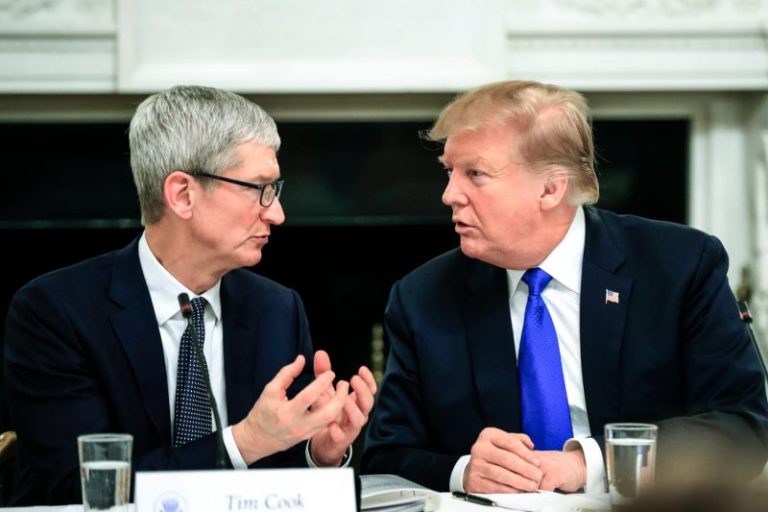
      Apple CEO Tim Cook will join President Donald Trump on Wednesday for an event touting what the White House calls a new $100 billion investment commitment by the tech giant in the U.S.

      The announcement in the Oval Office, set for 4:30 p.m. ET, includes Apple’s commitment to a new “American Manufacturing Program,” a White House official confirmed to CNBC.

      With the new pledge, Apple’s total investment in the U.S. over the next four years now totals $600 billion, the official said.

      Bloomberg first reported Apple’s new investment pledge earlier Wednesday.

      The meeting comes as Trump has pushed Apple to make its products in America — a feat that experts say would jack up prices by hundreds of dollars, if it can even be done at all.

      Most of Apple’s flagship iPhones have been manufactured in China, though the company is moving some of its production to India.

      Trump has complained about that plan. “We’re not interested in you building in India, India can take care of themselves … we want you to build here,” Trump said he told Cook in May.

      On Wednesday, Trump announced he will double the U.S. tariff rate on Indian goods to 50%. Trump said he was raising the tariff because of India continuing to purchase Russian oil.

      Trump had exempted smartphones, chips and other tech products from his early April “reciprocal” tariff plan, which slapped a 10% baseline duty on nearly the entire world and set significantly higher rates for dozens of individual countries.

      That exemption still applied as of this week, following Trump’s executive order tweaking U.S. tariffs on a slew of countries.

      And it appears to remain intact in Trump’s latest order ratcheting up tariffs on imports from India.

      Apple declined CNBC’s request for comment.

      CNBC’s Steve Kovach contributed to this report.

      This post appeared first on NBC NEWS

      Questcorp Mining Inc. (CSE: QQQ,OTC:QQCMF) (OTCQB: QQCMF) (FSE: D910) (the ‘Company’ or ‘Questcorp’) is pleased to announce that drilling has commenced on its La Union Project in northwest Sonora, Mexico. This work is being carried out by property vendor and operator Riverside Resources Inc. (TSXV: RRI).

      Highlights

      • Initial drill program is designed to expand known zones of mineralization, test new targets, and explore areas surrounding multiple historical mine workings within the 25 km² project area.
      • Drill program will consist of + 1,500m of diamond core drilling across six holes, each averaging 250m in depth.
      • Drilling to test the carbonate-hosted replacement deposit (CRD) style of mineralization, with gold associated with mantos, chimneys, and along structural zones.
      • Angled drill holes are aimed at cutting perpendicular to stratigraphic targets and some structural targets which is typical in CRD systems
      • Structural features may have served as mineralizing conduits and are key targets in the current drill program.

      The recent exploration work over the past three months by Riverside has improved the understanding of the structural geology and stratigraphy in the Sierra El Viejo, the mountain range immediately to the west of La Union Project. The La Union district lies along the flanks of this range, where these updated interpretations help guide current exploration efforts. The exploration target focus is for a large potential gold discovery that expands from previous smaller scale mine operations on the property. The drill program will begin to test the new concepts and expand past previous mining.

      Saf Dhillon, President & CEO states, ‘Questcorp is proud to be working with John-Mark and his whole team at Riverside in what is a historic moment in the development of this property. The La Union Project has had work conducted on it for decades, including the production of 50,000 ounces of gold itself but, it has never had a drill bit pierce the ground until now!’

      Earlier this year, Questcorp entered into a definitive option agreement with Riverside’s wholly owned subsidiary, RRM Exploracion, S.A.P.I. DE C.V. to acquire a 100% interest in the La Union Project. As part of the agreement, Questcorp issued shares to Riverside, making Riverside a shareholder and aligning both parties’ interests in the Project’s success. With funding provided by Questcorp, an initial C$1,000,000 exploration program is now underway. This marks the first phase of a larger, C$5,500,000 work commitment, contingent on exploration results and Questcorp’s continued participation.

      The Drill Program Targets include more than four different areas, beginning with this early-stage stratigraphic and orientation phase of drilling exploration aimed at evaluating the scale of alteration and indications of a mineralized system. This will be the first drilling ever conducted on most of the targets, despite past mining having occurred in the majority of these areas. The initial program will consist of one to three holes per area, primarily for orientation purposes. Follow-up drilling is planned and can be expanded based on initial results, which will help verify the stratigraphy, lithologies, and structural features allowing for improved modeling and next-stage discovery targeting. The four areas are listed below:

      • Union Main Mine Area – The program will use angled drill holes to test limestone and other carbonate stratigraphic hosts within the Clemente Formation, with the potential to reach the underlying Caborca Formation. These units are considered the primary hosts for replacement-style mineralization.
      • North Union Mine Area – The initial focus of the program will be on testing structural interpretations. Additional drilling is anticipated following this first phase, as results will help guide future drill testing of areas with past mining activity and various structural orientations.
      • Cobre Mine Area – The Clemente Formation is the primary host unit, and structural features combined with areas of past mining provide multiple target zones. Drilling will begin with an initial stratigraphic test hole to help orient around the thickness of the host unit and extend into the lower Caborca Formation, which is also a favorable host for CRD-style mineralization.
      • Central Union Area – Structural targets, as possible mineralization feeder zones, are a key focus in this past mining manto area. There are extensive additional target zones in the area, and this initial orientation drilling will provide vectoring for the next stage of drilling and further study of the Clemente Formation, and possibly into the Caborca Formation as currently interpreted.

      General Overview of La Union Project

      The Project is summarized in a recently published NI 43-101 Technical Report available under Questcorp’s SEDAR+ profile (www.sedarplus.ca). Riverside initially acquired the Project and subsequently consolidated additional inlier mineral claims, building a strong land position. Riverside then advanced the Project through surface access agreements and drill permitting, making it a turn-key exploration opportunity for Questcorp.

      The Project was originally identified through Riverside’s exploration work in the western Sonora Gold Belt, conducted in collaboration with AngloGold Ashanti Limited, Centerra Gold Inc., and Hochschild Mining Plc. Earlier research by Riverside Founder John-Mark Staude also contributed to recognizing the district’s potential. Initial work by members of the Riverside team, drawing on more than two decades of geological compilation and analysis, further confirmed the region as highly prospective.

      At the Project, historical mining by the Penoles Mining Company targeted chimney and manto-style replacement bodies within the upper oxide zones. As a result, the underlying sulfide zones represent immediate and compelling drill targets for further exploration.

      The Project features favorable limestone host rocks, an extensive alteration footprint, and multiple small-scale historical workings, with mineralization styles similar to those at the Hermosa Project in southern Arizona. At Hermosa, South32 is advancing mine development following its acquisition of the project from Arizona Mining. On 15 February 2024, South32’s board approved a US $2.16 billion capital investment to develop the Taylor zinc-lead-silver deposit, representing the largest private mining investment in Southern Arizona’s history. The project is now considered one of the most significant undeveloped base-metal assets in the United States.

      At the La Union Project, immediate drill targets offer the potential for significant-scale discoveries. La Union is well positioned for near-term exploration success, with targets that include both oxide and deeper sulfide mineralization.

      Figure 1. Geologic map with the tenure of the Union internal concession shown in pink. Manto and chimney type CRD targets are shown as red polygons. All mineral tenures on this map comprise the La Union project. The drill program will focus on the Union Mine and areas north of the Union Mine with the initial drill work.

      To view an enhanced version of this graphic, please visit:
      https://images.newsfilecorp.com/files/10197/261433_a2ed3d4fb471dade_001full.jpg

      Figure 2. Cross section looking west with conceptual drill targets and schematic drillhole traces. Assays from Riverside’s sampling of rock dump materials from the two mine areas are labeled in black. Red areas are interpreted as manto and chimney target bodies that are now well defined and drill ready. Assays shown on figures 1 and 2 have been previously released and disclosed as summarized below the geochemical QA/QC and in published NI 43-101 Report that Questcorp published 2025 on Sedar+.

      To view an enhanced version of this graphic, please visit:
      https://images.newsfilecorp.com/files/10197/261433_a2ed3d4fb471dade_002full.jpg

      The La Union Project

      The La Union Project is a carbonate replacement deposit (‘CRD’) project hosted by Neoproterozoic sedimentary rocks (limestones, dolomites, and siliciclastic sediments) overlying crystalline Paleoproterozoic rocks of the Caborca Terrane. The structural setting features high-angle normal faults and low-to-medium-angle thrust faults that sometimes served as mineralization conduits. Mineralization occurs as polymetallic veins, replacement zones (mantos, chimneys), and shear zones with high-grade metal content, as shown in highlight grades of 59.4 grams per metric tonne (g/t) gold, 833 g/t silver, 11% zinc, 5.5% lead, 2.2% copper, along with significant hematite and manganese oxides, consistent with a CRD model (see the technical report entitled ‘NI 43-101 Technical Report on the Union Project, State of Sonora, Mexico’ dated effective May 6, 2025 available under Questcorp’s SEDAR+ profile). These targets also demonstrate intriguing potential for large gold discoveries potentially above an even larger porphyry Cu district potential as the Company’s target concept at this time.

      Questcorp cautions investors that grab samples are selective by nature and not necessarily indicative of similar mineralization on the property.

      The technical and scientific information in this news release has been reviewed and approved by R. Tim Henneberry, P. Geo (BC), a director of the Company and a ‘qualified person’ under National Instrument 43-101 – Standards of Disclosure for Mineral Projects.

      About Questcorp Mining Inc.

      Questcorp Mining Inc. is engaged in the business of the acquisition and exploration of mineral properties in North America, with the objective of locating and developing economic precious and base metals properties of merit. The Company holds an option to acquire an undivided 100% interest in and to mineral claims totaling 1,168.09 hectares comprising the North Island Copper Property, on Vancouver Island, British Columbia, subject to a royalty obligation. The Company also holds an option to acquire an undivided 100% interest in and to mineral claims totaling 2,520.2 hectares comprising the La Union Project located in Sonora, Mexico, subject to a royalty obligation.

      Contact Information

      Questcorp Mining Corp.

      Saf Dhillon, President & CEO

      Email: saf@questcorpmining.ca
      Telephone: (604) 484-3031

      This news release includes certain ‘forward-looking statements’ under applicable Canadian securities legislation. Forward-looking statements include, but are not limited to, statements with respect to Riverside’s arrangements with geophysical contractors to undertake orientation surveys and follow up detailed survey to confirm and enhance the drill targets. Forward-looking statements are necessarily based upon a number of estimates and assumptions that, while considered reasonable, are subject to known and unknown risks, uncertainties, and other factors which may cause the actual results and future events to differ materially from those expressed or implied by such forward-looking statements. Such factors include but are not limited to: the ability of Riverside to secure geophysical contractors to undertake orientation surveys and follow up detailed survey to confirm and enhance the drill targets as contemplated or at all, general business, economic, competitive, political and social uncertainties, uncertain capital markets; and delay or failure to receive board or regulatory approvals. There can be no assurance that the geophysical surveys will be completed as contemplated or at all and that such statements will prove to be accurate, as actual results and future events could differ materially from those anticipated in such statements. Accordingly, readers should not place undue reliance on forward-looking statements. The Company disclaims any intention or obligation to update or revise any forward-looking statements, whether as a result of new information, future events or otherwise, except as required by law.

      To view the source version of this press release, please visit https://www.newsfilecorp.com/release/261433

      News Provided by Newsfile via QuoteMedia

      This post appeared first on investingnews.com
      Wednesday marks the 80th anniversary of when the U.S. employed the first ever nuclear bomb over the Japanese city of Hiroshima, followed by the bombing of Nagasaki three days later on Aug. 9. But despite nearly a century of lessons learned, nuclear warfare still remains a significant threat.

      ‘This is the first time that the United States is facing down two nuclear peer adversaries – Russia and China,’ Rebeccah Heinrichs, nuclear expert and senior fellow at the Hudson Institute, told Fox News Digital.

      Heinrichs explained that not only are Moscow and Beijing continuing to develop new nuclear capabilities and delivery systems, but they are increasingly collaborating with one another in direct opposition to the West, and more pointedly, the U.S.

      ‘It’s a much more complex nuclear threat environment than what the United States even had to contend with during the Cold War, where we just had one nuclear peer adversary in the Soviet Union,’ she said. ‘In that regard, it’s a serious problem, especially when both China and Russia are investing in nuclear capabilities and at the same time have revanchist goals.’

      Despite the known immense devastation that would accompany an atomic war between two nuclear nations, concern has been growing that the threat of nuclear war is on the rise. 

      The bombings of Hiroshima and Nagasaki – which collectively killed some 200,000 people, not including the dozens of thousands who later died from radiation poisoning and cancer – have been attributed with bringing an end to World War II.

      But the bombs did more than end the deadliest war in human history – they forever changed military doctrine, sparked a nuclear arms race and cemented the concept of deterrence through the theory of mutually assured destruction.

      Earlier this year the Bulletin of Atomic Scientists moved forward the ‘Doomsday Clock’ by one second – pushing it closer to ‘midnight,’ or atomic meltdown, than ever before.

      In January, the board of scientists and security officials in charge of the 78-year-old clock, which is used to measure the threat level of nuclear warfare, said that moving the clock to 89 seconds to midnight ‘signals that the world is on a course of unprecedented risk, and that continuing on the current path is a form of madness.’

      Despite the escalated nuclear threats coming out of North Korea, and international concern over the Iranian nuclear program, the threat level largely came down to the three biggest players in the nuclear arena: Russia, the U.S. and China.

      The increased threat level was attributed to Russia’s refusal to comply with international nuclear treaties amid its continuously escalating war in Ukraine and its hostile opposition to NATO nations, as well as China’s insistence on expanding its nuclear arsenal.

      But the Bulletin, which was founded by scientists on the Manhattan Project in 1945 to inform the public of the dangers of atomic warfare, also said the U.S. has a role in the increased nuclear threat level.

      ‘The U.S. has abdicated its role as a voice of caution. It seems inclined to expand its nuclear arsenal and adopt a posture that reinforces the belief that ‘limited’ use of nuclear weapons can be managed,’ the Bulletin said. ‘Such misplaced confidence could have us stumble into a nuclear war.’

      But Heinrichs countered the ‘alarmist’ message and argued that deterrence remains a very real protectant against nuclear warfare, even as Russia increasingly threatens Western nations with atomic use.

      ‘I do think that it’s a serious threat. I don’t think it’s inevitable that we’re sort of staring down nuclear Armageddon,’ she said. 

      Heinrichs argued the chief threat is not the number of nuclear warheads a nation possesses, but in how they threaten to employ their capabilities.

      ‘I think that whenever there is a threat of nuclear use, it’s because adversaries, authoritarian countries, in particular Russia, is threatening to use nuclear weapons to invade another country. And that’s where the greatest risk of deterrence failure is,’ she said. ‘It’s not because of the sheer number of nuclear weapons.’

      Heinrichs said Russia is lowering the nuclear threshold by routinely threatening to employ nuclear weapons in a move to coerce Western nations to capitulate to their demands, as in the case of capturing territory in Ukraine and attempting to deny it NATO access.

      Instead, she argued that the U.S. and its allies need to improve their deterrence by not only staying on top of their capabilities but expanding their nuclear reach in regions like the Indo-Pacific.

      ‘The answer is not to be so afraid of it or alarmed that you capitulate, because you’re only going to beget more nuclear coercion if you do that,’ she said. ‘The answer is to prudently, carefully communicate to the Russians they are not going to succeed through nuclear coercion, that the United States also has credible response options.

      ‘We also have nuclear weapons, and we have credible and proportional responses, and so they shouldn’t go down that path,’ Heinrichs said. ‘That’s how we maintain the nuclear peace. That’s how we deter conflict. And that’s how we ensure that a nuclear weapon is not used.’

      This post appeared first on FOX NEWS

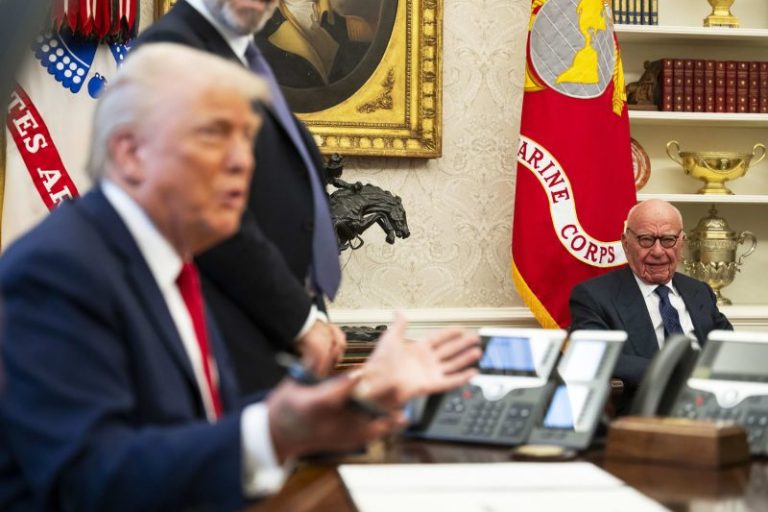
      Conservative media baron Rupert Murdoch will give President Donald Trump regular updates on his health as part of an agreement to postpone Murdoch’s deposition in Trump’s $10 billion defamation lawsuit against him over a Wall Street Journal article about late sex offender Jeffrey Epstein.

      The unusual stipulation comes a week after Trump’s lawyers sought a quick deposition in the case. Their filing in Miami federal court implied that Murdoch might be either dead or too sick to testify in person by the time the case went to trial.

      “Murdoch is 94 years old, has suffered from multiple health issues throughout his life, is believed to have suffered recent significant health scares, and is presumed to live in New York, New York,” Trump’s lawyers said in their filing last week.

      Murdoch’ agreement to divulge highly personal information about his health to Trump and his lawyers contrasts sharply with the cozy relationship Murdoch’s Fox News has had with the president over the years.

      Fox News for more than a decade has acted as a cheerleader for Trump and his policies. The president is an avid watcher of the conservative network, and several of his key administration officials have worked for Fox. Trump’s daughter-in-law, Lara Trump, currently has a show on Fox News.

      The new deal, outlined in a court filing jointly filed by Trump’s and Murdoch’s lawyers late Monday night, postpones Murdoch’s deposition in the case until after a judge rules on his and other defendants’ motions to dismiss Trump’s lawsuit.

      If the judge denies that dismissal motion, Murdoch would have to sit for questioning under oath from Trump’s lawyers within 30 days.

      The deal has to be approved by the judge, but it is likely to be approved given that both sides have agreed to it.

      When the judge signs off on it, Murdoch will be required within three calendar days to give Trump’s’ lawyers “a sworn declaration describing his current health condition,” according to the stipulation filed Monday.

      “Defendant Murdoch has further agreed to provide regularly scheduled updates to Plaintiff regarding his health, including a mechanism for him to alert the Plaintiff if there is a material change to his health,” the filing says.

      That mechanism is described in a separately signed agreement, which was not publicly filed with the court.

      If Murdoch fails to provide the updates as agreed to in the abatement agreement, he will have to sit for an “expedited” deposition, the filing says.

      A spokesman for Trump declined to comment on the filing.

      CNBC has requested comment from Dow Jones & Co., the publisher of the Journal, which is owned by Murdoch’s News Corp.

      Trump’s suit alleges defamation for a Wall Street Journal article in July which said he had sent Epstein a “bawdy” birthday card in 2003 for Epstein’s 50th birthday.

      Trump, who denies writing the note, sued Murdoch; News Corp and its CEO Robert Thomson; Dow Jones & Co.; and the two reporters who wrote the article.

      For weeks, the president and the Justice Department have faced criticism for a decision not to release investigative files about Epstein, a former friend of Trump’s, who died by suicide in jail in 2019, after being arrested on child sex trafficking charges.

      This post appeared first on NBC NEWS