Archive

August 2025

Browsing

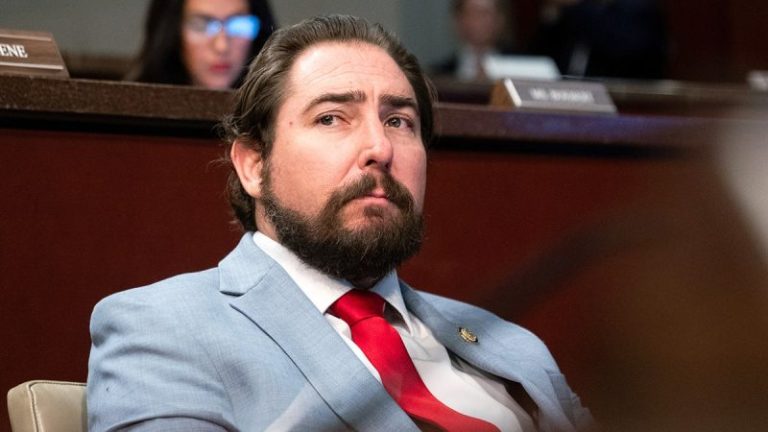
Former Navy SEAL and current GOP House lawmaker Rep. Eli Crane of Arizona delivered a pointed message to former President Barack Obama.

‘You’ve done enough damage. Probably best to sit this one out,’ the congressman told Obama in a post on X.

Crane made the comments in response to a post in which Obama declared, ‘Since we passed the Affordable Care Act, Republicans have tried over and over to repeal it. And over and over, they’ve failed — in part because millions of people now depend on the ACA for quality, affordable health care. Now Republicans are trying something different: quietly weakening the law and hoping you won’t notice. We can’t let them.’

GOP Sen. Mike Lee of Utah wrote in response to the Democrat’s post, ‘Obamacare was a great deal—for huge healthcare companies But it’s made healthcare less affordable for hardworking American families, who have seen their healthcare costs skyrocket—while a small handful of healthcare giants have reaped a windfall of billions of dollars a year.’

‘The worst part of Obamacare was putting able-bodied, working-age adults on government assistance instead of helping them find employment. I’ve been vocally against this since day one. Medicaid should be for needy children, families, and seniors. Not for those who can work!’ former Wisconsin Gov. Scott Walker, who is now the president of the Young America’s Foundation, wrote.

Fox News Digital reached out to the White House for comment on Obama’s post.

Obama served two consecutive terms as president, with his White House tenure spanning from early 2009 through early 2017, when he was succeeded by President Donald Trump.

This post appeared first on FOX NEWS

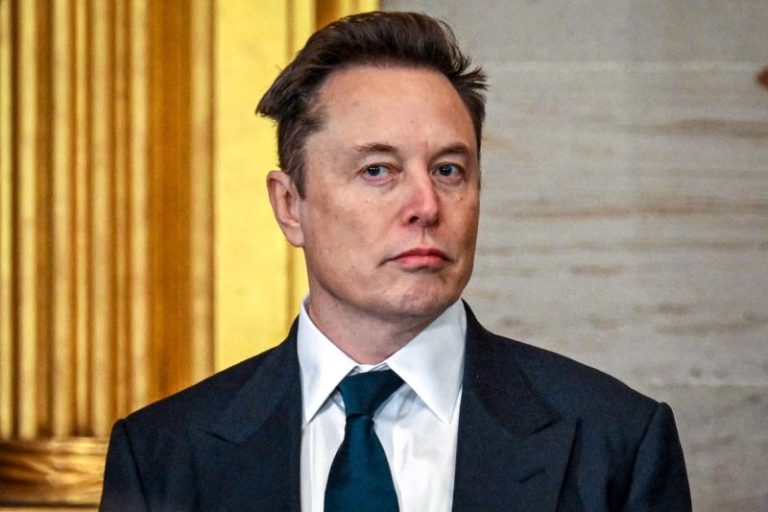
Elon Musk on Monday threatened Apple with legal action over alleged antitrust violations related to rankings of the Grok AI chatbot app, which is owned by his artificial intelligence startup xAI.

“Apple is behaving in a manner that makes it impossible for any AI company besides OpenAI to reach #1 in the App Store, which is an unequivocal antitrust violation. xAI will take immediate legal action,” Musk wrote in a post on his social media platform X.

Apple declined to comment on Musk’s threat.

“Why do you refuse to put either X or Grok in your ‘Must Have’ section when X is the #1 news app in the world and Grok is #5 among all apps? Are you playing politics?” Musk said in another post.

Apple last year partnered with OpenAI to integrate its ChatGPT chatbot into iPhone, iPad, Mac laptop and desktop products. Musk at the time said: “If Apple integrates OpenAI at the OS level, then Apple devices will be banned at my companies. That is an unacceptable security violation.”

Prior to his legal threats against Apple, Musk had celebrated Grok surpassing Google as the fifth top free app on the App Store. When contacted by CNBC, xAI did not immediately respond to a request for further information on a potential lawsuit.

CNBC confirmed that ChatGPT was ranked No. 1 in the top free apps section of the American iOS store, and was the only AI chatbot in Apple’s “Must-Have Apps” section. The App Store also featured a link to download OpenAI’s new flagship AI model, ChatGPT-5 at the top of its “Apps” section.

OpenAI on Thursday announced GPT-5, its latest and most advanced large-scale AI model, following xAI’s release of its newest chatbot, Grok 4, last month.

Musk has an ongoing feud with ChatGPT maker OpenAI, which he co-founded in 2015. The billionaire stepped down from its board in 2018, four years after saying that AI was “potentially more dangerous than nukes.”

He is now suing the Microsoft-backed startup, and its CEO Sam Altman, alleging they abandoned OpenAI’s founding mission to develop artificial intelligence “for the benefit of humanity broadly.”

Robert Keele, who headed the legal department at xAI, announced last week that he had left the company to spend more time with his family. In his announcement, Keele also acknowledged “daylight between our worldviews,” referring to Musk.

In response to Musk’s antitrust threats against Apple, OpenAI CEO Sam Altman said in an X post: “This is a remarkable claim given what I have heard alleged that Elon does to manipulate X to benefit himself and his own companies and harm his competitors and people he doesn’t like.”

This is not the first time Apple has been challenged on antitrust grounds. In a landmark case, the Department of Justice last year sued the company over charges of running an iPhone ecosystem monopoly.

In June, a panel of judges also denied an emergency application from Apple to halt the changes to its App Store resulting from a ruling that the company could no longer charge a commission on payment links inside its apps, nor tell developers how the links should look.

— CNBC’s Kif Leswing and Lora Kolodny contributed to this article.

This post appeared first on NBC NEWS

Nuvau Minerals Inc. (TSXV: NMC) has begun its minimum 1,500 m drill program aimed at testing continuity and extensions to the orogenic gold system discovered last month. The discovery was made with the first hole drilled of an inaugural gold-focused exploration program, in the footwall of the Bracemac-McLeod Mine approximately 200 m below surface. The follow-up program is being drilled immediately north east of this base metal mine, which was in production until mid 2022.

The Matagami Property is in the northern Abitibi Region of Quebec, one of the world’s most prolific gold endowed districts. This northern part of the Abitibi region includes Canada’s largest gold producing mine with the country’s largest gold mineral reserves: the Detour Lake Mine owned by Agnico Eagle Mines Limited. Hecla Mining Company’s Casa Berardi Mine, which has produced over 3 million ounces of gold, is located to the southwest of the Matagami Property (see Figure 1 below).

While the Abitibi’s first recorded gold discovery was 119 years ago in Rouyn-Noranda, the Matagami Property remains one of the largest areas in the region that has not been subject to a gold focused exploration program. Previous owners were concentrating on defining and developing multiple VMS deposits into multiple mines that produced extensive copper and zinc for more than 60 years. This was one of the primary opportunities Nuvau identified when it entered into the agreement to acquire the Property from Glencore. The Company recently began compiling gold related historic data, as well as launching several gold-focused initiatives (including till sampling) aimed at defining initial targets for drilling.

Figure 1: Matagami property location

To view an enhanced version of this graphic, please visit:
https://images.newsfilecorp.com/files/11236/262123_8f984e3ef4857b89_001full.jpg

Nuvau’s current gold-focused exploration program has identified three initial priority targets:

  1. Bracemac Footwall Discovery
  2. Gold-in-Till Anomaly Target
  3. Thunder Mine (1988) Target

The map below shows the location of these three targets (Figure 2). The vast majority of this 1,300 km2 land pack remains open for gold exploration.

Figure 2: Current gold targets

To view an enhanced version of this graphic, please visit:
https://images.newsfilecorp.com/files/11236/262123_8f984e3ef4857b89_002full.jpg

1. Bracemac Footwall Discovery

The recent discovery of gold mineralization in the footwall of the Bracemac Mine is located only 25 m from the access ramp of this permitted mine. The steeply dipping, strong shear zone structure with quartz veining mineralized with pyrite and locally visible gold was intersected at a depth of approximately 200 m. The visible gold was observed over approximately 0.5 m of core and assays are still pending on the discovery hole, BRCG-25-001.

Although located within the immediate footwall of the past-producing Bracemac-McLeod mine, the mineralized structure occurs in a late intrusive that truncated the mine host rock units (see Figure 3). The intrusive has seen very little drilling as the stratigraphy was not of interest for VMS exploration.

The follow up drill program is now underway to continue to step-out both up and down dip, and along strike, to test continuity of mineralization within the structural corridor as well as providing critical data on the dip and strike of the vein.

Figure 3: Past producing Bracemac-McLeod Mine and relative position of gold target drilled (left); schematic of the stratigraphy (right)

To view an enhanced version of this graphic, please visit:
https://images.newsfilecorp.com/files/11236/262123_figure3.jpg

Figure 4: Visible gold found in more than 30 gold chips identified in logging the core

To view an enhanced version of this graphic, please visit:
https://images.newsfilecorp.com/files/11236/262123_8f984e3ef4857b89_005full.jpg

2. Gold-in-Till Anomaly Target

As part of Nuvau’s target generative exploration program, an overburden (till) drilling program was launched in 2023. This program resulted in the discovery of significant gold-in-till mineralization that was announced on March 4, 2025.

From the 2023 sonic drill program, hole PD-23-030s produced a notable gold grain anomaly detected at a depth of between 29.26 to 29.87 m in the overburden and featured more than 2,000 gold grains per 10 kg of material. In addition, a near-contiguous sample with 295 gold grains per 10 kg of material between 31.12 to 32.00 m was also encountered with the interval between consisting of a large locally derived boulder. Based on the almost pristine nature of the gold grains, and their close proximity to the bottom of the hole, the source is expected to be relatively close to this hole. (See images of gold grains below in Figure 5.)

To assist in defining targets in this area, a detailed drone MAG survey was completed. The limited rock outcrops were also mapped recently and together with the MAG data, a drill program is being designed for later this year. The objective of this drill program will be to gain a better understanding of the local geological structures and to test for the potential source of the extensive gold grains.

Figure 5: Mosaic of backscattered electron images of gold grain

To view an enhanced version of this graphic, please visit:
https://images.newsfilecorp.com/files/11236/262123_figure5.jpg

Notice the delicate textures and silicate attachments. LEFT: Image of 230 gold grains found in sample 155320186, hole PD-23-030s, RIGHT: Image of 112 gold grains found in adjacent sample 155320187.

3. Thunder Mine (1988) Target

The Thunder Mine property was acquired by Nuvau in 2023 for its potential for both base metal and gold mineralization. In 1988, Thunderwood Exploration Ltd. drilled a series of holes as follow-up to a 1959 hole that intersected copper mineralization (see Figure 6).

This follow-up program identified multiple gold-bearing structures; however, no subsequent follow-up work was completed. Highlight intercepts from the available public domain report include the following:

  • DT-14-88: 209.00 – 209.80 m (0.80 m) @ 26.40 g/t Au.
  • DT-10-88: 205.00 – 206.00 m (1.00 m) @ 78.16 g/t Au.
  • DT-18-88: 100.80 – 107.30 m (6.50 m) @ 1.55 g/t Au, incl.: 0.30 m @ 4.89 g/t Au.
  • DT-19-88: 226.00 – 231.00 m (5.0 m) @ 2.27 g/t Au, Incl.: 0.50 m @ 10.39 g/t Au.
  • DT-20-88: 136.80 – 137.10 m (0.30 m) @ 10.37 g/t Au and 204.50 – 205.00 m (0.50 m) @ 6.48 g/t Au.
  • DT-21-88: 310.50 – 319.90 m (9.40 m) @ 4.02 g/t Au, incl.: 0.70 m @ 42.03 g/t Au and 0.70 m @ 7.30 g/t Au.

These results been extracted from historical information, and are not compliant with NI 43-101. The original results are available via GESTIM, GM 48216, and GM 08790 at the following links:

    Thunder mine drilling is planned as part of Nuvau’s winter drilling program in Q1 2026.

    Figure 6: Thunder Mine Past drilling

    To view an enhanced version of this graphic, please visit:
    https://images.newsfilecorp.com/files/11236/262123_8f984e3ef4857b89_012full.jpg

    About Nuvau Minerals Inc.
    Nuvau is a Canadian mining company focused on the Abitibi Region of mine-friendly Québec. Nuvau’s principal asset is the Matagami Property that is host to significant existing processing infrastructure and multiple mineral deposits and is being acquired from Glencore.

    Qualified Person and Quality Assurance
    Bastien Fresia P. Geo. (Qc), Technical Services Director of Nuvau and a ‘qualified person’ as is defined by National Instrument 43-101, has verified the scientific and technical data disclosed in this news release, and has otherwise reviewed and approved the scientific and technical information in this news release.

    Drill core samples are sawn by staff technicians to create half core splits. One split is retained in the drill core box for archival purposes with a sample tag affixed at each sample interval and the other split is placed in a labelled plastic bag along with a corresponding sample number tag and placed in the shipment queue.

    Quality control samples including blind certified reference material (‘CRM’), blank material, and core duplicates are inserted at a frequency of 1 in every 20 samples and sample batches of up to 60 samples were then shipped directly by Nuvau personnel to the ALS Canada Ltd. preparation laboratory in Rouyn-Noranda, Québec.

    All submitted core samples are crushed in full to 95 % passing less than 2 mm (ALS code CRU-32). A 1000-gram sample was then riffled split from the crushed material and pulverized to 90 % passing 75 μm (SPL-22 and PUL-32a). Pulps are shipped from the preparation laboratory to ALS Canada Ltd.’s analytical lab in North Vancouver, British Columbia, for assay.

    Lead, silver, copper and zinc analyses were determined by ore grade four acid digestion with an inductively coupled plasma atomic emission spectroscopy (‘ICP-AES’) or atomic absorption spectroscopy (‘AAS’) finish (ALS codes Pb-OG62, Ag-OG62, Cu-OG62 and ZnOG62), whereas gold was determined by 50 g fire assay analysis with an AAS finish (code Au-AA23).

    ALS Canada Ltd. is an accredited, independent commercial analytical firm registered to ISO/IEC 17025:2017 and ISO 9001:2015.

    For further information please contact:
    Nuvau Minerals Inc.
    Peter van Alphen
    President and CEO
    Telephone: 416-525-6023
    Email: pvanalphen@nuvauminerals.com

    Cautionary Statements
    This news release contains forward-looking statements and forward-looking information (collectively, ‘forward-looking statements’) within the meaning of applicable securities laws. Any statements that are contained in this news release that are not statements of historical fact may be deemed to be forward-looking statements. Forward-looking statements are often identified by terms such as ‘may’, ‘should’, ‘anticipate’, ‘will’, ‘estimates’, ‘believes’, ‘intends’ ‘expects’ and similar expressions which are intended to identify forward-looking statements. More particularly and without limitation, this news release contains forward-looking statements concerning drill results relating to the Matagami Property, the results of the PEA, the potential of the Matagami Property, the timing and commencement of any production, the restart of the Bracemac-McLeod Mine, the completion of the earn-in of the Matagami Property and the timing and completion of any technical studies, feasibility studies or economic analyses. Forward-looking statements are inherently uncertain, and the actual performance may be affected by a number of material factors, assumptions and expectations, many of which are beyond the control of the Company, including expectations and assumptions concerning the Company and the Matagami Property. Readers are cautioned that assumptions used in the preparation of any forward-looking statements may prove to be incorrect. Events or circumstances may cause actual results to differ materially from those predicted as a result of numerous known and unknown risks, uncertainties, and other factors, many of which are beyond the control of the Company. Readers are further cautioned not to place undue reliance on any forward-looking statements, as such information, although considered reasonable by the management of the Company at the time of preparation, may prove to be incorrect and actual results may differ materially from those anticipated.

    The forward-looking statements contained in this news release are made as of the date of this news release, and are expressly qualified by the foregoing cautionary statement. Except as expressly required by securities law, neither the Company nor Nuvau undertakes any obligation to update publicly or to revise any of the included forward-looking statements, whether as a result of new information, future events or otherwise.

    Neither the TSX Venture Exchange nor its Regulation Services Provider (as that term is defined in the policies of the TSX Venture Exchange) accepts responsibility for the adequacy or accuracy of this news release. No stock exchange, securities commission or other regulatory authority has approved or disapproved the information contained herein.

    To view the source version of this press release, please visit https://www.newsfilecorp.com/release/262123

    News Provided by Newsfile via QuoteMedia

    This post appeared first on investingnews.com

    Senate Democrats have undergone a steady tonal shift on Israel, with a recent vote to block arms sales to the Jewish State giving a glimpse at the evolution on the Hill.

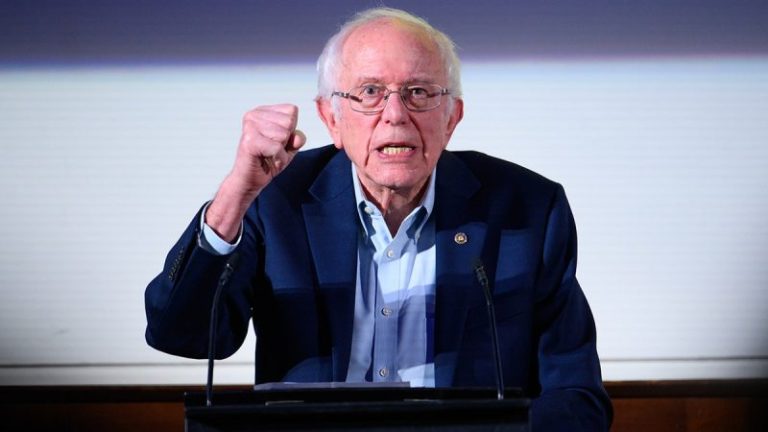
    More Democrats in the upper chamber than ever before voted alongside Sen. Bernie Sanders, I-Vt., to halt the $675 million sale of thousands of bombs and guidance kits for the bombs and to block the sale of automatic rifles to Israel.

    Sanders’ push ultimately failed late last month, but over half of all Senate Democrats voted alongside him, with many voting with him for the first time. Meanwhile, all Senate Republicans voted against them.

    ‘The tide is turning,’ Sanders, who routinely caucuses with Democrats, said in a statement. ‘The American people do not want to spend billions to starve children in Gaza. The Democrats are moving forward on this issue, and I look forward to Republican support in the near future.’

    Getting Republicans on board for future attempts, as Sanders hoped would happen, is a stretch at best.

    ‘Republicans stand with Israel,’ Senate Foreign Relations Committee Chair Jim Risch, R-Idaho, told Fox News Digital in a statement.

    ‘Senator Sanders’ resolution to block arms sales would have reinstated the failed policies of the Biden administration and would abandon America’s closest ally in the Middle East,’ he continued. ‘We can’t afford to go back there.’

    But the change within the Democratic caucus was likely spurred by the release of photos of starving children in the Gaza Strip, which earned shocked reactions from both lawmakers and President Donald Trump.

    Many Democrats have pinned the blame on Israel and argued that the Jewish state has put a chokehold on aid that is meant for civilians in Gaza, while Republicans contend that the terrorist organization Hamas is stealing the food.

    ‘What’s going on is unacceptable, and Israel has the power to fix it,’ Sen. Angus King, I-Maine, told Fox News Digital.

    Like Sanders, King typically caucuses with Senate Democrats. But unlike his fellow Independent colleague, he has routinely stood firm in his support of Israel. But the photos and reports of widespread malnutrition prompted him to vote to block arms sales.

    ‘Israel’s the one that’s not letting the aid get in,’ he said. ‘The humanitarian response is entirely within Israel’s hands, and they’ve been blocking, slowing, starting and stopping, to the point where I just could no longer stand silent.’

    And like King, Sen. Jean Shaheen, the top ranking Democrat on the Senate Foreign Relations Committee, changed course and voted in favor of blocking arms sales out of concern that food aid was not making its way to Palestinians.

    ‘I think it’s important to send the message to Prime Minister [Benjamin] Netanyahu and his government that things need to change,’ the New Hampshire Democrat said in an interview with PBS Newshour.

    But Republicans charged that it was not Israeli Prime Minister Benjamin Netanyahu’s fault that food aid was not making its way into Gaza, and instead believed that it was Hamas stealing the food.

    Sen. John Kennedy, R-La., said that Israel wants to make sure that the food aid actually makes it to civilians in Hamas.

    ‘Israel and the US have cut out, cut off most of Hamas’ cash flow,’ Kennedy said. ‘And a lot of their cash flows depends on stealing the food and selling it, sometimes to their own people, absorbing the prices.’

    And not every Senate Democrat is on the same page when it comes to their position on the Jewish State.

    Sen. John Fetterman, D-Pa., has routinely slammed Democrats for criticizing Israel, and believed that his party was moving further away from his position.

    ‘What I really fundamentally believe, there’s been a wholesale shift, even within my party, to blame Israel for the situations and the circumstances overall,’ Fetterman told Fox News Digital. ‘And I don’t really understand. It’s like we’ve seen the same pictures and, of course, what’s happened in Gaza is devastating.’

    ‘But so, for me, I blame Hamas and Iran,’ he continued. ‘And I don’t know why there’s not like a collective global outrage.’

    This post appeared first on FOX NEWS

    Disney’s ESPN and Fox Corp. are teaming up to offer their upcoming direct-to-consumer streaming services as a bundle, the companies said Monday.

    The move comes as media companies look to nab more consumers for their streaming alternatives, and draw them in with sports, in particular.

    Last week, both companies announced additional details about the new streaming options. ESPN’s streaming service — which has the same name as the TV network — and Fox’s Fox One will each launch on Aug. 21, ahead of the college football and NFL seasons.

    The bundled apps, however, will be available beginning Oct. 2 for $39.99 per month. Separately, ESPN and Fox One will cost $29.99 and $19.99 a month, respectively.

    While the bundle will offer sports fans a bigger offering at a discounted rate, the streaming services are not exactly the same.

    ESPN’s flagship service will be an all-in-one app that includes all of its live sports and programming from its TV networks, including ESPN2 and the SEC Network, as well as ESPN on Disney-owned ABC. The app will also have fantasy products, new betting tie-ins, studio programming and documentaries.

    ESPN will also offer its app as a bundle with Disney’s other streaming services, Disney+ and Hulu, for $35.99 a month. That Disney bundle will cost a discounted $29.99 a month for the first 12 months — the same price as the stand-alone app.

    Last week, ESPN further beefed up the content on its streaming app when it inked a deal with the WWE for the U.S. rights to the wrestling league’s biggest live events, including WrestleMania, the Royal Rumble and SummerSlam, beginning in 2026. The sports media giant also reached an agreement with the NFL that will see ESPN acquire the NFL Network and other media assets from the league.

    The Fox One service, however, will be a bit different. Fox had been on the sidelines of direct-to-consumer streaming for years after its competitors launched their platforms. Just this year, it said it would offer all of its content — including news and entertainment — from its broadcast and pay TV networks in a streaming offering. Fox One won’t have any exclusive or original content.

    Fox’s move into the direct-to-consumer streaming game — outside of its Fox Nation app and the free, ad-supported streamer Tubi — came after it abandoned its efforts to launch Venu, a joint sports streaming venture with Disney and Warner Bros. Discovery.

    Both Fox CEO Lachlan Murdoch and Disney CEO Bob Iger said during separate earnings calls last week that they were exploring bundling options with other services. Since Fox announced the Fox One app, Murdoch has said the company would lean into bundles with other streaming services.

    “Announcing ESPN as our first bundle partner is evidence of our desire to deliver the best possible value and viewing experience to our shared customers,” said Tony Billetter, SVP of strategy and business development for FOX’s direct to consumer segment, in a release on Monday.

    This post appeared first on NBC NEWS

    This week saw tech stocks push the Nasdaq Composite (INDEXNASDAQ:.IXIC) to its best week since June.

    However, on Monday (August 4), multiple news outlets reported that various Wall Street firms were warning of a near-term drop in the S&P 500 (INDEXSP:.INX) after its strong rally. In a note to clients, Mike Wilson of Morgan Stanley (NYSE:MS) forecasts that tariffs, which went into effect this week, will lead to a 10 percent correction.

    “Over the last couple of weeks, we have noted that investors should expect a modest pullback in the third quarter,” Wilson wrote. Julian Emanuel of Evercore (NYSE:EVR) anticipates a 15 percent drop. Additionally, Parag Thatte’s team at Deutsche Bank (NYSE:DB) points to an overdue drawdown following three months of equity expansion.

    Markets appear to have disregarded the warnings, as economic data released this week has revived expectations for interest rate cuts. Stephen Miran, US President Donald Trump’s interim selection for Adriana Kugler’s position as chair of the Council of Economic Advisers, has further fueled these expectations. According to CME Group’s (NASDAQ:CME) Fedwatch tool, traders now anticipate a nearly 90 percent probability of a rate cut next month.

    Furthermore, exemptions to the Trump administration’s tariffs for companies investing in US manufacturing capacity led to a midweek rally in tech stocks that persisted through to Friday (August 8).

    1. OpenAI’s busy week

    On Wednesday (August 6), OpenAI unveiled the long-awaited GPT-5 version of ChatGPT, which CEO Sam Altman described as a “significant step” along the path to artificial general intelligence (AGI).

    Altman declared that GPT-5 gives users PhD-level expert assistance on any subject, with fewer hallucinations, as well as superior coding abilities that could lead to an era of “software on demand.’

    “Something like GPT-5 would be pretty much unimaginable in any other time in history,” he said during a pre-briefing with journalists on Wednesday. While GPT-5 exhibits signs of broad intelligence, Altman clarified that it lacks a key characteristic of AGI: the ability to learn and improve autonomously.

    Concurrently, OpenAI for Government announced it is partnering with the US General Services Administration to offer ChatGPT Enterprise to the federal executive branch workforce for US$1 per agency for the next year.

    In a statement to Wired, Altman said the agreement was part of Trump’s Artificial Intelligence (AI) Action Plan, which is geared at leveraging AI to better serve the American people.

    Additionally, the company reportedly engaged in early discussions this week for a secondary stock sale that would increase its valuation to US$500 billion. During an interview with Schwab Network, Ben Emons, chief investment officer and founder of FedWatch Advisors, said OpenAI’s valuation could hit US$1 trillion.

    A recent report by the Information found that OpenAI has hit an annualized run rate of US$12 billion, roughly double the US$6 billion recorded in revenue in the first half of 2025.

    OpenAI also introduced a pair of freely available models this week, which Amazon (NASDAQ:AMZN) will offer to cloud-computing clients.

    2. Stocks react to chip tariff exemptions

    Trump announced plans to impose a nearly 100 percent tariff on semiconductor chips on Wednesday, but carved out an exemption for companies investing in US manufacturing capacity.

    After a meeting at the White House, Apple (NASDAQ:AAPL) CEO Tim Cook pledged an additional US$100 billion investment in US manufacturing capacity, bringing its total commitment to US$600 billion over the next four years.

    However, final assembly is expected to remain overseas “for a while,” according to Cook, and the announcement did not include any mention of future iPhone assembly in the US.

    Apple performance, August 5 to 8, 2025.

    Chart via Google Finance.

    The pledge led to a significant market reaction, with Apple shares climbing over 4 percent, leading gains on Wall Street.

    Taiwan Semiconductor Manufacturing Company (NYSE:TSM) also saw strong gains after it was reported that National Development Council Chief Liu Chin-ching told parliament that the company will be exempt since it has factories in the US, referring to fabrication plants currently under construction in Arizona.

    However, he added that some of Taiwan’s chipmakers will be affected.

    Likewise, South Korean trade officials stated that Samsung Electronics (KRX:005930) and SK Hynix (KRX:000660) will both avoid the tariffs due to their investments in US manufacturing facilities. Samsung has two chip fabrication plants in Texas, while SK Hynix is building a new advanced chip packaging and R&D facility in Indiana.

    3. Firefly Aerospace makes explosive Nasdaq debut

    Firefly Aerospace (NASDAQ:FLY) made a strong debut on the Nasdaq Global Market on Thursday (August 7).

    The stock opened at US$70 per share, a significant jump from its initial public offering price of US$45.

    After first targeting between US$35 and US$39 per share, the company raised the price from US$41 to US$43 on Tuesday (August 5). Firefly was valued at over US$2 billion after a Series D funding round in November 2024.

    Its opening price represented a further increase. After briefly topping US$73.80, the company closed its first day on the market at US$60.35, raising US$868.3 million and achieving a valuation of approximately US$8.5 billion.

    The company experienced a moderate pullback on Friday, opening at US$54.85 before briefly touching US$57.07; it then closed the week at US$50.17.

    4. Tesla desbands Dojo team

    Tesla (NASDAQ:TSLA) CEO Elon Musk confirmed reports that the company is disbanding its Dojo supercomputer team, posting to X on Thursday evening:

    “It doesn’t make sense for Tesla to divide its resources and scale two quite different AI chip designs.

    “The Tesla AI5, AI6 and subsequent chips will be excellent for inference and at least pretty good for training. All effort is focused on that.”

    Tesla intended for Dojo to facilitate the training of its Autopilot and Full Self-Driving systems.

    Sources for Bloomberg, which first reported the story, said Tesla will rely on partners like NVIDIA (NASDAQ:NVDA), Advanced Micro Devices (NASDAQ:AMD) and Samsung for chip manufacturing.

    This move contradicts Musk’s commitments to “double down on Dojo” during his company’s second quarter earnings call on July 23. The development follows a letter sent to shareholders by two Tesla directors on Monday explaining the board’s decision to grant Musk a US$23.7 billion stock award.

    Robyn Denholm, chair of Tesla’s board of directors, and Kathleen Wilson-Thompson, a director, said the decision was driven by Tesla’s transition from electric vehicles to AI and robotics.

    The letter emphasizes the critical need to motivate Musk, stating that his involvement is essential for attracting and retaining talent at Tesla, especially as competition for AI talent intensifies.

    5. Palantir reports solid growth in Q2

    Major software company Palantir Technologies (NASDAQ:PLTR) reported its Q2 earnings on Monday, revealing revenue growth of 48 percent to US$1.003 billion. Shares of the company opened over 7 percent higher on Tuesday and continued to rise, finishing the week up nearly 18 percent.

    Palantir Technologies performance, August 5 to 8, 2025.

    Chart via Google Finance.

    “This was a phenomenal quarter. We continue to see the astonishing impact of AI leverage,’ said Alex C. Karp, co-founder and CEO of Palantir, in a press release. “We are guiding to the highest sequential quarterly revenue growth in our company’s history, representing 50 percent year-over-year growth.”

    Free cashflow rose by 282 percent to US$568.7 million. The company is projecting further revenue growth of around 49 percent in the third quarter. Its share price is up over 145 percent year-to-date after starting the year at US$76.20. As of Friday’s closing bell, shares of Palantir were trading for US$186.96.

    Securities Disclosure: I, Meagen Seatter, hold no direct investment interest in any company mentioned in this article.

    This post appeared first on investingnews.com

    President Donald Trump’s week will culminate in a high-stakes summit with Russian President Vladimir Putin in Alaska, where the two leaders are expected to discuss the war in Ukraine and the broader state of U.S.–Russia relations on the global stage.

    The summit, scheduled for Friday, has drawn international scrutiny amid concerns that Washington and Moscow could attempt to broker terms for ending the conflict without formally involving Ukrainian President Volodymyr Zelenskyy, leaving him only a tacit role in negotiations.

    Trump has previously said that Putin and Zelenskyy were close to a ceasefire deal but signaled that war-weary Kyiv would have to concede significant territory, an outcome that Ukrainians and many European allies oppose.

    Russian forces currently occupy approximately one-fifth of Ukraine’s territory stretching from the Russian border to Crimea — including regions vital to the country’s economy, rich in minerals, industry, and home to Europe’s largest nuclear power plant.

    Both the White House and the Kremlin have acknowledged Zelenskyy’s request to join the talks, though no formal invitation has been extended to the Ukrainian leader. If granted a seat at the table, it would mark the first face-to-face meeting between Zelenskyy and Putin since the Kremlin launched its full-scale invasion of Ukraine in February of 2022.

    The summit comes as Russia’s war grinds into its third year and fifth month, with Moscow showing little sign of abandoning its efforts to erode Ukraine’s sovereignty and reassert the territorial influence of the former Soviet empire.

    The Kremlin said in a statement on Saturday that Trump and Putin are expected to ‘focus on discussing options for achieving a long-term peaceful resolution’ in Ukraine. ‘This will evidently be a challenging process, but we will engage in it actively and energetically,’ the statement added.

    ‘The US has the power to force Russia to negotiate seriously’

    Over the weekend, several European leaders voiced support for Zelenskyy’s push to attend this week’s summit, amid growing concerns that Kyiv’s long-term security could be negotiated without its direct involvement.

    The leaders of Britain, France, Germany, Italy, Poland, Finland and the European Commission said in a joint statement that any diplomatic solution brokered between Trump and Putin must uphold the security interests of both Ukraine and Europe.

    ‘The U.S. has the power to force Russia to negotiate seriously,’ European Union foreign policy chief Kaja Kallas told Reuters on Sunday. ‘Any deal between the U.S. and Russia must have Ukraine and the EU included, for it is a matter of Ukraine’s and the whole of Europe’s security,’ she added.

    NATO Secretary General Mark Rutte also voiced support for Zelenskyy’s attendance at the meeting and called the summit an opportunity to measure how serious Putin is about ‘bringing this terrible war to an end.’ 

    Zelenskyy thanked European leaders for their support and said that ‘the end of the war must be fair.’

    ‘I am grateful to everyone who stands with Ukraine and our people today for the sake of peace in Ukraine, which is defending the vital security interests of our European nations,’ he said.

    This post appeared first on FOX NEWS

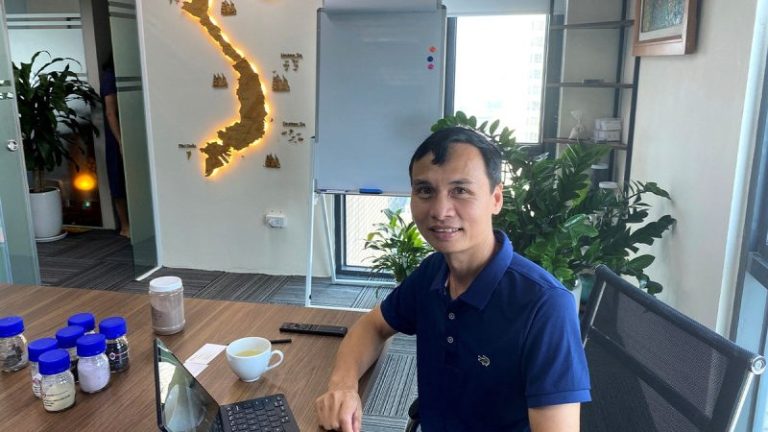
    China’s bid to strangle the world’s supply of heavy rare-earth elements was about to hit a wall. Vietnamese entrepreneur Luu Anh Tuan had lined up U.S. backing for a technology that could break Beijing’s chokehold on the critical minerals behind everything from smartphones to missile-guidance systems.

    Tuan and his family had fled Vietnam for the U.S. to escape Beijing’s tightening grip over Hanoi, where the Chinese Communist Party exerts a heavy influence on domestic governance.

    In July 2023, he signed a technology transfer agreement, seen by Fox News Digital, to bring the heavy rare earth separation technology he was using at his Vietnam-based company, Vietnam Rare Earth (VTRE) to VTRU Corporation, a company registered in Nevada. VTRE had also signed a series of memoranda of understanding (MOU) agreements with Western companies. 

    ‘He had a bad sense of insecurity about being in Vietnam. He was determined to transfer his technology to the US as quickly as possible,’ a source familiar with the rare earth industry, granted anonymity to speak without fear of retribution, told Fox News Digital. 

    At the time, the world was entirely dependent on Chinese companies to separate their heavy rare earth metals.

    ‘China has been really working for the better part of over 20 years now on building this dominance,’ Gracelin Baskaran, director of the Critical Minerals Security Program at the Center for Strategic and International Studies, said in an interview. 

    And while companies like U.S.-based MP Materials and Australia-based Lynas are in the process of developing their own separation technologies, China still controls up to 90% of the rare earths separation and refining capacity and over half of mining output. 

    In October 2023, Tuan, then a U.S. permanent resident and green card holder in the process of becoming a citizen, was back in his Hanoi office when Vietnamese authorities raided the building, seizing all laptops and records. Seventeen employees were arrested, according to Tuan’s American business partner, Richard Dunham, and all but one, Do Hanh Huong, Tuan’s sister-in-law and COO of VTRE, have since been released.

    The arrest came shortly after President Joe Biden visited Vietnam and signed cooperation agreements on rare earth minerals. 

    In December, China banned rare earth extraction and separation, in what the industry saw as another effort to maintain its monopoly on the market. 

    ‘When China put in these restrictions, it really made countries like the U.S. and Australia realize that they didn’t actually even have the technical know-how to do it themselves,’ said Baskaran. 

    ‘The process itself is just very labor-intensive and very toxic,’ said Josh Birenbaum, a minerals expert at the Foundation for Defense of Democracies, adding China cornered the market through state subsidies and lax environmental concerns. 

    While the U.S. has one major rare earths mine, MP Materials’ Mountain Pass, until this year, the company was exporting those rare earths to China for separation. The trade war and export controls that followed prompted the U.S. to stockpile its rare earths until separation capacity was up to scale at home. 

    Tuan was accused of forging a value-added tax receipt while trading rare earths with Thai Duong Group, which operates a mine in the northern Vietnamese province of Yen Bai. 

    VTRE had partnered with Australian mining companies Australian Strategic Materials and Blackstone Minerals Ltd. Tuan and Dunham had also met with officials from the state of Nevada and the Department of Energy to discuss plans to bring the separation technology to the U.S. through VTRE. Both were ‘enthusiastic’ about the proposal, which ultimately led to the signing of the transfer agreement, according to Dunham.

    The arrest also came as Vietnam prepared to auction the Dong Pao mine. VTRE, backed by Western partners, was the only qualified bidder, according to Dunham.

    This year, Tuan pleaded guilty in exchange for a lighter sentence. He’ll spend 16 years in prison with a fine of $10 million, but his advocates say he was ‘coerced.’ Huong was sentenced to six years in prison. 

    ‘We believe these charges to be manipulated, charges that were founded by Vietnamese state actors who have realigned themselves with China,’ said Dunham. ‘He was tortured to obtain a guilty plea.’ 

    Fox News Digital could not independently verify this claim. The State Department documents credible reports of arbitrary arrests, torture and inhumane treatment by authorities, affecting both political detainees and others in custody.  Medical neglect and forced confessions are frequently reported.

    Tuan’s advocates say the company he was purchasing ore from, Thai Duong, refused to provide invoices at the actual rate VTRE was paying for ore. It only provided invoices that claimed it was selling ore at a lower rate, reducing its taxable income. 

    According to Dunham, Thai Duong refused to issue invoices reflecting the actual sale price to VTRE, allegedly to avoid environmental, natural resource and corporate income taxes, obligations that fell on Thai Duong, not Tuan.

    Tuan was faced with a choice: accept the lower-rate invoices and make up the tax discrepancies with his own money or allow his state-funded minerals project, and in turn, his business, to collapse, per Dunham. 

    Though Tuan was convicted on criminal charges, Dunham said the violation of accounting regulations lacks evidence of criminal intent. 

    ‘Even if he were guilty of an accounting issue, it’s not something that is criminally liable for what they’re trying to do. No place in Vietnam has there ever been an issue with this type of sentencing. It’s totally unheard of. Typically you would pay a fine and that’s it.’

    ‘He is the only individual outside of China that has a fully integrated rare earth company that’s from mining to metallization; in other words, from digging it out of the ground to the manufacturing of magnets.’

    Tuan was also convicted of smuggling rare earth materials, but customs documents show clearance of 63 shipments of heavy rare earth oxide mixtures under tax code 2846, which corresponds to rare earth compounds. The court misclassified the exports under tax code 2530 (raw ore), to falsely claim they were illegal, according to Dunham. 

    The Vietnamese Ministry of Public Security’s investigation concluded that customs officers who signed the 63 export declarations for VTRE verified Tuan’s compliance.

    China’s crackdown since then has only accelerated. Minerals experts have been ordered to surrender their passports to prevent them from sharing any technology outside the country. Beijing has tightened controls on exports of rare earths, prompting major concerns from within the U.S. defense industry. While China allowed them to flow again during trade negotiations with the Trump administration, they remain banned for defense purposes. 

    According to Dunham, VTRE has developed the technology to produce heavy rare earth oxides from xenotime, monazite and ion-absorption clay at a purity of 95% through a solvent extraction system. The technology was capable of processing diverse ore types and recycling NdFeB magnets.

    Requests for assistance from the U.S. government have not been fruitful, according to Tuan’s advocates. 

    Tuan is essentially cut off from his family and lawyers. He’s seen family members around five times since his arrest nearly two years ago. 

    ‘We are deeply concerned about his physical and mental well-being,’ the source said. ‘He is mentally resilient. He continues to believe the truth will eventually come to light.’

    Fox News Digital has reached out to the White House, State Department, Chinese Embassy and Vietnamese Embassy for comment. 

    This post appeared first on FOX NEWS

    Statistics Canada released July’s labor force survey on Friday (August 8). The data shows that the Canadian economy shed 41,000 workers during the month and registered a 0.2 percent decline in the employment rate to 60.7 percent.

    However, the unemployment rate was unchanged at 6.9 percent.

    The most significant segment for the decline was among youth aged 15 to 24, with a drop of 34,000. That pushed the youth unemployment rate up to 14.6 percent, its highest rate since September 2010 apart from the pandemic.

    In terms of industry, construction saw the steepest decline as it lost 22,000 workers during the month.

    South of the border, the US imposed a 39 percent tariff on imports of 1 kilogram and 100 ounce gold bars from Switzerland.

    In a ruling posted to US Customs and Border Protection’s (CBP) Customs Rulings Online Search System on Friday, the CBP states that reciprocal tariffs will be applied to these bars. Switzerland is the world’s biggest refining and transit hub, and imports of the 1 kilogram and 100 ounce bars are typically used to back transactions on the COMEX.

    The ruling caused some uncertainty among gold traders, who paused imports of the precious metal to the US and pushed the price for December contracts on the COMEX to a high of US$3,534 per ounce in morning trading.

    While the price has since retreated, it’s still up more than 1 percent on the day at US$3,491.

    The gold spot price is also up significantly this week, gaining 3.26 percent by 4:00 p.m. EDT on Friday to US$3,398.42. Silver was up even more; it rose 4.58 percent to US$38.38 and is closing in on its recent highs.

    Markets and commodities react

    In Canada, equity markets were in positive territory this week.

    The S&P/TSX Composite Index (INDEXTSI:OSPTX) posted steady gains through the week, moving up 2.16 percent to close at 27,758.68 on Friday. The S&P/TSX Venture Composite Index (INDEXTSI:JX) registered a 2.71 percent rise to 787.22. Meanwhile, the CSE Composite Index (CSE:CSECOMP) soared, gaining 8.99 percent to 142.78.

    US equity markets were broadly down on Friday on new US tariffs and poor jobs data. The S&P 500 (INDEXSP:INX) rose 1.62 percent to 6,389.44, the Nasdaq 100 (INDEXNASDAQ:NDX) jumped 2.86 percent to 23,603.05 and the Dow Jones Industrial Average (INDEXDJX:.DJI) gained 0.90 percent to 44,175.60.

    In base metals, copper prices fell as low as US$4.41 per pound on Tuesday (August 5), but recovered to finish the week with a 0.67 percent gain to US$4.52.

    Top Canadian mining stocks this week

    How did mining stocks perform against this backdrop?

    Take a look at this week’s five best-performing Canadian mining stocks below.

    Stock data for this article was retrieved at 4:00 p.m. EDT on Friday using TradingView’s stock screener. Only companies trading on the TSX, TSXV and CSE with market capitalizations greater than C$10 million are included. Mineral companies within the non-energy minerals, energy minerals, process industry and producer manufacturing sectors were considered.

    1. Kirkland Lake Discoveries (TSXV:KLDC)

    Weekly gain: 88.24 percent
    Market cap: C$15.2 million
    Share price: C$0.16

    Kirkland Lake Discoveries is a gold-copper explorer focused on projects in its district-scale land package located in the Kirkland Lake area of Ontario, Canada. Its holdings span approximately 38,000 hectares in the Abitibi greenstone belt, an area that holds past-producing gold and copper mines. Its land is broadly divided into KL West and KL East, which contain the Goodfish-Kirana and Lucky Strike gold projects, respectively, among others.

    On April 29, the company entered a mining option agreement with Val-d’Or Mining (TSXV:VZZ) to acquire the Winnie Lake and Amikougami properties, as well as mining claim purchase agreements with two vendors to acquire further claims around the Winnie Lake Pluton. The properties expand KL West’s southern portion.

    On Wednesday (August 6), the company initiated an inaugural diamond drill program at KL West and Winnie Lake. The program is designed to follow up on historic drill results as well as recent surface exploration.

    About 2,000 meters of drilling are planned, and the company expects it to be completed by the end of August. Kirkland stated that assays will be released as they are received and interpreted.

    2. Avanti Helium (TSXV:AVN)

    Weekly gain: 78.95 percent
    Market cap: C$15.2 million
    Share price: C$0.17

    Avanti Helium is an explorer and developer focused on advancing helium assets in Canada and the US toward production. Its Greater Knappen projects are composed of several areas in Southern Alberta, Canada, and Northern Montana, US. The combined land packages cover approximately 74,000 acres with multiple targets.

    According to its project page, Avanti has drilled three exploration wells in Montana, with two testing for a combined 18.5 million cubic feet per day gas rate with 1.1 percent helium concentration.

    The company’s Leader project consists of a combined land package of 91,000 acres in Southern Saskatchewan. The surrounding region has seen 84 wells drilled by other companies since 2016, and as of September 2023, it hosted approximately 25 wells producing 450,000 cubic feet of helium per day.

    Avanti gained this week after it announced on Thursday (August 7) that it has signed a multi-year offtake agreement with a global industrial gas supplier. The buyer has committed to a minimum monthly volume from Avanti’s Sweetgrass helium recovery unit in Montana, for 33 percent of the initial plant output and 25 percent following a planned expansion.

    3. Discovery Energy Metals (CSE:DEMC)

    Weekly gain: 68.57 percent
    Market cap: C$17.08 million
    Share price: C$0.295

    Discovery Energy Metals is a lithium explorer working to advance interests in Québec and BC, Canada. Most of the company’s land holdings are in Québec, where it has interests in over 225,000 hectares.

    On March 20, the company released assays from a fall 2024 exploration program focused on its Eeyou Istchee James Bay properties. It reported values including 82 parts per million tantalum pentoxide and 101 parts per million cesium oxide at Cirrus East, and 0.66 g/t gold and 0.56 percent zinc at its Mantle property.

    Discovery announced on June 25 that it had completed the acquisition of eight mineral claims over 5,283 hectares at the Crystal Lake property in BC. The company acquired the property in a deal with Zimtu Capital (TSXV:ZC).

    Early stage exploration work at the property was carried out between 2009 and 2010, and included a magnetic survey and grab samples, which returned up to 0.7 percent copper with elevated gold and silver.

    The most recent news from Discovery came on July 15, when it announced a non-brokered private placement for up to 10 million units for gross proceeds of up to C$1 million.

    4. Abcourt Mines (TSXV:ABI)

    Weekly gain: 66.67 percent
    Market cap: C$45.53 million
    Share price: C$0.075

    Abcourt Mines is a gold exploration and development company focused on operations at its Sleeping Giant mine in the Abitibi region of Québec. The property consists of four mining leases covering an area of 458 hectares and 69 claims. The site hosts an underground mine along with a mill capable of processing 750 metric tons per day.

    A July 2023 preliminary economic assessment demonstrates an after-tax net present value of US$77.5 million with an internal rate of return of 33.3 percent over a payback period of 2.2 years.

    The company has been working on restarting mining operations at the site throughout 2025.

    On Thursday, it provided an update on progress from Sleeping Giant, stating that teams had begun the rehabilitation of underground openings, as well as preparations at the mill for the first stope at the end of July. It also said it had built a surface stockpile of approximately 1,000 metric tons of ore and started work on a tailings facility. Once complete, pulp storage will be good until 2032 at the proposed mining rate of 100,000 to 125,000 metric tons per year.

    5. Scorpio Gold (TSXV:SGN)

    Weekly gain: 64.71 percent
    Market cap: C$60.93 million
    Share price: C$0.28

    Scorpio Gold is an exploration and development company focused on the advancement of its Manhattan District in the Walker Lane Trend in Nevada, US. The district is composed of the 6,071 acre Manhattan project, which hosts two past-producing open-pit mines, Reliance and Manhattan, as well as the fully permitted Goldwedge underground mine.

    Scorpio acquired the project from Kinross Gold (TSX:K,NYSE:KGC) in 2021.

    The most recent update from the project came on June 19, when Scorpio announced it was commencing a Phase 1 diamond drill program. The focus is on targets at the Gap zone, the Zanzibar trend and Mustang Hill. Up to 3,400 meters have been planned, with results contributing to an initial mineral resource estimate, which is expected in Q3.

    FAQs for Canadian mining stocks

    What is the difference between the TSX and TSXV?

    The TSX, or Toronto Stock Exchange, is used by senior companies with larger market caps, and the TSXV, or TSX Venture Exchange, is used by smaller-cap companies. Companies listed on the TSXV can graduate to the senior exchange.

    How many mining companies are listed on the TSX and TSXV?

    As of February 2025, there were 1,572 companies listed on the TSXV, 905 of which were mining companies. Comparatively, the TSX was home to 1,859 companies, with 181 of those being mining companies.

    Together the TSX and TSXV host around 40 percent of the world’s public mining companies.

    How much does it cost to list on the TSXV?

    There are a variety of different fees that companies must pay to list on the TSXV, and according to the exchange, they can vary based on the transaction’s nature and complexity. The listing fee alone will most likely cost between C$10,000 to C$70,000. Accounting and auditing fees could rack up between C$25,000 and C$100,000, while legal fees are expected to be over C$75,000 and an underwriters’ commission may hit up to 12 percent.

    The exchange lists a handful of other fees and expenses companies can expect, including but not limited to security commission and transfer agency fees, investor relations costs and director and officer liability insurance.

    These are all just for the initial listing, of course. There are ongoing expenses once companies are trading, such as sustaining fees and additional listing fees, plus the costs associated with filing regular reports.

    How do you trade on the TSXV?

    Investors can trade on the TSXV the way they would trade stocks on any exchange. This means they can use a stock broker or an individual investment account to buy and sell shares of TSXV-listed companies during the exchange’s trading hours.

    Article by Dean Belder; FAQs by Lauren Kelly.

    Securities Disclosure: I, Dean Belder, hold no direct investment interest in any company mentioned in this article.

    Securities Disclosure: I, Lauren Kelly, hold no direct investment interest in any company mentioned in this article.

    This post appeared first on investingnews.com

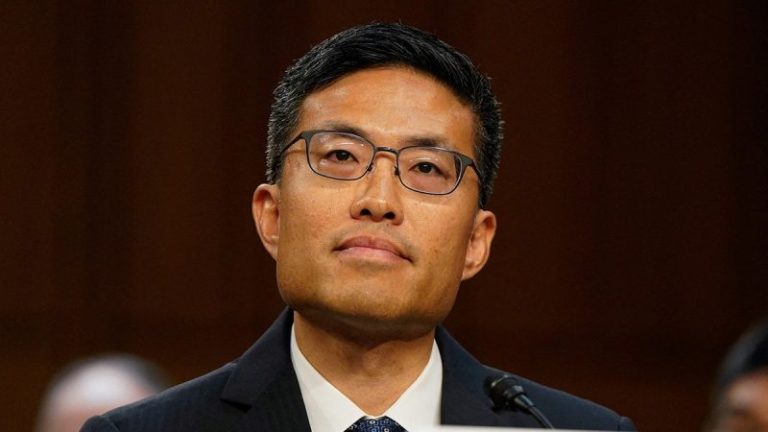
    On July 15, President Trump nominated my friend and former Gorsuch clerk colleague Eric Tung to the U.S. Court of Appeals for the Ninth Circuit. If confirmed, Tung will succeed Judge Sandra Ikuta, who recently assumed senior status after a distinguished tenure. Judge Ikuta leaves behind a strong legacy, one Tung is more than equipped to uphold and extend.

    Tung’s credentials are exceptional. He earned a philosophy degree from Yale in 2006 and graduated with high honors from the University of Chicago Law School in 2010. While there, he served as managing editor of the University of Chicago Law Review, one of the most rigorous legal journals in the country.

    Following law school, Tung clerked for two of the most respected jurists in America: then-Judge Neil Gorsuch on the Tenth Circuit and Supreme Court Justice Antonin Scalia. These clerkships are offered only to the legal elite. Even among that group, Tung stood out.

    Although President Trump made inroads during his first term in balancing out the nation’s most liberal federal appeals court outside of Washington, D.C., of the 29 active judges, 16 were Democratic nominees. Tung replacing Ikuta won’t change that balance, but it will ensure the vacated seat remains in the hands of a strong constitutionalist.

    Tung’s brilliance, ethics, and temperament have earned him bipartisan respect. A letter supporting his nomination was signed by fellow Supreme Court clerks from across the ideological spectrum, from Justice Ginsburg’s to Justice Thomas’. That level of cross-aisle support is rare and speaks volumes.

    One signer, Danielle Sassoon, a former federal prosecutor who has publicly disagreed with the Trump administration, went out of her way to endorse Tung. Her support underscores how widely admired he is for his intellect and integrity, regardless of politics.

    Ultimately, what really matters is Tung’s record, and it’s unimpeachable. He is a brilliant legal mind, a fair-minded jurist, and a committed constitutionalist.

    Tung’s experience goes far beyond the top of the legal profession. He served in the Department of Justice’s Office of Legal Policy, where he helped vet judicial nominees, giving him a firsthand look at what makes a good judge. As an Assistant U.S. Attorney in Los Angeles, he prosecuted serious criminal cases, gaining invaluable courtroom experience. Now a partner at Jones Day, Tung handles complex appellate and trial work at a national level.

    Although President Trump made inroads during his first term in balancing out the nation’s most liberal federal appeals court outside of Washington, D.C., of the 29 active judges, 16 were Democratic nominees. Tung replacing Ikuta won’t change that balance, but it will ensure the vacated seat remains in the hands of a strong constitutionalist.

    Despite this impeccable record, Tung’s Senate Judiciary Committee hearing was marred by partisan theatrics. Several Democrat senators ignored his qualifications and fixated instead on social media posts I had written. Sen. Dick Durbin, D-Ill., quoted part of an old post of mine and demanded Tung ‘condemn’ it. Tung, noting the canons of judicial ethics, rightly declined to weigh in, clarifying that my opinions are not necessarily his.

    Sen. Cory Booker, D-N.J., followed suit, hitting Tung over a post where I had labeled certain Democrats ‘evil Marxists.’ Booker then attempted to cast himself as a model of bipartisan civility, citing his friendship with Sen. John Kennedy, R-La., conveniently omitting that he once claimed supporters of Justice Brett Kavanaugh’s confirmation to the U.S. Supreme Court were ‘complicit in evil.’ Again, Tung refused to be drawn into political grandstanding, displaying the restraint and poise we should expect from a federal judge.

    This guilt-by-association line of attack is dishonest and irrelevant. Tung’s record speaks for itself. Rather than engage with his legal merits, some senators tried to hijack yet another Judiciary Committee  hearing to score cheap political points. Tung never took the bait.

    His nomination also highlights the double standard in how judicial diversity is treated. As the son of Chinese immigrants and a fluent Mandarin speaker, one would think Democrats would celebrate Tung at least for their sacred metrics of representation and diversity on the federal bench. But because he’s a conservative, his background is downplayed, or even used against him. The selective celebration of diversity and identity politics in judicial nominations is glaring.

    Ultimately, what really matters is Tung’s record, and it’s unimpeachable. He is a brilliant legal mind, a fair-minded jurist, and a committed constitutionalist. His combination of courtroom experience, academic rigor, and ethical clarity makes him an ideal appellate judge.

    The Senate should rise above political posturing and confirm Eric Tung without delay. His confirmation will not only fortify the Ninth Circuit, but strengthen the rule of law nationwide. President Trump’s reshaping of the federal judiciary with principled, constitutionalist judges will take a significant step forward with Tung’s appointment.

    Eric Tung is exactly the kind of judge Americans want: sharp, steady, and scrupulously fair. The Senate must act upon its return and confirm him in September.

    Mike Davis is the founder and president of the Article III Project.

    This post appeared first on FOX NEWS