Archive

August 2025

Browsing

MIAMI BEACH, Fla. — Playboy plans to relocate its global headquarters from Los Angeles to Miami Beach and open a Playboy club there.

The Miami Beach headquarters at the top of a luxury office building will include studios to support Playboy’s “growing creator network” and the club will have a restaurant as well as a members-only section inspired by the Playboy Mansion in Los Angeles, the company said Thursday in a statement.

“Miami Beach is among the most dynamic and culturally influential cities in the country, making it the ideal home for Playboy’s next chapter,” Ben Kohn, CEO of Playboy Inc., said in the statement.

The first Playboy Magazine was published in 1953, featuring Marilyn Monroe on the cover and in a “Sweetheart of the Month” color nude photo inside.

The first Playboy Club opened in 1960 in Chicago, which was the headquarters of the company at the time, and the company opened up clubs around the world.

In 2020, Playboy ceased publishing its monthly print magazine, sticking instead with online content.

This post appeared first on NBC NEWS

On Friday (August 15), Statistics Canada released wholesale trade data for June. The release indicates that sales increased 0.7 percent to C$84.7 billion for the month, with four of seven sectors reporting gains.

The increases were led by the food, beverage and tobacco sector, which increased 1.7 percent to C$15.6 billion, and on a provincial level by Québec, which reported 1.9 percent higher sales at C$15.3 billion. Sales also increased in the mineral, ore and precious metals subsector, rising to C$1.02 billion in June from C$750.84 million recorded in May.

Despite the increases, Statistics Canada notes that more than a third of all businesses questioned said Canada-US trade have tensions affected them, and that sales have been negatively impacted in all seven subsectors.

In the US, the Bureau of Labor Statistics released July consumer price index (CPI) data on Tuesday (August 12). It shows that the all-items index increased 0.2 percent month-on-month, a slight deceleration from the 0.3 percent gain in June.

Core CPI, which excludes the volatile food and energy segments, rose by 0.3 percent in July versus 0.2 percent recorded the previous month. On an annualized basis, the all-items CPI remained steady with an increase of 2.7 percent, but posted a more significant 3.1 percent gain when the food and energy categories were excluded.

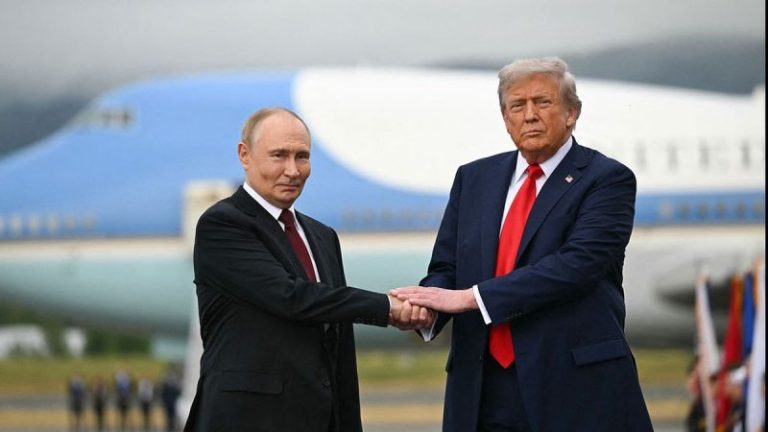
On Friday, US President Donald Trump was scheduled to meet with Russian President Vladimir Putin in Alaska, US, for talks to de-escalate the war between Russia and Ukraine. Ukrainian President Volodymyr Zelenskyy was excluded from Friday’s summit, but Trump has said he hopes the meeting will lead to further talks that will include Ukraine.

The two nations have been at war since Russia invaded Ukraine in February 2022. Russia is seeking to retain the territory it has held since near the beginning of the war, while Ukraine says the original borders should be maintained.

Markets and commodities react

In Canada, equity markets were mixed this week.

The S&P/TSX Composite Index (INDEXTSI:OSPTX) was in record territory, closing Wednesday (August 13) at an all-time high of 27,993.43, but it had slipped by Friday to close the week up 0.41 percent at 27,905.49.

The S&P/TSX Venture Composite Index (INDEXTSI:JX) was flat, posting a slight loss of 0.12 percent to 790.77. The CSE Composite Index (CSE:CSECOMP) had another strong week, gaining 3.58 percent to 156.87.

US equity markets rebounded this week and finished near all-time highs.

The S&P 500 (INDEXSP:INX) set a new record on Thursday (August 14), closing at 6,468.53, but slipped to register a 1.49 percent gain on the week to 6,449.79. The Nasdaq 100 (INDEXNASDAQ:NDX) also set a new record of 23,849.04 on Wednesday, but fell in the last two days of trading, recording a weekly gain of 1.08 percent to 23,712.07.

Meanwhile, the Dow Jones Industrial Average (INDEXDJX:.DJI) was above 45,000 points for the first time since December 2024, but failed to achieve a new record. It posted a 2.01 percent gain to finish the week at 44,946.13.

The gold price slumped this week following clarification from the White House that imports of 1 kilogram and 100 ounce gold bars from Switzerland will not face tariffs. Gold had fallen 1.81 percent by 4:00 p.m. EDT on Friday to reach US$3,338.36 per ounce. Silver also retraced this week, losing 0.7 percent to hit US$37.97 per ounce.

Copper saw little change this week, posting a 0.44 percent gain to US$4.54 per pound. The S&P GSCI (INDEXSP:SPGSCI) commodities index posted a slight decline of 0.8 percent by close on Friday, finishing at 545.59.

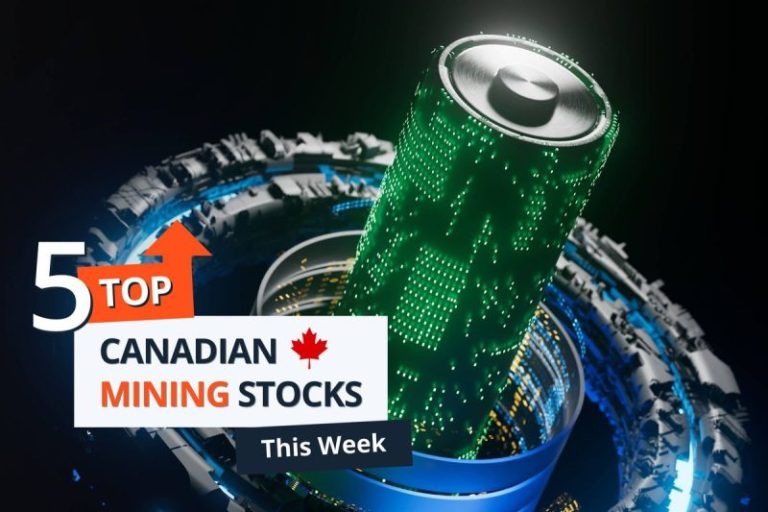
Top Canadian mining stocks this week

How did mining stocks perform against this backdrop?

Take a look at this week’s five best-performing Canadian mining stocks below.

Stock data for this article was retrieved at 4:00 p.m. EDT on Friday using TradingView’s stock screener. Only companies trading on the TSX, TSXV and CSE with market caps greater than C$10 million are included. Mineral companies within the non-energy minerals, energy minerals, process industry and producer manufacturing sectors were considered.

1. Focus Graphite (TSXV:FMS)

Weekly gain: 94.44 percent
Market cap: C$25.18 million
Share price: C$0.35

Focus Graphite is working to advance its Lac Knife and Lac Tétépisca projects in Québec, Canada.

Lac Knife covers 3,248 hectares in Eastern Québec. An April 2023 updated feasibility study outlines an after-tax net present value of C$284.8 million with an internal rate of return of 22.57 percent and a payback period of 3.38 years. Lac Knife is expected to produce 50,000 metric tons (MT) of graphite concentrate annually over a mine life of 27 years.

For its part, Lac Tétépisca spans 6,629 hectares in Central Québec. An April 2022 technical report shows an indicated resource of 59.3 million MT grading 10.61 percent graphitic carbon for 6.3 million MT of in-situ natural flake graphite. The inferred category stands at 14.8 million MT grading 11.06 percent graphitic carbon for 1.6 million MT.

On Wednesday (August 13), Focus resumed work on the environmental and social impact assessment for Lac Knife. In total, it has to complete 16 technical reports as required by the province to advance to the construction phase. Focus previously halted work due to funding delays, but now expects the reports to be complete in early 2026.

The firm is also moving forward with geochemical analysis of over 1,000 samples collected from 2022 exploration drilling at Lac Tétépisca. It will use the results to finalize a resource estimate, which it expects to deliver this fall.

This week’s news comes after Focus said on August 8 that it had closed a non-brokered private placement for C$891,000. Funds will be used to maintain existing operations and for general capital.

2. Libra Energy Materials (CSE:LIBR)

Weekly gain: 56.67 percent
Market cap: C$13 million
Share price: C$0.235

Libra Energy Materials is a lithium-focused exploration company that is currently working to advance its Flanders North, Flanders South and Soules Bay-Caron (SBC) projects in Ontario, Canada.

The properties are part of a November 2024 earn-in agreement with KoBold Metals. Libra can earn a 75 percent stake by incurring C$33 million in exploration expenditures across the properties over the next six years.

Flanders North and South cover 40,000 hectares, and initial surveys in 2023 revealed hundreds of pegmatites, with surface exposures of up to 200 meters in width and grab samples of up to 2.86 percent lithium oxide.

SBC covers an area of 15,000 hectares and is located near Pickle Lake, Ontario. Exploration work carried out at the property in June 2024 earned the company the Bernie Schnieders Discovery of the Year Award. The discovery included several spodumene-bearing pegmatites with widths of up to 30 meters, and spodumene grades of 15 to 25 percent across SBC. During the program, the company collected 184 grab samples with up to 6.64 percent lithium oxide.

Shares of Libra gained this week, but the company did not release any news.

3. Q-Gold Resources (TSXV:QGR)

Weekly gain: 50 percent
Market cap: C$10.48 million
Share price: C$0.18

Q-Gold Resources is a gold explorer focused on the acquisition of the Quartz Mountain project in Oregon, US. On April 3, it entered into a definitive agreement with Alamos Gold (TSX:AGI,NYSE:AGI) to acquire the property.

The measured and indicated gold resource for Quartz Mountain, which spans 2,000 hectares, comes in at 339,000 ounces at an average grade of 0.87 grams per MT (g/t) from 12.16 million MT of ore; its inferred resource stands at of 1.15 million ounces with an average grade of 0.91 g/t from 39.21 million MT ore.

Q-Gold’s latest news came on August 8. It said company representatives intend to visit the project site for the first time. They expect to conduct sampling of select diamond drill cores and verify the current status of all claims at the project.

4. Gienstar Minerals (CSE:GIEN)

Weekly gain: 49.12 percent
Market cap: C$17.58 million
Share price: C$0.85

Glenstar Minerals is an exploration company working to advance projects in Nevada, US.

Its Green Monster property consists of 35 lode claims and covers 700 acres southwest of Las Vegas. The property hosts nickel, copper, cobalt and zinc mineralization, and has mine workings dating back to the late 1800s.

The most recent update from the property came this past Wednesday, when Glenstar announced that it will switch the focus of its Phase 2 drill program to extension drilling following the discovery of a new polymetallic zone. The drilling will be centered on a high-grade zinc occurrence with grades above 30 percent and assay results of up to 177 parts per million (ppm) silver, 523 ppm nickel, 91.9 ppm cobalt and copper of 0.36 percent.

The company also owns the Wildhorse property in Southern Nevada. The early stage project has had limited exploration, but assays from a sampling program were released on July 23. In that announcement, Glenstar said four grab samples from the Coca Cola zone returned copper grades of 1.6 percent, 5.3 percent, 2.3 percent and 5.1 percent, with an average of 21.6 ppm silver, 156 ppm bismuth and 72.5 ppm tungsten.

Four samples were also collected from the Highland zone, which returned average grades of 0.16 percent copper, 1.23 percent zinc, 1.98 percent lead and 43 ppm silver.

5. Sterling Metals (TSXV:SAG)

Weekly gain: 47.69 percent
Market cap: C$13.3 million
Share price: C$0.48

Sterling Metals is an exploration company working to advance a trio of projects in Canada. Over the past year, its primary focus has been on exploration at its brownfield Soo copper project in Ontario. The 25,000 hectare property has hosted two past-producing copper mines and has the potential for larger intrusion-related copper mineralization.

On January 15, Sterling announced results from a 3D induced-polarization and resistivity survey that covered an area of 5 kilometers by 3 kilometers and revealed multiple high-priority drill-ready targets.

The company intends to use the survey results, along with historical exploration, to inform a drill program at the site.

The company’s other two projects are Adeline, a 297 square kilometer district-scale property with sediment-hosted copper and silver mineralization along 44 kilometers of strike, and Sail Pond, a silver, copper, lead and zinc project that hosts a 16 kilometer long linear soil anomaly and has seen 16,000 meters of drilling.

Both properties are located in Newfoundland and Labrador.

The most recent news from the company came on August 7, when Sterling reported that it had commenced Phase 2 drilling at Soo. The 3,000 to 5,000 meter program is designed to test areas defined through the Phase 1 program, as well as historic drill data and geophysical interpretations.

FAQs for Canadian mining stocks

What is the difference between the TSX and TSXV?

The TSX, or Toronto Stock Exchange, is used by senior companies with larger market caps, and the TSXV, or TSX Venture Exchange, is used by smaller-cap companies. Companies listed on the TSXV can graduate to the senior exchange.

How many mining companies are listed on the TSX and TSXV?

As of February 2025, there were 1,572 companies listed on the TSXV, 905 of which were mining companies. Comparatively, the TSX was home to 1,859 companies, with 181 of those being mining companies.

Together the TSX and TSXV host around 40 percent of the world’s public mining companies.

How much does it cost to list on the TSXV?

There are a variety of different fees that companies must pay to list on the TSXV, and according to the exchange, they can vary based on the transaction’s nature and complexity. The listing fee alone will most likely cost between C$10,000 to C$70,000. Accounting and auditing fees could rack up between C$25,000 and C$100,000, while legal fees are expected to be over C$75,000 and an underwriters’ commission may hit up to 12 percent.

The exchange lists a handful of other fees and expenses companies can expect, including but not limited to security commission and transfer agency fees, investor relations costs and director and officer liability insurance.

These are all just for the initial listing, of course. There are ongoing expenses once companies are trading, such as sustaining fees and additional listing fees, plus the costs associated with filing regular reports.

How do you trade on the TSXV?

Investors can trade on the TSXV the way they would trade stocks on any exchange. This means they can use a stock broker or an individual investment account to buy and sell shares of TSXV-listed companies during the exchange’s trading hours.

Article by Dean Belder; FAQs by Lauren Kelly.

Securities Disclosure: I, Dean Belder, hold no direct investment interest in any company mentioned in this article.

Securities Disclosure: I, Lauren Kelly, hold no direct investment interest in any company mentioned in this article.

This post appeared first on investingnews.com

It was a made-for-TV moment: The two leaders met on the tarmac at Joint Base Elmendorf–Richardson in Anchorage, Alaska, Air Force One and two F-35 fighters in the background. As they walked together, overhead came the roar of those F-35s, followed by the low, almost ghostly sweep of a B-2 stealth bomber — a display of U.S. airpower as much as a nod to the Cold War history between the nations.

Hours later, after their closed-door discussions, President Donald Trump and Russian President Vladimir Putin appeared again — this time on a raised stage, each behind a podium, U.S. and Russian flags flanking both sides, with a blue backdrop behind them that read ‘Pursuing Peace.’ It was the first U.S.-hosted summit between American and Russian presidents on U.S. military soil.

Trump had spent days rehearsing via secure calls with European leaders and Ukrainian President Volodymyr Zelenskyy, coordinating ‘red lines’ to take into the meeting: no territorial concessions to Russia, Ukraine in the room for all negotiations, and clear conditions for any sanctions relief. Yet, despite the military pomp and the careful stagecraft, what emerged from Alaska was not a deal, but a diplomatic pause — warm words, thin details, and the hard work still ahead.

Putin spoke first, describing the talks as ‘constructive and mutual respect.’ He recalled moments in history when the U.S. and Russia ‘worked together’ and said he sought a ‘long-term settlement.’ He acknowledged Russia’s ‘legitimate concerns’ and said it was ‘very important for our countries to turn the page.’ He described a ‘trustworthy tone’ in the conversation and praised Trump for having ‘a good idea of what he wants.’ In a line clearly aimed at the cameras back home, Putin claimed Trump told him that if he had been president earlier, ‘there would not have been war,’ and confirmed that he believed it was true.

Trump followed, also taking no questions. ‘We had productive meetings,’ he said. ‘Big agreements. No deal until there is a deal.’ He promised to call ‘NATO,’ to ‘call Zelenskyy,’ and declared, ‘We really made great progress today.’ He reminded the audience of his ‘fantastic relationship with Putin’ and judged there was ‘a good chance of getting there,’ even if ‘we’re not there yet.’ Most importantly, Trump said, ‘We need to stop thousands of people being killed every week.’

For all the positive tone, the substance was modest. Putin left Alaska dangling the prospect of a ceasefire — but with strings attached. We know from prior statements that he wants the U.S. to lift certain sanctions and drop tariff threats aimed at countries like India that buy Russian energy. He intends to keep control of two eastern Ukrainian provinces seized in 2022. Likely, Trump did not concede those points, but evidently they agreed to a follow-on meeting ‘soon.’ 

While the flags fluttered in Anchorage, the war did not stop. Russian forces pressed forward modestly near Dobropillia in Donetsk region, testing Ukrainian defenses in what looks like an attempt to improve their tactical position before any pause. Ukraine rushed reinforcements, stabilizing the line for now, but fighting remains intense.

Russia’s long-range bombardment shows no sign of abating. In July alone, Moscow launched more than 70 cruise missiles and thousands of Iranian-made Shahed drones at Ukrainian targets. Ukraine has answered with deep strikes — including a hit on a Russian oil refinery and the bombing of a cargo ship carrying drone parts in the Caspian Sea. Neither side is behaving as if the war’s end is imminent.

That’s why any ceasefire talk must be backed by ironclad verification: neutral observers on the ground, satellite surveillance, clearly mapped lines, and automatic ‘snap-back’ sanctions for violations. Without that, Moscow will have every incentive to rearm under the cover of diplomacy.

If nothing else, Alaska revealed the bottom lines.

For Putin, it’s about locking in territorial gains and relieving the economic pressure eroding his war machine. Rolling back sanctions on countries that help him skirt restrictions would boost his revenues and signal to others that U.S. economic warfare is negotiable.

For Trump, it’s about testing whether Putin can be moved toward de-escalation without sacrificing U.S. credibility. Involving Zelenskyy keeps Ukraine’s fate from being decided in absentia, and reaffirming NATO’s support reassures allies.

For Ukraine, it’s a double-edged sword. A follow-on meeting offers a diplomatic opening, but Putin’s explicit territorial demands remain a political, legal, and moral red line.

Washington must resist trading sanctions relief for vague promises. The sanctions regime is one of the few levers that works, and any easing must be tied to measurable, sustained compliance verified by independent intelligence as well as neutral monitors.

Putin leaves Alaska with the optics of being a willing negotiator — useful for his domestic image — but no immediate relief on sanctions or Western recognition of his land grabs. Expect him to probe Western unity with limited escalations in the next two weeks.

Kyiv has a brief window to reinforce its defenses and prepare a clear case for the next meeting: explicit security guarantees, timetables for arms deliveries, and a non-negotiable stance on sovereignty.

Allied capitals can point to a small win: the U.S. did not cut a side deal. But they must be ready to step up enforcement and fill any gaps if U.S. resolve wavers.

Beijing will study Alaska closely. If the West blinks on sanctions enforcement, it could embolden Chinese adventurism in the Pacific. A unified Western stand would send the opposite message.

If the U.S. wants these ceasefire talks to go anywhere, three steps are essential:

  1. Lock in Enforcement MechanismsBuild a monitoring framework that combines neutral observers, allied intelligence, and technological oversight. Make violations costly and automatic to deter cheating.
  2. Keep Ukraine at the Center‘No decision about Ukraine without Ukraine’ must remain non-negotiable. Zelensky needs a real voice and veto over any territorial terms.
  3. Use Sanctions as Leverage, Not CurrencyAny relief should be phased, conditional, and reversible. Sanctions should be the reward for sustained compliance, not an upfront concession.

The Alaska summit was not the breakthrough some hoped for, but it wasn’t a failure, either. It gave both sides a clearer picture of the negotiating terrain and bought time for positioning. But time favors the side that uses it best.

For the United States, that means holding firm on sanctions, bolstering Ukraine’s defenses, and treating any ceasefire as the start of a rigorous verification process, not the war’s conclusion. For Ukraine, it means preparing for two divergent paths: meaningful diplomacy or intensified conflict. For Russia, it means deciding whether continued war is worth the mounting cost when the West refuses to pay in land.

If Alaska was merely a pause, the next meeting will decide whether it becomes a bridge to peace — or a bridge to nowhere.

This post appeared first on FOX NEWS

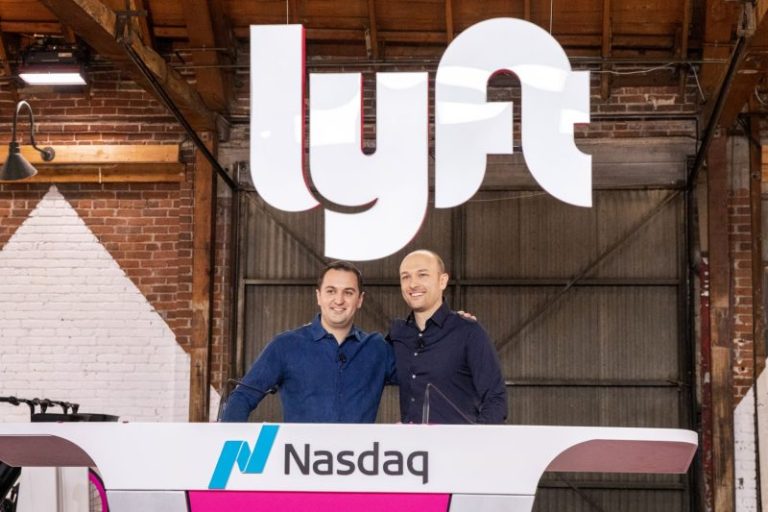
Lyft said Thursday its co-founders, Logan Green and John Zimmer, are stepping down from the ride-hailing services provider’s board, following the completion of a two-year transition plan.

Green and Zimmer began serving as the chair and vice chair of Lyft’s board in 2023 after stepping down as CEO and president, respectively, handing the reins to David Risher, who has been a board member since 2021.

The duo founded Lyft in 2012, with the company now operating across four continents and nearly 1,000 cities.

Sean Aggarwal, who was the chair of Lyft’s board from 2019 to 2023, will reprise his role.

Zimmer is launching a new consumer-focused business venture named YES&, while Green will continue as a venture partner at Autotech Ventures, a firm investing in the mobility and transportation sector.

Lyft, which recently completed its nearly $200 million acquisition of European mobility platform FreeNow, has signed a deal with China’s Baidu 9888.HK to introduce the search-engine giant’s robotaxis in the region.

It posted revenue of $1.59 billion in the second quarter, missing estimates of $1.61 billion, according to data compiled by LSEG.

Rides on Lyft’s platform grew 14% to a record high of 234.8 million in the quarter, slightly below estimates of 235.9 million, per Visible Alpha.

This post appeared first on NBC NEWS

/NOT FOR DISTRIBUTION TO THE UNITED STATES OR THROUGH U.S. NEWSWIRE SERVICES/

TSX Venture Exchange: BSK
Frankfurt Stock Exchange: MAL2
OTCQB Venture Market (OTC): BKUCF

Blue Sky Uranium Corp. (TSXV: BSK,OTC:BKUCF) (FSE: MAL2) (OTC: BKUCF) (‘Blue Sky’ or the ‘Company’) announces that it has closed final tranche of the private placement through the issuance of 1,851,000 units of the Company (each, a ‘ Unit ‘) at a price of $0.06 per Unit for aggregate gross proceeds of $111,060 (the ‘ Offering ‘). In total, the Company has issued 29,212,633 Units for aggregate gross proceeds of $1,752,758 .

Each Unit consists of one common share and one transferrable common share purchase warrant (a ‘ Warrant ‘). Each Warrant will entitle the holder thereof to purchase one additional common share in the capital of the Company at $0.075 per share for three (3) years from the date of issue, expiring August 16, 2028 for this final tranche.

The Company intends to use the proceeds of the Offering for general working capital.

Finder’s fees of $714 are payable in cash on a portion of the Offering from this tranche to parties at arm’s length to the Company. In addition, 11,900 non-transferable finder’s warrants are being issued for this tranche (the ‘ Finder’s Warrants ‘). Each Finder’s Warrant entitles a finder to purchase one common share at a price of $0.06 per share for three (3) years from the date of issue, expiring on August 16, 2028 . In total, the Company paid cash finder’s fees of $4,822.86 and issued 80,381 Finder’s Warrants for this Offering.

Certain insiders of the Company participated in this tranche of the Offering for $21,000 in Units. Such participation represents a related-party transaction under Multilateral Instrument 61-101 – Protection of Minority Security Holders in Special Transactions (‘ MI 61-101 ‘), but the transaction is exempt from the formal valuation and minority shareholder approval requirements of MI 61-101 as neither the fair market value of the subject matter of the transaction, nor the consideration paid, exceed 25% of the Company’s market capitalization. In total, insiders participated in the Offering for $117,000 in Units.

This Offering is subject to regulatory approval and all securities to be issued pursuant to the Offering in this 3 rd and final tranche are subject to a four-month hold period under applicable Canadian securities laws expiring on December 16, 2025 . The proceeds of the Offering will be used for general working capital.

The securities described herein have not been, and will not be, registered under the United States Securities Act of 1933, as amended (the ‘ 1933 Act ‘) or any state securities laws, and accordingly, may not be offered or sold within the United States except in compliance with the registration requirements of the 1933 Act and applicable state securities requirements or pursuant to exemptions therefrom. This press release does not constitute an offer to sell or a solicitation to buy any securities in any jurisdiction.

About Blue Sky Uranium Corp.

Blue Sky Uranium Corp. is a leader in uranium discovery in Argentina . The Company’s objective is to deliver exceptional returns to shareholders by rapidly advancing a portfolio of uranium deposits into low-cost producers, while respecting the environment, the communities, and the cultures in all the areas in which we work. Blue Sky’s flagship Amarillo Grande Project was an in-house discovery of a new district that has the potential to be both a leading domestic supplier of uranium to the growing Argentine market and a new international market supplier. The Company’s recently optioned Corcovo project has potential to host an in-situ recovery (‘ ISR ‘) uranium deposit. The Company is a member of the Grosso Group, a resource management group that has pioneered exploration in Argentina since 1993.

ON BEHALF OF THE BOARD

‘Nikolaos Cacos’

______________________________________
Nikolaos Cacos , President, CEO and Director

Neither TSX Venture Exchange nor its Regulation Services Provider (as that term is defined in policies of the TSX Venture Exchange) accepts responsibility for the adequacy or accuracy of this release.

SOURCE Blue Sky Uranium Corp.

View original content to download multimedia: http://www.newswire.ca/en/releases/archive/August2025/15/c9631.html

News Provided by Canada Newswire via QuoteMedia

This post appeared first on investingnews.com

Smithsonian museums must represent the U.S. in a ‘fair’ manner and portray both the good and the bad of American history, according to President Donald Trump. 

Trump made his comments after the White House sent a letter to the Smithsonian Tuesday unveiling plans to conduct a review of its museums and exhibits in preparation for the 250th birthday of the United States in 2026.

‘We want the museums to treat our country fairly,’ Trump told reporters Thursday. ‘We want their museums to talk about the history of our country in a fair manner, not in a woke manner or in a racist manner, which is what many of them, not all of them, but many of them are doing.’ 

‘Our museums have an obligation to represent what happened in our country over the years. Good and bad,’ Trump said. ‘But what happened over the years in an accurate way.’ 

The Smithsonian told Fox News Digital it was reviewing the Trump administration’s letter and would work with the White House, Congress and its governing Board of Regents moving forward. 

‘The Smithsonian’s work is grounded in a deep commitment to scholarly excellence, rigorous research and the accurate, factual presentation of history,’ the Smithsonian said in a statement. 

Stephen Miller, White House deputy chief of staff, weighed in on the matter earlier Thursday, saying left-wing activists had ‘obscenely defaced’ the museum. 

‘The Smithsonian is supposed to be a global symbol of American strength, culture and prestige,’ Miller posted to X Thursday. ‘A place for families and children to celebrate American history and greatness. Instead, the exhibits have clearly been taken over by leftwing activists who have used the Smithsonian as yet one platform to endlessly bash America and rewrite / erase our magnificent story.

‘These activists have obscenely defaced this beloved institution,’ Miller added. ‘The Trump Administration will proudly and diligently restore the patriotic glory of America and ensure the Smithsonian is a place that once more inspires love and devotion to this nation, especially among our youngest citizens.’

The White House’s initial letter to the Smithsonian Tuesday said the review would evaluate social media, exhibition text and educational materials. This would be done to ‘assess tone, historical framing, and alignment with American ideals,’ the letter said. 

‘This initiative aims to ensure alignment with the President’s directive to celebrate American exceptionalism, remove divisive or partisan narratives, and restore confidence in our shared cultural institutions,’ the letter said.

The review will focus on the following museums: the National Museum of American History, the National Museum of Natural History, the National Museum of African American History and Culture, the National Museum of the American Indian, the National Air and Space Museum, the Smithsonian American Art Museum, the National Portrait Gallery and the Hirshhorn Museum and Sculpture Garden.

Trump has taken previous steps to alter what content is shown in the Smithsonian museums and signed an executive order in March that placed Vice President JD Vance in charge of overseeing the removal of programs or exhibits that ‘degrade shared American values, divide Americans based on race, or promote programs or ideologies inconsistent with Federal law and policy.’ 

Vance has already moved to shake things up at the Smithsonian. 

Artist Amy Sherald canceled an exhibit scheduled to arrive at the Smithsonian in September that included a portrait of a transgender Statue of Liberty at the National Portrait Gallery after Vance claimed the show featured woke and divisive content, Fox News Digital first reported. 

The Associated Press contributed to this report. 

This post appeared first on FOX NEWS

For years, conservative groups and corporate leaders argued that the U.S. government would be better if it were run like a business.

For President Donald Trump, who has controlled his own businesses for decades, that looks like taking an increasingly active role in individual corporations’ affairs, from manufacturing to media to tech firms.

And corporations are meeting the demands of a president who is more freely exerting his powers than he did the last time he was in office. At Trump’s urging, Coca-Cola said it would produce a version of its namesake soda with U.S.-grown cane sugar. Paramount paid millions to settle allegations Trump levied against CBS’ venerated “60 Minutes.” Two major semiconductor makers agreed to give the government a cut of their sales in China. The CEO of Intel met with Trump soon after the president called on him to resign.

“It’s so much different than the first term,” said a Republican lobbyist whose firm represents several Fortune 500 companies, who spoke on condition of anonymity to speak candidly. “He’s just acting like a businessman. In his first term, I think he was trying to cosplay as a politician. He’s more comfortable in his own skin, too. He can explain deals better.”

Trump’s role represents a break with past administrations that may have been unwilling or unable, politically, to bring similar pressure to bear on businesses. In the past, small-government conservatives once accused previous Democratic administrations of attempting to “pick winners and losers” by trying to regulate industries. Trump today stands downstream of a bolder right-wing movement that calls for enhanced state intervention in corporate affairs.

Trump has said the corporate concessions are intended to boost the U.S. economy.

And the White House, in a statement, reinforced the idea that Trump’s involved approach to private-sector dealings is a key part of his economic agenda.

“Cooled inflation, trillions in new investments, historic trade deals, and hundreds of billions in tariff revenue prove how President Trump’s hands-on leadership is paving the way towards a new Golden Age for America,” White House spokesperson Kush Desai said.

This post appeared first on NBC NEWS

The Trump administration is announcing the launch of a new tool it says will be instrumental in enabling agencies across the federal government to efficiently implement artificial intelligence at scale and take a major step forward rolling out the president’s ‘AI Action Plan.’

Trump’s U.S. General Services Administration (GSA) said on Thursday it has launched USAi, a tool the agency describes as a ‘secure generative artificial intelligence evaluation suite that enables federal agencies to experiment with and adopt artificial intelligence at scale—faster, safer, and at no cost to them.’

The agency says that the platform, available starting Thursday at 10 a.m. through USAi.gov, gives government users access to ‘powerful’ tools like chat-based AI, code generation and document summarization with the goal of ‘supercharging employee productivity.’

‘USAi isn’t just another tool, it’s infrastructure for America’s AI future,’ GSA Chief Information Officer David Shive explained. ‘USAi helps the government cut costs, improve efficiency, and deliver better services to the public, while maintaining the trust and security the American people expect.’

GSA Deputy Administrator Stephen Ehikian told Fox News Digital that this latest application is an ‘on ramp’ to A.I. that will be the ‘tip of the spear’ on the A.I. front similar to the way GSA previously implemented the cloud. 

The Trump administration rolled out its A.I. Action Plan in July after Trump ordered the federal government in January to develop a plan of action for artificial intelligence in order to ‘solidify our position as the global leader in AI and secure a brighter future for all Americans.’ 

Trump has made U.S. A.I. growth a cornerstone of his administration, such as notching multi-billion deals with high-tech firms such as Oracle and OpenAI for the Stargate project, which is an effort to launch large data centers in the U.S, as well as a $90 billion energy and tech investment deal specifically for the state of Pennsylvania to make it the U.S. hub for AI. 

‘USAi means more than access—it’s about delivering a competitive advantage to the American people,’ GSA Deputy Administrator Stephen Ehikian said in press release.

‘The launch of USAi shows how GSA is translating President Trump’s AI strategy into action and accelerating AI adoption across government. USAi will put mission-ready tools directly into the hands of agencies to modernize faster, boost security, and lead globally.’

The A.I. Action Plan includes a three-pillar approach focused on American workers, free speech and protecting U.S.-built technologies. 

‘We want to center America’s workers, and make sure they benefit from AI,’ A.I. and crypto czar David Sacks told the media in July when details of the A.I. plan were made public. 

‘The second is that we believe that AI systems should be free of ideological bias and not be designed to pursue socially engineered agendas,’ Sacks said. ‘And so we have a number of proposals there on how to make sure that AI remains truth-seeking and trustworthy. And then the third principle that cuts across the pillars is that we believe we have to prevent our advanced technologies from being misused or stolen by malicious actors. And we also have to monitor for emerging and unforeseen risks from AI.’

Advancing the federal government’s use of A.I. and expanding employee access are core to the GSA’s efforts to fulfill Trump’s directive to preserve U.S. leadership in the global technology race, GSA Commissioner Josh Gruenbaum explained to Fox Digital in an interview earlier this month. 

‘As we kind of examined the President’s AI action plan, heard the call to action of, ‘Hey, this is a race, and we are going to win this race.’ From our perspective, all that meant, synonymously, was widespread adoption,’ he told Fox Digital of delivering AI to federal employees. 

The rollout of the USAi tool follows GSA announcing earlier in August that OpenAI’s ChatGPT Enterprise is now available to all federal agencies to incorporate into their workflow at $1 per agency. The deal with OpenAI, the tech company behind ChatGPT, is part of GSA’s OneGov Strategy that aims to modernize ‘how the federal government purchases goods and services’ under the Trump administration. 

GSA also notched another deal with A.I. company Anthropic this month providing all three branches of government access to large language model Claude. 

Gruenbaum told Fox News Digital that Thursday’s announcement will be critical for agencies for creating efficiencies to help turn the federal workforce into ‘the most nimble, smart, efficient, agile, and agentically tech-forward workforce out there so that this country can continue to compete and win the AI race.’

This post appeared first on FOX NEWS

Lithium prices and mining stocks around the world soared this week after Chinese battery giant Contemporary Amperex Technology (CATL) (SZSE:300750,HKEX:3750) suspended operations at one of the world’s largest lithium mines.

The halt at the Jianxiawo lepidolite mine in Jiangxi province’s Yichun city, a hub for China’s lithium production, came after the mine’s permit expired on August 9.

CATL confirmed the closure on Monday (August 11), saying it is seeking a permit extension but offering no timeline for resuming output. The shutdown will last at least three months, according to people familiar with the matter cited by Bloomberg.

The mine produces around 65,000 tons of lithium carbonate equivalent (LCE) annually, equivalent to roughly 6 percent of global output, according to estimates.

That makes the stoppage one of the most significant supply interruptions in recent years for a metal central to electric vehicle (EV) batteries, grid storage, and consumer electronics.

The most-active lithium carbonate futures contract on the Guangzhou Futures Exchange (GFEX) jumped the daily limit of 8 percent on Monday (August 11), closing at 81,000 yuan (US$11,280) per ton for November delivery.

Meanwhile, spot prices in China also climbed, with Asian Metal reporting a 3 percent increase to 75,500 yuan per ton, the highest margin since February.

On the Liyang Zhonglianjin E-Commerce platform, November delivery prices surged over 10,000 yuan to around 85,500 yuan per ton.

Chandler Wu, senior analyst for battery raw materials at Fastmarkets, estimated that the shutdown would cut about 5,000 tons of LCE from China’s monthly output.

Market sentiment had been building for weeks amid speculation the mine’s license might not be renewed. By Wednesday, contracts on the GFEX were already posting sharp gains, with sellers in the spot market pushing up offers in line with futures prices.

Global mining stocks rally

The supply shock sent lithium miners’ shares higher from Sydney to New York.

In the US, Albemarle (NYSE:ALB) jumped more than 15 percent, Lithium Americas (NYSE:LAC) by 13 percent, and Chile’s SQM (NYSE:SQM) by 12 percent.

Australian producers saw similar gains: Pilbara Minerals (ASX:PLS,OTC Pink:PILBF) climbed up to 20 percent, Liontown Resources (ASX:LTR,OTC Pink:LINRF), surged 25 percent, and Mineral Resources (ASX:MIN,OTC Pink:MALRF) advanced 14 percent.

Analysts say the suspension may be linked to Beijing’s “anti-involution” campaign — an initiative aimed at curbing overcapacity and promoting more sustainable production across industries.

The policy theme has recently swept China’s financial markets and affected sectors from steelmaking to e-commerce and EVs.

China has been the world’s top processor of lithium for years. CATL, the world’s largest battery maker, has also aggressively invested in raw material supply chains to secure long-term access to critical minerals like lithium, nickel, and cobalt.

That vertical integration has helped China dominate the global EV market, but it has also contributed to oversupply concerns in the lithium sector.

CATL emphasized that the Jianxiawo shutdown would have “little impact” on its overall operations.

Even so, traders warn that the effects could be far-reaching if the suspension extends beyond Jianxiawo. Local authorities in Yichun have reportedly asked eight other miners to submit reserve reports by the end of September after audits revealed non-compliance in registration and approvals.

Securities Disclosure: I, Giann Liguid, hold no direct investment interest in any company mentioned in this article.

This post appeared first on investingnews.com