
Archive

August 2025

Browsing

A broad selloff in heavyweight tech stocks at the start of the week abruptly reversed after US Federal Reserve Chair Jerome Powell delivered a speech that bolstered expectations of a September interest rate cut.

Speaking at the Jackson Hole Economic Policy Symposium, Powell took a more dovish tone than investors may have been expecting, noting a slowdown in both worker supply and demand that could lead to employment risks.

He stated that the shifting balance of risks may warrant adjusting the Fed’s policy stance, stressing the need to balance both sides of the central bank’s dual mandate when goals are in tension.

This is a change from the Fed’s previous stance, which had been more focused on the need to keep rates high to fight inflation. Powell acknowledged the visible, though likely temporary, effects of tariffs, cautioning about the potential for persistent inflation, but signaled that the Fed is now also seriously considering the downside risks to employment.

A risk-on rally ensued, impacting various market sectors: the S&P 500 (INDEXSP:.INX), Dow Jones Industrial Average (INDEXDJX:.DJI) and Nasdaq Composite (INDEXNASDAQ:.IXIC) all closed up by more than 1.5 percent.

Bitcoin climbed above US$116,800, the Russell 2000 Index (INDEXRUSSELL:RUT) surged by 3.9 percent and 10 year treasury yields decreased by 0.07 percentage points to 4.26 percent. Traders now have higher expectations for a September rate cut, with probabilities exceeding 83 percent according to CME Group’s (NASDAQ:CME) FedWatch tool.

Here’s a look at the other drivers that shaped the tech sector this week.

1. Softbank to invest US$2 billion in Intel

Intel’s (NASDAQ:INTC) share price got a boost this week after a series of major announcements, beginning with SoftBank Group’s (TSE:9984) Monday (August 18) announcement that it plans invest US$2 billion in the company.

“Semiconductors are the foundation of every industry. For more than 50 years, Intel has been a trusted leader in innovation,’ said Masayoshi Son, chairman and CEO of SoftBank, in a press release.

‘This strategic investment reflects our belief that advanced semiconductor manufacturing and supply will further expand in the United States, with Intel playing a critical role,” he added.

Following that news, sources confirmed last week’s reports that the US government was seeking an equity stake in Intel in exchange for Biden-era Chips Act funding. Then, on Friday (August 22), US Secretary of Commerce Howard Lutnick announced that Intel had agreed to sell an 8.9 percent stake to the federal government, a move that will convert billions of dollars in previously awarded grants into a passive ownership stake.

Intel performance, July 28 to August 18, 2025.

Chart via Google Finance.

These developments have sent Intel’s market value soaring, with its share price increasing over 28 percent from the start of the month. Shares of Intel closed up on Friday at US$24.80.

2. Figure files for Nasdaq IPO

Figure Technology filed for an initial public offering (IPO) on the Nasdaq on Monday under the ticker symbol FIGR, joining a growing list of crypto-related companies looking to access public markets following the successful debut of stablecoin issuer Circle Internet Group (NYSE:CRCL).

Figure leverages blockchain to streamline financial services. The company’s filing reveals a strong financial performance, with profit reaching US$29 million in the first half of 2025, compared to a US$13 million loss in the same period last year. Its revenue for the first half of the year was US$191 million.

Goldman Sachs (NYSE:GS), Jefferies Financial Group (NYSE:JEF) and Bank of America Securities are acting as lead underwriters for the offering. The number of shares and price ranges are yet to be confirmed.

3. Google unveils new Pixel and more

Google (NASDAQ:GOOGL) made headlines this week with several new developments spanning its business lines.

The week kicked off with the tech giant announcing it has increased its stake in data center operator and Bitcoin miner TeraWulf (NASDAQ:WULF) to roughly 14 percent, worth US$3.2 billion.

The company also revealed a partnership with advanced nuclear startup Kairos Power and the Tennessee Valley Authority to power its data centers in Tennessee and Alabama using a new nuclear reactor.

On Wednesday (August 20), Google unveiled its latest Pixel smartphone, the Pixel 10, and accessories, with upgrades including a health coach powered by artificial intelligence (AI).

The week culminated with reports of a US$10 billion cloud computing agreement with Meta Platforms (NASDAQ:META) to provide the necessary servers and infrastructure for Meta’s expanding AI operations. The news sent Google’s share price up by over 3 percent and Meta’s up by over 2 percent.

4. NVIDIA tumbles amid China tension and chip sales

NVIDIA (NASDAQ:NVDA) experienced a volatile week, with its share price slipping in early trading on Monday following reports of renewed tensions with China. The downturn was triggered by news that Beijing will move to restrict sales of the H20 AI chip, the company’s most advanced product approved for the Chinese market.

China’s internet and telecom regulator, as well as the state planning agency, issued informal guidance to major tech companies, instructing them to halt new orders of the H20 chips, citing security concerns.

According to unnamed officials who spoke to the Financial Times, the decision was also influenced by “insulting” remarks from US Secretary of Commerce Howard Lutnick.

In response to the Chinese directive, NVIDIA has reportedly instructed its component suppliers, including Foxconn Technology (TPE:2354), Samsung Electronics (KRX:005930) and Amkor Technolgy (NASDAQ:AMKR), to suspend production of the H20 chip; the company also said it is working on a new AI chip for China.

Alphabet, NVIDIA, Palo Alto Networks and Meta Platforms performance, August 19 to 22, 2025.

Chart via Google Finance.

NVIDIA saw the greatest losses midweek, falling over 4 percent between Tuesday and Thursday. The company recovered some of its losses during Friday’s rally, but finished the week over one percent lower.

5. Palo Alto Networks rises on strong forecast

Palo Alto Networks (NASDAQ:PANW) surged over 7 percent on Tuesday after the cybersecurity company forecast that revenue and profit for its 2026 financial year will come in above estimates.

The company gave a strong performance in its 2025 fiscal year, with total revenue increasing 15 percent year-on-year to US$9.2 billion, fueled by an increase in revenue from newer, cloud-based security products. This growth occurred alongside a 24 percent rise in its future contracted business to US$15.8 billion.

The company also surpassed a US$10 billion revenue run rate while maintaining its “Rule-of-50” status — a measure of the balance between growth and profitability — for the fifth consecutive year.

Securities Disclosure: I, Meagen Seatter, hold no direct investment interest in any company mentioned in this article.


This post appeared first on investingnews.com

Russia’s top nuclear official this week said Moscow is facing ‘colossal threats’ and needs to update its nuclear capabilities.

Without directly naming where Russia’s chief nuclear threat is coming from, Director General of the State Atomic Energy Corporation Rosatom Alexei Likhachev said, ‘the current geopolitical situation, is a time of colossal threats to the existence of our country.’

‘Therefore, the nuclear shield, which is also a sword, is a guarantee of our sovereignty,’ he added, according to Russian state news agency RIA. ‘We understand today that the nuclear shield must only be improved in the coming years.’

The comments came less than a week after Russian President Vladimir Putin and President Donald Trump convened for a face-to-face meeting that marked the first time a U.S. leader has met with the Kremlin chief since Russia invaded Ukraine in 2022. 

While Trump and Putin appeared positive following the talks, little seemed to have been concretely accomplished in the meeting and hope surrounding a Russia-Ukraine ceasefire appeared to decline as the week progressed. 

It is unclear why Likhachev issued comments regarding Russia’s nuclear program at this time, and he did not detail what sort of updates he would be looking to make to Moscow’s ‘shield’ program. 

Trump issued similar comments earlier this year when in May he announced his plans to develop the ‘Golden Dome’ missile defense system — inspired by Israel’s ‘Iron Dome’ defense system — and which is expected to cost at least $175 billion.

Though security experts have been sounding the alarm when it comes to China’s escalating nuclear development, together Russia and the U.S. continue to possess 90% of the world’s nuclear arsenal.

Moscow continues to hold nearly 4,400 nuclear warheads, over 1,500 of which are ‘strategically deployed’ while the U.S. possesses more than 3,700 warheads in its stockpiles with 1,400 deployed, according to the Arms Control Association. 

While nuclear disarmament was the standing international goal following the end of the Cold War, the trajectory of this policy remains dubious as relations between Washington and Moscow have once again turned precarious amid Putin’s war in Ukraine, and his burgeoning relationship with Chinese President Xi Jinping. 

The New Start Treaty remains the only bilateral nuclear arms control agreement between the U.S. and Russia, and though it was extended in 2021, it is set to expire in February 2026. The future of the treaty – first signed in 2010 – also remains unclear as Moscow paused its participation in the agreement in 2023.

Putin said that this suspension meant he would continue to abide by stockpile limits under the treaty, but he would not allow for continued U.S. inspections. 

Fox News Digital could not immediately reach the International Atomic Energy Agency (IAEA) for comment as nations increasingly look to expand their nuclear capabilities just six months ahead of when the New Start Treaty is set to expire. 

This post appeared first on FOX NEWS

ROCHESTER, Minnesota, Aug 22 (Reuters) – U.S. farmers will harvest a record corn crop in 2025 after ideal weather across much of the Midwest this summer, but the bounty will fall short of the U.S. government’s lofty outlook as pockets of plant disease and heat stress dented yields in spots across the farm belt, crop consultancy Pro Farmer said on Friday.

Growers are also expected to reap a bumper soybean crop, although dry conditions in parts of the eastern Midwest and pockets of disease pressure in Iowa may limit yield potential, Pro Farmer said after its annual four-day tour across seven top-producing states this week.

The United States is the world’s top corn exporter and No. 2 soybean exporter, and favorable weather in most of the main growing states supported crops but pushed futures prices to recent multi-year lows.

The warm and wet conditions that fueled crop growth also fostered fungal diseases such as tar spot, southern rust and northern blight in corn, and sudden death syndrome in soybeans.

“Each day we’ve noted the disease pressure in corn. Tar spot, southern rust more widespread than we’ve ever seen before. Those are going to be some real yield robbers,” said Lane Akre, Pro Farmer economist and one of the leaders of the tour’s eastern leg.

Pro Farmer projected 2025 U.S. corn production at a record 16.204 billion bushels, with an average yield of 182.7 bushels per acre, and soybean production at 4.246 billion bushels, with an average yield of 53.0 bpa.

The outlook is below the U.S. Department of Agriculture’s latest forecast for corn production at a record 16.742 billion bushels with yields averaging 188.8 bpa, and soybean production at 4.292 billion bushels with record average yields of 53.6 bpa.

Crop scouts on the Pro Farmer tour saw more disease-hit fields than normal across the Midwest farm belt this week, although it is not yet clear whether these diseases will blow up into significant yield loss.

At one stop in northwest Illinois, the corn field appeared healthy and green from the roadside, but 30 to 40 steps in, leaves were streaked with rust, leaving crop scouts covered in color. Overhead, bright yellow crop dusters banked low as they sprayed wide white plumes of fungicide.

Jake Guse, a Minnesota row crop farmer and crop scout on the eastern leg of the tour, said disease levels were the worst and most widespread that many crop scouts had ever seen on the tour.

“As we traveled across Indiana, we started seeing more (disease). In Illinois, started getting bad — and it was all over Iowa,” Guse said of three of the largest producing states.

However, crop scouts also found exceptional yield prospects that could help cushion any disease-related yield decline.

The strong production prospects may not be welcome news to farmers, who are facing a third straight year of declining corn prices due to excess supplies and only a modest improvement in soybean prices, according to USDA data.

Production costs remain high while trade tensions with key markets like China, the top soybean importer, have left demand uncertain.

While the USDA is forecasting that the nation’s farm economy will improve in 2025, that boost will largely come from a massive influx of federal funding the Trump administration plans to send to rural America, according to USDA data.

Corn and soybean futures on the Chicago Board of Trade firmed this week as reports from the crop tour suggested that recent USDA harvest forecasts may be too high.

The benchmark CBOT December corn contract CZ25 ended the week up 1.5%, its first weekly gain in a week in five weeks, while November soybeans SX25 also rose 1.5% and hit a one-month high.

This post appeared first on NBC NEWS

Here’s a quick recap of the crypto landscape for Friday (August 22) as of 9:00 p.m. UTC.

Get the latest insights on Bitcoin, Ethereum and altcoins, along with a round-up of key cryptocurrency market news.

Bitcoin and Ethereum price update

Bitcoin (BTC) was priced at US$116,546, a 3.9 percent increase in 24 hours. Its lowest valuation of the day was US$112,019, and its highest was US$117,310.

Bitcoin price performance, August 22, 2025.

Chart via TradingView.

The crypto market rallied after US Federal Reserve Chair Jerome Powell’s speech at the Jackson Hole Symposium offered clues that the Fed may be preparing to lower interest rates in September.

Bitcoin jumped from US$112,000 to US$116,000 in just over an hour. The current situation with inflation and the labor market, Powell said, “may warrant adjusting” the Fed’s monetary policy stance.

Powell cited a “curious balance” in the labor market, with reduced worker supply and demand increasing employment risks, while also noting that tariffs’ visible impact on consumer prices is likely to be short-lived.

However, he signaled that the central bank remains cautious of potential lasting inflation, emphasizing the need to balance its dual mandates when goals conflict.

The Fed also revised its monetary policy, stating that low unemployment alone will not trigger rate hikes. They removed language suggesting tolerance for inflation above 2 percent to offset past undershoots and no longer described low interest rates as a “defining feature” of the economy, offering greater flexibility in a volatile post-pandemic economy.

According to the CME Group Fedwatch tool, the probability of an interest rate cut at the September 17 FOMC meeting has surged to over 83 percent, up from 75 percent just yesterday.

Likewise, Ether (ETH) gained over 10 percent following Powell’s remarks, rising above the week-long US$4,600 resistance and forming a bull flag pattern, with analysts projecting potential highs around US$6,000.

ETH was priced at US$4,843.61, up by 14.5 percent over the past 24 hours, and its highest valuation of the day. Its lowest valuation was US$4,254.24.

Altcoin price update

  • Solana (SOL) was priced at US$199.01, up by 10.5 percent over 24 hours to its highest valuation of the day. Its lowest was US$178.52.
  • XRP was trading for US$3.09, up by 7.9 percent in the past 24 hours, and its highest valuation of the day. Its lowest was US$282.
  • Sui (SUI) was trading at US$3.74, up by 9.5 percent over the past 24 hours, following market trends by reaching its highest valuation as the markets wrapped. Its lowest valuation of the day was US$3.33.
  • Cardano (ADA) was also trading at its highest valuation on Friday at US$0.9334, up by 9.5 percent over 24 hours. Its lowest valuation for the day was US$0.8332.

Today’s crypto news to know

Coinbase approves Trump-backed stablecoin

Coinbase Global (NASDAQ:COIN) has listed USD1, a stablecoin issued by World Liberty Financial, the crypto project linked to US President Donald Trump and his sons. The exchange announced the move on Thursday (August 21), while Eric Trump reposted the news on X and hinted that additional updates on the project are coming soon.

With the addition, Coinbase now offers US users a wide range of stablecoins, including USDT, USDC, PYUSD, DAI and others. World Liberty launched USD1 earlier this year as part of its push into decentralized finance, positioning the token for use in a forthcoming platform built on Ethereum with Aave technology.

The platform is not yet live, but the company has said it will eventually support lending and borrowing services.

The listing comes as the US stablecoin sector gains momentum following the passage of the GENIUS Act, which set national standards for stablecoin issuance and trading.

Still, World Liberty’s political connections remain controversial, especially after reports linked USD1 to a multibillion-dollar investment in Binance from an Abu Dhabi sovereign fund.

House moves to prohibit Fed from issuing CBDC

The US House of Representatives has added a provision to a defense policy bill for the 2026 fiscal year that would ban the Fed from issuing a central bank digital currency (CBDC). On Thursday, the House Rules Committee released a revised version of HR 3838, the House’s rendition of a bill enacting the National Defense Authorization Act.

It incorporates extensive wording that prohibits the Fed from researching or developing digital currency.

In July, the House narrowly passed the Republican-backed Anti-CBDC Surveillance State Act, which aims to prevent the Fed from issuing a digital currency, with a vote of 219 to 210. Its fate in the Senate remains uncertain.

The National Defense Authorization Act and its associated appropriations bills are considered essential national security legislation. They detail the military’s funding and budget allocation. Adding this provision from the anti-CBDC bill is a strategic maneuver by supporters of the CBDC ban to increase the likelihood of it passing into law.

CFTC seeks public input on spot crypto trading regulations

Caroline D. Pham, acting chair of the Commodity Futures Trading Commission (CFTC), is calling for public input from crypto market participants on how the agency can better regulate spot crypto trading.

“The public feedback will assist the CFTC in carefully considering relevant issues for leveraged, margined or financed retail trading on a CFTC-registered exchange as we implement the President’s directive,” Pham said on Thursday.

Comments may be submitted via the commission’s website until October 20.

This marks the second leg of the CFTC’s “crypto sprint,” an initiative to fast track the implementation of a new regulatory framework for cryptocurrencies and other digital assets in the US. Last month, the agency announced that it would explore enabling the trading of spot crypto asset contracts on CFTC-registered futures exchanges.

Ripple, SBI to bring RLUSD to Japan

Ripple and SBI Holdings (TSE:8473) unveiled plans on Thursday to bring Ripple USD (RLUSD) to Japan.

Their aim is to launch the stablecoin in early 2026. The rollout will be handled by SBI VCTrade, a licensed digital payments provider, under Japan’s new regulatory framework for stablecoins.

RLUSD, first introduced in December 2024, is backed by dollar deposits, short-term US treasuries and cash equivalents, with monthly attestations from an independent firm. Ripple says this design ensures regulatory clarity and sets the coin apart as an institutional-grade product. SBI executives described the partnership as a milestone for Japan’s financial system, stressing that the stablecoin will enhance trust and convenience for users.

Ripple officials framed RLUSD as a bridge between traditional finance and decentralized networks, particularly just days after Japan approved its first yen-based stablecoin.

ECB explores public blockchains for digital euro

The European Central Bank (ECB) is reportedly exploring major public blockchain networks, including Ethereum and Solana, in connection with its digital euro design.

Sources familiar with the matter told the Financial Times that EU officials are accelerating plans for a digital euro after the passage of the GENIUS Act deepened concerns regarding the competitive viability of a European digital currency.

Sources familiar with the matter told the news outlet that while a private blockchain was widely expected for the digital euro, a public option is now being considered more seriously.

Meanwhile, the ECB informed the Financial Times that it is exploring both centralized and decentralized technologies, including distributed ledger technologies, in the lead up to a final decision.

Austrac directs Binance to appoint external auditor

Binance is facing renewed scrutiny in Australia after the country’s financial watchdog directed it to appoint an external auditor. AUSTRAC said the exchange has failed to meet standards for anti-money laundering and counter-terrorism financing controls, citing gaps in oversight and risk management. The agency also pointed to Binance’s high staff turnover and limited senior management presence in Australia as red flags.

AUSTRAC Chief Brendan Thomas warned that global crypto exchanges must adapt to local compliance requirements, regardless of their size. The action adds to a growing list of regulatory challenges for Binance worldwide, including a record US$4.3 billion fine in the US last year for failing to block illicit users.

The company’s founder, Changpeng Zhao, is serving a four month prison sentence related to those violations. Meanwhile, in Nigeria, Binance is still battling tax evasion and illegal foreign exchange allegations, with a court trial pushed back to October.

Securities Disclosure: I, Giann Liguid, hold no direct investment interest in any company mentioned in this article.

Securities Disclosure: I, Meagen Seatter, hold no direct investment interest in any company mentioned in this article.
This post appeared first on investingnews.com

Cracker Barrel Old Country Store, the chain of southern-style restaurants with a gift shop that lines highways across America, has gotten a makeover. Their logo has lost the ‘Old Country Store’ tagline, as well as the iconic man in a chair resting his arm on a barrel in favor of the words Cracker Barrel in text only. Inside, per patron videos of remodeled locations, gone is the dark nostalgic feel replaced with a sterile renovation. The knick-knacks have gone from quirky kitsch from yesteryear to something you might see in a suburban craft store. 

While the company’s CEO has said that initial reaction to these changes was positive, the verdict across social media was very much the opposite. The new look removes the old-school charm and character that was central to the brand’s identity for decades. 

Cracker Barrel is just the latest in a string of companies, including Jaguar more recently and even Coca-Cola in the mid-’80s with their New Coke rollout, to violate the critical principle of making sure that you do not alienate your loyal customer base. 

I wear many hats in business and have more than 20 years of experience as an advocate for loyal customers and clients in business, working in an outsourced CCO (Chief Customer Officer) function and sharing my proprietary customer loyalty models via speeches and consulting with both the biggest companies in the world and a variety of small and mid-sized businesses. And I firmly believe that one of a company’s most important assets isn’t listed on its balance sheet: the company’s loyal customers. 

Loyal customers are easier to sell more to, both in frequency of purchases and upsells, because they already love your business and have often given you permission to communicate with them and build a relationship. They are also excellent advocates for generating new business via their own advertising efforts — word of mouth, posts on social media and more. 

While it is a challenge for companies to continually grow, and publicly traded companies are under even more pressure to do so, mathematically, growth becomes harder if you are losing customers from your key customer base. 

If you make your customers believe you do not care about them and their relationship with your brand and company, it is going to be very difficult for you to be successful in your business. This is the stark reality many businesses who have sought out new customers have faced lately. It’s fine to reach new customers, but you must do it carefully and in a way that doesn’t simultaneously burn goodwill with your existing customers. 

New customers should never be treated better or given more weight than existing, loyal customers. 

In my own social media post resharing a video of a Cracker Barrel dining room remodel, I received thousands of interactions. Among the majority comments from long-time customers expressing their displeasure at the changes, one other comment stood out. The poster said, ‘I don’t eat there but it looks nice to me.’ 

And that is the crux of the issue. The poster is not a customer, and based on the comment, is not likely to become a customer. So, seeking her approval is not a revenue-enhancing win for the company. Maybe it gets some ROE (return on ego) points for the marketing team, but it doesn’t get ROI (return on investment) for shareholders.  

For Cracker Barrel, losing character in a time when corporatization is making everything around us bland and soulless feels like something enjoyable from the past is being killed off. And for a brand which has been based on nostalgia — from their décor to their nostalgic candy and wares in their adjacent store — it doesn’t make a lot of sense.  

I am a long-time Cracker Barrel patron. I stop in whenever I am on the road. And as a long-time customer, as well as business advisor and executive, I can tell you that Cracker Barrel’s logo was not their issue.  

My last stop in was in June on a road trip. I noted that I hadn’t been there in a while prior, because I hadn’t been on the road much. And in a moment where convenience is a part of the equation and DoorDash has taken hold of younger generations, it is harder to get touchpoints with a brand, even if you want them. This is a much bigger strategic endeavor that Cracker Barrel needs to think through. 

My other issue was the menu. They had taken off my favorite item and their hashbrown casserole tasted off — the food overall wasn’t as fresh as I had experienced in the past. In my social media post, there were several comments about a decline in food quality over recent years. Making the menu and food quality rock-solid is critical for a restaurant, particularly when consumers are trying to stretch their dollars. 

Cracker Barrel isn’t the first and certainly won’t be the last company to fall into the trap of thinking that all change is good. Companies should be bringing their customer voices to the table, which can be accomplished with a CCO whose job it is to know the customers well and advocate for them within the company or other loyalty specialist advising.  

Loyalty is hard to build and easy to lose. Companies always want to attract new customers, but that isn’t effective if relationships with existing customers aren’t nurtured at the same time. 

This post appeared first on FOX NEWS

Shares of Cracker Barrel Old Country Store plummeted roughly 10% on Thursday after the restaurant unveiled its new logo earlier this week as part of a larger brand refresh.

The new logo removes the image of a man leaning against a barrel that was prominently featured in the original, leaving behind just the words Cracker Barrel against a yellow background. The phrase “old country store” has also been removed.

The company said the colors in the logo were inspired by the chain’s scrambled eggs and biscuits.

Cracker Barrel’s new logo.Cracker Barrel

The change is part of a “strategic transformation” to revitalize the brand that started back in May 2024. Under that mission, Cracker Barrel’s brand refresh includes updates to visual elements, restaurant spaces and food and retail offerings.

Cracker Barrel said in March that the refresh will still maintain the brand’s “rich history of country hospitality” and “authentic charm that has made the brand a beloved destination for generations of families.”

“We believe in the goodness of country hospitality, a spirit that has always defined us. Our story hasn’t changed. Our values haven’t changed,” Chief Marketing Officer Sarah Moore said in a media release.

However, many social media users have criticized the new logo, especially those in conservative circles. The president’s son, Donald Trump Jr., amplified a post on Wednesday suggesting that the logo change was led by CEO Julie Felss Masino to erase the American tradition aspect of the branding and make it more general, as a way of leaning into diversity, equity and inclusion efforts.

Conservative activist Robby Starbuck added his commentary on Thursday, writing in a post on X, “Good morning @CrackerBarrel! You’re about to learn that wokeness really doesn’t pay.”

The company has a relatively small market cap of about $1.2 billion compared with other restaurant chains.

Customers have also complained on social media about the interior redesign of many Cracker Barrel restaurants, saying that the new decor favors a more sterile and modern style over its tried-and-true country feel.

On the restaurant’s latest earnings call in June, Masino said Cracker Barrel had completed 20 remodels and 20 refreshes. She said the company will be sharing more information about the remodeling initiative in September.

“Employees had given us great feedback about working in those newly remodeled and refreshed stores and guests continue to tell us that they’re lighter, brighter, more welcoming and they’re enjoying them,” Masino said on the call.

Cracker Barrel is not the only stock to see large swings based on political social media posts.

Earlier this month, shares of American Eagle soared after Trump posted that an ad featuring Sydney Sweeney, which faced significant social media pushback from the left, was “the ‘HOTTEST’ ad out there.”

Back in 2023, Anheuser-Busch InBev faced heavy criticism from conservatives after a collaboration between Bud Light and social influencer Dylan Mulvaney, who is transgender.

This post appeared first on NBC NEWS

The Department of Justice (DOJ) is set to begin turning over documents related to Jeffrey Epstein to the House Oversight Committee Friday.

Committee Chair James Comer, R-Ky., told reporters Thursday that he had no timeline for when materials would be sent over, but confirmed he still expected files Friday.

Comer suggested that documents would be made public at some point after being assessed by the committee.

‘We’ll work as quickly as we can…this is sensitive information,’ the Kentucky Republican said in response to Fox News Digital asking about a timeline for a wide release. 

‘We want to make sure we don’t do anything to harm or jeopardize any victims that were involved in this. But we’re going to be transparent. We’re doing what we said we would do. We’re getting the documents. And, I believe the White House will work with us.’

Comer was directed to subpoena the DOJ for materials related to Epstein’s case via a bipartisan vote by committee members last month.

The subpoena deadline, originally set for earlier this week, was moved to Friday in an effort to accommodate the Trump administration – which Comer said was complying with his request.

‘There are many records in DOJ’s custody, and it will take the Department time to produce all the records and ensure the identification of victims and any child sexual abuse material are redacted,’ Comer said on Tuesday. ‘I appreciate the Trump administration’s commitment to transparency and efforts to provide the American people with information about this matter.’

He told reporters Thursday that he believed there were ‘hundreds and hundreds of pages’ of documents in existence.

‘It’s just a matter of getting it together and reviewing it, which I’m sure the Department of Justice is doing as we speak,’ Comer said.

Requested materials included all documents and communications in the DOJ’s possession relating to both Epstein and his accomplice Ghislaine Maxwell, as well as files ‘further relating or referring to human trafficking, exploitation of minors, sexual abuse, or related activity,’ according to a subpoena viewed by Fox News Digital.

Documents relating specifically to the DOJ’s prosecutions of Epstein and Maxwell, Epstein’s 2007 non-prosecution agreement with federal prosecutors in Florida, and any materials related to Epstein’s death were requested.

Renewed furor over Epstein’s case engulfed Capitol Hill after intra-GOP fallout over the Trump administration’s handling of the matter.

The DOJ effectively declared the case closed after an ‘exhaustive review,’ revealing Epstein had no ‘client list,’ did not blackmail ‘prominent individuals,’ and confirmed he did die by suicide in a New York City jail while awaiting prosecution.

In response to the backlash by some on the right, President Donald Trump and his DOJ have sought to take steps to make more information public.

Democrats seized on the backlash with newfound calls for transparency in Epstein’s case, prompting some on the right to accuse them of hypocrisy for not pushing the matter earlier.

When asked about that divide, House Oversight Committee member Rep. Jasmine Crockett, D-Texas, told reporters that Epstein’s case was not a priority for Democrats in the same way it was seen by the GOP.

‘I can tell you that Democrats, when they went out there and campaigned, they campaigned on costs, whether it was housing costs, whether it was food costs or whether they were campaigning on children, being able to get the education that they deserve in this country. This wasn’t a promise that we made. So this was not something that was front and center,’ Crockett said. 

‘I don’t see anything wrong with the fact that we were trying to do everything that we could to prevent our economy from being where it is right now. But ultimately, when people voted, they’re telling us that they voted for this particular reason. It’s important that we follow up.’

Fox News Digital reached out to the DOJ for comment but did not hear back by press time.

This post appeared first on FOX NEWS

Walmart on Thursday raised its full-year earnings and sales outlook as its online business posted another quarter of double-digit gains, even as the company said costs are rising from higher tariffs.

The big-box retailer topped Wall Street’s quarterly sales estimates but fell short of earnings expectations, the first time it missed on quarterly earnings since May 2022. The company said it felt pressure on profits for the period, including from some one-time expenses, such as restructuring costs, pricier insurance claims and litigation settlements.

Walmart said it now expects net sales to grow 3.75% to 4.75% for the fiscal year, up from its previous expectations of 3% to 4%. It raised its adjusted earnings per share outlook slightly to $2.52 to $2.62, up from a prior range of $2.50 to $2.60 per share.

In an interview with CNBC, Chief Financial Officer John David Rainey said the company is working hard to keep prices low — including speeding up imports from overseas and stepping up the number of Rollbacks, or limited-time discounts, in its stores.

“This is managed on an item-by-item and category-by-category basis,” he said. “There are certainly areas where we have fully absorbed the impact of higher tariff costs. There are other areas where we’ve had to pass some of those costs along.”

But he added “tariff-impacted costs are continuing to drift upwards.”

Even so, Rainey said Walmart hasn’t seen a change in customer spending. For example, sales of private label items, which typically cost less than national brands, were roughly flat year over year, he said.

“Everyone is looking to see if there are any creaks in the armor or anything that’s happening with the consumer, but it’s been very consistent,” he said. “They continue to be very resilient.”

Yet on the company’s earnings call, CEO Doug McMillon said middle- and lower-income households have been more sensitive to tariff-related price increases, particularly in discretionary categories.

“We see a corresponding moderation in units at the item level as customers switch to other items, or in some cases, categories,” he said.

Here’s what the big-box reported for the fiscal second quarter compared with what Wall Street expected, according to a survey of analysts by LSEG:

Walmart shares fell about 2% in premarket trading Thursday.

Walmart’s net income jumped to $7.03 billion, or 88 cents per share, in the three-month period that ended July 31, compared with $4.50 billion, or 56 cents per share, in the year-ago quarter.

Revenue rose from $169.34 billion in the year-ago quarter.

Comparable sales for Walmart U.S. climbed 4.6% in the second quarter, excluding fuel, compared with the year-ago period, as both the grocery and health and wellness category saw strong growth. That was higher than the 4% increase that analysts expected. The industry metric, also called same-store sales, includes sales from stores and clubs open for at least a year.

At Sam’s Club, comparable sales jumped 5.9% excluding fuel, higher than the 5.2% that analysts anticipated.

E-commerce sales jumped 25% globally and 26% in the U.S., as both online purchases and advertising grew. In the U.S., Walmart said sales through store-fulfilled delivery of groceries and other items grew nearly 50% year over year, with one-third of those orders expedited. The company charges a fee for some of those faster deliveries, and others are included as a benefit of its subscription-based membership program, Walmart+.

Its global advertising business grew 46% year over year, including Vizio, the smart TV maker it acquired for $2.3 billion last year. Its U.S. advertising business, Walmart Connect, grew by 31%.

As Walmart’s online business drums up more revenue from home deliveries, advertising and commissions from sellers on its third-party marketplace, e-commerce has become a profitable business. The company marked a milestone in May — posting its first profitable quarter for its e-commerce business in the U.S. and globally.

Rainey said on Thursday that Walmart doubled its e-commerce profitability in the fiscal second quarter from the prior quarter.

In the U.S., shoppers both visited Walmart more and spent more on those trips during the quarter. Customer transactions rose 1.5% year over year and average ticket increased 3.1% for Walmart’s U.S. business.

As the largest U.S. retailer, Walmart offers a unique window into the financial health of American households. As higher duties have come in fits and starts — with some getting delayed and others going into effect earlier this month — Wall Street has tried to understand how those costs will ripple through the U.S. economy.

Walmart warned in May that it would have to raise some prices due to higher levies on imports, even with its size and scale. The company’s comments drew the ire of President Donald Trump, who said in a social media post that Walmart should “EAT THE TARIFFS.”

About a third of what Walmart sells in the U.S. comes from other parts of the world, with China, Mexico, Canada, Vietnam and India representing its largest markets for imports, Rainey said in May.

According to an analysis by CNBC of about 50 items sold by the retailer, some of those price changes have already hit shelves. Items that rose in price at Walmart over the summer included a frying pan, a pair of jeans and a car seat.

Rainey on Thursday declined to specify items or categories where Walmart had increased prices, saying the company is “trying to keep prices as low as we can.”

He said one of the company’s strategies has been bringing in inventory early, particularly for Sam’s Club as it gets ready for the second half of the fiscal year and its crucial holiday season. At the end of the quarter, inventory was up about 3.5% at Sam’s Club, Rainey said. It was up 2.2% for Walmart U.S.

On the company’s earnings call, McMillon said the impact of tariffs has been “gradual enough that any behavioral adjustments by the customer have been somewhat muted.”

“But as we replenish inventory at post-tariff price levels, we’ve continued to see our costs increase each week, which we expect will continue into the third and fourth quarters,” he said.

Yet even with higher costs from tariffs, Walmart has fared better than its retail competitors as it has leaned into its reputation for value, competed on faster deliveries to customers’ homes and attracted more business from higher-income households.

The Arkansas-based retailer’s performance has diverged sharply from rival Target, which posted another quarter of sales declines on Wednesday and named the new CEO who will be tasked with trying to turn around the company.

Walmart has gained from Target’s struggles. It has followed the Target playbook by launching more exclusive and trend-driven brands, including grocery brand BetterGoods and activewear brand Love & Sports. It has also expanded its third-party marketplace to include prestige beauty brands and more.

Sales of general merchandise, items outside of the grocery department, were a bright spot for Walmart in the fiscal second quarter, Rainey said. That category struggled during peak inflation in recent years, as consumers spent less on discretionary items because of rising grocery bills.

Comparable sales for general merchandise rose by a low-single-digit percentage and accelerated throughout the quarter, Rainey told CNBC. He added clothing and fashion sales “really shined for us.”

This post appeared first on NBC NEWS

Uranium mining in Canada accounts for 13 percent of global output, making the Great White North the second largest producer of uranium in the world, behind only Kazakhstan.

Canada hosts 9 percent of the world’s uranium resources and is home to the biggest deposits of high-grade uranium. Their grades of up to 20 percent uranium are 100 times greater than the global average.

Canadian uranium deposits are found mainly in the provinces of Saskatchewan, Newfoundland and Labrador, and Québec, as well as the territory of Nunavut. Of these, Saskatchewan leads the country in both uranium exploration and production.

In this article

    Top Canadian uranium mines

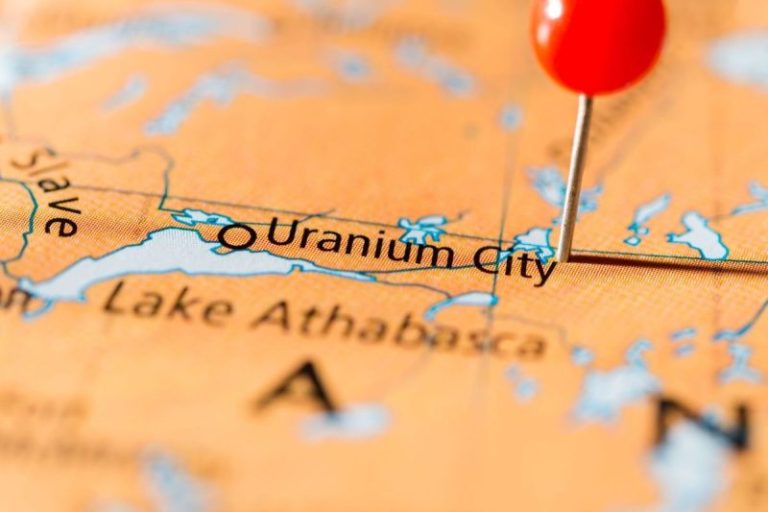
    Canada is home to three producing uranium mines, Cigar Lake, McArthur River and McClean Lake, all of which are located in Saskatchewan’s Athabasca Basin.

    Saskatchewan is a premier uranium mining jurisdiction as home to the Athabasca Basin, a mining-friendly region in the north of the province that’s renowned for its high-quality uranium deposits. The area’s long uranium-mining history has made Canada an international leader in the uranium sector.

    Canada’s major uranium mining companies are Cameco (TSX:CCO,NYSE:CCJ) and Orano Canada, a subsidiary of the multinational company Orano Group. Cameco is the majority owner and operator of Cigar Lake and McArthur River. Orano holds a significant stake in both mines, and is also the majority owner and operator of the recently restarted McClean Lake operation.

    Data and information on the Canadian uranium mines and advanced projects discussed below is taken from mining database MDO. The database only includes projects that have at least partial ownership by public companies.

    1. Cigar Lake Mine

    Ownership:
    54.547% — Cameco
    40.453% — Orano Canada
    5% — TEPCO Resources
    Province: Saskatchewan
    Mine type: Underground
    Deposit type: Unconformity-related

    Cigar Lake, which entered commercial production in 2015, is one of Canada’s largest uranium mines and the world’s highest grade uranium mine. The underground mining operation involves the use of innovative mining methods such as jet boring, which was purposely designed by Cameco to tackle the unique challenges of the Cigar Lake deposit.

    For 2024, production at the Cigar Lake mine was reported at 16.9 million pounds U3O8, up 2 million pounds from the previous year. Guidance for 2025 stands at approximately 18 million pounds.

    Cigar Lake’s proven and probable reserves stand at 551,400 metric tons of ore grading 15.87 percent U3O8 for 192.9 million pounds of contained U3O8. Its mine life is expected to run until 2036.

    2. McArthur River-Key Lake Mine

    Ownership:
    McArthur River mine
    69.805% — Cameco
    30.195% — Orano Canada
    Key Lake mill
    83.3% — Cameco
    16.7% — Orano Canada
    Province: Saskatchewan
    Mine type: Underground
    Deposit type: Unconformity-related

    The McArthur River-Key Lake operation is home to the McArthur River mine and Key Lake mill, respectively the largest high-grade uranium mine and largest uranium mill in the world, according to MDO.

    McArthur River was first brought into production in 2000 using raiseboring and blast hole stoping mining methods, but was put on care and maintenance temporarily in early 2018 due to low uranium prices. Cameco brought the mine and mill back into production in late 2022, progressively ramping up output over the next few years.

    Production in 2024 came in at 20.3 million pounds U3O8, up nearly 43 percent from the previous year’s output, and production guidance for 2025 has been set at 18 million pounds.

    McArthur River’s proven and probable reserves total 2.49 million metric tons grading 6.55 percent U3O8 for 359.6 million pounds of contained metal. Its mine life extends out to 2044.

    3. McClean Lake Mine and Mill

    Ownership:
    77.5% — Orano Canada
    22.5% — Denison Mines (TSX:DML)
    Province: Saskatchewan
    Mine type: Surface mine
    Deposit type: Unconformity-related

    The McClean Lake mine re-entered production in July 2025, 17 years after it was shuttered in 2008 due to low uranium prices made the operations uneconomic.

    After studies demonstrated that the joint venture partners’ patented surface access borehole resource extraction (SABRE) mining method could bring McClean back to life economically, the decision was made in January 2024 to bring the asset back into production.

    The site hosts multiple deposits, including the now-producing McClean North deposit. It also boasts the only mill in the world designed to process high-grade uranium ore without dilution, according to MDO. The mill has the capacity to produce 24 million pounds of uranium concentrate, or yellowcake, annually. Currently, the mill is processing ore from the Cigar Lake mine under a toll mining agreement.

    Proven reserves at McClean Lake are in the form of ore stockpiles, and total 90,000 metric tons at a grade of 0.37 percent for U3O8 for 700,000 pounds of contained metal. The site also hosts significant indicated and inferred resources of 25.4 million pounds across the McLean North, Sue D and Sue F deposits.

    The partners expect to produce approximately 800,000 pounds of U3O8 from McClean North in the first year of operations. In addition, mining at the McClean North and Sue F deposits has the potential to produce about 3 million pounds from 2026 to 2030.

    Upcoming Canadian uranium mines

    There are a handful of contenders for Canada’s next uranium mine: Patterson Lake South, Rook 1 and Wheeler River. None are in the construction stage yet, but most are expecting to come online in the next few years. Learn about the advanced uranium projects below.

    1. Patterson Lake South

    Ownership: Paladin Energy (TSX:PDN,ASX:PDN)
    Province: Saskatchewan
    Mine type: Underground
    Deposit type: Basement hosted vein-type or fracture-filled

    Currently in the permitting phase, the Patterson Lake South (PLS) project hosts the large, high-grade and near-surface Triple R deposit, which has the potential to produce both uranium and gold. The project has a probable mineral reserve estimate of 93.7 million pounds of contained uranium from 3 million metric tons grading 1.41 percent U3O8.

    The 2023 feasibility study for PLS highlights average production of approximately 9 million pounds U3O8 per year over a 10 year mine life.

    Paladin added the PLS uranium project to its portfolio in December 2024 via its acquisition of Fission Uranium. The company is continuing to develop the PLS’s resource potential outside of the Triple R deposit, with a significant focus on the project’s Saloon East zone. Advancing through the environmental permitting process remains ongoing.

    2. Rook 1

    Ownership: NexGen Energy (TSX:NXE)
    Province: Saskatchewan
    Mine type: Underground
    Deposit type: Basement-hosted, vein-type

    NexGen Energy’s Rook 1 project, home to the Arrow deposit, is in the permitting stage with a feasibility study completed in February 2021. Arrow hosts probable mineral reserves of 239.6 million pounds of U3O8 from 4.57 million metric tons of ore at a grade of 2.37 percent, as well as a measured and indicated resource of 256.7 million pounds from 3.75 million metric tons at 3.1 percent.

    Over its 11.7 year mine life, Rook 1 is expected to produce an average of 19.8 million pounds of U3O8 per year, including over 25 million pounds during the first five years.

    Provincial environmental assessment approval was granted in November 2023, and the federal environmental impact statement was accepted as final in January 2025. In March 2025, the company shared that the Canadian Nuclear Safety Commission has proposed hearing dates for the Rook I project on November 19, 2025, and February 9 to 13, 2026.

    NexGen states that a full project execution team is at the ready and the site is fully prepared for construction activities to commence following final federal approval.

    3. Wheeler River

    Ownership:
    95% — Denison Mines
    5% — Uranium Energy (TSX:UEC,NYSEAMERICAN:UEC)
    Province: Saskatchewan
    Mine type:
    Phoenix — In-situ recovery

    Gryphon — Underground
    Deposit type: Unconformity-related

    The Wheeler River uranium project, billed as the largest undeveloped uranium project in the eastern region of the Athabasca Basin, is home to the high-grade Phoenix and Gryphon deposits. Each deposit is considered a standalone asset, and the Phoenix deposit is the more advanced of the two.

    A feasibility study for the Phoenix deposit as an in-situ recovery operation was completed in mid-2023. In February 2025, Denison reported that the Canadian Nuclear Safety Commission is set to conduct hearings for the project’s environmental assessment and license to prepare and construct a uranium mine and mill on October 8 and December 8 to 12, 2025. If granted approval, Denison is prepared to start construction in early 2026, followed by first production by the first half of 2028.

    As for the Gryphon deposit, an update to the pre-feasibility study for a conventional underground mining operation was completed in 2023. Denison conducted a field program in the first quarter of 2025 as part of its efforts to support a feasibility study.

    Canadian uranium exploration companies

    Canada is also home to a slew of uranium exploration and development companies focused on discovering uranium in Saskatchewan, Nunavut and Newfoundland and Labrador.

      For more insight on the uranium companies operating in the Athabasca Basin discussed in this article, check out our breakdown of the 15 uranium companies exploring the basin.

      Securities Disclosure: I, Melissa Pistilli, hold no direct investment interest in any company mentioned in this article.
      This post appeared first on investingnews.com