Cardiex Limited (CDX:AU) has announced FY25 Preliminary Results Summary and Company Update
Download the PDF here.
This post appeared first on investingnews.com


Cardiex Limited (CDX:AU) has announced FY25 Preliminary Results Summary and Company Update
Download the PDF here.
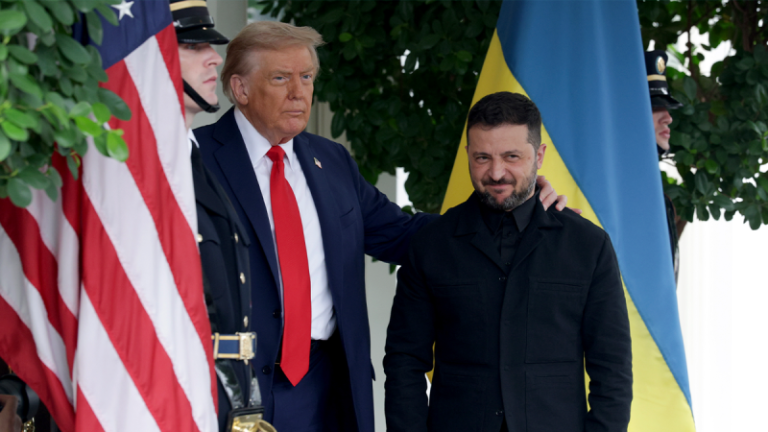
There is no question that President Donald Trump is deserving of the Nobel Peace Prize. Nations, statesmen and elected officials around the globe have seen the fruits of his labor to bring peace to different hemispheres.
The big question is, ‘Is there a real pathway for President Trump to actually receive the Nobel Peace Prize?’ I believe there is. But it’s a pathway that must be flawlessly executed.
And in doing so, it’s important to understand the history of the Nobel Peace Prize and the actual process for awarding it. We can also gain insight from how a former Trump appointee led an international organization to receive it. And we can learn from how a former Republican president worked to end a war and received the Nobel Peace Prize despite protests from Norwegian and Swedish politicians and media.
The Nobel Prizes were established by the will of the famed Swedish industrialist and inventor, Alfred Nobel. Nobel was the inventor of dynamite and, at the time of his death in 1896, was the owner of Bofors, the Swedish armaments manufacturer.
I personally became intrigued with the Nobel Prizes while doing consulting work for Bofors in the late 1990s and visiting Karlskoga, Sweden, a number of times.
Nobel’s will provided for prizes in physics, chemistry, physiology or medicine, literature and peace. A Nobel Memorial Prize in Economic Sciences was added in 1968. The original prizes have been awarded since 1901.
In his will, Nobel provided that the prizes were to be awarded by different Swedish entities, with the exception of the Nobel Peace Prize, which was to be awarded ‘by a committee of five persons to be elected by the Norwegian Storting [Parliament].’ Today, the Norwegian Nobel Committee is responsible for selecting Nobel Peace Prize laureates. Appointed by the Norwegian Parliament, it should surprise no one that historically its members have been former members of Parliament and cabinet ministers.
Only ‘qualified nominators’ can submit a name for the Nobel Peace Prize. These include members of national assemblies, national governments, current heads of state, previous recipients, certain university professors and directors of peace research institutions.
This explains why President Trump has been nominated by numerous members of Congress, several nations, heads of state and university professors. Nominations are due on Jan. 31 each year, followed by a multi-stage selection process. The winner is announced in early October, with the award ceremony taking place on Dec. 10 every year at Oslo City Hall.
Make no mistake, this is a very political process. I served for a number of years on the board of the Norwegian-American Foundation. I remember when the Nobel Peace Prize was awarded to President Barack Obama for ‘the promise’ of his vision. My Norwegian friends were flabbergasted.
The running joke in Norway was that he received it because a couple of left-wingers on the Committee wanted a chance to meet him and have a photo-op. In Trump’s case, you actually have a president who has resolved conflicts and helped to bring peace to different regions of the world.
In addition to the formal nominations, I believe there are key actions supporters of President Trump can undertake to maximize his chances. Consider these:
, the former NATO secretary-general, is back in the current Labour government’s cabinet serving as finance minister. Following Trump’s victory last November, Stoltenberg said that during Trump’s first term, they had ‘established a good and reliable working relationship.’ He further noted that they ‘got things done,’ and that ‘NATO had become stronger.’ A former Labour prime minister, he could be helpful with one or two members of the committee. In fact, committee member Gry Larsen is a member of the Labour Party and served as state secretary for the Ministry of Foreign Affairs when Stoltenberg was prime minister.
, founded by former Norwegian Prime Minister Kjell Magne Bondevik, is considered much less political than the Norwegian Nobel Institute. It has a history of actually being in the field promoting peace and strengthening democratic political institutions and processes. I met with him as he was laying the foundation for the center and heard his vision. An ordained Lutheran minister, he’s the former head of the Christian Democratic Party. Current committee member Anne Enger served as Bondevik’s deputy during his first term as prime minister. And committee member Kristin Clemet served as Bondevik’s minister of education during his second term.
Either through the ambassador when he’s confirmed, or through the current charge d’affaires, the embassy needs to take a proactive role in making the case for President Trump to the Norwegian media and institutions.
: Former South Carolina Gov. David Beasley received the prize as the Trump-appointed executive director of the World Food Program (WFP) in 2020. The WFP had been nominated numerous times over 40 years, but it was under a Trump appointee’s leadership that it finally happened. Insights on how Beasley and the WFP interacted with Norwegian authorities can be helpful.
: The Republican president received the Nobel Peace Prize despite protests from liberal Norwegian politicians and Swedish media. His efforts to end the Russo-Japanese War were too meritorious and couldn’t be ignored. Likewise, President Trump supporters can make a similar case with the conflicts that he has helped to end. The embassy can play a big role in articulating this.
On the merits, President Trump deserves the Nobel Peace Prize. But this is a political process, and his supporters need to work the process.
A Norwegian friend reminded me that the prize is supposed to consider achievements over a period of time. He pointed to President Trump’s brokering the Abraham Accords during his first term as laying a foundation for real peace in the Middle East.
He’s right. President Trump’s achievements during his first term, combined with what he’s done so far in his second term, have earned him the Nobel Peace Prize.
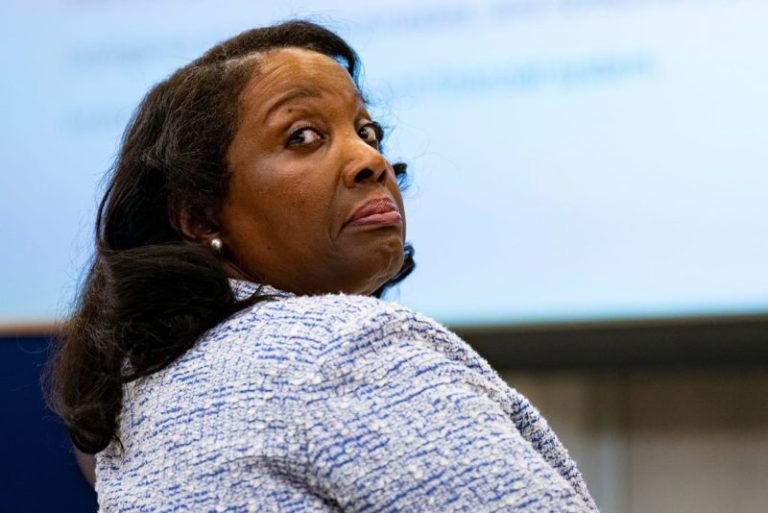
The Trump administration’s latest allegations of mortgage fraud have raised questions about a long-standing housing issue known as owner-occupancy mortgage fraud. But that type of fraud can be difficult to prove, experts say.
President Donald Trump announced in a Truth Social post on Monday night that he was removing Federal Reserve governor Lisa Cook. He cited allegations made by Federal Housing Finance Agency Director Bill Pulte that Cook committed mortgage fraud by claiming homes in two different states as her primary residence at the same time.
Cook’s attorney on Tuesday said Cook will file a lawsuit to challenge her removal.
“President Trump has no authority to remove Federal Reserve Governor Lisa Cook,” the lawyer, Abbe Lowell, said in a statement.
The Justice Department has also recently targeted Sen. Adam Schiff, D-Calif., and New York Attorney General Letitia James with similar mortgage fraud allegations.
Here are the key things to know about owner-occupancy mortgage fraud, according to experts.
The main reason a borrower could be motivated to claim a primary residence on a mortgage application is to get a lower interest rate for that home.
Typically, mortgages for a primary residence have lower interest rates and homeowner’s insurance costs, said Keith Gumbinger, vice president of mortgage website HSH.
Mortgage interest rates are generally 0.5% to 1% higher for investment properties than for primary homes, according to Bankrate. Homeowners also typically pay about 25% more for insurance as a landlord compared with a standard homeowners policy, according to the Insurance Information Institute.
Owner-occupied means “you’re going to live there the majority of the time,” Gumbinger said. But there are limited exceptions, including for military service, parents providing housing for a disabled adult child or children providing housing for parents, according to Fannie Mae.
If a homeowner changes primary residences, they need to inform their mortgage lender that the original property is no longer owner-occupied, Gumbinger said.
There are also federal and state tax benefits for primary residences, according to Albert Campo, a certified public accountant and president of Campo Financial Group in Manalapan, New Jersey.
For example, when an owner sells a home and makes a profit, they can take a capital gains exemption worth up to $250,000 for single filers or $500,000 for married couples filing jointly, as long as they meet certain IRS rules, including owner occupancy for two of the past five years.
For tax purposes, a homeowner can have only one primary residence at a time.
When a taxpayer owns more than one home, proving which one is the primary residence is “always based on facts and circumstances,” Campo said. For example, a primary residence is typically where an owner spends most of their time, votes, files their tax returns and receives mail, he said.
A 2023 report from the Federal Reserve Bank of Philadelphia found that more than 22,000 “fraudulent borrowers” misrepresented their owner-occupancy status, out of 584,499 loans originated from 2005 to 2017. The data was based on a subsample from more than 15 million loans originated during this period.
Typically, the fraudulent borrowers took out larger loans and had higher mortgage default rates, the authors found.
However, this type of fraud may be “difficult to detect until long after the mortgage has been originated,” the authors wrote.
“There is a difference between the court of law and the court of public opinion,” Jonathan Kanter, a law professor at Washington University in St. Louis and a former assistant attorney general, told CNBC’s “Squawk Box” last week when asked about Cook. “In the court of law, this is small ball and very difficult to prove.”
“You’d have to establish not only that she filled out the form incorrectly, but she had the specific intent to deceive, to defraud banks, as opposed to just making a mistake,” he said.
During fiscal year 2024, 38 mortgage fraud offenders were sentenced in the federal system, according to the United States Sentencing Commission’s interactive data analyzer. That number is up slightly from 34 offenders in 2023, but down from 426 offenders in 2015, the earliest date in that tool’s dataset. The U.S. Sentencing Commission data does not break out the types of mortgage fraud.