

Archive

August 26, 2025

Browsing

Phosphate is mainly used in the form of fertilizer for crops and animal feed supplements. Only 5 percent of world phosphate production is used for other applications, such as corrosion prevention and detergents.

In its 2025 Mineral Commodity Summary, the US Geological Survey (USGS) states that global production of phosphate grew in 2024 alongside demand, totaling 240 million metric tons. Most of 2024 was marked by steady growth in agricultural demand in the face of declining quality reserves.

‘World consumption of P2O5 contained in fertilizers was estimated to have been 47.5 million tons in 2024 compared with 45.8 million tons in 2023,’ the USGS reported. ‘World consumption of P2O5 in fertilizers was projected to increase to 51.8 million tons by 2028. The leading regions for growth were expected to be Asia and South America.’

This list of the top phosphate countries by production is based on data from the USGS. Those interested in the phosphate mining sector will want to keep an eye on phosphate production data and mining companies in these countries.

1. China

Phosphate production: 110 million metric tons
Phosphate reserves: 3.7 billion metric tons

China’s phosphate production increased in 2024 to 110 million metric tons (MT), up from 105 million MT in 2023, placing it as number one on the list of top phosphate-producing countries by a long shot. China has the second largest phosphate reserves in the world at 3.7 billion metric tons of phosphate. The country is also the fourth largest producer of fellow fertilizer mineral potash.

The rise in Chinese output came in despite of the nation’s environmental crackdown on the mining industry. China’s government has placed restrictions on phosphate exports in an effort to drive down domestic prices of the fertilizer with its own supply. In December 2024, China halted new export applications for phosphate due to the rising cost of sulfur. The material is critical in the separation of phosphates from rock.

2. Morocco

Phosphate production: 30 million metric tons
Phosphate reserves: 50 billion metric tons

As the second largest phosphate-producing country, Morocco produced 30 million metric tons of the fertilizer in 2024, down from 33 million MT in the previous year. The North African nation’s phosphate output is expected to increased in the coming years due to ongoing capacity expansions, which are expected to be completed by 2027.

Morocco’s phosphate production comes from state-owned fertilizer company OCP Group’s mines, including its Gantour operation, one of the world’s largest phosphate mines.

Morocco holds the world’s largest phosphate reserves at 50 billion metric tons, accounting for over 67 percent of total global phosphate reserves.

3. United States

Phosphate production: 20 million metric tons
Phosphate reserves: 1 billion metric tons

In 2024, US phosphate mining production totaled 20 million metric tons, up slightly by 400,000 metric tons from the previous year. The nation’s 10 producing phosphate mines are located across four states: Florida, North Carolina, Idaho and Utah.

The two largest phosphate mining companies in the US are Mosaic (NYSE:MOS) and Nutrien (TSX:NTR). Global giant Mosaic’s Florida phosphates operation comprises three producing mines: Four Corners, South Fort Meade and Wingate. The three mines combined for 8,900 MT of phosphate rock concentrate in 2024. Nutrien operates the Aurora mine in North Carolina and White Springs mine in Utah.

Most phosphate rock mined in the US is used for manufacturing phosphoric acid and superphosphoric acid. These types of wet-process phosphate products are used for items such as animal feed supplements. About a quarter of this is exported in the form of merchant-grade phosphoric acid, upgraded granular diammonium and monoammonium phosphate fertilizer, as well as other fertilizer products, according to the USGS.

4. Russia

Phosphate production: 14 million metric tons
Phosphate reserves: 2.4 billion metric tons

Russia produced 14 million metric tons of phosphate in 2024, down by 1 million MT from the previous year, and the country’s phosphate reserves total 2.4 billion metric tons. Russia is also the second largest producer of potash.

A significant portion of Russia’s phosphate is produced by PhosAgro subsidiary Apatit from apatite minerals at the Khibiny deposit, which is located east of Finland in Russia’s Kola Peninsula. Phosphate operations are also found in Perm Krai at the Oleniy Ruchey apatite mine and processing facility owned by the Acron Group’s North-Western Phosphorous Company.

European nations were previously Russia’s biggest phosphate customers in the global market, but the country’s war in Ukraine initially had an impact, directly influencing phosphate prices. However, Russian phosphate exports were supported through increases in shipments to countries including India and Brazil.

5. Jordan

Phosphate production: 12 million metric tons
Phosphate reserves: 1 billion metric tons

Jordan’s phosphate production came in at 12 million metric tons in 2024, rising slightly from the previous year. Jordan’s phosphate reserves stand at an estimated 1 billion MT.

The country’s sole phosphate producer is state-owned Jordan Phosphate Mines Company, which operates as a phosphate miner and fertilizer producer. The company bills itself as the second largest phosphate exporter and the sixth largest producer of phosphate in the world, with combined production capacity between its three mines exceeding 11 million metric tons of phosphate annually.

6. Saudi Arabia

Phosphate production: 9.5 million metric tons
Phosphate reserves: 1 billion metric tons

Saudi Arabia produced 9.5 million metric tons of phosphate in 2024, down by 400,000 MT from 2023’s output level. The country is sitting on 1 billion MT of phosphate reserves. The Saudi Arabian Mining Company, also known as Ma’aden, produces up to 5 million metric tons of concentrated phosphate rock per year.

The Wa’ad Al Shamal Minerals Industrial City, an integrated phosphate fertilizer production complex, is a US$8 billion joint venture investment between Ma’aden at 60 percent, chemical manufacturer Saudi Basic Industries (TADAWUL:2010) at 15 percent and US fertilizer giant Mosaic at 25 percent. However, in January 2025, Mosaic sold its stake for US$1.5 billion in Ma’aden shares, bringing the latter company’s interest to 85 percent.

7. Brazil

Phosphate production: 5.3 million metric tons
Phosphate reserves: 1.6 billion metric tons

Brazil, another of the top phosphate countries by production, produced 5.3 million metric tons of phosphate in 2024, nearly on par with its production in the previous year. Brazil has a booming agricultural sector and is one of the world’s largest fertilizer consumers and importers. More phosphate production capacity in the country is expected to come online in 2027.

Mosaic is the country’s largest producer of both phosphate and nitrogen, and it also operates Brazil’s only potash mine. Swedish fertilizer company Eurochem launched a new US$1 billion phosphate fertilizer production facility in the State of Minas Gerais, Brazil, in April 2024. The facility has a phosphate mine and plant complex with an annual production capacity of 1 million MT of advanced phosphate fertilizers.

8. Egypt

Phosphate production: 5 million metric tons
Phosphate reserves: 2.8 billion metric tons

Egypt’s phosphate-mining production in 2024 totalled 5 million metric tons, on par with 2023 output levels. According to the US Geological Survey, Egypt’s phosphate reserves now sit at 2.8 billion MT.

The phosphate company Misr Phosphate operates the Abu Tartour, the Sibaiya and the Red Sea mines, all of which host high grades of phosphate.

9. Peru

Phosphate production: 4.7 million metric tons
Phosphate reserves: 210 million metric tons

Peru produced 4.7 million metric tons of phosphate in 2024, down by 300,000 MT from the previous year. About 98 percent of US phosphate imports originate from Peru.

Peru’s investment agency ProInversión made a US$940 million commitment in mid-2024 for the expansion Fosfatos del Pacífico’s Bayóvar mine in the Piura region, which is expected to bolster the country’s domestic phosphate production for the next 10 years.

10. Tunisia

Phosphate production: 3.3 million metric tons
Phosphate reserves: 2.5 billion metric tons

Tunisia’s phosphate output in 2024 totaled 3.3 million metric tons, down from 3.6 million metric tons the previous year. Tunisia is home to the fourth highest phosphate reserves in the world at 2.5 billion metric tons.

The North African country has been rising among the ranks of the world’s largest phosphate producing nations. In 2023 Tunisia’s state-owned phosphate firm Gafsa Phosphate Company ramped up its production as part of its US$76 million investment program.

FAQS for phosphate

What are phosphates?

Phosphates are compounds that usually include phosphorous and oxygen, and can have one or more common elements, such as sodium, calcium, potassium and aluminum.

Where are phosphate compounds found?

Phosphate is mostly found in phosphate rock, a non-detrital sedimentary rock that contains high amounts of phosphate minerals. Phosphate rock can come in different forms such as quartz, calcite, dolomite, apatite, iron oxide minerals and clay minerals.

Is phosphate the same as phosphorus in fertilizer?

Phosphate is the natural source of phosphorous, which provides essential nutrients for plant growth and development.

Securities Disclosure: I, Melissa Pistilli, hold no direct investment interest in any company mentioned in this article.
This post appeared first on investingnews.com

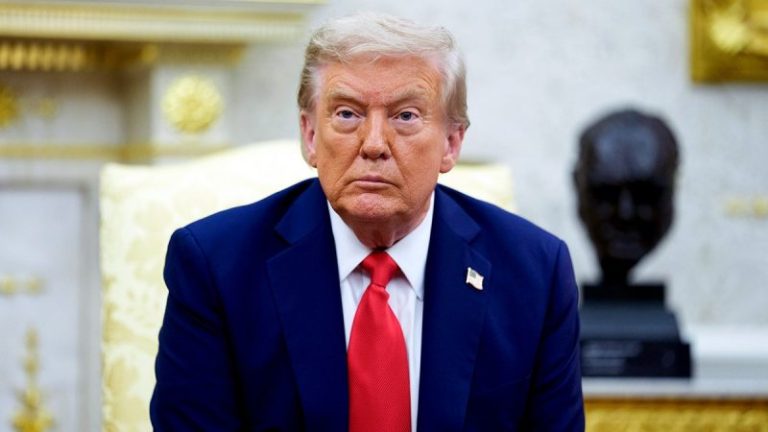
I asked Donald Trump the question. Everyone asked Donald Trump the question.

Would he engage in retribution in a second term?

And we all got the same answer: He’d be too busy for that. His only retribution would be success.

Well, if Trump is not engaged in turning government against his political enemies, he’s doing a pretty good imitation of it.

Now, hardball politics is as old as the republic. The founders engaged in it. Abe Lincoln engaged in it. And you think LBJ never got his way by threatening to pull a grant or two for a congressman’s pet projects?

Look, one thing I’ve learned covering Trump for decades is that he loves to fight. In New York, back in the day, he would do battle with the likes of Ed Koch and Leona Helmsley, the ‘Queen of Mean.’

When his divorce from Ivana became a tabloid sensation, Trump got on the phone with me to discuss why his proposed settlement was really generous.

We see that fighting instinct today when the president goes after not just Democrats but fellow Republicans who defy him, or won’t back his proposals – a number of whom have announced their retirements rather than lose a primary to a Trump-backed challenger.

We see that Trump-against-the-world approach with his crackdown on D.C. crime  which, despite the home-rule issues, is being welcomed by some liberals (publicly and privately) because folks are scared in a city that can’t even stop teenage carjackings.

The next target is Chicago, which also has a Black mayor, with the Washington Post reporting that there has been weeks of secret planning to send thousands of National Guard troops there. Illinois Gov. J.B. Pritzker has denounced this as an effort to spread fear, and sometimes it seems like the president is at war with urban America.

The underlying motivation is crucial: Trump believes that the Democrats waged ‘lawfare’ against him for four years. There is no evidence that President Biden ordered such efforts, but Trump is convinced that the multiple investigations against him–as in the Stormy Daniels case–were part of a grand scheme to knock him out of the race.

And he has a point. Look at the outrageously illegal fine that Judge Arthur Engoron hit him with in the civil fraud case brought by New York AG Letitia James: $354 million, since grown to $515 million.

This was so blatantly unfair that an appellate court just threw it out as a violation of the Eighth Amendment, barring cruel and unusual punishment. James is appealing, and the court didn’t toss the whole case–the ‘fake’ case, says Trump–but a half-billion-fine over real estate valuations seems pathetically unfair.

But when Trump cried foul, the media reaction was there he goes again, attacking every judge who disagrees with him. But Trump was right about Engoron.

The Trump DOJ, by the way, is now investigating Tish James for allegations of mortgage fraud.

So what the press sees as Trump going after his opponents is, in his eyes, just basic payback, an attempt at getting even.

Having said that…

‘I just watched Sloppy Chris Christie be interviewed on a ratings challenged ‘News’ Show…on ABC Fake News,’ ‘This Week’ hosted by George Stephanopoulos.
‘Can anyone believe anything that Sloppy Chris says? Do you remember the way he lied about the dangerous and deadly closure of the George Washington Bridge in order to stay out of prison, at the same time sacrificing people who worked for him, including a young mother, who spent years trying to fight off the vicious charges against her. Chris refused to take responsibility for these criminal acts. For the sake of JUSTICE, perhaps we should start looking at that very serious situation again?’

Christie, a onetime ally, was Trump’s harshest Republican critic during the campaign. As for the 2013 scandal known as Bridgegate, it was thoroughly investigated and two top Christie aides were convicted, but the Supreme Court, while blasting the conduct, overturned those convictions.

It’s worth pointing out that the decision to close some lanes on the George Washington Bridge, which created traffic chaos, was the governor’s attempt to strike back at a Democratic mayor who refused to endorse him.

‘Time for some traffic problems in Fort Lee,’ wrote one of the convicted aides in a remarkably succinct message.

‘I always thought he got away with murder,’ Trump told reporters yesterday.

Having watched the Sunday shows, the president unloaded on two networks:

‘Despite a very high popularity and, according to many, among the greatest 8 months in Presidential History, ABC & NBC FAKE NEWS, two of the worst and most biased networks in history, give me 97% BAD STORIES. IF THAT IS THE CASE, THEY ARE SIMPLY AN ARM OF THE DEMOCRAT PARTY AND SHOULD, ACCORDING TO MANY, HAVE THEIR LICENSES REVOKED BY THE FCC. I would be totally in favor of that because they are so biased and untruthful, an actual threat to our Democracy!!!’

He added that ABC and NBC should be paying ‘Millions of Dollars a year in LICENSE FEES…Crooked ‘journalism’ should not be rewarded, it should be terminated!!!’

Now networks shouldn’t lose their licenses just because the president doesn’t like their coverage. Maybe they should be paying more for use of the airwaves, but that should apply to all networks; so far they’ve played by the rules.

Trump and John Bolton have been at each other’s throats since the president fired the national security adviser. There was a criminal investigation over Bolton’s 2020 book that Trump tried to stop, but it was cleared for publication.

I take Trump at his word that he didn’t know in advance about the FBI raid on Bolton’s Bethesda home. But twice in the days leading up to the raid, Trump was slamming him online for criticizing his efforts to end the Russia-Ukraine war..

‘Very unfair media is at work on my meeting with Putin. Constantly quoting fired losers and really dumb people like John Bolton, who just said that, even though the meeting is on American soil, ‘Putin has already won.’ What’s that all about?’

After the raid, Trump called Bolton a ‘low-life’ and a ‘sleazebag’ who suffers from ‘major Trump Derangement Syndrome.’

But two things can be true at once. Trump prosecutors had to show convincing evidence to a special court to get the search warrant approved. So it’s possible that Bolton did hang on to some classified documents.

After the raid, Trump posted that Bolton was among the ‘stupid people’ who were making it ‘much harder’ for him to end the war by ripping his approach to Putin.

I’ve known John Bolton for years–he used to be a Fox contributor–and I’m surprised he’s made no comment. There was just a little wave at the press pack when he returned home.

Next up: Wes Moore, Maryland’s first Black governor.

They’ve been jabbing each other back and forth, which is fine. But then the president posted this:

‘Governor Wes Moore of Maryland has asked, in a rather nasty and provocative tone, that I ‘walk the streets of Maryland’ with him. I assume he is talking about out of control, crime ridden, Baltimore? As President, I would much prefer that he clean up this Crime disaster before I go there for a ‘walk.’ Wes Moore’s record on Crime is a very bad one.’.

There’s more: 

Trump ‘offered’ to deploy troops to Baltimore – which has a serious crime problem – after which he would accept Moore’s invitation to meet him on the streets.

Then came the threat: ‘I gave Wes Moore a lot of money to fix his demolished bridge. I will now have to rethink that decision???’

Moore has been rebuilding the Francis Scott Key Bridge since a reckless and out-of-control tanker destroyed it early last year. And for the record, Congress approved the funds as part of a package during the final stretch of the Biden administration.

But put that aside. Who would be hurt if Trump carried out this threat?

Millions of people in Maryland who rely on the bridge, or whose jobs are tied to commerce in that region.

So Trump is openly suggesting to use the official power of government to withhold funds that would hurt ordinary citizens. That is more troubling than the punching and counterpunching with Bolton and Christie. 

For what it’s worth, I don’t think Trump would actually do it. It’s a brushback pitch.

While Trump may view himself as evening the score, one day Democrats will occupy the White House again. They would feel fully justified in going after their opponents as payback for the way they were targeted for investigation. And the endless cycle continues.

This post appeared first on FOX NEWS

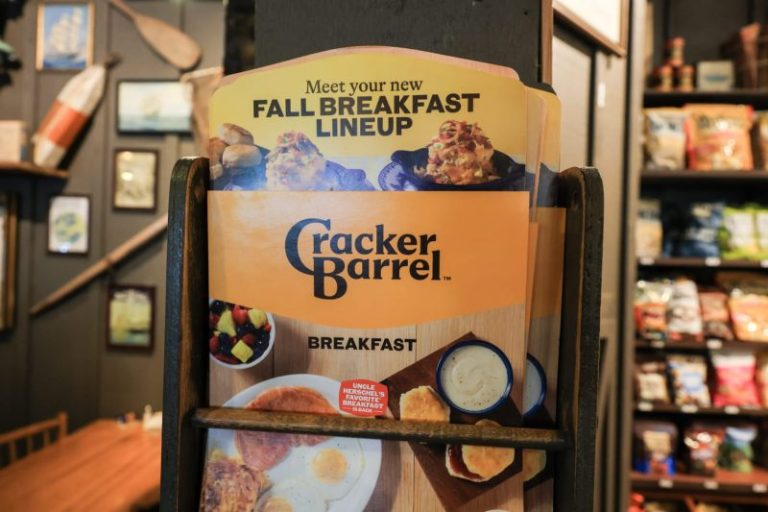
Cracker Barrel tried to reassure customers Monday that its values have remained the same after it received criticism following a new logo reveal and general brand refresh.

The company promised customers in a statement that while its logo may be different, its values — “hard work, family, and scratch-cooked food made with care’ — are not.

“You’ve shown us that we could’ve done a better job sharing who we are and who we’ll always be,” the statement read, adding that Cracker Barrel will remain “a place where everyone feels at home, no matter where you’re from or where you’re headed.”

Last week, the company unveiled a new logo that no longer features a man leaning against a barrel or the words ‘Old Country Store.’ Instead, it featured the company’s name, in a color scheme that it said was inspired by the chain’s scrambled eggs and biscuits.

The change was part of a ‘strategic transformation’ that aimed to update the chain’s visual elements, spaces, food and retail offerings. The company’s shares are down about 8.5% since the reveal ignited criticism, especially from those in conservative circles.

Donald Trump Jr., the president’s son, amplified a post Wednesday suggesting that the logo change was intended to erase the American traditions aspect of the branding and make it more general and lean into diversity, equity and inclusion efforts.

On Monday, the chain also shared an update on the man in the original logo, Uncle Herschel, who is said is still featured on menus and road signs and in stores.

‘He’s not going anywhere — he’s family,’ the company said in the statement.

Cracker Barrel said its focuses remain country hospitality and generous portions of food at fair prices. The refresh, it said, was to ensure the restaurant will be there for the next generation.

‘That means showing up on new platforms and in new ways, but always with our heritage at the heart,’ it said.

‘We know we won’t always get everything right the first time, but we’ll keep testing, learning, and listening to our guests and employees.’

This post appeared first on NBC NEWS