
Here’s a quick recap of the crypto landscape for Friday (August 22) as of 9:00 p.m. UTC.
Get the latest insights on Bitcoin, Ethereum and altcoins, along with a round-up of key cryptocurrency market news.
Bitcoin and Ethereum price update
Bitcoin (BTC) was priced at US$116,546, a 3.9 percent increase in 24 hours. Its lowest valuation of the day was US$112,019, and its highest was US$117,310.
Bitcoin price performance, August 22, 2025.
Chart via TradingView.
The crypto market rallied after US Federal Reserve Chair Jerome Powell’s speech at the Jackson Hole Symposium offered clues that the Fed may be preparing to lower interest rates in September.
Bitcoin jumped from US$112,000 to US$116,000 in just over an hour. The current situation with inflation and the labor market, Powell said, “may warrant adjusting” the Fed’s monetary policy stance.
Powell cited a “curious balance” in the labor market, with reduced worker supply and demand increasing employment risks, while also noting that tariffs’ visible impact on consumer prices is likely to be short-lived.
However, he signaled that the central bank remains cautious of potential lasting inflation, emphasizing the need to balance its dual mandates when goals conflict.
The Fed also revised its monetary policy, stating that low unemployment alone will not trigger rate hikes. They removed language suggesting tolerance for inflation above 2 percent to offset past undershoots and no longer described low interest rates as a “defining feature” of the economy, offering greater flexibility in a volatile post-pandemic economy.
According to the CME Group Fedwatch tool, the probability of an interest rate cut at the September 17 FOMC meeting has surged to over 83 percent, up from 75 percent just yesterday.
Likewise, Ether (ETH) gained over 10 percent following Powell’s remarks, rising above the week-long US$4,600 resistance and forming a bull flag pattern, with analysts projecting potential highs around US$6,000.
ETH was priced at US$4,843.61, up by 14.5 percent over the past 24 hours, and its highest valuation of the day. Its lowest valuation was US$4,254.24.
Altcoin price update
- Solana (SOL) was priced at US$199.01, up by 10.5 percent over 24 hours to its highest valuation of the day. Its lowest was US$178.52.
- XRP was trading for US$3.09, up by 7.9 percent in the past 24 hours, and its highest valuation of the day. Its lowest was US$282.
- Sui (SUI) was trading at US$3.74, up by 9.5 percent over the past 24 hours, following market trends by reaching its highest valuation as the markets wrapped. Its lowest valuation of the day was US$3.33.
- Cardano (ADA) was also trading at its highest valuation on Friday at US$0.9334, up by 9.5 percent over 24 hours. Its lowest valuation for the day was US$0.8332.
Today’s crypto news to know
Coinbase approves Trump-backed stablecoin
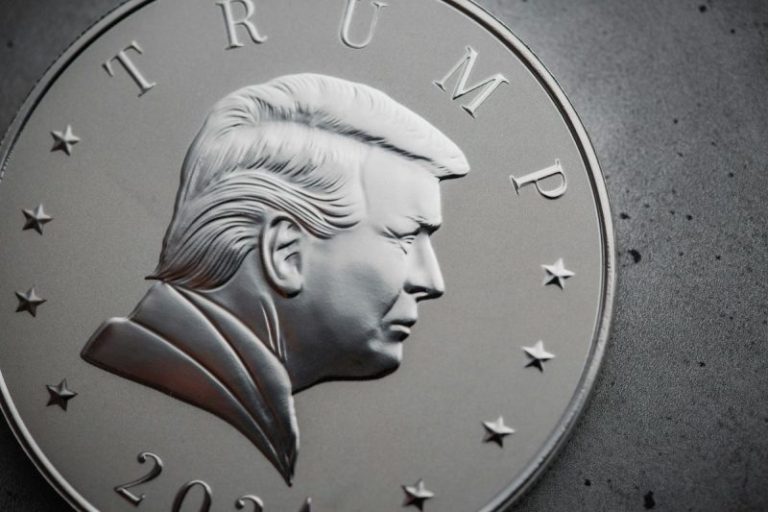
Coinbase Global (NASDAQ:COIN) has listed USD1, a stablecoin issued by World Liberty Financial, the crypto project linked to US President Donald Trump and his sons. The exchange announced the move on Thursday (August 21), while Eric Trump reposted the news on X and hinted that additional updates on the project are coming soon.
With the addition, Coinbase now offers US users a wide range of stablecoins, including USDT, USDC, PYUSD, DAI and others. World Liberty launched USD1 earlier this year as part of its push into decentralized finance, positioning the token for use in a forthcoming platform built on Ethereum with Aave technology.
The platform is not yet live, but the company has said it will eventually support lending and borrowing services.
The listing comes as the US stablecoin sector gains momentum following the passage of the GENIUS Act, which set national standards for stablecoin issuance and trading.
Still, World Liberty’s political connections remain controversial, especially after reports linked USD1 to a multibillion-dollar investment in Binance from an Abu Dhabi sovereign fund.
House moves to prohibit Fed from issuing CBDC
The US House of Representatives has added a provision to a defense policy bill for the 2026 fiscal year that would ban the Fed from issuing a central bank digital currency (CBDC). On Thursday, the House Rules Committee released a revised version of HR 3838, the House’s rendition of a bill enacting the National Defense Authorization Act.
It incorporates extensive wording that prohibits the Fed from researching or developing digital currency.
In July, the House narrowly passed the Republican-backed Anti-CBDC Surveillance State Act, which aims to prevent the Fed from issuing a digital currency, with a vote of 219 to 210. Its fate in the Senate remains uncertain.
The National Defense Authorization Act and its associated appropriations bills are considered essential national security legislation. They detail the military’s funding and budget allocation. Adding this provision from the anti-CBDC bill is a strategic maneuver by supporters of the CBDC ban to increase the likelihood of it passing into law.
CFTC seeks public input on spot crypto trading regulations
Caroline D. Pham, acting chair of the Commodity Futures Trading Commission (CFTC), is calling for public input from crypto market participants on how the agency can better regulate spot crypto trading.
“The public feedback will assist the CFTC in carefully considering relevant issues for leveraged, margined or financed retail trading on a CFTC-registered exchange as we implement the President’s directive,” Pham said on Thursday.
Comments may be submitted via the commission’s website until October 20.
This marks the second leg of the CFTC’s “crypto sprint,” an initiative to fast track the implementation of a new regulatory framework for cryptocurrencies and other digital assets in the US. Last month, the agency announced that it would explore enabling the trading of spot crypto asset contracts on CFTC-registered futures exchanges.
Ripple, SBI to bring RLUSD to Japan
Ripple and SBI Holdings (TSE:8473) unveiled plans on Thursday to bring Ripple USD (RLUSD) to Japan.
Their aim is to launch the stablecoin in early 2026. The rollout will be handled by SBI VCTrade, a licensed digital payments provider, under Japan’s new regulatory framework for stablecoins.
RLUSD, first introduced in December 2024, is backed by dollar deposits, short-term US treasuries and cash equivalents, with monthly attestations from an independent firm. Ripple says this design ensures regulatory clarity and sets the coin apart as an institutional-grade product. SBI executives described the partnership as a milestone for Japan’s financial system, stressing that the stablecoin will enhance trust and convenience for users.
Ripple officials framed RLUSD as a bridge between traditional finance and decentralized networks, particularly just days after Japan approved its first yen-based stablecoin.
ECB explores public blockchains for digital euro
The European Central Bank (ECB) is reportedly exploring major public blockchain networks, including Ethereum and Solana, in connection with its digital euro design.
Sources familiar with the matter told the Financial Times that EU officials are accelerating plans for a digital euro after the passage of the GENIUS Act deepened concerns regarding the competitive viability of a European digital currency.
Sources familiar with the matter told the news outlet that while a private blockchain was widely expected for the digital euro, a public option is now being considered more seriously.
Meanwhile, the ECB informed the Financial Times that it is exploring both centralized and decentralized technologies, including distributed ledger technologies, in the lead up to a final decision.
Austrac directs Binance to appoint external auditor
Binance is facing renewed scrutiny in Australia after the country’s financial watchdog directed it to appoint an external auditor. AUSTRAC said the exchange has failed to meet standards for anti-money laundering and counter-terrorism financing controls, citing gaps in oversight and risk management. The agency also pointed to Binance’s high staff turnover and limited senior management presence in Australia as red flags.
AUSTRAC Chief Brendan Thomas warned that global crypto exchanges must adapt to local compliance requirements, regardless of their size. The action adds to a growing list of regulatory challenges for Binance worldwide, including a record US$4.3 billion fine in the US last year for failing to block illicit users.
The company’s founder, Changpeng Zhao, is serving a four month prison sentence related to those violations. Meanwhile, in Nigeria, Binance is still battling tax evasion and illegal foreign exchange allegations, with a court trial pushed back to October.
Securities Disclosure: I, Giann Liguid, hold no direct investment interest in any company mentioned in this article.
Securities Disclosure: I, Meagen Seatter, hold no direct investment interest in any company mentioned in this article.