
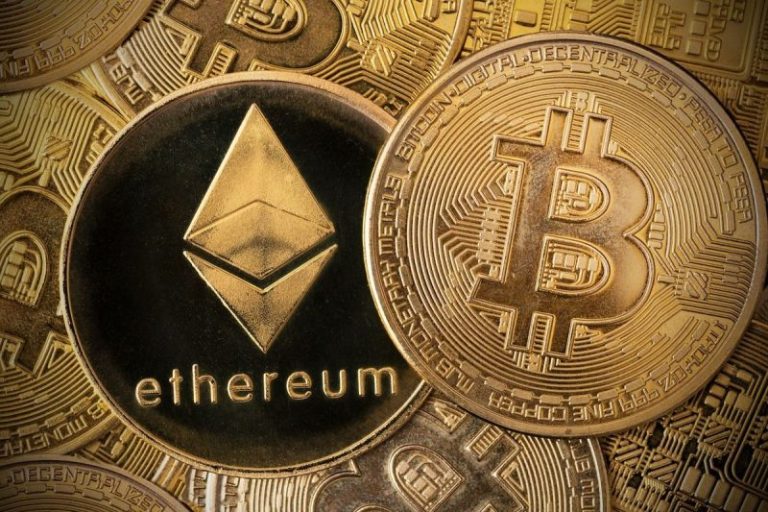
Here’s a quick recap of the crypto landscape for Friday (August 15) as of 9:00 p.m. UTC.
Get the latest insights on Bitcoin, Ethereum and altcoins, along with a round-up of key cryptocurrency market news.
Bitcoin and Ethereum price update
Bitcoin (BTC) was priced at US$116,999, a 0.8 percent decline in 24 hours. Its lowest valuation of the day was US$116,956, while its highest was US$118,192.
Bitcoin price performance, August 15, 2025.
Chart via TradingView.
Bitcoin surged to a new all-time high of US$124,533 on Thursday (August 14), driven by increased institutional interest and expectations that the US Federal Reserve will cut interest rates.
However, the rally was short-lived, as the price fell as low as US$117,263 early on Friday.
The decline was attributed to hotter-than-expected US producer price index data for July, which dampened investor optimism about a rate reduction. Additionally, comments from US Secretary of the Treasury Scott Bessent revealed that the country holds less Bitcoin in reserve than previously thought, further unsettling the market.
Ethereum (ETH) experienced one of its most successful weeks of the year, with on-chain data further underscoring this bullish trend. Daily active addresses, stablecoin transfer volume and daily transactions all reached record highs this week. Additionally, decentralized exchange volume hit its highest point since 2022.
As of Friday’s close, ETH was priced at US$4,391.13, a 3.3 percent decline over 24 hours. Its lowest valuation on Friday was US$4,381.31, and its highest was US$4,614.81.
Altcoin price update
- Solana (SOL) was priced at US$184.03, down by 4.8 percent over 24 hours. Its lowest valuation of the day was US$183.837, while its highest valuation was US$193.02.
- XRP was trading for US$3.07, down 0.3 percent in the past 24 hours. Its lowest valuation of the day was US$3.01, and its highest was US$3.11.
- Sui (SUI) was trading at US$3.66, down by 2.4 percent over the past 24 hours. Its lowest valuation of the day was US$3.63, while its highest was US$3.85.
- Cardano (ADA) was trading at US$0.93, up 0.3 percent over 24 hours. Its lowest valuation of the day was US$0.9186, while its highest was US$0.9526.
Today’s crypto news to know
Ethereum ETF inflows hit nearly US$3 billion for the week
Ethereum-focused exchange-traded funds (ETFs) have seen an unprecedented surge in investor demand, attracting almost US$3 billion in net inflows over the past week. According to SoSoValue data, this amount is more than five times the US$562 million that flowed into Bitcoin ETFs during the same period.
The spike coincides with a rapid increase in Ethereum holdings by crypto treasury firms — their exposure has climbed from US$600 million to US$11 billion in just six weeks. It also follows the US Securities and Exchange Commission’s (SEC) approval of in-kind creations and redemptions for spot Bitcoin and Ethereum ETFs. The change makes the funds more cost efficient and attractive to institutional investors.
ETF Store President Nate Geraci said in a post on X that three of the four largest single-day inflows for Ethereum ETFs since their inception occurred this week alone. Prices for the cryptocurrency have rallied nearly 19 percent over the past seven days, coming within reach of their 2021 all-time high of US$4,878.
Galaxy Digital secures US$1.4 billion loan for AI data center
Galaxy Digital (NASDAQ:GLXY) has secured a US$1.4 billion term loan facility to accelerate the development of its Helios artificial intelligence (AI) data center campus in Texas.
The loan, announced on Friday, will cover approximately 80 percent of the construction costs for the project’s first phase, with Galaxy Digital contributing US$350 million in equity. According to an SEC filing, the loan is secured by all assets of Galaxy Helios I, a subsidiary of Galaxy Digital, and is set to mature on August 15, 2028.
The capital infusion will fund the expansion of the Helios AI datacenter, enabling it to deliver power for AI workloads under a long-term agreement with GPU cloud provider CoreWeave (NASDAQ:CRWV), commencing in early 2026.
Galaxy Digital also announced the expansion of a power capacity deal with CoreWeave to 800 megawatts for AI and high-performance computing operations at its Helios campus, projecting over US$1 billion in annual revenue from this deal, or US$15 billion over 15 years. The Helios data center is expected to reach a 3.5 gigawatt capacity when fully developed, with 2.7 gigawatts available for other clients after the CoreWeave agreement.
DOJ seizes over US$2.8 million in crypto from alleged ransomware operator
On Thursday, the US Department of Justice (DOJ) announced the seizure of over US$2.8 million in cryptocurrency, as well as cash and other assets, as part of a criminal case against an alleged ransomware operator.
Ianis Aleksandrovich Antropenko, the alleged operator, faces charges of conspiring to commit computer fraud and abuse, as well as conspiracy to commit money laundering.
On Thursday, the DOJ unsealed six warrants, authorizing the seizure of US$2.8 million in cryptocurrency from a wallet controlled by Antropenko, along with US$70,000 in cash and a luxury vehicle.
According to the notice, these assets are believed to be the proceeds of ransomware activity, or involved in laundering those proceeds. The laundered assets were disguised through various methods, including the use of ChipMixer, a cryptocurrency mixing service that was shut down in a coordinated international operation in 2023.
Antropenko also laundered cryptocurrency by converting it to cash and making structured cash deposits.
Saylor bets on US$100 billion ‘Bitcoin credit’
Michael Saylor, executive chairman of Strategy (NASDAQ:MSTR), is pursuing a high-risk plan to finance further Bitcoin purchases through perpetual preferred stock offerings.
The new securities — nicknamed “Stretch” — do not mature, lack voting rights and can skip dividends under certain conditions, giving the issuer flexibility while raising investor concerns about risk.
This marks a departure from the company’s earlier reliance on common stock sales and convertible bonds to fund what is now a US$75 billion Bitcoin treasury. Saylor aims to retire billions in outstanding debt and replace it with preferred equity, which he says could theoretically scale to US$100 billion or more in capital raised.
The model hinges on investor appetite for yield backed indirectly by Bitcoin’s performance, while avoiding the dilution impact of issuing more common stock.
Federal Reserve Board to sunset crypto supervision program
In a notice on Friday, the US Federal Reserve Board said it will sunset a program created in August 2023 to supervise certain activities related to crypto assets and distributed ledger technology.
The Fed said it will return to monitoring activity through the normal supervisory process.
“Since the Board started its program to supervise certain crypto and fintech activities in banks, the Board has strengthened its understanding of those activities, related risks, and bank risk management practices,” it said.
“As a result, the Board is integrating that knowledge and the supervision of those activities back into the standard supervisory process and is rescinding its 2023 supervisory letter creating the program.”
Hong Kong SFC rolls out stricter rules for licensed crypto platforms
Hong Kong’s Securities and Futures Commission (SFC) has introduced new custody rules for licensed virtual asset trading platforms, setting stricter benchmarks for how client assets must be stored and secured.
The updated framework includes specific requirements for cold wallet usage, senior management accountability and real-time cyber threat monitoring, alongside rules for using third-party wallet providers.
These measures follow an SFC review earlier this year that identified security and operational gaps among some licensed exchanges. The regulator says the changes are part of its ASPIRe strategy, a five point plan to address liquidity fragmentation, regulatory arbitrage and volatility, while expanding regulated product offerings.
The policy also aims to position Hong Kong as a safer, more structured alternative to other Asian crypto hubs, notably Singapore, which has imposed tighter limits on retail trading.
Securities Disclosure: I, Giann Liguid, hold no direct investment interest in any company mentioned in this article.
Securities Disclosure: I, Meagen Seatter, hold no direct investment interest in any company mentioned in this article.