Archive

July 2025

Browsing

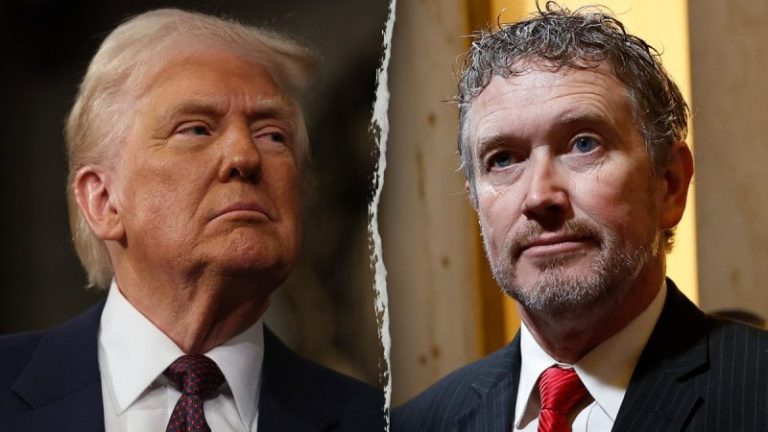
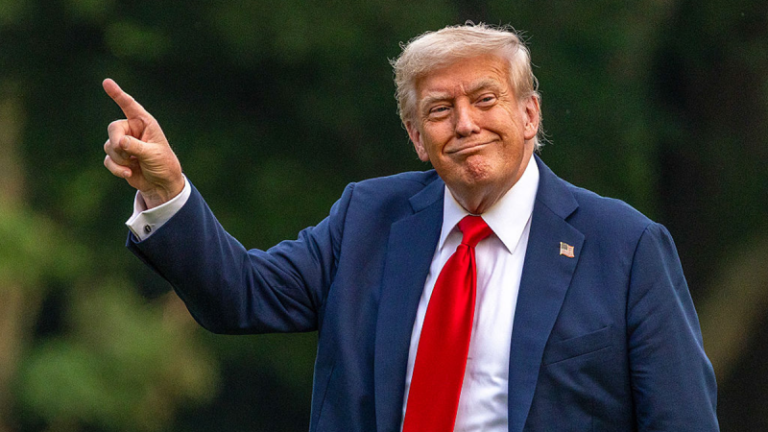
President Donald Trump slammed Rep. Thomas Massie, R-Ky., calling the lawmaker ‘the worst Republican Congressman’ in a Monday night Truth Social post, while noting that he is seeking a challenger he can support against the incumbent lawmaker.

‘Thomas Massie, the worst Republican Congressman, and an almost guaranteed NO VOTE each and every time, is an Embarrassment to Kentucky. He’s lazy, slow moving, and totally disingenuous – A real loser! Never has anything positive to add. Looking for someone good to run against this guy, someone I can Endorse and vigorously campaign for!’ Trump declared in the post.

The president’s post linked to a video by MAGA KY targeting the congressman for ouster. ‘Let’s fire Thomas Massie,’ the voiceover declares.

Fox News Digital reached out to Massie early on Tuesday morning, but did not receive a response by the time of publication.

Massie, a fiscal hawk, voted against passage of the Trump-backed One Big Beautiful Bill Act.

Trump has been a vociferous critic of the congressman.

In a Truth Social post last month, the president asserted that Massie ‘is not MAGA,’ and declared, ‘we will have a wonderful American Patriot running against him in the Republican Primary, and I’ll be out in Kentucky campaigning really hard.’

Billionaire business tycoon Elon Musk has indicated that he will donate to support Massie’s re-election bid.

This post appeared first on FOX NEWS


Scout Drilling Discovered the Extension of the High-grade Merten Vein Creating an Opportunity to Expand the Dpb Resource up to 1,200 Metres to the East


SCOUT PROGRAM HIGHLIGHTS:


  • Assay results from the Company’s reverse circulation Scout Drill Program (see March 31, 2025 news) returned significant gold & silver values in 7 drillholes that successfully expanded the footprint of mineralization up to 1,200 metres from the east of the existing DPB resource toward the historic Ohio mine;

  •  

  • These intercepts cover a new zone of silver and gold interpreted to be the outer ring structure of the Fraction caldera, and are not included in the 2024 resource;

  •  

  • A fully funded 15 drillhole program totalling up to 5,000 metres is underway; and

  •  

  • Results from this program will be incorporated into an updated Mineral Resource Estimate in Q1, 2026.

  •  

Vancouver, British Columbia–(Newsfile Corp. – July 21, 2025) – Blackrock Silver Corp. (TSXV: BRC,OTC:BKRRF) (OTCQX: BKRRF) (FSE: AHZ0) (‘Blackrock‘ or the ‘Company‘) announces commencement of a fully-funded expansion drill program (‘Expansion Program’) to follow up on the successful Scout Drilling campaign that expanded the DPB South zone 1,200 metres in an easterly direction on its 100% owned Tonopah West project located in Nye and Esmeralda Counties, Nevada, United States.


The Expansion Program will utilize one Reverse Circulation (RC) drill overseen by Legacy Drilling and two core drill rigs operated by Alloy Drilling to complete 2,450 metres (8,000 ft) of RC precollars and 2,550 metres (8,400 ft) of core tails across 15 drillholes targeting the Eastern Expansion zone between the DPB resource area and the eastern extent of the project. Drilling is anticipated to be completed in October with assay results expected through year end.


Andrew Pollard, Blackrock’s President and CEO, stated, ‘With drills now turning on this fully financed program, we’re stepping out across a 1.2-kilometre corridor with strong potential to significantly expand our mineral inventory at Tonopah West. Scout drilling confirmed the eastern extension of the high-grade Merten vein well beyond the current resource boundary, returning standout grades including 2,063 grams per tonne (g/t) silver equivalent (AgEq) (1,198 g/t silver (Ag) and 9.6 g/t gold (Au)) over 1.52 metres, and 952 g/t AgEq (10 g/t Ag and 10.5 g/t Au) over 4.57 metres. This newly defined zone, situated along the outer ring structure of the Fraction caldera, lies entirely outside our 2024 resource and presents an opportunity to quickly and meaningfully grow the scale of the project. Results from this program are expected to underpin a resource update in Q1 2026. The Company remains on track to deliver a separate resource update in Q3 2025 that will incorporate all results from the recently completed M&I conversion program.’


As announced on March 31, 2025, the Company discovered the 1,200 metre eastern extension zone representing the continuation of the outer-ring structure or Fraction caldera margin from DPB South to the historic Ohio mine. The Scout Drilling showed the Merten vein extends eastward and is arched and dips southward. This orientation suggests multiple ring structures associated with the Fraction caldera running across Tonopah West. An inner structure hosting the Victor and DPB North (Denver and Paymaster) resources, and an outer, more southern, ring structure hosting DPB South (Merten and Bermuda) and the NW Stepout resources (See Figure 1). The arching geometry of the Merten vein is similar to that described from the historic Ohio vein which was 15 metres thick when mined in the early 1900s1. Given the geometry and location, the Merten is potentially the extension of the Ohio vein. Table 1 summarizes the Scout Drilling assay results above 150 g/t AgEq.


Table 1: Scout Drilling Program results above 150 g/t AgEq


Drillhole ID Hole 
Type
Area From 
(m)
To
 (m)
Drill
 Interval
 (m)
Ag g/t Au g/t AgEq g/t
TW25-125 RC DPB East 220.98 222.50 1.52 76.41 2.010 257.3
TW25-127 RC DPB East 390.15 391.67 1.52 8.00 1.750 165.5
TW25-130 RC DPB East 188.98 190.50 1.52 290.00 3.300 587.0
TW25-132 RC DPB East 245.36 246.89 1.52 78.58 1.180 184.8
TW25-133 RC DPB East 280.42 283.47 3.05 129.08 1.575 270.8
TW25-133 RC DPB East 309.37 313.95 4.57 10.65 10.456 951.8
Including 309.37 310.90 1.52 15.73 21.467 1,948.0
TW25-128 RC Ohio 292.61 294.13 1.52 1,198.00 9.610 2,063.0
TW25-128 RC Ohio 297.18 298.71 1.52 219.00 1.720 373.8
TW25-131 RC Ohio 269.75 271.27 1.52 89.10 2.630 325.8
AgEq gpt=(Au gpt*90)+Ag gpt; True thickness unknown at this time; Cut-off grade is 150 gpt AgEq;
RC = Reverse Circulation Drilling


TW25-133 returned significant silver and gold with values starting at 309-metres grading 10.46 g/t gold and 10.6 g/t silver over 4.57 metres (952 g/t AgEq), and show mineralization extends along the Merten vein for 540 meters to the east-southeast of the main DPB South resource. With the inclusion of TW25-128 which returned 9.6 g/t gold and 1198 g/t silver over 1.5-metres (2,063 g/t AgEq), the zone could be up to 1,200-metres in length.


The mineralized zone traced by these assay results is new and not included in the 2024 resource. These results could have a substantive impact on the future resource estimate.


Figure 1: Tonopah West expansion potential


To view an enhanced version of this graphic, please visit:
https://images.newsfilecorp.com/files/676/259346_2ae57e3a248179b3_001full.jpg


Figure 2: Drillhole location map with cross section line at location 478540E


To view an enhanced version of this graphic, please visit:
https://images.newsfilecorp.com/files/676/259346_2ae57e3a248179b3_002full.jpg


Figure 3: Geologic cross section along 478540E


To view an enhanced version of this graphic, please visit:
https://images.newsfilecorp.com/files/676/259346_2ae57e3a248179b3_003full.jpg


Quality Assurance/ Quality Control


All sampling is conducted under the supervision of the Company’s project geologists, and a strict chain of custody from the project to the sample preparation facility is implemented and monitored. The RC samples are hauled from the project site to a secure and fenced facility in Tonopah, Nevada, where they are loaded on to American Assay Laboratory’s (AAL) flat-bed truck and delivered to AAL’s facility in Sparks, Nevada. A sample submittal sheet is delivered to AAL personnel who organize and process the sample intervals pursuant to the Company’s instructions.


The RC samples are lined out at the lab and logged into AAL’s system. The samples are dried, crushed to 85% passing 10 mesh (2mm) and a 250-gram sub-sample split is collected and pulverized to 200 mesh (74 micron) in a ring and puck pulverizer. Then the pulverized material is digested and analyzed for gold using fire assay fusion and an Induced Coupled Plasma (ICP) finish on a 30-gram assay split (FA-PB30-ICP). Silver is determined using five-acid digestion and ICP analysis (ICP-5AM48). Over limits for gold and silver are determined using a gravimetric finish (GRAVAU30 and GRAVAG30). Data verification of the assay and analytical results are completed to ensure accurate and verifiable results. Blackrock personnel insert a blind prep blank, lab blank or a certified reference material approximately every 15th to 20th sample.


Qualified Persons


Blackrock’s exploration activities at Tonopah West are conducted and supervised by Mr. William Howald, Executive Chairman of Blackrock. Mr. William Howald, AIPG Certified Professional Geologist #11041, is a Qualified Person as defined under National Instrument 43-101 – Standards of Disclosure for Mineral Projects. He has reviewed and approved the contents of this news release.


About Blackrock Silver Corp.


Backed by gold and silver ounces in the ground, Blackrock is a junior precious metal focused exploration and development company driven to add shareholder value. Anchored by a seasoned Board of Directors, the Company is focused on its 100% controlled Nevada portfolio of properties consisting of low-sulphidation, epithermal gold and silver mineralization located along the established Northern Nevada Rift in north-central Nevada and the Walker Lane trend in western Nevada.


Additional information on Blackrock Silver Corp. can be found on its website at www.blackrocksilver.com and by reviewing its profile on SEDAR at www.sedarplus.ca.


Cautionary Note Regarding Forward-Looking Statements and Information


This news release contains ‘forward-looking statements’ and ‘forward-looking information’ (collectively, ‘forward-looking statements‘) within the meaning of Canadian and United States securities legislation, including the United States Private Securities Litigation Reform Act of 1995. All statements, other than statements of historical fact, are forward-looking statements. Forward-looking statements in this news release relate to, among other things: the Company’s strategic plans; the timing of and successful completion of the Company’s Expansion Program at Tonopah West and the anticipated objectives and results therefrom; timing and estimates of mineral resource quantities and qualities; timing of updated resource estimates; estimates of mineralization from drilling; geological information projected from sampling results; and the potential quantities and grades of the target zones.


These forward-looking statements reflect the Company’s current views with respect to future events and are necessarily based upon a number of assumptions that, while considered reasonable by the Company, are inherently subject to significant operational, business, economic and regulatory uncertainties and contingencies. These assumptions include, among other things: conditions in general economic and financial markets; accuracy of assay results; geological interpretations from drilling results, timing and amount of capital expenditures; performance of available laboratory and other related services; future operating costs; the historical basis for current estimates of potential quantities and grades of target zones; the availability of skilled labour and no labour related disruptions at any of the Company’s operations; no unplanned delays or interruptions in scheduled activities; all necessary permits, licenses and regulatory approvals for operations are received in a timely manner; the ability to secure and maintain title and ownership to properties and the surface rights necessary for operations; and the Company’s ability to comply with environmental, health and safety laws. The foregoing list of assumptions is not exhaustive.


The Company cautions the reader that forward-looking statements involve known and unknown risks, uncertainties and other factors that may cause actual results and developments to differ materially from those expressed or implied by such forward-looking statements contained in this news release and the Company has made assumptions and estimates based on or related to many of these factors. Such factors include, without limitation: the timing and content of work programs; results of exploration activities and development of mineral properties; the interpretation and uncertainties of drilling results and other geological data; receipt, maintenance and security of permits and mineral property titles; environmental and other regulatory risks; project costs overruns or unanticipated costs and expenses; availability of funds; failure to delineate potential quantities and grades of the target zones based on historical data; general market and industry conditions; and those factors identified under the caption ‘Risks Factors’ in the Company’s most recent Annual Information Form.


Forward-looking statements are based on the expectations and opinions of the Company’s management on the date the statements are made. The assumptions used in the preparation of such statements, although considered reasonable at the time of preparation, may prove to be imprecise and, as such, readers are cautioned not to place undue reliance on these forward-looking statements, which speak only as of the date the statements were made. The Company undertakes no obligation to update or revise any forward-looking statements included in this news release if these beliefs, estimates and opinions or other circumstances should change, except as otherwise required by applicable law.


Neither the TSX Venture Exchange nor its Regulation Services Provider (as that term is defined in the policies of the TSX Venture Exchange) accepts responsibility for the adequacy or accuracy of this release.


For Further Information, Contact:


Andrew Pollard
President and Chief Executive Officer
(604) 817-6044
info@blackrocksilver.com 


1 All historic production information from Nevada Bureau of Mines & Geology, Bulletin 51


To view the source version of this press release, please visit https://www.newsfilecorp.com/release/259346


News Provided by Newsfile via QuoteMedia

This post appeared first on investingnews.com

Recent studies confirm what many clinicians, myself included, have quietly observed for years: Liberals — especially young liberals — are reporting worse mental health than their conservative peers. Statistician Nate Silver’s Substack recently spotlighted this disparity, and while many factors are at play, one explanation remains oddly absent from the national conversation: the psychological cost of cutting people off over politics. 

In my work as a clinical psychologist, I’ve watched this pattern unfold in real time. Some clients describe rising anxiety, loneliness and a growing sense of disconnection — but they don’t initially trace it back to politics. Only after reflection do they realize: they’ve quietly (or, in some cases quite loudly and proudly) distanced themselves from family, ended friendships, or withdrawn from romantic prospects — not because of mistreatment, but because of political disagreement. 

As I was researching for my upcoming book Can I Say That? Why Free Speech Matters and How to Use It Fearlessly, I noticed a striking pattern — what I now call ‘The Five Ds’: defriending, declining to date, disinviting, decreasing contact and outright dropping someone over political views. These behaviors are often framed as moral stands. But when practiced habitually, they can degrade the very relationships we rely on for emotional well-being. Research backs this up — liberals are statistically more likely than conservatives to engage in the Five Ds over political differences. 

The cost is real. The U.S. surgeon general has declared loneliness a public health crisis, linking it to depression, anxiety and even physical health problems. Social support is a powerful protective factor — it helps regulate emotions, buffer stress and reinforce a person’s sense of meaning and connection.  

As social creatures, humans rely on relationships to regulate stress. When those bonds are cut over politics — especially through the habitual use of the Five Ds — liberals may be isolating themselves in ways that make them more vulnerable to loneliness, anxiety and diminished emotional regulation. 

Some do this in the name of safety, seeing opposing views as threatening. But this is a dangerous shift. Conflating disagreement with danger undermines mental health and shrinks our capacity for dialogue. Even The New York Times recently published an essay titled ‘Is It Time to Stop Snubbing Your Right-Wing Family?’ in which former Obama speechwriter David Litt wrestles with whether to stay in contact with his conservative brother-in-law. To his credit, Litt expresses openness to reconnecting. But his tone is hesitant, not declarative.  

The piece reads less like someone awakening to the dangers of ideological cutoffs and more like someone reluctantly conceding a grudge. That this question — whether to maintain ties with family — was posed at all in a national newspaper shows how far the goalposts have shifted. Ostracizing loved ones over votes once seemed extreme. Now it’s mainstream content. 

This mindset of seeing opposing views as intolerable, or even threatening, isn’t just common — it’s increasingly celebrated, even when it harms us. The phrase ‘words are violence’ may feel righteous, but taken literally, it breeds anxiety and isolation. When we view differing viewpoints as threats, we push people away — not because we must, but because we’ve convinced ourselves we should. The result? We’re lonelier and more brittle than ever. 

None of this is to say that all relationships must be preserved. Boundaries are important. But ideological purging — done habitually and reflexively — is something different. It’s corrosive. Ironically, conservatives — often caricatured as emotionally rigid — may be faring better precisely because they are less likely to sever ties over politics. Their emotional well-being may benefit from tolerating disagreement and maintaining bonds across divides. 

As a psychologist, I don’t believe political ideology is destiny. But relational habits shape mental health. When we cut off those closest to us, even over serious disagreement, we deprive ourselves of a key buffer against emotional distress. What’s worse, we often do so under the illusion that the cutoff is virtuous. 

The solution is not to avoid politics. It’s to resist the reflex to cut and run. That begins with a simple mindset shift: disagreement isn’t danger, and tension doesn’t always mean toxicity. We can learn to talk through our differences — even when it’s hard. 

Mental health and free speech are more connected than people realize. If we want to feel less anxious, less isolated and more connected, we need to rethink the social costs of ideological purity. The Five Ds may feel righteous in the moment — but the long-term cost to our mental health may be far too high. 

This post appeared first on FOX NEWS

Sector Rotation Stalls, Tech Remains King

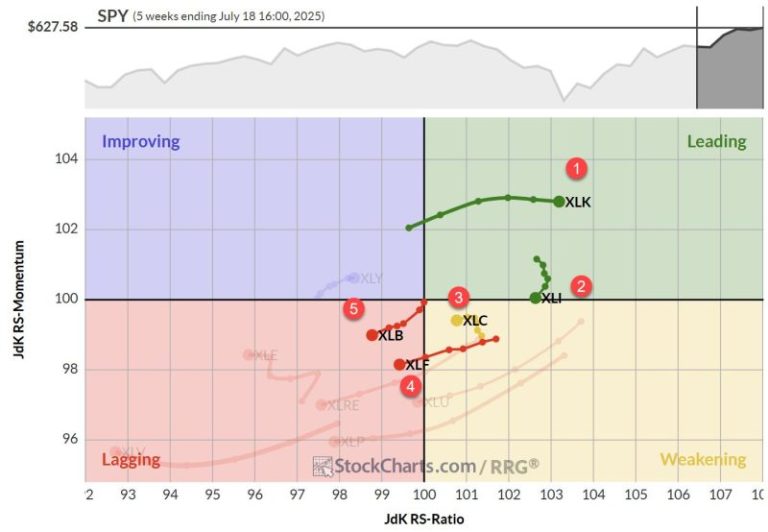
Despite a slight rise in the S&P 500 over the past week, the sector rotation landscape is presenting an intriguing picture. For the first time in recent memory, we’re seeing absolutely no changes in the composition of the sector ranking — not just in the top five, but across the board. Will this stability kick off a return to a period of more significant trends in relative strength and a return to outperformance for the portfolio?

  1. (1) Technology – (XLK)
  2. (2) Industrials – (XLI)
  3. (3) Communication Services – (XLC)
  4. (4) Financials – (XLF)
  5. (5) Materials – (XLB)
  6. (6) Utilities – (XLU)
  7. (7) Consumer Discretionary – (XLY)
  8. (8) Consumer Staples – (XLP)
  9. (9) Real-Estate – (XLRE)
  10. (10) Energy – (XLE)
  11. (11) Healthcare – (XLV)

Technology

The tech sector continues to flex its muscles, moving up on the price ratio scale while maintaining a stable momentum around 103. This sustained strength is a clear indication that tech remains the sector to beat in the current market environment.

On the daily RRG, we’re seeing a nice rotation backup for tech while inside the weakening quadrant, a sign of strength that confirms the move on the weekly RRG. The raw RS line for tech is climbing almost straight up, reflecting very strong RRG lines. There might be a slight loss of momentum, but make no mistake, tech is still the strongest player in the game.

Industrials

Industrials is currently rotating out of the leading quadrant and sits on the verge of moving into weakening. However, it’s crucial to note that it still holds the second-highest rank based on the RS ratio. This positioning suggests that the odds for a rotation back up towards the leading quadrant are still in play.

The daily RRG shows industrials confirming its strength with a move further into the leading quadrant, moving up on the RS ratio scale while keeping stable momentum.

After breaking out of overhead resistance, the price chart continues higher, and a new higher low is visible on the relative strength line. This keeps the RS ratio line at elevated levels, though the RS momentum line is still moving lower just above 100. If this RS line can maintain a series of higher highs or higher lows, I expect the RS momentum line to bottom out soon and follow the RS ratio higher.

Communication Services

The communication services sector is positioned inside the weakening quadrant on the weekly RRG but has hooked back to the left and is now even lower on the RS ratio scale. It’s moving towards the lagging corner, which is a concerning trend for its top 5 position.

On the daily RRG, communication services have moved into the lagging quadrant. It has started to slow down on the negative momentum, but we need a rotation back up on this daily RRG into the improving quadrant and back to leading to have that weekly tail curl back up to its leading quadrant as well.

The price chart shows the sector holding up after breaking higher, with a pullback now finding support at the level of old resistance, respecting the rule that old resistance is expected to work as support going forward. The problem child here is the raw RS line, which has fallen below its rising support line. This is taking its toll on the RRG lines, with both RS ratio and RS momentum rolling over and starting to move down.

Financials

Financials are inside the lagging quadrant on the weekly RRG, moving at a negative heading. This means that a significant amount of strength is needed from the daily tail to keep this sector within the top five.

On the price chart, financials are playing around with overhead resistance around 52, with a small consolidation area and a pennant-like formation suggesting more upside potential on the price chart.

However, this is not confirmed on the relative strength chart, where the RS line has broken its rising trend and is moving lower.

Materials

Materials are also inside the lagging quadrant on the weekly RRG and traveling a negative heading, like financials. Here, also, strength is needed from the daily teams to keep the sector inside the top five.

Materials are holding up on the price chart after a break that could be described as a head-and-shoulders reversal pattern. The relative strength line remains contained within the boundaries of its falling channel, but hugging the falling resistance line.

We need a break higher to turn that trend around. Only an upward breakout of that relative downtrend will turn the RRG lines around and provide a lifeline for materials to maintain its position inside the top five.

Portfolio Performance

The portfolio continues to lag the S&P 500, currently sitting around 8% behind. It seems to be stabilizing for now, but it’s not exactly what we want, of course. A drawdown of around 8-10% is not unprecedented, based on historical backtests; however, it’s somewhat disappointing that it occurs right when we begin operating in a semi-live environment.

That said, the fact that we’re now stable with no changes after a period of significant volatility over recent months could be a sign that we’re ready to enter a new period with stable relative trends that can bring the portfolio back to outperformance.

#StayAlert and have a great week. –Julius


Investors honed in on tech stocks again as Q2 earnings season kicked off on Monday (July 14).

Some experts believe the rallying market is showing signs of frothiness.

Apollo Global Management (NYSE:APO) Chief Economist Torsten Sløk highlighted concerns about overvaluation mid-week, comparing the current tech craze to the dotcom bubble of the 1990s.

“The difference between the IT bubble in the 1990s and the AI bubble today is that the top 10 companies in the S&P 500 today are more overvalued than they were in the 1990s,” he wrote in a note on Wednesday (July 16).

Similar thoughts were expressed by Moor Insights & Strategy founder Patrick Moorhead last week.

However, Sanctuary Wealth’s chief investment strategist, Mary Ann Bartels, told CNBC’s Power Lunch team that valuations are justified by the technology that’s being unleashed. Major financial firms like Citigroup (NYSE:C), Bank of America (NYSE:BAC) and Morgan Stanley (NYSE:MS) also said they are increasingly exploring digital asset offerings, signaling traditional finance’s growing involvement in crypto and the broader adoption of innovative technologies.

These announcements came alongside positive earnings reports and mixed inflation data that helped lift markets to renewed highs, culminating in global manufacturer 3M (NYSE:MMM) raising its full-year profit forecast on Friday.

The company is projecting a smaller tariff-related hit to its 2025 earnings.

1. TSCM, ASML release latest quarterly results

This week saw semiconductor giants Taiwan Semiconductor Manufacturing Company (NYSE:TSM) and ASML Holding (NASDAQ:ASML) report their latest quarterly earnings.

The companies received vastly different reactions from the market. Contract chipmaker TSMC saw its valuation soar on Thursday (July 17) morning after it posted record profits that exceeded expectations and raised its full-year revenue forecast by 30 percent due to demand for artificial intelligence (AI) chips.

While the chipmaker addressed minor concerns about US tariffs and inventory, AI-driven growth dominated investor sentiment. Shares of TSMC opened 4.51 percent higher from Wednesday’s (July 16) closing price.

Positive sentiment spilled over into other chip stocks, with NVIDIA (NASDAQ:NVDA) and Broadcom (NASDAQ:AVGO) also seeing gains. TSMC maintained its position to close up 5.87 percent for the week.

TSMC and ASML performance, July 15 to 18, 2025.

Chart via Google Finance.

Conversely, ASML, a lithography systems monopolist, saw its share price plunge more than 8 percent ahead of Wednesday’s open, despite solid Q2 numbers, due to a cautious outlook for late 2025 and 2026.

In a statement, the company said it cannot confirm growth in 2026 due to current macroeconomic and geopolitical developments. ASML closed the week 7.39 percent below its Monday opening price.

The divergence highlights their supply chain positions: TSMC directly benefits from the immediate AI boom, while the prospects for ASML, a step removed, remain uncertain.

2. US announces major investments in Pennsylvania

US President Donald Trump joined Pennsylvania Senator Dave McCormick (R) at the inaugural Energy and Innovation Summit at Carnegie Mellon University in Pittsburgh on Tuesday (July 15).

He announced an investment amounting to over US$90 billion in AI and energy infrastructure in the state.

The announcement from Trump covers several multibillion-dollar spending plans from the likes of Google (NASDAQ:GOOGL), Blackstone (NYSE:BX), Anthropic, GE Verona (NYSE:GEV) and others for power generation and grid modernization. It also includes natural gas production to help power data centers.

Additionally, the preview mentions AI training programs and apprenticeships for businesses.

“These commitments will create tens of thousands of construction jobs and thousands of permanent jobs, signaling Pennsylvania’s readiness to power the AI and energy revolution, further strengthening America’s resilience and independence,” McCormick’s office wrote in a press release.

Separately, Google and Brookfield Asset Management (NYSE:BAM) announced on Tuesday that they have entered into a framework agreement to provide up to 3,000 MW megawatts of domestically produced hydropower from Brookfield’s Holtwood and Safe Harbor hydroelectric facilities in Pennsylvania. The agreement allows for future expansion, with an initial focus on the mid-Atlantic and mid-continent electricity markets.

3. NVIDIA resumes chip sales to China

On Monday, NVIDIA CEO Jensen Huang said his company will resume H20 GPUs sales to China after productive meetings with government officials from the US and Beijing earlier this month.

In a press release, the company said it has been assured by the US government that licenses will be granted.

NVIDIA performance, July 15 to 18, 2025.

Chart via Google Finance.

Shares of the chipmaker opened 4.27 percent higher on Tuesday and closed the week up 4.25 percent.

4. Apple to invest in US rare earths miner

On Tuesday, Apple (NASDAQ:AAPL) said it will invest US$500 million in rare earths miner MP Materials (NYSE:MP) as part of an effort to strengthen the American rare earths supply chain.

MP is the only fully integrated rare earths miner operating in the US. Last week, the US Department of Defense said it would buy a direct equity stake in the company, becoming its largest shareholder.

The company’s Apple collaboration also includes plans to build out MP’s neodymium magnet manufacturing lines at its Texas factory specifically for Apple products. This expansion is slated to boost production and create jobs in advanced manufacturing and research and development, helping to meet global demand.

Apple and MP will also collaborate to establish a rare earths recycling line in Mountain Pass, California, and will develop new magnet materials and processing technologies to improve magnet performance.

“American innovation drives everything we do at Apple, and we’re proud to deepen our investment in the U.S. economy,” said Tim Cook, Apple’s CEO.

5. OpenAI and AWS launch new AI agent features

Open AI has launched a powerful new Agent mode in ChatGPT for pro, plus and team users.

It can autonomously complete tasks across the web, and also includes productivity tools.

The new feature enables AI agents that can help automate workflow by creating and editing spreadsheets and presentations, generating reports, analyzing data and managing calendars on users’ desktops; agents can also browse websites and fill out forms with user approval. The company has plans to add e-commerce checkouts.

Aside from that, the Financial Times reported this week that OpenAI plans to take a cut of online shopping purchases made within its chatbot as a way to generate revenue from people using AI for shopping inspiration.

Amazon (NASDAQ:AMZN) also made major announcements around AI agents this week. At its Amazon Web Services (AWS) Summit in New York, the company launched Bedrock AgentCore, a suite of enterprise-grade services that will allow developers to build, deploy and run scalable agents. AWS also introduced AI Agents & Tools, a new category on AWS Marketplace. It features pre-built agents from partners like Anthropic, IBM (NYSE:IBM) and Stripe.

Securities Disclosure: I, Meagen Seatter, hold no direct investment interest in any company mentioned in this article.

This post appeared first on investingnews.com

Democrats have railed against potential Medicaid cuts since President Donald Trump won the 2024 presidential election. Now that his ‘big, beautiful bill’ has passed through Congress, they are making Medicaid a top talking point ahead of competitive midterm elections expected in 2026. 

Republicans, meanwhile, are doubling down on Medicaid reform included in Trump’s megabill, which also includes sweeping legislation on taxes, immigration and energy. 

‘My policy is if you’re an able-bodied worker, get a damn job,’ Rep. Nancy Mace, R-S.C., told Fox News Digital. ‘If you want government benefits, go to work and get a job.’

A provision in the megabill requires able-bodied, childless adults between the ages of 18 and 64 to work at least 80 hours a month to be eligible to receive Medicaid benefits. Individuals can also meet the requirement by ​​participating in community service, going to school or engaging in a work program.

Fox News Digital asked lawmakers on Capitol Hill if taxpayers should have to pay for Medicaid bills for able-bodied workers who are under 65 and unemployed. 

Sen. Angus King, an independent from Maine, said in both Arkansas and Georgia, where work requirements have already been imposed, it ended up costing taxpayers more money to administer the work requirements. 

‘We’re talking about a very small population, and in the two cases where they tried it, it ended up, number one, disqualifying people who met all the requirements but gave up on the paperwork. These aren’t people that are used to filling out a lot of paperwork every month. And it also cost the state a lot to administer,’ King said. 

The New England Journal of Medicine found that Arkansas’ Medicaid work requirement from 2018 to 2019 ‘found no evidence of increased employment … and a significant loss of Medicaid coverage among low-income adults.’

Similarly, the Georgia Budget & Policy Institute (GBPI) reported that 80% of the $58 million spent in the first year of Georgia’s Pathways to Coverage program went toward administrative costs. 

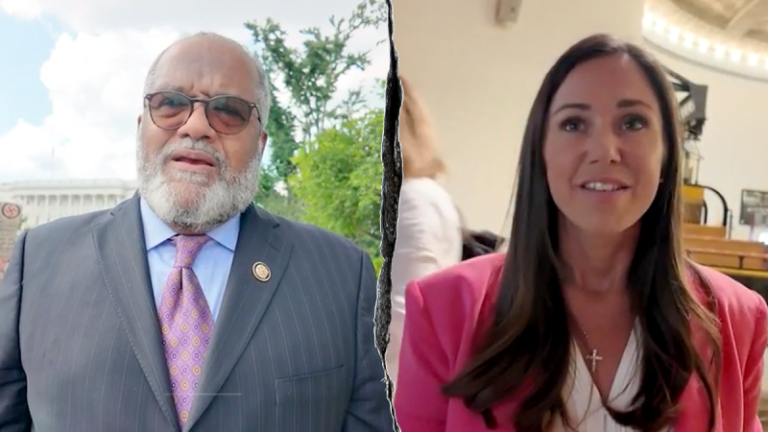
But Sen. Katie Britt, R-Ala., emphasized that Republicans ‘want these programs to be around for the people who need them.’ She said Medicaid reform is about ‘strengthening and preserving these programs at the rate that they’re growing.’

‘These programs were intended to be safety nets, not hammocks that people stay in, and the success of these programs should be measured by how many people we get off of them,’ Britt said. 

Sen. Bill Cassidy, R-La., agreed, telling Fox News Digital, ‘What you don’t want is for somebody to become dependent. I’d tell people: safety nets should bounce you to your feet. They shouldn’t be like flypaper in which you stick and can never get off.’

‘We’re not saying, ‘Hey, we’re not throwing you out.’ All right, but you gotta go get a job. You either get a job, or actually you can even volunteer, all right? And that will satisfy the requirements for work,’ Rep. Carlos Gimenez, R-Fla., explained. 

But Democrats who spoke to Fox News Digital continued to push back against the work requirements included in the ‘big, beautiful bill.’ 

‘I think people [who] are able to work, trust me, they’d rather work than to get the piddling dollars that they get from Medicaid. It’s insulting to suggest that a person would rather sit at home rather than work and get this meager amount of money. All of this has just been totally expanded to fit a narrative that allows them to cut into those people who really deserve Medicaid,’ Rep. Troy Carter, D-La., said. 

And Rep. Lateefah Simon, D-Calif., said, ‘We need to be able to have an infrastructure in this country that supports the elderly and the sick and the widows and the child. This bill, it violates all those basic principles.’

Fox News’ Peter Pinedo contributed to this report. 

This post appeared first on FOX NEWS

Elon Musk’s health tech company Neuralink labeled itself a “small disadvantaged business” in a federal filing with the U.S. Small Business Administration, shortly before a financing round valued the company at $9 billion.

Neuralink is developing a brain-computer interface (BCI) system, with an initial aim to help people with severe paralysis regain some independence. BCI technology broadly can translate a person’s brain signals into commands that allow them to manipulate external technologies just by thinking.

Neuralink’s filing, dated April 24, would have reached the SBA at a time when Musk was leading the Trump administration’s Department of Government Efficiency. At DOGE, Musk worked to slash the size of federal agencies.

MuskWatch first reported on the details of Neuralink’s April filing.

According to the SBA’s website, a designation of SDB means a company is at least 51% owned and controlled by one or more “disadvantaged” persons who must be “socially disadvantaged and economically disadvantaged.” An SDB designation can also help a business “gain preferential access to federal procurement opportunities,” the SBA website says.

The Department of Justice has previously fined companies for making false claims about their SDB status.

Musk, the world’s wealthiest person, is CEO of Tesla and SpaceX, in addition to his other businesses like artificial intelligence startup xAI and tunneling venture The Boring Company. In 2022, Musk led the $44 billion purchase of Twitter, which he later named X before merging it with xAI.

Jared Birchall, a Neuralink executive, was listed as the contact person on the filing from April. Birchall, who also manages Musk’s money as head of his family office, didn’t immediately respond to a request for comment.

Neuralink, which incorporated in Nevada, closed a $650 million funding round in early June at a $9 billion valuation. ARK Invest, Peter Thiel’s Founders Fund, Sequoia Capital and Thrive Capital were among the investors. Neuralink said the fresh capital would help the company bring its technology to more patients and develop new devices that “deepen the connection between biological and artificial intelligence.”

Under Musk’s leadership at DOGE, the initiative took aim at government agencies that emphasized diversity, equity and inclusion (DEI). In February, for example, DOGE and Musk boasted of nixing hundreds of millions of dollars worth of funding for the Department of Education that would have gone towards DEI-related training grants.

This post appeared first on NBC NEWS

In this video, Mary Ellen spotlights the areas driving market momentum following Taiwan Semiconductor’s record-breaking earnings report. She analyzes continued strength in semiconductors, utilities, industrials, and AI-driven sectors, plus highlights new leadership in robotics and innovation-focused ETFs like ARK. From there, Mary Ellen breaks down weakness in health care and housing stocks, shows how to refine trade entries using hourly charts, and compares today’s rally to past market surges. Watch as she explores setups in silver and examines individual stocks like Nvidia, BlackRock, and State Street.

This video originally premiered on July 18, 2025. You can watch it on our dedicated page for Mary Ellen’s videos.

New videos from Mary Ellen premiere weekly on Fridays. You can view all previously recorded episodes at this link.

If you’re looking for stocks to invest in, be sure to check out the MEM Edge Report! This report gives you detailed information on the top sectors, industries and stocks so you can make informed investment decisions.

Statistics Canada released June’s consumer price index (CPI) data on Tuesday (July 15). The report showed that year-over-year inflation gained momentum during the month, rising to 1.9 percent from the 1.7 percent recorded in May.

The increase was attributed in part to the 13.4 percent year-over-year decline in gas prices seen in June, as it was a smaller drop than May’s 15.5 percent decrease caused by the removal of the consumer carbon tax.

Other factors contributing to the rise included a 2.7 percent increase in durable goods, with passenger vehicles posting the largest gains at 4.1 percent. Grocery prices also increased 2.8 percent, although they eased off from a 3.3 percent increase in May.

While economists had predicted a larger 2 percent rise in CPI, the figures still make it unlikely that the Bank of Canada will cut its benchmark rate at its next meeting on July 30. Canada’s central bank has cut its interest rates seven times since June 2024, lowering it from 5 percent to 2.75 percent in March.

South of the border, the US Bureau of Labor Statistics also released its June CPI data the same day, reporting year-over-year growth of 2.7 percent, sharply up from the 2.4 percent gain posted in May. On a monthly basis, CPI rose 0.3 percent, also higher than May’s 0.1 percent.

Analysts have attributed the gain to an increase in prices resulting from US President Donald Trump’s tariff policy, as vendors restocked shelves with inventories purchased after tariffs were applied.

Goods and services increased across the board, except for new and used vehicles, which declined by 0.3 percent and 0.7 percent on a monthly basis. Energy rose 0.9 percent, including a 1 percent increase in gasoline prices, a reversal from May’s energy and gas price decreases of 1 percent and 2.6 percent respectively.

The data will likely play a role in what the US Federal Reserve decides during its next rate meeting on July 29 and 30. Economist consensus is that the central bank will continue to hold at the current 4.25 to 4.5 percent range.

Markets and commodities react

In Canada, equity markets were mostly positive this week. The S&P/TSX Composite Index (INDEXTSI:OSPTX) gained 1 percent to close at 27,314.01 on Friday (July 18) and set a new all-time high during the week. The S&P/TSX Venture Composite Index (INDEXTSI:JX) fared even better this week, gaining 2.53 percent to 797.75. However, the CSE Composite Index (CSE:CSECOMP) fell 2.6 percent to 126.84.

As for US equity markets, the S&P 500 (INDEXSP:INX) gained 0.66 percent to close Friday at 6,296.78 and the Nasdaq 100 (INDEXNASDAQ:NDX) climbed 1.35 percent to 23,065.47, with both also setting new record highs during the week. On the other hand, the Dow Jones Industrial Average (INDEXDJX:.DJI) fell 0.1 percent to 44,342.20.

In precious metals, the gold price rose 0.78 percent over the week to US$3,349.66 by Friday at 5 p.m. EDT. Meanwhile, the silver price continued to trade near 11-year highs, climbing 3.13 percent on the week to US$38.15 per ounce.

In base metals, copper ended the week were it started out, but was still trading near all time highs at US$5.60 per pound. The S&P GSCI (INDEXSP:SPGSCI) posted a 1.26 percent gain to finish the week at 551.61.

Top Canadian mining stocks this week

How did mining stocks perform against this backdrop?

Take a look at this week’s five best-performing Canadian mining stocks below.

Stock data for this article was retrieved at 4 p.m. EDT on Friday using TradingView’s stock screener. Only companies trading on the TSX, TSXV and CSE with market capitalizations greater than C$10 million are included. Mineral companies within the non-energy minerals, energy minerals, process industry and producer manufacturing sectors were considered.

1. Altima Energy (TSXV:ARH)

Weekly gain: 97.96 percent
Market cap: C$43.99 million
Share price: C$0.97

Altima Energy is a light oil and natural gas exploration and development company with operations in Alberta, Canada.

Its primary asset is the Richdale property in Central Alberta. The property consists of five producing light oil wells and sits on 5,920 acres of long-term reserves. The property hosts combined proved and probable reserves of just under 2 billion barrels of oil equivalent, with a pre-tax net present value of C$25.8 million.

The company also owns two wells at its Twinning light oil site near Nisku, seven producing wells at its Red Earth property in Northern Alberta and two multi-zone wells at its Chambers Ferrier liquid gas production property.

Shares in Altima started to gain after it released news on July 8 that it had completed a private placement for proceeds of up to C$5.5 million. Under the terms of the deal, the company will issue 20 million units at C$0.275 per unit, which each include one common share and one warrant allowing the holder to purchase a common share for C$0.40.

The company said that part of the proceeds would be used to complete field upgrades at its Red Earth and Richdale properties.

2. Kirkland Lake Discoveries (TSXV:KLDC)

Weekly gain: 81.82 percent
Market cap: C$11.26 million
Share price: C$0.10

Kirkland Lake Discoveries is a gold and copper exploration company focused on projects in its district-scale land package located in the Kirkland Lake area of Ontario, Canada.

Its holdings span an area of approximately 38,000 hectares in the Abitibi Greenstone Belt that has been host to past-producing gold and copper mines. It is broadly divided into KL West and KL East, which contain the Goodfish-Kirana and Lucky Strike gold projects, respectively, among others.

On April 29, the company announced it entered into a mining option agreement with Val-d’Or Mining (TSXV:VZZ) to acquire a 100 percent interest in the Winnie Lake and Amikougami properties, as well as mining claim purchase agreements with two vendors to acquire further claims around the Winnie Lake Pluton. The properties expand KL West’s southern portion.

Following the agreement, the company conducted grab samples at the Winnie Lake property and reported the results on July 9. One grab sample collected near the historic Winnie Shaft zone yielded grades of 1.6 grams per metric ton (g/t) gold, 28.2 g/t silver, 5.7 percent copper, 5.3 percent zinc and 1.65 g/t tellurium.

The company also discovered a quartz-veined intrusive outcrop 150 meters west of the shaft during field prospecting, with samples displaying characteristics of magmatic-hydrothermal copper-gold systems, including visible malachite and strong potassic alteration.

Additionally, Kirkland Lake reported it has received full drill permits for Winnie Lake and plans to initiate activities at the site this summer, focusing on the newly defined zones.

3. Happy Creek Minerals (TSXV:HPY)

Weekly gain: 70 percent
Market cap: C$10.33 million
Share price: C$0.085

Happy Creek Minerals is an exploration company focused on advancing a portfolio of assets in British Columbia, Canada.

Its primary focus has been on its Fox tungsten property located in the South Caribou region of the province. It comprises 135.9 square kilometers of mineral tenure and hosts deposits containing tungsten, molybdenum, zinc, indium, gold and silver. In total, 21,125 meters of exploration drilling have been carried out at the site, primarily in shallow holes, for resource definition.

Happy Creek’s share price began climbing Tuesday after the company announced a non-brokered private placement to raise gross proceeds of up to C$3.25 million in flow-through units at C$0.07 per share and non-flow-through units at C$0.05 per share.

The following day, Happy Creek upsized the offering to C$3.75 million.

The company plans to use the gross proceeds for drilling, exploration and development at Fox, as well as other exploration work in the Caribou.

4. Camino Minerals (TSXV:COR)

Weekly gain: 56.52 percent
Market cap: C$13.5 million
Share price: C$0.36

Camino Minerals is a copper exploration and development company with a portfolio of projects in Chile and Peru.

Earlier in 2025, the company shifted its focus to its newly acquired, construction-ready Puquois copper project in Chile.

In October 2024, Camino entered a definitive agreement to create a 50/50 joint venture with Nittetsu Mining (TSE:1515) that would acquire Cuprum Resources, which owns the Puquios project. The partners completed the acquisition April 17 and said they would turn their attention to project financing.

On March 17, Camino filed a prefeasibility study for the project. The study results demonstrate a post-tax net present value of US$118 million, with an internal rate of return of 23.4 percent and a payback period of 3.1 years at a fixed copper price of US$4.28. It also outlines all-in sustaining costs of US$2.00 per pound over a 14.2 year mine life.

In addition to the economic details, the included mineral resource estimate shows a measured and indicated resource of 149,000 metric tons of copper from 32.16 million metric tons of ore grading 0.46 percent copper.

Camino also owns the Los Chapitos project, which has been a long-time focus of the company. The project covers approximately 22,000 hectares near the coastal town of Chala, Peru, and hosts near-surface mineralization.

Camino has been conducting exploration efforts at Los Chapitos throughout the first half of 2025. On Wednesday, it reported trench results from the newly identified Mirador zone, including 1.07 percent copper over 90 meters, with a four-meter section containing 3.05 percent copper.

5. Solstice Gold (TSXV:SGC)

Weekly gain: 56.25 percent
Market cap: C$29.38 million
Share price: C$0.125

Solstice Gold is an exploration company focused on its flagship Strathy gold project in Ontario, which it acquired in June 2024.

The project consists of 45 claims covering an area of 45 square kilometers in the Temagami Greenstone belt. Historical documents report six gold showings in the central portion of the project areas, with documented mineralization at the Leckie prospect.

In its latest project update on July 2, Solstice announced it had wrapped up its spring drill program, which focused on four target areas. In total, the company completed 3,125 meters of drilling across 14 holes, and results are expected in July.

The company also reported that it had entered into an agreement to acquire 17 additional claims, which would increase the project area by 50 percent. It added that targets identified from its IP program may extend along strike into these claims.

FAQs for Canadian mining stocks

What is the difference between the TSX and TSXV?

The TSX, or Toronto Stock Exchange, is used by senior companies with larger market caps, and the TSXV, or TSX Venture Exchange, is used by smaller-cap companies. Companies listed on the TSXV can graduate to the senior exchange.

How many mining companies are listed on the TSX and TSXV?

As of February 2025, there were 1,572 companies listed on the TSXV, 905 of which were mining companies. Comparatively, the TSX was home to 1,859 companies, with 181 of those being mining companies.

Together the TSX and TSXV host around 40 percent of the world’s public mining companies.

How much does it cost to list on the TSXV?

There are a variety of different fees that companies must pay to list on the TSXV, and according to the exchange, they can vary based on the transaction’s nature and complexity. The listing fee alone will most likely cost between C$10,000 to C$70,000. Accounting and auditing fees could rack up between C$25,000 and C$100,000, while legal fees are expected to be over C$75,000 and an underwriters’ commission may hit up to 12 percent.

The exchange lists a handful of other fees and expenses companies can expect, including but not limited to security commission and transfer agency fees, investor relations costs and director and officer liability insurance.

These are all just for the initial listing, of course. There are ongoing expenses once companies are trading, such as sustaining fees and additional listing fees, plus the costs associated with filing regular reports.

How do you trade on the TSXV?

Investors can trade on the TSXV the way they would trade stocks on any exchange. This means they can use a stock broker or an individual investment account to buy and sell shares of TSXV-listed companies during the exchange’s trading hours.

Article by Dean Belder; FAQs by Lauren Kelly.

Securities Disclosure: I, Dean Belder, hold no direct investment interest in any company mentioned in this article.

Securities Disclosure: I, Lauren Kelly, hold no direct investment interest in any company mentioned in this article.

This post appeared first on investingnews.com

President Trump has been in office for six months, delivering on campaign promises, securing his ‘big beautiful bill’ by his self-imposed deadline and taking decisive action on the world stage.

The president was sworn into office Jan. 20, and the Trump administration has operated at warp speed since Day One.

Key tenets of Trump’s first 100 days included imposing harsh tariffs on Chinese imports, starting and continuing peace negotiations between Russia and Ukraine, and cracking down on border security amid a mass deportation initiative. 

The next chapter of the second Trump administration began, with the House of Representatives, as promised, passing Trump’s ‘One Big Beautiful Bill,’ before Memorial Day, sending it to the Senate for weeks of negotiations.

The Senate made its changes, approved the legislation and kicked it back to the House just in time for the lower chamber to pass the bill before Trump’s self-imposed Fourth of July deadline. 

The president welcomed House and Senate Republican leadership to the White House July 4 for a signing ceremony on his landmark legislation, which included key provisions that would permanently establish individual and business tax breaks included in his 2017 Tax Cuts and Jobs Act, and incorporate new tax deductions to cut duties on tips and overtime pay. 

Trump’s second administration has also focused on the new Department of Government Efficiency (DOGE), which was run by Elon Musk. DOGE proposed cuts to programs that the Trump administration chalked up to wasteful and excessive government spending.

Congressional lawmakers prepped a rescissions package — a bill to codify those DOGE cuts into law. Congress passed that package by its deadline. 

Trump signed the package Friday, which blocks $8 billion in funding to the U.S. Agency for International Development (USAID) and $1 billion to the Corporation for Public Broadcasting for the remainder of the fiscal year. The dollars had been allocated by Congress for the duration of fiscal year 2025.

As for Musk, his ‘special government employee’ window expired, and he returned to the private sector. Shortly after, Musk started a short-lived feud with the president, who chose not to prolong the tensions. Trump only hit his former ally briefly, and carried on with business as usual, leaving Musk to a lonely rant on social media.

Meanwhile, on the world stage, the president ordered strikes on Iran’s nuclear facilities. 

Trump’s historic precision strikes on Iran’s nuclear sites in June hit their targets and ‘destroyed’ and ‘badly damaged’ the facilities’ critical infrastructure — an assessment agreed upon by Iran’s Foreign Ministry, Israel and the United States. 

But Iranian Supreme Leader Ayatollah Ali Khamenei recently issued his latest threat against the U.S. and ‘its dog on a leash, the Zionist regime (Israel),’ saying that Iran’s attack on U.S. Al Udeid Air Base in Qatar was just the beginning of what Tehran could throw at Washington. He warned that ‘an even bigger blow could be inflicted on the U.S. and others.’

Iran has until the end of August to agree to a nuclear deal with the United States and its allies, Fox News has learned. 

Secretary of State Marco Rubio and the foreign ministers of France, Germany and the United Kingdom set the de facto deadline, according to three sources with knowledge of a call Wednesday among the officials. 

If Iran fails to agree to a deal, it would trigger the ‘snapback’ mechanism that automatically reimposes all sanctions previously imposed by the United Nations Security Council. 

The sanctions were lifted under the 2015 Iran deal. 

In his first six months as president, Trump also signed a sweeping order blocking travel to the U.S. from nearly 20 countries identified as high-risk for terrorism, visa abuse and failure to share security information.

The travel restrictions — announced under executive order 14161 — apply to nationals from 12 countries, including Afghanistan, Iran, Somalia, Libya and Yemen, all deemed ‘very high risk’ due to terrorist activity, weak or hostile governments, and high visa overstay rates. 

Domestically, the president has focused efforts on securing the border, with border crossings at a record low.

U.S. Customs and Border Protection reported the lowest number of border crossings in recorded history in June. Nationwide, there were 25,228 CBP encounters, the lowest monthly number the agency has recorded, including a ‘historical low’ of 8,024 apprehensions. Encounters include legal ports of entry, whereas apprehensions are arrests of those coming into the United States illegally. 

As for tariffs, the Trump administration had leveled tariffs as high as 145% on Chinese goods following the president’s reciprocal tariff plans in April, when China retaliated against the U.S. with tariffs of its own. China and the U.S. reached a preliminary trade agreement in May, which Trump said China violated in a Truth Social post at the end of May.  

An agreement was reached between the U.S. and China in June, which includes China supplying rare earth materials to the U.S., and that Trump will ‘work closely’ with Chinese President Xi Jinping ‘to open up China to American Trade.’

‘Full magnets, and any necessary rare earths, will be supplied, up front, by China,’ Trump said in June. ‘Likewise, we will provide to China what was agreed to, including Chinese students using our colleges and universities (which has always been good with me!). We are getting a total of 55% tariffs, China is getting 10%. Relationship is excellent!’ 

The president also celebrated the U.S. Army’s 250th birthday with a massive parade in Washington June 14 — kicking off a yearlong extravaganza leading up to America’s 250th birthday.

Outside the White House, Trump administration agencies have delivered on promises. 

The Department of Education unveiled plans to scale down its workforce, terminating nearly 1,400 Education Department employees. The Supreme Court upheld Trump’s move.

The Justice Department released the audio of former President Joe Biden’s interview with former Special Counsel Robert Hur. Hur was investigating Biden for alleged improper retention of classified records.

Congressional lawmakers had been demanding the audio of that interview be released since 2024, after the transcript of Biden’s interview was littered with mistakes and revealed significant memory lapses.

The Department of Justice also has started an investigation into Biden’s pardons his final days in office to determine whether they are valid. Fox News Digital has learned the pardons, in his final weeks in office, were signed by autopen, with just one signed by hand — the pardon for his son Hunter. 

Trump has also directed Attorney General Pam Bondi to make public any relevant grand jury testimony relating to the Jeffrey Epstein case. 

Over at the FBI, CIA and the Office of the Director of National Intelligence, intelligence officials and political appointees are in the process of declassifying all records related to the Trump–Russia investigation, also known as ‘Crossfire Hurricane.’

Fox News Digital also exclusively reported that former FBI Director James Comey and former CIA Director John Brennan are under criminal investigation relating to their actions tied to the Trump–Russia probe.

Fox News’ Emma Colton, Diana Stancy, Elizabeth Elkind and Louis Casiano contributed to this report. 

This post appeared first on FOX NEWS