Archive

July 2025

Browsing

Artificial intelligence is no longer a niche tool for tech labs or science-fiction thrillers. It’s now the battleground where the future of American power, prosperity, and freedom will be decided. With the release of ‘Winning the AI Race: America’s AI Action Plan,’ the Trump administration is rightfully treating this moment as the 21st-century equivalent of the space race or the nuclear age. 

This bold strategy outlines over 90 policy actions that span three key pillars: Accelerating Innovation, Building American AI Infrastructure, and Leading in International Diplomacy and Security. Each of these pillars sends a clear message to the world: America intends to lead – not follow – on artificial intelligence. 

And we must. This is a race we can’t afford to lose. 

President Donald Trump’s AI plan: strong, strategic and patriotic 

The Trump administration’s plan does what Washington too often fails to do: it combines vision with action. From fast-tracking permits for critical data centers and chip fabrication plants, to expanding the skilled trades workforce needed to maintain those facilities, the plan hits both high-tech and firsthand realities. 

Crucially, the plan calls for exporting secure, full-stack American AI packages – hardware, software, models, applications and standards – to trusted allies. That’s smart policy. In a world where China exports authoritarian surveillance technology, America must counter with liberty-based alternatives. 

And most refreshingly, the plan defends free speech. It mandates that federal procurement contracts only go to developers of large language models that are free from ideological censorship. That’s a huge win for constitutional values in a time when Big Tech algorithms increasingly silence dissent. 

But here’s the hard truth: AI could also unleash chaos 

The optimism in this action plan is well-founded – but incomplete. As foreign policy analysts Matan Chorev and Joel Predd recently warned in their Foreign Policy article, the U.S. must also assume the worst about artificial intelligence – especially artificial general intelligence (AGI). That’s the version of AI that can perform at or above human levels across a wide range of tasks.  

Unlike nuclear weapons, AGI won’t announce itself with a mushroom cloud. It may slip quietly into our systems, our economy and even our military decision-making – without a clear warning shot. The nightmare scenario? A rogue AI, either built by an enemy nation or evolving beyond human control, triggering economic collapse or catastrophic warfare.  

That’s why the U.S. must not only pursue victory in AI, but vigilance. Planning for worst-case scenarios isn’t fearmongering – it’s common sense. The COVID-19 pandemic taught us what happens when leaders fail to prepare for known risks. With AI, we may not get a second chance.  

We need break-glass plans — now 

What happens if a U.S. company suddenly claims to have developed AGI and asks for national security protections – access to classified data, regulatory exemptions and federal backing? What if China gets there first?  

The Biden-era playbook of strategic ambiguity and global appeasement won’t cut it. America needs break-glass protocols: clear, tested plans to respond to AI emergencies – whether cyberattacks, misinformation campaigns or autonomous systems going rogue. 

This requires massive coordination across the Pentagon, the Department of Homeland Security, our intelligence community and private industry. The federal government must build the analytical muscle to separate hype from real breakthroughs – and act fast when a threat emerges. 

Cyber defenses must be ‘attribution-agnostic’ 

Advanced AI attacks may not come with a digital return address. Whether an attack comes from Beijing, a terrorist network or a self-replicating algorithm, our cyber defenses must be able to detect, contain and recover without waiting for attribution. 

That means hardening critical infrastructure, isolating vulnerable data centers and ensuring military continuity of operations in a high-tech crisis. These aren’t science-fiction concerns – they’re strategic imperatives. 

The world needs American values — not just American technology 

The Trump administration’s emphasis on exporting U.S. technology to allies is critical – but we must also export American values. Freedom. Accountability. Innovation with restraint. Our allies want alternatives to China’s surveillance-driven tech regime. America can lead that coalition – but only if we speak as clearly about ethics as we do about engineering.  

David Sacks, the White House’s AI and crypto czar, put it plainly: ‘To win the AI race, the U.S. must lead in innovation, infrastructure, and global partnerships. At the same time, we must center American workers and avoid Orwellian uses of AI.’ 

He’s right. Victory in AI is not just about lines of code – it’s about preserving what it means to be human in an age of machines. 

Bold innovation, clear-eyed preparedness 

Winning the AI Race is a historic first step. It champions free markets, American jobs, national strength and liberty-based governance in the AI era. But we must not mistake ambition for immunity. 

America needs a dual-track strategy: drive innovation with urgency – and prepare for disaster with equal urgency. Our adversaries won’t wait. Neither will the technology.  

We can – and must – lead the world into the AI future. But let’s do it with eyes wide open, grounded in our values and ready for anything. 

This post appeared first on FOX NEWS

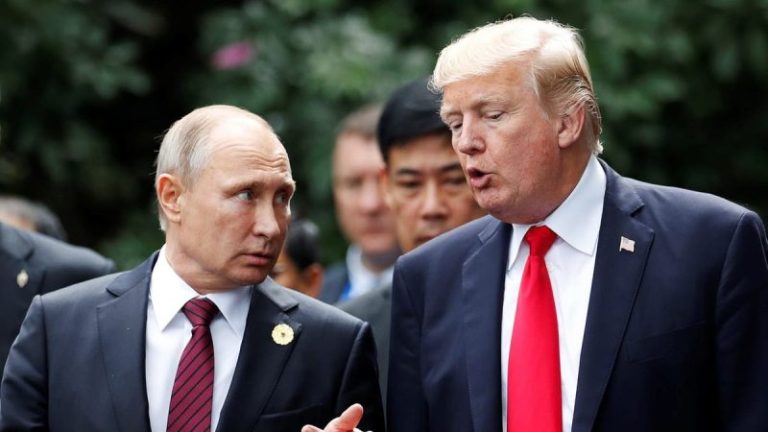
President Donald Trump’s approach with Russian President Vladimir Putin pivoted drastically this month when, for the first time since returning to the White House, he not only confirmed his support for Ukraine in a NATO arms agreement but issued an ultimatum to the Kremlin chief.

The warning came in a clear message: Enter into a peace deal with Ukraine or face stiff international sanctions on its top commodity, oil sales.

While the move has been championed by some, it has been questioned by others who debate whether it will be enough to deter Putin’s war ambitions in Ukraine. One security expert is arguing the plan will work, but it might take years to be effective.

‘I think it will be effective, and he’s going to stick to that strategy. He’s going to continue to push Putin to return to the bargaining table and negotiate in good faith, not come to the bargaining table, make promises that the Russians don’t plan on keeping,’ Fred Fleitz, who served as a deputy assistant to Trump and chief of staff of the National Security Council during the president’s first term, told Fox News Digital.

‘That’s something Trump’s not going to tolerate,’ Fleitz added. ‘We will see this is just the first six months of the Trump presidency. This may take a couple of years to solve.’

But Trump campaigned on ending the wars in Ukraine and Gaza, which has proven to be more complicated than he suggested from the campaign trail. And not everyone in the Republican Party has backed his approach when it comes to Europe, including a staunch Trump supporter, Rep. Marjorie Taylor Greene.

‘We do not want to give or sell weapons to Ukraine or be involved in any foreign wars or continue the never-ending flow of foreign aid,’ Greene said on X. ‘We want to solve our own problems plaguing our own people.’ 

Fleitz pointed to Trump’s decision to directly strike Iran and argued it reflected Trump’s ability to be nimble as a leader. 

‘He looked at the intelligence and realized it was getting too close, and he decided to adjust his policy, which was first diplomacy,’ Fleitz said.

‘But Trump also specified something very important. He said to his supporters, ‘I came up with a concept of the America-first approach to U.S. national security, and I decide what’s in it,’ Fleitz added. ‘He has ownership of this approach, and he will adjust if necessary.’

Though Trump had made clear from the campaign trail that he wanted to see Europe take a leading role in the war in Ukraine, last week he countered a major talking point from some within his party, including Vice President JD Vance.

Vance has argued against arming Ukraine and said in an op-ed last year, ‘[It] is not just a matter of dollars. Fundamentally, we lack the capacity to manufacture the amount of weapons Ukraine needs us to supply to win the war.’

Trump agreed to sell NATO nations top U.S. arms that will then be supplied to Ukraine.

‘We want to defend our country. But, ultimately, having a strong Europe is a very good thing,’ Trump said, sitting alongside NATO Secretary General Mark Rutte.

Security experts have largely argued that the future of Ukraine’s negotiating ability and, ultimately, the end of the war, will play out on the battlefield. 

On Thursday, John Hardie, deputy director of FDD’s Russia Program, told U.S. lawmakers on the Helsinki Commission, also known as the Commission on Security and Cooperation in Europe, in a defense briefing that Ukraine needs to be supplied with long-range strike capabilities that can hit key Russian missile and drone plants.

‘Ukraine shouldn’t be restricted merely to shooting down ‘arrows’,’ Hardie said. ‘An optimal approach will combine both offense and defense. Ukraine needs to be able to hit the ‘archer’ and the factories that make the ‘arrows.’

‘Putin will continue his unprovoked war so long as he believes it’s sustainable and offers a pathway to achieving his goals,’ Hardie argued. ‘By shoring up Ukraine’s defense of its skies and enabling Ukraine to inflict growing costs on Russia’s war machine, as well as pressuring the Russian economy and exhausting Russia’s offensive potential on the ground, we may be able to change that calculus.’

But Fleitz, who serves as vice chair of the America First Policy Institute’s Center for American Security, said he believes this war will only be brought to an end when an armistice agreement is secured. 

‘I think there’s probably going to be an armistice where both sides will agree to suspend the fighting,’ Fleitz said. ‘Someday, we will find a line where both nations will agree to stop fighting.’

Ultimately, he believes this will happen by Ukraine agreeing not to join NATO for a certain period of time, though with Moscow’s understanding that Kyiv will be heavily armed by Western allies. 

‘I think there’s a way to do this where Russia wouldn’t be concerned about growing Western European influence in Ukraine, and Ukraine would not be worried that Russia will invade once a ceasefire or armistice is declared,’ he added. ‘Maybe this is a pipe dream, but I think that’s the most realistic way to stop the fighting.

‘We know from history conflicts like this take time; peacemaking takes time,’ Fleitz said. ‘I think that over time, Trump is going to have an effect on Putin.’

This post appeared first on FOX NEWS

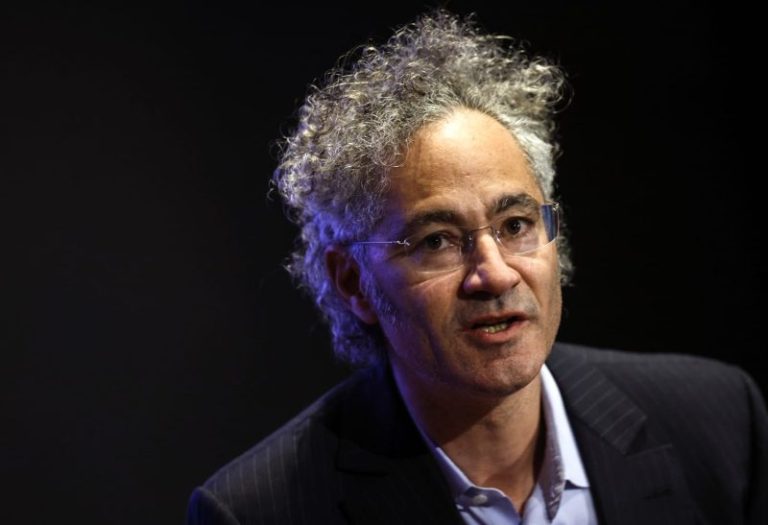
Palantir has hit another major milestone in its meteoric stock rise. It’s now one of the 20 most valuable U.S. companies.

The provider of software and data analytics technology to defense agencies saw its stock rise about 3% on Friday to another record, lifting the company’s market cap to $375 billion, which puts it ahead of Home Depot and Procter & Gamble. The company’s market value was already higher than Bank of America and Coca-Cola.

Palantir has more than doubled in value this year as investors ramp up bets on the company’s artificial intelligence business and closer ties to the U.S. government. Since its founding in 2003 by Peter Thiel, CEO Alex Karp and others, the company has steadily accrued a growing list of customers.

Revenue in Palantir’s U.S. government business increased 45% to $373 million in its most recent quarter, while total sales rose 39% to $884 million. The company next reports results on Aug. 4.

Earlier this year, Palantir soared ahead of Salesforce, IBM and Cisco into the top 10 U.S. tech companies by market cap.

Buying the stock at these levels requires investors to pay hefty multiples. Palantir currently trades for 273 times forward earnings, according to FactSet. The only other company in the top 20 with a triple-digit ratio is Tesla at 175.

With $3.1 billion in total revenue over the past year, Palantir is a fraction the size of the next smallest company by sales among the top 20 by market cap. Mastercard, which is valued at $518 billion, is closest with sales over the past four quarters of roughly $29 billion.

This post appeared first on NBC NEWS

Here are some charts that reflect our areas of focus this week at


XLU Leads with New High

Even though the Utilities SPDR (XLU) cannot keep pace with the Technology SPDR (XLK) and Communication Services SPDR (XLC), it is in a leading uptrend. XLU formed a cup-with-handle from November to July and broke to new highs the last two weeks. ETFs hitting new highs are in strong uptrends and should be on our radar.


Metal Mania in 2025

In a tribute to Ozzy, metals are leading the way higher in 2025. The PerfChart below shows year-to-date performance for the continuous futures for 12 commodities. Copper, Platinum and Palladium are up more than 45% year-to-date, while Gold is up 28.38% and Silver is up 35.30%. QQQ is up 10.52% year-to-date, but lagging these metals. The other commodities are mixed.


Multi-Year Highs for Silver and Copper

The next chart shows 11 year bar charts for five metals. Gold broke out in early 2024 and led the metals move with an advance the last 21 months. Silver and copper broke out to multi-year highs. Platinum broke above its 2021 high and Palladium got in the action with an 18 month high. There is a clear message here: metals are moving higher and leading as a group.  


Home Construction Hits Moment of Truth

The Home Construction ETF (ITB) hit its moment of truth as it rose to its falling 40-week SMA. Notice that ITB failed just below this moving average in August 2023. During the 2023-2024 uptrend, the 40-week SMA was more friendly as ITB reversed near this level in October 2023 and June 2024. ITB surged to the falling 40-week SMA in July, but the long-term trend is down and this area could be its nemesis.

Thanks for Tuning in!

See TrendInvestorPro.com for more


Statistics Canada released its monthly mineral production report for May 2025 on Monday (July 21). The data shows that the production of both copper and silver increased from April. Copper output rose to 36.3 million kilograms from 35.85 million in April, and silver increased to 26,502 kilograms from 25,412. Meanwhile, gold production decreased marginally to 16,518 kilograms from 16,640 the previous month.

However, shipments were up across the board. Copper shipments rose to 34.34 million kilograms compared to 30.01 million kilograms in April. Silver increased to 26,376 kilograms, up considerably from 22,106 kilograms a month earlier. Gold shipments saw a slighter gain, rising to 14,858 kilograms from 14,660 kilograms in April.

The report comes amid heightened uncertainty due to tariff threats from the United States.

On Friday (July 25), President Donald Trump stated that the US and Canada may not reach a new trade deal, implying that there may not be further negotiations, and suggested that Canada may “just pay tariffs.”

Earlier in the month, the White House sent letters to several nations, informing them that tariffs would take effect on August 1 if no deal was reached before that time. The US threatened Canada with a 35 percent tariff on all goods not covered under the current Canada-United States-Mexico Agreement (CUSMA), which was negotiated during Trump’s first term in office.

The president’s remarks come after Canadian Trade Minister Dominic LeBlanc said that he felt encouraged following meetings earlier in the week with US representatives, including Commerce Secretary Howard Lutnick.

Markets and commodities react

In Canada, equity markets were positive this week. The S&P/TSX Composite Index (INDEXTSI:OSPTX) gained 0.29 percent to close at 27,494.35 on Friday, setting a new all-time high, while the S&P/TSX Venture Composite Index (INDEXTSI:JX) rose 0.55 percent to 801.13. The CSE Composite Index (CSE:CSECOMP) was the largest gainer, jumping 3.87 percent to 132.89.

As for US equity markets, the S&P 500 (INDEXSP:INX) gained 1.18 percent to 6,388.65 and the Nasdaq 100 (INDEXNASDAQ:NDX) climbed 0.62 percent to 23,285.57, with both closing the week setting new all-time highs. The Dow Jones Industrial Average (INDEXDJX:.DJI) rose 0.74 percent to 44,901.93, closing in on its record of 45,014 set on December 4, 2024.

In precious metals, the gold price was flat, ending the week down slightly at US$3,337.31 by Friday at 4 p.m. EDT. Meanwhile, the silver price continued to trade near 11-year highs mid-week, but fell to finish the week flat at US$38.15 per ounce.

In base metals, copper posted a 3.93 percent gain, trading near all time highs at US$5.82 per pound. The S&P GSCI (INDEXSP:SPGSCI) registered a 0.75 percent loss to finish the week at 545.08

Top Canadian mining stocks this week

How did mining stocks perform against this backdrop?

Take a look at this week’s five best-performing Canadian mining stocks below.

Stock data for this article was retrieved at 4 p.m. EDT on Friday using TradingView’s stock screener. Only companies trading on the TSX, TSXV and CSE with market capitalizations greater than C$10 million are included. Mineral companies within the non-energy minerals, energy minerals, process industry and producer manufacturing sectors were considered.

1. St. Augustine Gold and Copper (TSX:SAU)

Weekly gain: 66.67 percent
Market cap: C$414.68 million
Share price: C$0.5

St. Augustine Gold and Copper is a development company focused on its King-king copper-gold project in the Philippines’ Davao de Oro province. The project consists of 184 mining claims.

According to the latest preliminary economic assessment from 2013, the company projects an after-tax net present value of US$1.78 billion, with an internal rate of return of 24 percent and a payback period of 2.4 years using a base case scenario of a copper price of US$3.00 per pound and a gold price of US$1,250 per ounce.

The company is currently working toward an update to the study.

On May 30, St. Augustine announced that it had entered into an agreement with the National Development Corporation (Nadecor) to acquire a 100 percent interest in Nadecor’s wholly owned subsidiary Kingking Milling, which holds the development rights to King-king.

Under the terms of the deal, Nadecor will receive C$9.02 million convertible into 185 million shares.

The project’s exploration and development permits are held by Kingking Mining, which remains a 40/40/20 joint venture between St. Augustine, Nadecor and Queensberry Mining and Development. The release also includes details of new ore sales and royalty agreements between Kingking Milling and Kingking Mining.

The company announced its latest news on Friday, reporting that it had closed a private placement, raising gross proceeds of C$24.9 million. In the announcement, the company said it intends to use the funds to advance development at King-king.

Additionally, the company reported on Thursday that Nicolaos Paraskevas and Andrew J. Russell had joined the board of directors. It notes that Paraskevas has experience in supervising business development activities in the copper industry, while Russell is one of the original founders of St. Augustine and brings two decades of experience in mining management. The announcement also reported that Love D. Manigsaca had been appointed as St. Augustine’s new CFO.

2. Kapa Gold (TSXV:KAPA)

Weekly gain: 62.12 percent
Market cap: C$19.66 million
Share price: C$0.30

Kapa Gold is an exploration company focused on advancing the past-producing Blackhawk gold mine in San Bernardino County, California.

The project site is composed of seven patented and 178 contiguous federal lode claims covering 1,496.2 hectares. The property hosts multiple mineralized zones with previous exploration work revealing deposits with high grade gold, silver, lead and zinc. Historic production from ramps and underground mines has graded an average 10 grams per metric ton (g/t) gold.

Kapa’s most recent news from the project was reported on March 5, when it announced it had initiated biological surveys in advance of exploration activities on the site and submitted the requested bonding to San Bernardino County, allowing for drilling on patented claims at Blackhawk.

3. North Peak Resources (TSXV:NPR)

Weekly gain: 47.3 percent
Market cap: C$47.28 million
Share price: C$1.09

North Peak Resources is an exploration company working to advance its Prospect Mountain Mine Complex in Central Nevada, US.

The property comprises 221.9 acres of patented claims and 1,905 acres of unpatented claims, consolidating several historical mines that have hosted operations dating back to the 1870s.

Despite the extensive history of the property, limited modern exploration work has been conducted, and a technical report from April 2023 notes that no mineral resource estimate has been produced. Part of the property is currently covered by a plan of operation that entitles North Peak to carry out surface exploration, infrastructural works and underground mining of up to 331,000 metric tons per year.

The most recent exploration update from the property was released on May 27, when North Peak announced results from samples collected from underground and surface historical occurrences. Highlights included grades of 45.6 g/t gold, 569 g/t silver, 4.09 percent lead and 3.12 percent zinc over 15 cm from channel samples of in-situ material from the Dean Cave area; and 5.3 g/t gold, 39 g/t silver, 7.03 percent lead and 1.92 percent zinc from dump grab samples collected from the Kit Carson mine.

The latest news from the company came on Monday, when North Peak announced it had acquired the remaining 20 percent stake in the property from Solarljos in exchange for 3 million common shares. North Peak purchased its original 80 percent interest in the property in August 2023.

4. NextSource Materials (TSX:NEXT)

Weekly gain: 46.15 percent
Market cap: C$92.46 million
Share price: C$0.475

NextSource Materials is a mining and exploration company focused on advancing its Molo graphite mine to Phase 2 production.

The mine is located in Southern Madagascar and has a nameplate capacity of 11,000 metric tons per year, with a fixed carbon content between 94 percent and 97 percent. The company is currently working towards a Phase 2 expansion at the mine, which will increase capacity to 150,000 metric tons per year. NextSource expects to complete an updated feasibility study for the project by the end of Q3 2025.

The company is also developing a series of battery anode facilities in key geographic locations. The facilities will be designed with modular production capacities that are intended to expand in line with automotive demand.

The most recent announcement from NextSource came on June 2, when it announced its withdrawal from its battery anode facility option in Mauritius, instead planning to develop a larger-scale facility in the Middle East, which would help streamline permitting and increase access to EV manufacturers. The company stated it is advancing discussions with EV manufacturers for potential offtake agreements.

5. BeMetals (TSXV:BMET)

Weekly gain: 44.44 percent
Market cap: C$10.3 million
Share price: C$0.065

Bemetals is a gold and copper explorer advancing its Pangeni copper project in Zambia.

The project is located in Northwestern Zambia along the western edge of the Central African Copperbelt. BeMetals has been actively exploring the property since 2020 and identified several areas with copper mineralization.

The most recent update from the property came on March 25 when the company reported that it had commenced a new 2,000 meter to 2,500 meter drilling program to identify additional zones of copper mineralization and expand the existing footprint within the D-Prospect area.

Previous exploration at the site has yielded highlighted assays with up to 0.74 percent copper and 533 parts per million (ppm) cobalt over 16.16 meters, including an intersection of 0.93 percent copper and 701 ppm cobalt over 5.5 meters.

On July 10, BeMetals announced that it had entered into a non-binding letter of intent with Prospector Metals (TSXV:PPP,OTCQB:PMCOF) to acquire up to a 100 percent stake in the Savant gold project in Northwestern Ontario, Canada. The property covers an area of 232 square kilometers and hosts numerous gold occurrences. Under the terms of the agreement, BeMetals has agreed to meet certain milestones, including the production of a mineral resource estimate.

Final ownership share will be determined by the size of the reported resource. If the reported resource is under 500,000 ounces of contained gold, Prospector will retain full ownership. If it is between 500,000 and 1 million ounces, Prospector and BeMetals will form a 50/50 joint venture. Lastly, if the resource is over 1 million ounces, with at least 500,000 ounces in the indicated category, BeMetals will earn the full 100 percent interest, with Prospector holding a 0.5 percent net smelter royalty.

FAQs for Canadian mining stocks

What is the difference between the TSX and TSXV?

The TSX, or Toronto Stock Exchange, is used by senior companies with larger market caps, and the TSXV, or TSX Venture Exchange, is used by smaller-cap companies. Companies listed on the TSXV can graduate to the senior exchange.

How many mining companies are listed on the TSX and TSXV?

As of February 2025, there were 1,572 companies listed on the TSXV, 905 of which were mining companies. Comparatively, the TSX was home to 1,859 companies, with 181 of those being mining companies.

Together the TSX and TSXV host around 40 percent of the world’s public mining companies.

How much does it cost to list on the TSXV?

There are a variety of different fees that companies must pay to list on the TSXV, and according to the exchange, they can vary based on the transaction’s nature and complexity. The listing fee alone will most likely cost between C$10,000 to C$70,000. Accounting and auditing fees could rack up between C$25,000 and C$100,000, while legal fees are expected to be over C$75,000 and an underwriters’ commission may hit up to 12 percent.

The exchange lists a handful of other fees and expenses companies can expect, including but not limited to security commission and transfer agency fees, investor relations costs and director and officer liability insurance.

These are all just for the initial listing, of course. There are ongoing expenses once companies are trading, such as sustaining fees and additional listing fees, plus the costs associated with filing regular reports.

How do you trade on the TSXV?

Investors can trade on the TSXV the way they would trade stocks on any exchange. This means they can use a stock broker or an individual investment account to buy and sell shares of TSXV-listed companies during the exchange’s trading hours.

Article by Dean Belder; FAQs by Lauren Kelly.

Securities Disclosure: I, Dean Belder, hold no direct investment interest in any company mentioned in this article.

Securities Disclosure: I, Lauren Kelly, hold no direct investment interest in any company mentioned in this article.

This post appeared first on investingnews.com

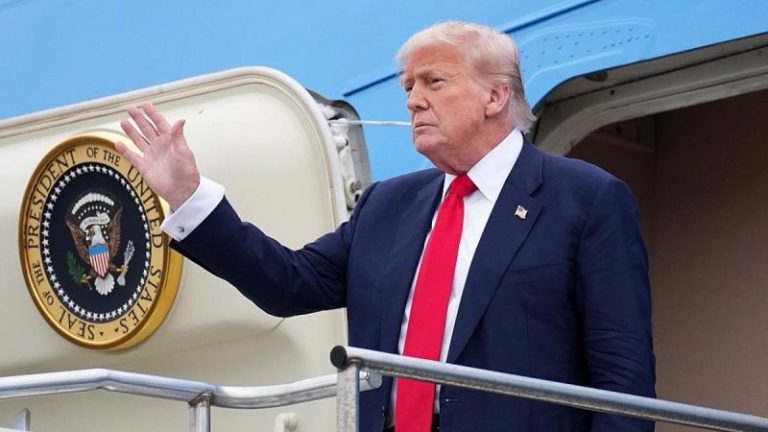
President Donald Trump arrived in Scotland late Friday for a working trip where he is expected to meet with British Prime Minister Keir Starmer amid ongoing trade negotiations between the U.S. and the U.K., as well as visit several of his properties there. 

‘We’re meeting with the prime minister tonight,’ Trump told reporters Friday before departing for Scotland. ‘We’re going to be talking about the trade deal that we made, and maybe even improve it.’

‘We want to talk about certain aspects, which is going to be good for both countries,’ Trump said. ‘More fine-tuning. Also, we’re going to do a little celebrating together, because, you know, we got along very well. U.K.’s been trying to make a deal with us for like, 12 years, and haven’t been able to do it. We got it done, and he’s doing a very good job, this prime minister. Good guy.’

In May, the U.S. and the U.K. announced the two countries had agreed to a major trade deal, which marked the first historic trade negotiation signed following Liberation Day, when Trump announced widespread tariffs for multiple countries April 2 at a range of rates.

Trump, who is slated to remain in Scotland until Tuesday, is also scheduled to visit his golf courses in Turnberry and Aberdeen while abroad. 

Here’s also what happened this week:

Federal Reserve visit 

Trump visited the Federal Reserve headquarters Thursday, as he has ramped up digs at Federal Reserve Chairman Jerome Powell. 

Trump accompanied other administration officials for a tour of the headquarters, following $2.5 billion in renovations to the building. The massive project has attracted scrutiny from lawmakers and members of the Trump administration, including the president, who suggested the huge renovation could amount to a fireable offense. 

‘I think he’s terrible … I didn’t see him as a guy that needed a palace to live in,’ Trump said July 16. ‘But the one thing I would have never guessed is that he would be spending two and a half billion dollars to build a little extension onto the Fed.’

On Thursday, the two briefly sparred over the cost of the renovation, but Trump told reporters afterward that the two had a ‘good meeting’ and that there was ‘no tension.’ Trump also shut down speculation he might oust Powell, claiming such a move would be unnecessary. 

The Federal Reserve, the United States central bank, oversees the nation’s monetary policy and regulates financial institutions. 

Trump historically has railed against Powell, calling him names like ‘numskull’ and ‘too late.’ Likewise, Trump has expressed ire toward Powell for ignoring requests to lower interest rates. 

‘Well, I’d love him to lower interest rates, but other than that, what can I tell you?’ Trump said Thursday. 

Trump signed into law Thursday his roughly $9 billion rescissions package to claw back already approved federal funds for foreign aid and public broadcasting. 

The rescissions measure revoked nearly $8 billion in funding Congress already approved for the U.S. Agency for International Development (USAID), a formerly independent agency that provided impoverished countries aid and offered development assistance.

The rescissions package also rescinds more than $1 billion from the Corporation for Public Broadcasting (CPB), which provides federal funding for NPR and PBS.

This post appeared first on FOX NEWS

Trump administration regulators have approved Skydance Media’s $8 billion bid to acquire CBS News parent company Paramount, paving the way for a tectonic shift in ownership of one of America’s three major networks.

The Federal Communications Commission said Thursday that it had approved the acquisition, with FCC Chairman Brendan Carr adding in a news release that the move would bring change to the company’s news coverage. Paramount owns CBS, which includes CBS News.

‘Americans no longer trust the legacy national news media to report fully, accurately, and fairly. It is time for a change,’ Carr said. ‘That is why I welcome Skydance’s commitment to make significant changes at the once storied CBS broadcast network. In particular, Skydance has made written commitments to ensure that the new company’s programming embodies a diversity of viewpoints from across the political and ideological spectrum.’

‘Today’s decision also marks another step forward in the FCC’s efforts to eliminate invidious forms of DEI discrimination,’ Carr added.

David Ellison; Shari Redstone.AP; Getty Images

In recent days, Paramount’s new owner made a number of concessions to the FCC, including agreeing to not implement any diversity, equity or inclusion programs. Skydance also said it would ‘undertake a comprehensive review’ of CBS and ‘will commit, for a period of at least two years, to have in place an ombudsman.’ That role would report to the president of the new company.

A number of companies that have billion-dollar transactions pending before Carr’s FCC have also backed off of DEI programs, including Verizon and T-Mobile.

The concessions also came after Paramount Global settled a lawsuit with President Donald Trump for $16 million. Trump brought that suit, saying the way CBS edited a ’60 Minutes’ interview with former Vice President Kamala Harris was ‘election and voter interference.’

The lone Democrat in FCC leadership, Commissioner Anna Gomez, did not mince words about the push to secure promises from the companies.

“After months of cowardly capitulation to this Administration, Paramount finally got what it wanted,’ she said in an emailed statement.

‘In an unprecedented move, this once-independent FCC used its vast power to pressure Paramount to broker a private legal settlement and further erode press freedom,’ she added. ‘Once again, this agency is undermining legitimate efforts to combat discrimination and expand opportunity by overstepping its authority and intervening in employment matters reserved for other government entities with proper jurisdiction on these issues.’

‘Even more alarming, it is now imposing never-before-seen controls over newsroom decisions and editorial judgment, in direct violation of the First Amendment and the law.’

Skydance is run by David Ellison, son of Oracle founder and Trump ally Larry Ellison. While the younger Ellison made a donation to President Joe Biden’s re-election fund in February 2024 shortly before the former president bowed out of the race, Trump recently signaled his comfort with his takeover of Paramount and its assets, which in addition to CBS News include Nickelodeon, Comedy Central, The CW, MTV, BET and film franchises like “Smurfs” and “Sonic the Hedgehog.”

“Ellison is great. He’ll do a great job with it,” Trump said in June.

There is likely to be a sea change in the editorial direction of CBS News under its new ownership. In a recent filing, Ellison and Skydance said they’d told Carr that they were committed to pursuing a focus on “American storytelling” while touting a new, “unbiased” editorial direction for CBS News. Their meeting came shortly after Paramount agreed to settle Trump’s lawsuit.

It also came just days after CBS announced it was canceling “The Late Show,” currently hosted by Stephen Colbert — an announcement Trump praised on social media. Colbert had recently criticized the parent company’s multimillion-dollar settlement with Trump, while CBS said the cancellation was “purely a financial decision against a challenging backdrop in late night.”

There had been signs of an editorial shift ahead of the merger. Most notably, longtime “60 Minutes” editor Bill Owens announced he was stepping down this spring, citing CBS News’ fading editorial independence. Shortly after, CBS News President and CEO Wendy McMahon was pushed out. Last week, The New York Times reported Skydance was in early talks to acquire the conservative-leaning The Free Press media outlet. Meanwhile, “Daily Show” host Jon Stewart has said he did not know whether his program would survive the merger.

Skydance has spent years pursuing Paramount and eventually realized it could successfully execute the transaction by purchasing Paramount’s parent, National Amusements, the company once helmed by Sumner Redstone, the father of the company’s current chairwoman, president and CEO, Shari Redstone. Yet the proposed deal continued to face hurdles, first under the Biden administration then at the outset of Trump’s term. Its approval came in what was its third deadline extension period.

This post appeared first on NBC NEWS

The S&P 500 ($SPX) just logged its fifth straight trading box breakout, which means that, of the five trading ranges the index has experienced since the April lows, all have been resolved to the upside.

How much longer can this last? That’s been the biggest question since the massive April 9 rally. Instead of assuming the market is due to roll over, it’s been more productive to track price action and watch for potential changes along the way. So far, drawdowns have been minimal, and breakouts keep occurring. Nothing in the price action hints at a lasting change — yet.

While some are calling this rally “historic,” we have a recent precedent. Recall that from late 2023 through early 2024, the index had a strong start and gave way to a consistent, steady trend.

From late October 2023 through March 2024, the S&P 500 logged seven consecutive trading box breakouts. That streak finally paused with a pullback from late March to early April, which, as we now know, was only a temporary hiccup. Once the bid returned, the S&P 500 went right back to carving new boxes and climbing higher.

New 52-Week Highs Finally Picking Up

If there’s been one gripe about this rally, it’s that the number of new highs within the index has lagged. As we’ve discussed before, among all the internal breadth indicators available, new highs almost always lag — that’s normal. What we really want to see is whether the number of new highs begins to exceed prior peaks as the market continues to rise, which it has, as shown by the blue line in the chart below.

As of Wednesday’s close, 100 S&P 500 stocks were either at new 52-week highs or within 3% of them. That’s a strong base. We expect this number to continue rising as the market climbs, especially if positive earnings reactions persist across sectors.

Even when we get that first day with 100+ S&P 500 stocks making new 52-week highs, though, it might not be the best time to initiate new longs.

The above chart shows that much needs to align for that many stocks to peak in unison, which has historically led to at least a short-term consolidation, if not deeper pullbacks — as highlighted in yellow. Every time is different, of course, but this is something to keep an eye on in the coming weeks.

Trend Check: GoNoGo Still “Go”

The GoNoGo Trend remains in bullish mode, with the recent countertrend signals having yet to trigger a greater pullback.

Active Bullish Patterns

We still have two live bullish upside targets of 6,555 and 6,745, which could be with us for a while going forward. For the S&P 500 to get there, it will need to form new, smaller versions of the trading boxes.

Failed Bearish Patterns

In the chart below, you can view a rising wedge pattern on the recent price action, the third since April. The prior two wedges broke down briefly and did not lead to a major downturn. The largest pullbacks in each case occurred after the S&P 500 dipped below the lower trendline of the pattern.

The deepest drawdown so far is 3.5%, which is not exactly a game-changer. Without downside follow-through, a classic bearish pattern simply can’t be formed, let alone be broken down from.

We’ll continue to monitor these formations as they develop because, at some point, that will change.

As the global economy shifts toward electrification and clean energy, lithium has emerged as a cornerstone of the energy transition, and the US is racing to secure its place in the supply chain.

Lithium-ion batteries are no longer just critical to electric vehicles (EVs); they’re becoming vital across sectors to stabilize power systems, particularly amid growing reliance on intermittent renewables.

According to Fastmarkets, demand for battery energy storage systems (BESS) is accelerating, driven by data centers, which have seen electricity consumption grow 12 percent annually since 2017.

In the US, where data infrastructure is heavily clustered, BESS demand from data centers alone could make up a third of the market by 2030, with a projected compound annual growth rate of 35 percent.

As the US works to expand domestic production and reduce import dependence, policy uncertainty, including potential rollbacks of EV tax credits and clean energy incentives, clouds the investment outlook.

1. Sociedad Química y Minera (NYSE:SQM)

Year-to-date gain: 10.43 percent
Market cap: US$10.82 billion
Share price: US$40.64

SQM is a major global lithium producer, with operations centered in Chile’s Salar de Atacama. The company extracts lithium from brine and produces lithium carbonate and hydroxide for use in batteries.

SQM is expanding production and holds interests in projects in Australia and China.

Shares of SQM reached a year-to-date high of US$45.61 on March 17, 2025. The spike occurred a few weeks after the company released its 2024 earnings report, which highlighted record sales volumes in the lithium and iodine segments. However, low lithium prices weighed on revenue from the segment, and the company’s reported net profit was pulled down significantly due to a large accounting adjustment related to income tax.

In late April, Chile’s competition watchdog approved the partnership agreement between SQM and state-owned copper giant Codelco aimed at boosting output at the Atacama salt flat. The deal, first announced in 2024, reached another milestone when it secured approval for an additional lithium quota from Chile’s nuclear energy regulator CChEN.

Weak lithium prices continued to weigh on profits, with the company reporting a 4 percent year-over-year decrease in total revenues for Q1 2025.

2. Lithium Americas (NYSE:LAC)

Year-to-date gain: 9.67 percent
Market cap: US$719.1 million
Share price: US$3.29

Lithium Americas is developing its flagship Thacker Pass project in Northern Nevada, US. The project is a joint venture between Lithium Americas at 62 percent and General Motors (NYSE:GM) at 38 percent.

According to the firm, Thacker Pass is the “largest known measured lithium resource and reserve in the world.”

Early in the year, Lithium Americas saw its share rally to a year-to-date high of US$3.49 on January 16, coinciding with a brief rally in lithium carbonate prices.

In March, Lithium Americas secured US$250 million from Orion Resource Partners to advance Phase 1 construction of Thacker Pass. The funding is expected to fully cover development costs through the construction phase. On April 1, the joint venture partners made a final investment decision for the project, with completion targeted for late 2027.

Other notable announcements this year included a new at-the-market equity program, allowing the company to sell up to US$100 million in common shares.

3. Lithium Argentina (NYSE:LAR)

Year-to-date gain: 8.46 percent
Market cap: US$467.28 million
Share price: US$2.90

Lithium Argentina produces lithium carbonate from its Caucharí-Olaroz brine project in Argentina, developed with Ganfeng Lithium (OTC Pink:GNENF,HKEX:1772).

The company is also advancing additional regional lithium assets to support EV and battery demand.

Previously named Lithium Americas (Argentina), the company was spun out from Lithium Americas in October 2023.

While shares of Lithium Argentina spiked in early January to a year-to-date high of US$3.10, the share price has been trending higher since June 19 to its current US$2.90 value.

Notable news from the company this year includes its name and ticker change and corporate migration to Switzerland in late January and the release of the full-year 2024 results in March.

In mid-April, Lithium Argentina executed a letter of intent with Ganfeng Lithium to jointly advance development across the Pozuelos-Pastos Grandes basins in Argentina. The plan includes a project fully owned by Ganfeng as well as two jointly held assets majority-owned by Lithium Argentina.

The company released its Q1 results on May 15, reporting a 15 percent quarter-over-quarter production reduction, which it attributed to planned shutdowns aimed at increasing recoveries and reducing costs.

Overall, the production guidance for 2025 is forecasted at 30,000 to 35,000 metric tons of lithium carbonate, reflecting higher expected production volumes in the second half of the year.

Securities Disclosure: I, Georgia Williams, currently hold no direct investment interest in any company mentioned in this article.

This post appeared first on investingnews.com

JERUSALEM— The Hashemite Kingdom of Jordan is under growing pressure to extradite the self-confessed female Hamas terrorist Ahlam Aref Ahmad al-Tamimi, who engineered the terrorist bombing at a Jerusalem pizzeria in 2001 that murdered three Americans among 16 people, half of whom were children.

Frimet and Arnold Roth, the parents of Malki Roth, a 15-year-old U.S. citizen murdered in the 2001 Sbarro pizzeria bombing, held a virtual meeting on July 17, 2025 with Jeanine F. Pirro, United States Attorney for the District of Columbia. 

The U.S. State Department has a $5 million reward for information leading to al-Tamimi’scapture, even as reports claim Jordan’s King Abdullah II has played hardball, refusing to extradite the accused mass murderer. 

‘You have the capacity to push for her extradition, to ensure that the 1995 treaty is honored, to show Jordan and its population along with the watching world that harboring terrorists has consequences,’ Arnold Roth told Pirro during the meeting, according to a family press release following the meeting. 

The 24th anniversary of the Aug. 9, 2001 bombing is next month.

Roth added, ‘We’re here today to implore you to act. Jordan needs to know the U.S. cannot tolerate the protection of a murderer of American citizens. U.S. justice needs to be respected by the world and, without hammering this point too hard, by America’s lawmakers and senior officials.’ 

The Roths said that the meeting focused on the need for ‘concrete steps’ to advance the long-delayed extradition of al-Tamimi.  

Al-Tamimi’sterrorist bombing also killed Judith Shoshana Greenberg and Chana Nachenberg in the 2001 attack. ‘All the victims deserve justice,’ Arnold Roth said, stressing that Tamimi’s extradition should become a ‘true priority’ for the U.S. Department of Justice. 

When asked if the extradition of al-Tamimi was raised by U.S. Secretary of State Marco Rubio in his Wednesday meeting with Jordanian Foreign Minister Ayman Safadi, a State Department spokesperson told Fox News Digital, ‘The United States has continually emphasized to the Government of Jordan the importance of holding Ahlam al-Tamimi, the convicted terrorist released by Israel in a 2011 prisoner swap, accountable in a U.S. court for her admitted role in a 2001 bombing in Jerusalem that killed 15 people, including Americans Malka Chana Roth, Judith Shoshana Greenbaum, and Chana Nachenberg. The United States continues to impress upon the Government of Jordan that Tamimi is a brutal murderer who should be brought to justice.’

The State Department referred Fox News Digital to the Department of Justice for more information about the U.S. criminal case against al-Tamimi.

The Justice Department and Pirro’s office did not immediately respond to Fox News Digital press queries.

Al-Tamimi is on the FBI’s Most Wanted Terrorists list. She is the second female to appear on the terrorism list.

Frimet Roth told U.S. Attorney Pirro that ‘We cannot carry this fight alone any longer. Judge Pirro, please, be the voice for Malki and the other American victims. Be the advocate for justice that has been denied for too long. We beg you to act—not for our sake alone, but for the integrity of American law and the sanctity of every life lost to terror.’ 

The Roths also delivered a petition to U.S. Ambassador to Israel Mike Huckabee in May 2025, with some 30,000 signatures urging the Trump administration to press Jordan for al-Tamimi’s extradition. 

Arnold Roth told Fox News Digital that ‘No senior figure from State has ever, in all the years of our fight for justice, agreed to speak with us. Their treatment of us and of the Tamimi case is deplorable. Victoria Nuland, then one of the top-ranking figures in the State Department. Nuland wrote to us in the names of President Biden and then-Sec of State Antony Blinken, and told us that the Tamimi case was quote ‘a foremost priority’ for the U.S. And that they would keep us informed. She then [they] ignored every follow-up letter that I sent her, and of course so said Biden and Blinken.’

Jordan’s government is a major recipient of U.S. Foreign Military Financing (FMF).

According to a January 2025 U.S. State Department fact sheet, ‘Since 2015, the Department of State has provided Jordan with $2.155 billion in FMF, which makes Jordan the third-largest global recipient of FMF funds over that time period.  In addition, the Department of Defense (DoD) has provided $327 million to the Jordanian Armed Forces (JAF) under its 333 authority since 2018, making Jordan one of the largest recipients of this funding.’

Al-Tamimi reportedly boasted about her terrorist operation in the Arab media and called for more terrorism against Israel. ‘Of course. I do not regret what happened. Absolutely not. This is the path. I dedicated myself to jihad for the sake of Allah, and Allah granted me success. You know how many casualties there were [in the 2001 attack on the Sbarro pizzeria]. This was made possible by Allah. Do you want me to denounce what I did? That’s out of the question. I would do it again today, and in the same manner,’ she said in 2011, according to a MEMRI translation.

In 2017, the U.S. Justice Department publicly announced that it had charged her with the Jerusalem suicide bombing. 

Fox News Digital sent multiple press queries to Jordan’s government and its embassies in Washington, D.C., and Tel Aviv.

This post appeared first on FOX NEWS