Archive

July 2025

Browsing

The US Federal Reserve held its fifth meeting of 2025 from Tuesday (July 29) to Wednesday (July 30) against a backdrop of trade tensions, spurred on by the Trump administration’s tariffs.

The central bank met analysts’ expectations by holding its benchmark rate in the 4.25 to 4.5 percent range.

Chair Jerome Powell stated that although there were differences of opinion among the Federal Open Markets Committee members, they were clear on why they made their decisions, noting that inflation was tracking higher, but the job market remained stable.

“The labor market looks solid, inflation is above target, and even if you look through the tariff effects, we think it’s still a bit above target, and that’s why our stance is where it is,” Powell said.

The Fed chair also noted a slowing in gross domestic product, which he pointed out was up 2.5 percent in 2024, but initial data from 2025 points to a slowing in growth to 1.1 percent.

The vote to hold the rate was 9-2, with Governors Michelle Bowman and Christopher Waller being the dissenters who advocated for cuts. It marks the first time since December 1993 that two board members have broken with consensus.

Both Bowman and Waller were appointed by Donald Trump during his first term in office, with Waller being one of the front-runners to replace Powell when his term as board chairman ends in May 2026.

Trump has been critical of Powell in recent months, with the latest statements coming just minutes before the Fed meeting. The president has said Powell has not moved quickly enough to make rate cuts, despite data suggesting inflation has been starting to increase.

North of the Border, the Bank of Canada (BoC) also held its June meeting on Wednesday.

It also met expectations by holding its benchmark rate at 2.75 percent, with Bank Governor Tiff Macklem citing resilience in the economy despite trade disputes brought on by the Trump administration in the United States.

The BoC last changed its rate with a 0.25 percent cut in March to the current 2.75 percent from 3 percent.

Gold was down in the day’s trading, losing 1.6 percent to US$3,272.75 per ounce. Silver declined more sharply, losing 3.37 percent to US$36.93 per ounce at 3:30 p.m. EST.

The S&P 500 (INDEXSP:INX) was down, recording a 0.4 percent decline to reach 6,344.17. The Nasdaq-100 (INDEXNASDAQ:NDX) slipped 0.17 percent to come in at 23,265 , and the Dow Jones Industrial Average (INDEXDJX:DJI) lost 0.74 percent, coming to 44,297.

Securities Disclosure: I, Dean Belder, hold no direct investment interest in any company mentioned in this article.

This post appeared first on investingnews.com

Two U.S. judges in separate federal courts scrapped their rulings last week after lawyers alerted them to filings that contained inaccurate case details or seemingly ‘hallucinated’ quotes that misquoted cited cases — the latest in a string of errors that suggest the growing use of artificial intelligence in legal research and submissions.

In New Jersey, U.S. District Judge Julien Neals withdrew his denial of a motion to dismiss a securities fraud case after lawyers revealed the decision relied on filings with ‘pervasive and material inaccuracies.’

The filing pointed to ‘numerous instances’ of made-up quotes submitted by attorneys, as well as three separate instances when the outcome of lawsuits appeared to have been mistaken, prompting Neals to withdraw his decision.

In Mississippi, U.S. District Judge Henry Wingate replaced his original July 20 temporary restraining order that paused enforcement of a state law blocking diversity, equity and inclusion programs in public schools after lawyers notified the judge of serious errors submitted by the attorney. 

They informed the court that the decision ‘relie[d] upon the purported declaration testimony of four individuals whose declarations do not appear in the record for this case.’ 

Wingate subsequently issued a new ruling, though lawyers for the state have asked his original order to be placed back on the docket. 

‘All parties are entitled to a complete and accurate record of all papers filed and orders entered in this action, for the benefit of the Fifth Circuit’s appellate review,’ the state attorney general said in a filing. 

A person familiar with Wingate’s temporary order in Mississippi confirmed to Fox News Digital that the erroneous filing submitted to the court had used AI, adding that they had ‘never seen anything like this’ in court before.

Neither the judges’ office nor the lawyers in question immediately responded to Fox News Digital’s requests for comment on the retracted New Jersey order, first reported by Reuters. It was not immediately clear if AI was the reason for that erroneous court submission in that case.

However, the errors in both cases — which were quickly flagged by attorneys, and prompted the judges to take action to revise or redact their orders — come as the use of generative AI continues to skyrocket in almost every profession, especially among younger workers. 

In at least one of the cases, the errors bear similarities to AI-style inaccuracies, which include the use of ‘ghost’ or ‘hallucinated’ quotes being used in filings, citing incorrect or even nonexistent cases.

For bar-admitted attorneys, these erroneous court submissions are not taken lightly. Lawyers are responsible for the veracity of all information included in court filings, including if it includes AI-generated materials, according to guidance from the American Bar Association.

In May, a federal judge in California slapped law firms with $31,000 in sanctions for using AI in court filings, saying at the time that ‘no reasonably competent attorney should out-source research and writing to this technology — particularly without any attempt to verify the accuracy of that material.’

Last week, a federal judge in Alabama sanctioned three attorneys for submitting erroneous court filings that were later revealed to have been generated by ChatGPT.

Among other things, the filings in question included the use of the AI-generated quote ‘hallucinations,’ U.S. District Judge Anna Manasco said in her order, which also referred the lawyers in question to the state bar for further disciplinary proceedings.

‘Fabricating legal authority is serious misconduct that demands a serious sanction,’ she said in the filing.

New data from the Pew Research Center underscores the rise of AI tools among younger users. 

According to a June survey, roughly 34% of U.S. adults say they have used ChatGPT, the artificial intelligence chatbot — roughly double the percentage of users who said the same at the same point two years ago, in 2023. 

The share of employed adults who use ChatGPT for work has spiked by a whopping 20 percentage points since June 2023; and among adults under 30, adoption is even more widespread, with a 58% majority saying they have used the chatbot.

This post appeared first on FOX NEWS

President Donald Trump on Wednesday signed an executive order ending the de minimis trade loophole for low-value packages shipped from all countries.

The order, which takes effect Aug. 29, will subject any shipments of imported goods into the U.S. worth $800 or less to duties, the White House said.

Any goods shipped through the international postal network will be subject to tariff rates based on the value of the package and its country of origin.

The move comes after Trump in May shuttered the de minimis loophole for goods from China and Hong Kong. A federal trade court on Monday declined to block Trump’s de minimis ban, even after an auto parts retailer argued the action was unlawful and threatened its business.

Use of the de minimis provision has exploded in recent years as online shopping has become more prevalent. Ultra-cheap online retailers such as Temu and Shein have used the loophole to ship packages to American shoppers directly from China duty-free.

Shares of PDD Holdings, the parent company of Temu, dipped lower following the announcement.

The Trump administration has sought to close the loophole, calling it a “big scam” that hurts U.S. businesses. Officials have said de minimis facilitates shipments of fentanyl and other illicit substances, saying the packages are less likely to be inspected by customs agents.

The volume of de minimis shipments has skyrocketed to 309 million units so far this fiscal year, up from 115 million for all of last year, the White House said.

This post appeared first on NBC NEWS

When Canadian-Russian programmer Vitalik Buterin penned a white paper in 2013 outlining a new kind of blockchain platform, few could have predicted the seismic impact it would have on the world of finance, technology, and beyond.

Today (July 30), Ethereum turns 10 years old, marking a milestone that represents a decade of one of the most influential blockchain platforms and a testament to the growing pains, triumphs, and resilience of the decentralized movement.

How did Ethereum go from a white paper drafted by a 19-year-old to a billion-dollar ecosystem that reshaped global finance?

Read on to find out more.

What is Ethereum and who invented it?

Co-founder Buterin said in a 2016 interview that Ethereum was born out of admiration for Bitcoin’s decentralized structure and frustration at its limited capabilities.

“I thought [those in the Bitcoin community] weren’t approaching the problem in the right way. I thought they were going after individual applications; they were trying to kind of explicitly support each [use case] in a sort of Swiss Army knife protocol,” Buterin said, summarizing his motivation to build something more adaptable.

From this foundational idea, Ethereum emerged as a decentralized, programmable blockchain — a “world computer” that would host smart contracts and decentralized applications (dApps), cutting out middlemen and enabling new forms of coordination.

The foundation of the fledgling project was laid between 2013 and 2014. After releasing his white paper in late 2013, Buterin attracted a handful of co-founders, including Gavin Wood, Charles Hoskinson, Joseph Lubin, Anthony Di Iorio, Jeffrey Wilcke, Mihai Alisie, and Amir Chetrit. Together, they spearheaded a crowdfunding campaign in mid-2014 that raised over US$18 million, one of the earliest and most successful Initial Coin Offerings (ICOs) in crypto history.

Despite this momentum, the Ethereum blockchain didn’t launch until July 30, 2015. That release, dubbed “Frontier,” was a basic, raw, and developer-focused version of Ethereum designed for building the infrastructure that would follow.

ETH, Ethereum’s native coin, initially traded for under a dollar. The early months saw little market movement as ETH hovered between US$0.70 and US$2.00, supported mainly by enthusiasts and developers interested in dApp potential.

When was Ethereum’s first major peak?

Ethereum’s first major price rally came during the 2017 crypto bull run, when rising global interest in blockchain technology and the initial coin offering (ICO) boom brought ETH into the mainstream.

After beginning the year at just barely US$8, Ethereum surged to a then-record high of around US$1,400 by January 2018, capping off one of the most explosive price increases in the history of digital assets. This more than 17,000 percent rise was driven by a combination of speculative demand and the emergence of Ethereum as the preferred platform for launching new tokens via ICOs.

By early 2018, however, the market began to reverse. A sweeping crypto correction saw Ethereum’s price fall back below US$100 by the end of that year. The drawdown exposed Ethereum’s technical bottlenecks, such as high gas fees and slow confirmation times during network congestion.

What was the DAO Hack, and how did it influence Ethereum’s trajectory?

Ethereum’s ethos of decentralization was also tested early on. In 2016, an experiment in decentralized governance — the Decentralized Autonomous Organization or DAO — raised about US$150 million in ETH from the community. The idea was to create a venture capital fund governed entirely by smart contracts and token-holder votes.

But just weeks after launch, a vulnerability in the DAO’s code that allowed for recursive call exploit was discovered, draining 3.6 million ETH or about a third of the fund.

At just ten months old, Ethereum was now facing a crisis that tested its fundamental principles, chief among them the immutability of the blockchain and the inviolability of smart contracts.

Three primary responses were debated. One option was to do nothing, honoring the hacker’s actions as legitimate under the rules of the code and accepting the theft. Another was to implement a “soft fork” that would blacklist the child DAO’s address, effectively freezing the stolen funds.

The most radical option was a “hard fork” that would roll back the ledger and return all stolen Ether to the original investors, which would undo the hack entirely.

Ultimately, the hard fork went ahead, and Ethereum split into two chains: the main Ethereum chain (ETH), where the funds were returned to investors, and a new chain called Ethereum Classic (ETC), which preserved the original ledger including the DAO hack.

How has Ethereum performed post-2020?

Ethereum price performance July 30, 2015 – June 30, 2025.

Chart via TradingView.

Ethereum reached its all-time high price of US$4,878 on November 10, 2021, during the peak of the 2020–2021 crypto bull run. The rally was driven by a convergence of factors: institutional adoption of crypto, a massive expansion of decentralized finance (DeFi), and explosive interest in NFTs, most of which were built on Ethereum’s ERC-721 standard.

By late 2021, Ethereum was settling billions in daily transaction volume and powering thousands of decentralized applications, cementing its position as the leading smart contract platform.

However, the peak was short-lived. Inflation fears and global risk aversion in early 2022 triggered a sharp correction across risk assets, including crypto. Ethereum’s price dipped below US$1,000 in June 2022 amid cascading liquidations and platform collapses like Terra and Celsius.

Still, even through the drawdown, Ethereum remained the backbone of DeFi, NFT markets, and layer-2 innovation, setting the stage for its long-planned transition to proof-of-stake later that year.

In the years that followed the fork, Ethereum faced growing pressure to scale and reduce its environmental impact, particularly as DeFi and NFT activity surged.

These challenges set the stage for a major protocol overhaul: Ethereum’s transition from Proof-of-Work (PoW) to Proof-of-Stake (PoS) was considered to be one of the most ambitious technical feats in blockchain history. Officially known as “the Merge,” the upgrade combined Ethereum’s execution layer (the mainnet) with the Beacon Chain, which introduced staking-based consensus.

The Merge took place in September 2022 and the environmental impact was immediate: Ethereum’s energy consumption dropped by over 99 percent.

While the Merge had little short-term effect on price, it marked a crucial moment for Ethereum’s long-term viability. At the time of the upgrade, ETH was trading at around US$1,600, which was a sharp decline from its all-time high of US$4,891 in November 2021 during the height of the crypto bull market.

That price peak had been driven by unprecedented network demand as NFTs and decentralized finance exploded in popularity, both largely built on Ethereum. By mid-2022, however, macroeconomic tightening, rising interest rates, and a series of high-profile crypto failures, including the collapse of TerraUSD and the insolvency of major lending platforms, had triggered a broad downturn.

After the Merge, ETH remained volatile. It already lost ground by as much as 70 percent against crypto leader Bitcoin since the Merge, and the introduction of EIP-1559 in 2021 had already created a more deflationary pressure on ETH supply through base fee burns.

Despite this setback, ETH showed relative resilience compared to many altcoins. In 2023, Ethereum hovered mostly between US$1,200 and US$2,100, with price movements closely tracking investor sentiment toward regulatory developments, Bitcoin’s performance, and broader market liquidity. Institutional interest in Ethereum also grew during this period, with more funds launching ETH products and staking services expanding.

Entering 2024, Ethereum gained momentum amid improving macroeconomic conditions and renewed optimism about real-world applications for blockchain technology. The network saw moderate success in sectors like tokenized assets, layer-2 infrastructure, and decentralized identity.

ETH briefly reclaimed the US$4,000 level in early March 2024 before retreating again due to renewed regulatory scrutiny in the US. Despite the pullback, Ethereum remained the second-largest cryptoasset by market capitalization and retained the majority share of developer activity across all chains.

The 2025 Swing

Ethereum 1-year price performance, July 28, 2024 – July 28, 2025.

Chart via TradingView.

Ethereum, as well as the rest of the crypto landscape, saw a full positive swing in 2025 as regulatory clarity dominated the first half of the year.

In June, the US Senate approved the Guiding and Establishing National Innovation for US Stablecoins (GENIUS) Act with bipartisan support. President Donald Trump, now serving his second term, publicly backed the bill, calling it “a win for American innovation and financial leadership.”

The GENIUS Act establishes a regulatory framework for US-pegged stablecoins, requiring full reserve backing, independent audits, and federal licensing for large issuers. It also clarifies that qualifying stablecoins are not securities, pulling them out of the SEC’s jurisdiction and instead aligning oversight with banking regulators like the OCC and Federal Reserve.

Crucially, the law defines “payment stablecoins” as a new category of digital cash, and Ethereum has emerged as one of the largest beneficiaries of this policy shift. The majority of dollar-backed stablecoins, which include USDC, USDT, and newer entrants like PayPal USD, are issued and transacted on Ethereum.

The GENIUS Act’s legal recognition of stablecoins has given institutional players more confidence to engage with Ethereum-based infrastructure.

As a result, capital inflows into Ethereum have accelerated, with analysts noting a sharp uptick in demand for ETH as a “platform asset” powering tokenized dollars and digital settlement rails.

ETH’s price also soon followed. Following the Senate’s approval of the GENIUS Act in June 2025, ETH jumped over 25 percent in two weeks, briefly reaching US$3,824 — outperforming Bitcoin and breaking out of a multi-month consolidation range.

The act has also prompted strategic shifts among financial institutions. BlackRock, Fidelity, and JPMorgan have expanded their Ethereum-based offerings, including on-chain fund administration, tokenized treasuries, and collateralized lending protocols that rely on smart contracts.

Several US banks are also piloting internal payment rails using tokenized dollars on Ethereum rollups.

What’s next for Ethereum?

Buterin himself has acknowledged that Ethereum’s current roadmap is not the end. Speaking in late 2022 before the Merge, he noted that “Ethereum is 55 percent complete.”

The long-term vision includes greater privacy features, zero-knowledge proofs for secure scalability, and expanding the reach of dApps to a billion users.

As of mid-2025, Ethereum currently trades around US$3,400, buoyed by strong institutional adoption, continued growth of layer-2 networks like Arbitrum and Base, and early signs of real-world asset tokenization gaining traction among banks and fintech firms.

While Ethereum’s price remains well below its 2021 peak, its performance since 2020 reflects growing maturity, with fewer speculative surges and more interest anchored in a more crypto-friendly environment.

Securities Disclosure: I, Giann Liguid, hold no direct investment interest in any company mentioned in this article.

This post appeared first on investingnews.com

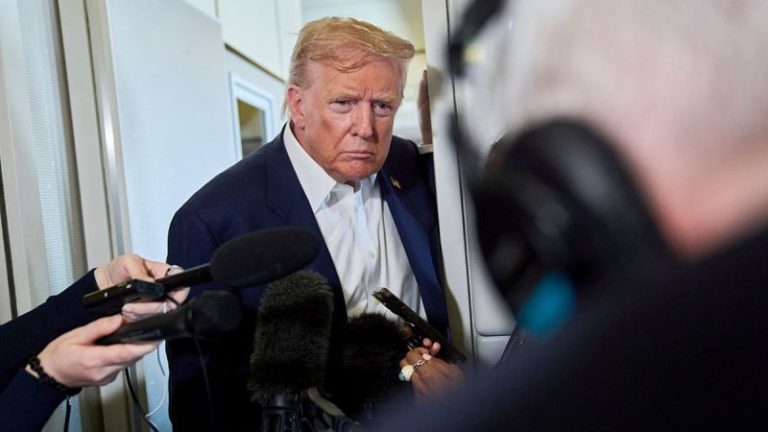
President Donald Trump said on Tuesday he may skip the G20 summit in South Africa in November over the nation’s ‘very bad policies,’ and instead send someone else to represent the United States.

Trump made the remarks aboard Air Force One in response to a reporter’s question as he returned from a trip to Scotland, where the president achieved a massive trade deal with the European Union.

‘I think maybe I’ll send somebody else because I’ve had a lot of problems with South Africa,’ Trump said. ‘They have some very bad policies.’

‘Very, very bad policies, like policies where people are being killed,’ Trump added.

In May, Trump confronted South African President Cyril Ramaphosa at the White House with news clippings and a video allegedly showing grave treatment of White farmers.

Trump has claimed that White Afrikaner South African farmers are being slaughtered and forced off their land. The Afrikaners are descendants of mostly Dutch settlers who first arrived in South Africa in 1652. 

South Africa and its president have denied claims of genocide and harassment. 

Secretary of State Marco Rubio already boycotted a G20 foreign ministers’ meeting in South Africa earlier this year over the government’s controversial land seizure policy.

Both the Trump and former Biden administrations have also criticized South Africa after the nation accused Israel of genocide in Gaza and brought a case to the International Court of Justice.

Fox News Digital’s Greg Norman contributed to this report.

This post appeared first on FOX NEWS

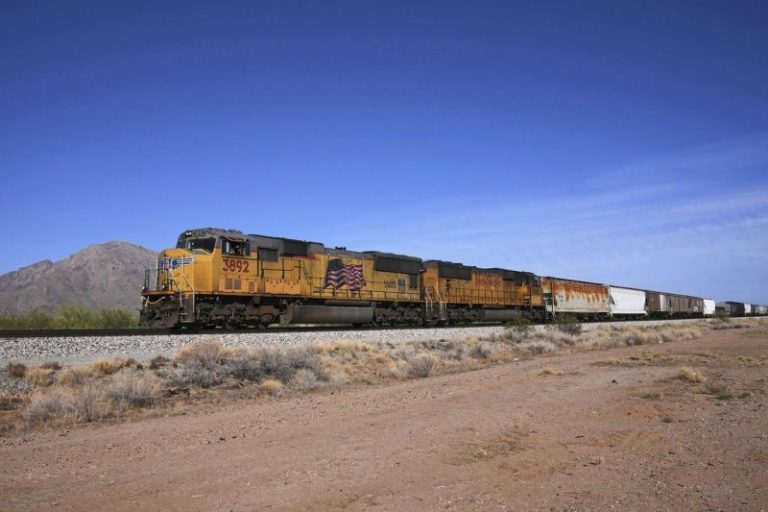
July 29 (Reuters) – Union Pacific said on Tuesday it would buy smaller rival Norfolk Southern in an $85-billion deal to create the country’s first coast-to-coast freight rail operator and reshape the movement of goods from grains to autos across the U.S.

If approved, the deal would be the largest-ever buyout in the sector and combine Union Pacific‘s stronghold in the western two-thirds of the United States with Norfolk’s 19,500-mile network that primarily spans 22 eastern states.

The two railroads are expected to have a combined enterprise value of $250 billion and would unlock about $2.75 billion in annualized synergies, the companies said.

The $320 per share price implies a premium of 18.6% for Norfolk from its close on July 17, when reports of the merger first emerged.

The companies said on Thursday they were in advanced discussions for a possible merger.

The deal will face lengthy regulatory scrutiny amid union concerns over potential rate increases, service disruptions and job losses. The 1996 merger of Union Pacific and Southern Pacific had temporarily led to severe congestion and delays across the Southwest.

The deal reflects a shift in antitrust enforcement under U.S. President Donald Trump’s administration. Executive orders aimed at removing barriers to consolidation have opened the door to mergers that were previously considered unlikely.

A Norfolk Southern freight train passes through Homestead, Pa.Gene J. Puskar / AP file

Surface Transportation Board Chairman Patrick Fuchs, appointed in January, has advocated for faster preliminary reviews and a more flexible approach to merger conditions.

Even under an expedited process, the review could take from 19 to 22 months, according to a person involved in the discussions.

Major railroad unions have long opposed consolidation, arguing that such mergers threaten jobs and risk disrupting rail service.

“We will weigh in with the STB (regulator) and with the Trump administration in every way possible,” said Jeremy Ferguson, president of the SMART-TD union‘s transport division, after the two companies said they were in advanced talks last week.

“This merger is not good for labor, the rail shipper/customer or the public at large,” he said.

The companies said they expect to file their application with the STB within six months.

The SMART-TD union‘s transport division is North America’s largest railroad operating union with more than 1,800 railroad yardmasters.

The North American rail industry has been grappling with volatile freight volumes, rising labor and fuel costs and growing pressure from shippers over service reliability, factors that could further complicate the merger.

Union Pacific‘s shares were down about 1.3%, while Norfolk fell about 3%.

The proposed deal had also prompted competitors BNSF, owned by Berkshire Hathaway BRKa.N, and CSX CSX.O, to explore merger options, people familiar with the matter said.

Agents at the STB are already conducting preparatory work, anticipating they could soon receive not just one, but two megamerger proposals, a person close to the discussions told Reuters on Thursday.

If both mergers are approved, the number of Class I railroads in North America would shrink to four from six, consolidating major freight routes and boosting pricing power for the industry.

The last major deal in the industry was the $31-billion merger of Canadian Pacific CP.TO and Kansas City Southern that created the first and only single-line rail network connecting Canada, the U.S. and Mexico.

That deal, finalized in 2023, faced heavy regulatory resistance over fears it would curb competition, cut jobs and disrupt service, but was ultimately approved.

Union Pacific is valued at nearly $136 billion, while Norfolk Southern has a market capitalization of about $65 billion, according to data from LSEG.

(Reuters reporting by Shivansh Tiwary and Sabrina Valle, additional reporting by Abhinav Parmar, Nathan Gomes and Mariam Sunny; Reuters editing by Sriraj Kalluvila, Pooja Desai, Dawn Kopecki and Cynthia Osterma)

This post appeared first on NBC NEWS

The copper price climbed to a record high of US$5.64 per pound on the COMEX during the second quarter of 2025.

The price rise comes on the back of escalating trade tensions and economic chaos from the United States’ new tariff policy.

While copper was initially spared from tariffs at the start of the year, US President Donald Trump announced the US would be imposing a 50 percent tariff on all copper products entering the US. The announcement sparked speculative buying by US metals traders, who sought to position themselves ahead of the yet-to-be-announced tariff deadline.

How has this affected small-cap copper-focused companies on the TSX Venture Exchange? Read on to learn about the five best-performing junior copper stocks since the start of 2025.

Data for this article was gathered on July 17, 2025, using TradingView’s stock screener, and copper companies with market caps of over C$10 million at that time were considered.

1. Camino Minerals (TSXV:COR)

Year-to-date gain: 655.56 percent
Market cap: C$13.5 million
Share price: C$0.34

Camino Minerals is a copper exploration and development company with a portfolio of projects in South America.

Among its primary focuses since the start of the year is the construction-ready Puquois copper project in Chile, a 50/50 joint venture with Nittetsu Mining (TSE:1515). The partners jointly acquired Cuprum Resources, the project’s owner, through a October 2024 definitive agreement that was completed on April 17, and are now focused on project financing.

Prior to the closing of the acquisition, the partners completed a prefeasibility study for the project in Chile on March 17.

The study results demonstrate a post-tax net present value of US$118 million, with an internal rate of return of 23.4 percent and a payback period of 3.1 years at a fixed copper price of US$4.28. It also outlines all-in sustaining costs of US$2.00 per pound for the 14.2 year mine life.

In addition to the economic details, the included mineral resource estimate shows a measured and indicated resource of 149,000 metric tons of copper from 32.16 million metric tons of ore grading 0.46 percent copper.

Camino also owns the Los Chapitos project, located near the coastal town of Chala, Peru, which covers approximately 22,000 hectares and hosts near-surface mineralization. Nittetsu Mining has an earn-in agreement for the project through which it can earn a 35 percent interest in the project for a total investment of C$10 million over three years.

Camino announced on January 22 that it had initiated a discovery exploration program at Los Chapitos, with work funded by Nittetsu. The company said the program would consist of 11 holes and 1,200 meters of drilling along the La Estancia fault, focusing on newly identified copper breccias and mantos to determine their extension at depth.

Camino released results from the program on May 6, reporting continuity of mineralization at depth at the Pampero prospect, with a 0.5 meter interval found 157.6 meters downhole grading an average of 0.5 percent copper and 3.15 grams per metric ton (g/t) silver. The company also reported that rock chip samples at the prospect graded up to 3.8 percent copper and 4 g/t silver.

The company has continued its exploration efforts at Los Chapitos, with another fully funded campaign running from June 1 to November 30. On July 16, it reported trench results from the newly identified Mirador zone, including 1.07 percent copper over 90 meters, with a 4 meter section grading 3.05 percent copper.

Shares of Camino reached a year-to-date high of C$0.34 on July 16.

2. Finlay Minerals (TSXV:FYL)

Year-to-date gain: 425 percent
Market cap: C$15.84 million
Share price: C$0.105

Finlay Minerals is an exploration company with a portfolio of five projects in British Columbia, Canada.

In 2025, the company has largely focused on its ATTY and PIL projects, which cover 3,875 hectares and 13,374 hectares respectively in BC’s Toodoggone mining district. The region is known for copper-molybdenum-gold porphyry deposits and gold-silver epithermal deposits.

Finlay’s shares rose sharply early in the year after Amarc Resources announced the significant AuRORA discovery at its JOY property, located just south of the PIL project in the same porphyry corridor as PIL and ATTY. On January 20, shortly after the discovery, Finlay announced it would be renewing its focus on its PIL project’s PIL South target, which lies approximately 750 meters from AuRORA.

One month later, Finlay reported it had outlined numerous copper targets at both the PIL and ATTY properties after reviewing geological data, and was planning its 2025 exploration program at PIL to delineate drill targets.

Shares surged in Q2 after Finlay announced on April 17 that it had entered into an earn-in agreement with Freeport McMoRan for PIL and ATTY. Under the terms of the agreement, Freeport can earn an 80 percent stake in the properties through a total of C$35 million in exploration expenditures and C$4.1 million in cash payments over the next six years.

In an update on June 18, Finlay reported that it had begun its exploration programs at both properties, fully funded by Freeport. At both properties, exploration will include property-wide airborne magnetic surveys, and induced polarization geophysical surveys. It will also include detailed geological and alteration mapping, along with rock and soil sampling, on up to eight targets at PIL and three targets at ATTY.

The most recent news came on July 17, when Finlay announced it had increased the exploration program budget for PIL to C$2.6 million from C$750,000 and the budget for ATTY to C$1 million from C$500,000. The company stated that the additional funding will be utilized to identify and prioritize as many targets as possible for drilling in 2026.

3. King Copper Discovery (TSXV:KCP)

Year-to-date gain: 420 percent
Market cap: C$52.92 million
Share price: C$0.26

King Copper Discovery is a copper, silver and gold explorer that is developing a portfolio of projects in South America. The company changed its name from Turmalina Metals in March.

Its primary focus is the Colquemayo project in Moquegua, Peru. In July 2024, King Copper entered into an option agreement with Compania de Minas Buenaventura (NYSE:BVM) to wholly acquire the property.

The company has been relogging the historic drill core from the site. The 6,600 hectare site has seen more than 20,000 meters of historic core drilling and hosts multiple porphyry targets that have been identified but had gone untested. Highlighted drill samples show results of 2.4 percent copper and 10 grams per metric ton (g/t) silver over 237.3 meters, including 14.8 percent copper and 47 g/t silver over 31.3 meters.

In a broad corporate update on February 12, the company said it was intensifying its focus on the project and rebranding from Turmalina to reflect that. Additionally, it hired Insideo, a Lima-based environmental consulting firm, to help advance baseline studies and the drill permit process. Additionally, CEO Roger James stepped down, maintaining a seat on the board, and was replaced by Jonathan Richards as interim CEO.

On March 11, the company began trading under its new name and ticker.

The company has not provided any updates from its projects in the second quarter of the year, but shares have traded higher alongside a rising copper price. On July 15, it released an updated corporate presentation with plans for a 15,000 meter drill program in Q4 testing porphyry systems at the site with holes over 1,000 meters deep.

Shares of King Copper reached a year-to-date high of C$0.26 on July 16.

4. Amarc Resources (TSXV:AHR)

Year-to-date gain: 251.22 percent
Market cap: C$166 million
Share price: C$0.72

Amarc Resources is a copper exploration company primarily focused on advancing its JOY district in Northern British Columbia.

The 495 square kilometer property lies within the Toodoggone region and hosts the AuRORA prospect.

Shares in Amarc surged early in the year after it announced the discovery of AuRORA on January 17. In the release, it outlined the high-grade potential of the deposit, highlighting an assay of 0.63 percent copper over 162 meters, including an 81 meter intersection grading 0.92 percent copper, from near surface depths.

The exploration program was funded as part of a May 2021 earn-in agreement with Freeport McMoran that could see Freeport earn a 70 percent stake in the project once funding milestones are met.

Amarc provided more drill assays from its 2024 program on February 28. One assay graded 0.63 percent copper over 132 meters, including 0.81 percent over a 90 meter segment.

On February 11, Amarc agreed to acquire the Brenda property, which lies directly to the east of the AuRORA discovery, from Canasil Resources. Under the terms of the deal, Amarc has the option to acquire a 100 percent interest in Brenda over five years. Canasil will retain a 2 percent net smelter return.

The most recent news from JOY came on July 16, when the company announced it commenced drilling at targets including the AuRORA and PINE deposits and the Twins and Canyon discoveries. The announcement also reported the expansion of the JOY district through Freeport’s options on Finlay’s PIL property.

In addition to exploration at JOY, Amarc also released assay results from its 2024 exploration at its IKE copper-gold project in Southern British Columbia on May 14. The company reported copper grades of 0.29 percent copper over 181 meters, including an intersection with 0.56 percent copper over 60 meters.

Shares in Armac reached a year-to-date high of C$0.77 on July 4.

5. C3 Metals (TSXV:CCCM)

Year-to-date gain: 233.33 percent
Market cap: C$74.91 million
Share price: C$0.80

C3 Metals is an exploration company working to advance its assets in Jamaica and Peru.

C3’s primary Jamaican asset is the Bellas Gate project, a 13,020 hectare site featuring 14 porphyry and over 30 epithermal prospects along an 18 kilometer strike. To date, drilling at the site has concentrated on a 4 kilometer zone encompassing the Provost, Geo Hill, Camel Hill and Connors prospects.

Shares of C3 experienced significant gains after it announced on February 11 that it had signed an earn-in agreement with a Freeport-McMoRan subsidiary, which can gain up to a 75 percent interest in the project. Under the agreement, Freeport must contribute US$25 million in exploration and project expenditures over five years to earn the initial 51 percent interest, and an additional US$50 million over the following four years for the remaining 24 percent.

In Peru, C3 has focused on advancing its Jasperoide copper-gold project. The site in Southern Peru spans 30,000 hectares and hosts two porphyry and more than 15 skarn prospects across two 28 kilometer belts.

According to a July 2023 technical report, a resource estimate outlines a measured and indicated resource of 51.94 million metric tons of ore with an average grade of 0.5 percent copper and 0.2 g/t gold for contained metal totaling 569.1 million pounds of copper and 326,800 ounces of gold.

C3 released an exploration update from its Khaleesi copper-gold project area in Jasperoide on February 19, reporting that a soil sampling campaign defined a copper-molybdenum anomaly extending 1,900 meters by up 650 meters. Two zones contain average concentrations of 950 parts per million copper and 650 ppm of copper.

The company said it is working to complete geophysical surveys by the end of March and will use the data to implement a maiden diamond drill program at the target. It closed a US$11.5 million bought-deal private placement on March 19 that will be used in part for exploration and development at the Khaleesi target.

The company has not provided further updates on the project.

Shares of C3 reached a year-to-date high of C$0.80 on July 17.

Securities Disclosure: I, Dean Belder, hold no direct investment interest in any company mentioned in this article.

This post appeared first on investingnews.com

The Trump administration is reportedly blocking Taiwan’s president from stopping over in New York City, en route to a diplomatic meeting in Central America, following pressure from China.

The Financial Times reported Monday that the administration has denied Taiwanese President Lai Ching-te the opportunity to stop over in New York City during a planned trip to Paraguay, Guatemala and Belize — all countries that recognize Taiwan as its own independent country.

However, on Monday, the office of the president in Taiwan released a statement indicating that Lai ‘currently has no plans to go on an overseas visit,’ according to Taiwan-state media. A source familiar with the matter at the State Department confirmed that no formal travel plans for President Lai have been announced.

‘In consideration of the ongoing rehabilitation efforts in southern Taiwan following a recent typhoon and regional developments including the United States’ tariffs, the president currently has no plans to go on an overseas visit,’ the statement from President Lai said.

According to the Financial Times, which spoke with unnamed sources said to be intimately familiar with the alleged trip, Lai’s decision not to travel came after he was informed that he would not be able to stop in New York City on his way to Central America. 

Lai’s trip was also reportedly supposed to include a stop in Dallas, but it is unclear if the Trump administration was also planning to bar Lai from stopping there as well, according to the Financial Times.

The White House did not respond to Fox News Digital’s request for comment. However, a State Department source familiar with the matter indicated that the Trump administration continues to be committed to the government’s long-standing one China policy, rooted in the Taiwan Relations Act, joint diplomatic agreements with China and longstanding pledges crafted by the government in regard to Taiwan and China.

Despite being in line with longstanding government policy, the move still garnered criticism from some Asia policy experts and critics of Trump. 

Lyle Morris, a senior fellow on foreign policy and national security at the Asia Society’s Center for China Analysis, said the ‘first concrete move’ under Trump’s second term regarding Taiwan is ‘a cause for concern.’ 

‘The assumption is this decision was made in the context of ongoing US-China trade negotiations and a possible Trump-Xi meeting,’ Morris said on X. ‘Still, not a good sign for enduring US-Taiwan relations.’

‘Denying President Lai a transit is a deeply concerning break with bipartisan precedent and sends a reckless signal to Beijing that our partnership with Taiwan is on the negotiating table,’ added Democrat Sen. Andy Kim, D-N.J., in a post on X following the news about President Lai’s alleged travel. 

‘American leadership is now seen as deeply unreliable, with Trump’s fits and starts with Ukraine, NATO allies, and other key partners. I urge President Trump to reverse course and do what presidents of both parties have done and allow a transit, and ask my colleagues in Congress to join me in that call.’

News of the Trump administration’s decision to prohibit the Taiwanese president from stopping in New York City comes as the president is reportedly feeling out a potential trip to Beijing himself, alongside major U.S. CEOs. Nothing so far has been set in stone regarding Trump’s trip, however.

This post appeared first on FOX NEWS

After spiraling from crisis to crisis over much of the past seven years, Boeing is stabilizing under CEO Kelly Ortberg’s leadership.

Ortberg, a longtime aerospace executive and an engineer whom the manufacturer plucked from retirement to fix the problem-addled company last year, is set this week to outline significant progress since he took the helm a year ago. Boeing reports quarterly results and gives its outlook on Tuesday.

So far, investors are liking what they’ve been seeing. Shares of the company are up more than 30% so far this year.

Wall Street analysts expect the aircraft manufacturer to halve its second-quarter losses from a year ago when it reports. Ortberg told investors in May that the manufacturer expects to generate cash in the second half of the year. Boeing’s aircraft production has increased, and its airplane deliveries just hit the highest level in 18 months.

It’s a shift for Boeing, whose successive leaders missed targets on aircraft delivery schedules, certifications, financial goals and culture changes that frustrated investors and customers alike, while rival Airbus pulled ahead.

“The general agreement is that the culture is changing after decades of self-inflicted knife wounds,” said Richard Aboulafia, managing director at AeroDynamic Advisory, an aerospace consulting firm.

Analysts expect the company to post its first annual profit since 2018 next year.

“When he got the job, I was not anywhere as near as optimistic as today,” said Douglas Harned, senior aerospace and defense analyst at Bernstein.

Ortberg’s work was already cut out for him, but the challenges multiplied when he arrived.

As the company hemorrhaged cash, Ortberg announced massive cost cuts, including laying off 10% of the company. Its machinists who make the majority of its airplanes went on strike for seven weeks until the company and the workers’ union signed a new labor deal. Ortberg also oversaw a more than $20 billion capital raise last fall, replaced the head of the defense unit and sold off its Jeppesen navigation business.

Ortberg bought a house in the Seattle area, where Boeing makes most of its planes, shortly after taking the job last August, and his presence has been positive, aerospace analysts have said.

“He’s showing up,” Aboulafia said. “You show up, you talk to people.”

Boeing declined to make Ortberg available for an interview.

Boeing’s leaders hoped for a turnaround year in 2024. But five days in, a door-plug blew out of a nearly new Boeing 737 Max 9 as it climbed out of Portland. The almost-catastrophe brought Boeing a production slowdown, renewed Federal Aviation Administration scrutiny and billions in cash burn.

Key bolts were left off the plane before it was delivered to Alaska Airlines. It was the latest in a series of quality problems at Boeing, where other defects have required time-consuming reworking.

Boeing had already been reeling from two deadly Max crashes in 2018 and 2019 that sullied the reputation of America’s largest exporter. The company in May reached an agreement with the Justice Department to avoid prosecution stemming from a battle over a previous criminal conspiracy charge tied to the crashes. Victims’ family members slammed the deal when it was announced.

For years, executives at top Boeing airline customers complained publicly about the manufacturer and its leadership as they grappled with delays. Ryanair CEO Michael O’Leary told investors in May 2022 that management needed a “reboot or boot up the arse.”

Last week, O’Leary had a different tune.

“I continue to believe Kelly Ortberg, [and Boeing Commercial Airplane unit CEO] Stephanie Pope are doing a great job,” he said on an earnings call. “I mean, there is no doubt that the quality of what is being produced, the hulls in Wichita and the aircraft in Seattle has dramatically improved.”

United Airlines CEO Scott Kirby cast doubt over the Boeing 737 Max 10 after the January 2024 door-plug accident, as the carrier prepared not to have that aircraft in its fleet plan. The plane is still not certified, but Kirby has said Boeing has been more predictability on airplane deliveries.

Still, delays for the Max 10, the largest of the Max family, and the yet-to-be certified Max 7, the smallest, are a headache for customers, especially since having too few or too many seats on a flight can determine profitability for airlines.

“They’re working the right problems. The consistency of deliveries is much better,” Southwest Airlines CEO Bob Jordan said in an interview last month. “But there’s no update on the Max 7. We’re assuming we are not flying it in 2026.”

Boeing under Ortberg still has much to fix.

The FAA capped Boeing’s production at 38 Maxes a month, a rate that it has reached. To go beyond that, to a target of 42, Boeing will need the FAA’s blessing.

Ortberg said this year that the company is stabilizing to go beyond that rate. Manufacturers get paid when aircraft are delivered, so higher production is key.

“I would suspect they would be having those discussions very soon,” Harned said. “It’s 47 [a month] that I think is the challenging break.”

He added that Boeing has a lot of inventory on hand to help increase production.

Its defense unit has also suffered. The defense unit encompasses programs like the KC-46 tanker program and Air Force One, which has drawn public ire from President Donald Trump. Trump, frustrated with delays on the two new jets meant to serve the president, turned to a used Qatari Boeing 747 to potentially use as a presidential aircraft, though insiders say that used plane could require months of reoutfitting.

Ortberg replaced the head of that unit last fall.

A strike could also be on the horizon at the defense unit after factory workers “overwhelmingly” rejected a new labor deal, according to their union, the International Association of Machinists and Aerospace Workers Local 837.

“The proposal from Boeing Defense fell short of addressing the priorities and sacrifices of the skilled IAM Union workforce,” the union said Sunday. “Our members are standing together to demand a contract that respects their work and ensures a secure future.”

There is a seven-day cooling off period before a strike would begin, if a new deal isn’t reached.

“They’re not totally out of the woods,” Harned said.

Boeing and Ortberg also need to start thinking about a new jet, some industry members said. Its best-selling 737 first debuted in 1967, and the company was looking at a midsize jetliner before the two crashes sent its attention elsewhere.

“Already there’s been a reversal from ‘read my lips, no new jet.’ I would like to see that accelerate,” Aboulafia said. “He is the guy to make that happen.”

This post appeared first on NBC NEWS

Questcorp Mining Inc. (CSE: QQQ,OTC:QQCMF) (OTCQB: QQCMF) (FSE: D910) (‘Questcorp’ or the ‘Company’) is excited to announce a strategic engagement with GRA Enterprises LLC, operating as the National Inflation Association (‘NIA’), to deliver a dynamic marketing and communications campaign aimed at boosting investor awareness and market visibility.

Under the terms of the agreement (the ‘NIA Agreement‘), which commences July 28, 2025, Questcorp will pay a one-time fee of US$30,000 for a three-month initial campaign, with the option for renewal. The NIA will leverage its expansive distribution channels-including targeted email lists, website features, and blog content-to highlight Questcorp’s compelling growth story and project developments.

‘As we continue advancing our highly prospective assets in British Columbia and Mexico, this partnership with NIA will allow us to connect with a broader investment audience and amplify our message at a pivotal time,’ said Saf Dhillon, Founding Director, President & CEO of Questcorp.

NIA, based in Mooresville, North Carolina, is an arm’s-length third party with a strong track record of investor communications for publicly traded companies. Questcorp confirms that no securities will be issued as part of this agreement and, to its knowledge, NIA does not currently own any equity or convertible instruments of the Company.

For more information about NIA: Contact ga@gerardadams.com or visit them at 112 Camp Lane, Mooresville, North Carolina, 28117.

About Questcorp Mining Inc.

Questcorp Mining Inc. is focused on the acquisition and exploration of precious and base metal projects across North America. The Company holds an option to acquire a 100% interest in the North Island Copper Property-covering 1,168 hectares on Vancouver Island, British Columbia-as well as the La Union Project in Sonora, Mexico, comprising 2,520 hectares. Both properties are subject to royalty obligations and represent high-potential targets for copper, silver, and gold exploration.

Contact Information

Questcorp Mining Corp.

Saf Dhillon, Founding Director, President & CEO
Email: saf@questcorpmining.ca
Telephone: (604) 484-3031
Website: https://questcorpmining.ca 

Forward-Looking Statements

This news release contains ‘forward-looking statements’ under applicable Canadian securities laws. These statements involve known and unknown risks and uncertainties that may cause actual results to differ materially from those expressed or implied. Readers are advised not to place undue reliance on forward-looking statements, which are based on current expectations and assumptions. The Company does not undertake to update or revise any forward-looking statements unless required by law.

To view the source version of this press release, please visit https://www.newsfilecorp.com/release/260142

News Provided by Newsfile via QuoteMedia

This post appeared first on investingnews.com